Table of Contents >> Show >> Hide
- What Happened in the Case
- Why This Story Hit So Hard
- The Bigger Issue: Youth Violence Rarely Begins at the Front Door
- What Adolescent Brain Science Adds to the Conversation
- The Victim’s Story Does Not End When the Case Does
- Why the “Wrong Target” Detail Changes Public Understanding
- What Prevention Actually Looks Like
- What Experiences Like This Do to Families and Communities
- Final Thoughts
- SEO Tags
Some headlines feel like a slap of cold water. This is one of them. A 16-year-old boy was sentenced to 12 years in prison after a 14-year-old boy was seriously attacked on his own doorstep in Manchester, England. What made the case even more unsettling was the finding that the victim was apparently not the intended target. In other words, a child answered the door and paid the price for someone else’s grievance. That is the kind of detail that sticks in the public mind long after the courtroom empties.
This story is not just about a sentence. It is about how youth violence can erupt in ordinary places, how quickly adolescent conflict can spiral into life-altering harm, and why communities tend to recoil especially hard when the wrong child gets caught in the blast radius. It is also a reminder that when the people involved are teenagers, the public conversation gets complicated fast: accountability matters, rehabilitation matters, and so does the lasting trauma left behind.
Below is a deeper look at what happened, why the case resonated, and what experts in youth violence, trauma, and juvenile justice say stories like this should teach us. Because while the headline is dramatic, the lessons are painfully real.
What Happened in the Case
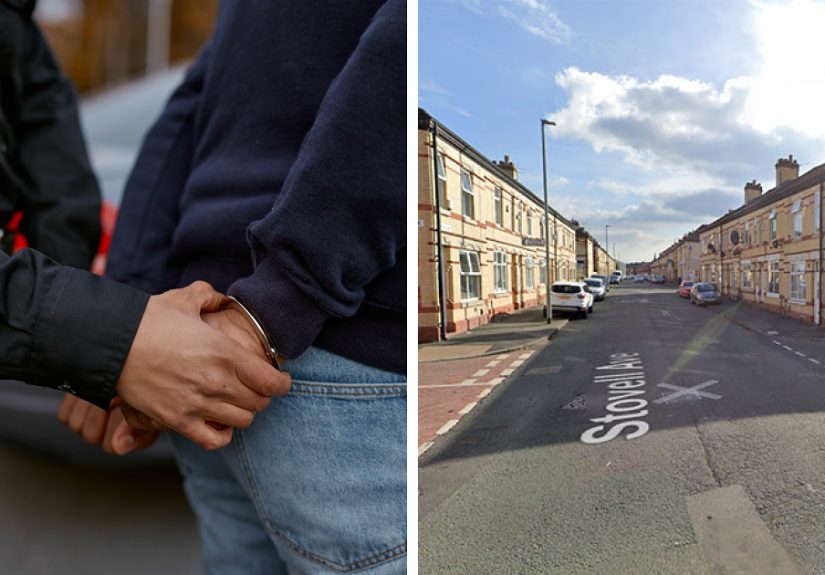
According to Greater Manchester Police, the attack happened on February 26, 2024, on Stovell Avenue in Levenshulme, Manchester. The victim, a 14-year-old boy, was attacked after answering the door at his home. Police later said the attacker, who was 15 at the time of the offense and 16 at sentencing, appeared to believe he had a grievance with another male who was also at the address. That meant the injured boy was not believed to be the intended victim.
The victim spent two weeks in the hospital and was left with life-changing injuries. The suspect was identified and arrested the next day, then charged with attempted murder. On December 6, 2024, he was sentenced to 12 years in custody, with Greater Manchester Police announcing the result publicly on December 9. Because of his age, he was not named.
Those are the core verified facts, and they are serious enough without adding sensational seasoning. No dramatic soundtrack is needed. A teenager opened his front door. Another teenager brought a grievance to that doorstep. The wrong boy was hurt. A judge handed down a long sentence. A family now measures time in “before” and “after.”
Why This Story Hit So Hard
Cases involving mistaken identity often provoke a stronger public reaction than other violent crimes. That is not because one victim’s suffering matters more than another’s. It is because these cases challenge one of the basic assumptions people carry through daily life: that staying out of trouble and staying at home create a reasonable zone of safety.
When a wrong-target attack breaks that assumption, the emotional fallout spreads quickly. Parents imagine their own children answering the door. Neighbors start replaying the ordinary routines of a street that suddenly no longer feels ordinary. Communities do not just ask, “Why did this happen?” They ask, “How could this happen here, like this, to him?”
That is one reason the phrase attacked by mistake carries such weight. It is not a legal defense. It is not a softer version of the offense. It simply highlights the chaos and recklessness involved when personal conflict is acted out with violence. The intended plan, if there ever was one, collapses into something even worse: an innocent or unintended victim is left carrying the consequences.
The Bigger Issue: Youth Violence Rarely Begins at the Front Door
Public health experts in the United States describe youth violence as more than isolated bad behavior. It is a larger pattern that includes threats, assaults, group conflict, weapon-related harm, and the emotional damage that follows for victims, witnesses, families, and neighborhoods. In that sense, this Manchester case fits into a wider problem that many countries are still struggling to address.
The trouble with youth violence is that it often looks sudden only at the final moment. By the time police tape appears, there may already have been layers of grievance, bravado, fear, retaliation, social pressure, online conflict, or neighborhood tension underneath. The public sees the explosion. The fuse is usually much older.
That does not erase personal responsibility. Not even close. But it does explain why experts keep urging communities to treat youth violence as something to prevent early, not merely punish later. Waiting until a teenager shows up angry at someone’s home is like waiting until the kitchen is on fire before looking for the smoke alarm manual. Technically possible. Strategically ridiculous.
What Adolescent Brain Science Adds to the Conversation
Whenever a violent crime involves teenagers, two unhelpful extremes usually show up. One side says, “He is just a kid.” The other says, “He knew exactly what he was doing, so nothing else matters.” Reality is less tidy than either slogan.
Research on adolescent brain development has consistently found that teens think, assess risk, and regulate emotion differently from adults. That does not mean teenagers cannot distinguish right from wrong. It does mean they are more prone to impulsive behavior, emotional decision-making, short-term thinking, and sensitivity to peer pressure. In other words, adolescence is not a free pass, but it is also not adulthood with worse shoes.
That is why juvenile justice systems often try to balance two goals that can look contradictory from the outside: holding young offenders accountable while still recognizing their capacity for change. In many modern justice systems, including in the United States, policy discussions around youth crime increasingly lean on this developmental science. The idea is simple enough: a teenager who commits a grave crime must face serious consequences, but the system should not pretend that a 16-year-old and a fully mature adult are identical in judgment, impulse control, or long-term rehabilitation potential.
In this case, the 12-year sentence reflects the seriousness of the offense. But the broader debate around youth sentencing remains the same: how do societies punish dangerous conduct without giving up on the possibility that a young offender can still be transformed? That question does not come with an easy answer. It barely comes with a polite answer.
The Victim’s Story Does Not End When the Case Does
One of the most important details in the official police statement was that the victim survived but would carry the injuries for the rest of his life. That line matters because it shifts the focus away from the dramatic courtroom result and back to the boy living through the aftermath.
After a traumatic violent event, recovery is rarely only physical. Mental health experts note that people who experience or witness violence may struggle with fear, sleep disruption, anxiety, intrusive memories, hypervigilance, concentration problems, mood changes, or symptoms linked to post-traumatic stress. Children and teens can be especially vulnerable because trauma tends to shake the very things young people depend on most: safety, predictability, and trust in everyday routines.
And this case struck at a particularly sensitive place: home. A home is supposed to be the place where locks, family, and routine do their quiet protective work. When violence enters through something as ordinary as a knock at the door, the psychological damage can linger in ways outsiders do not immediately see. The doorbell rings differently after that. Hallways feel different. Even silence can feel noisy.
The impact also extends to siblings, parents, classmates, and neighbors. Children in the same school or community may not have been physically present, but they still absorb the fear. They hear the rumors, see the patrol cars, read the comments, and learn the unsettling lesson that youth conflict does not always stay where it starts.
Why the “Wrong Target” Detail Changes Public Understanding
There is something uniquely destabilizing about the idea that the victim was not even the person the attacker meant to confront. That detail strips away the comforting fiction that violence always follows a neat chain of personal cause and effect. Sometimes it does. Sometimes it doesn’t. Sometimes the person harmed is simply the person who happened to be there.
That randomness is what communities remember. It turns a criminal case into a cautionary story about recklessness. A grievance that might already have been unlawful becomes something worse when it is acted on without care for who is actually standing in front of you. At that point, the offense is no longer just targeted aggression. It becomes evidence of total disregard.
That is also why these cases often intensify calls for earlier intervention. By the time a teenager is showing up at an address prepared to settle a score, several earlier safeguards may already have failed: conflict de-escalation, parental awareness, school intervention, peer accountability, youth support services, or police intelligence. No single institution can solve youth violence on its own. But every institution gets blamed when none of them stop it in time.
What Prevention Actually Looks Like
The word prevention can sound frustratingly vague, like the kind of thing people say at conferences while everyone else checks the coffee table. But researchers and public agencies have been fairly consistent about what works best in reducing youth violence.
1. Early intervention beats late outrage
Programs that support children before crises escalate tend to matter more than flashy responses after harm has already occurred. That includes mentoring, mental health access, family support, school engagement, and community-based programs that reduce isolation and retaliation cycles.
2. Trauma-informed care matters for victims and witnesses
Children exposed to violence often need more than a quick check-in and a brave-face speech. Trauma-informed support helps families understand why a child may become withdrawn, jumpy, angry, or unable to concentrate. It treats emotional fallout as a real injury, not an inconvenient side plot.
3. Accountability still matters
Prevention is not the opposite of consequences. Communities lose trust when serious youth violence is treated casually. Clear legal consequences are part of deterrence, public safety, and justice for victims. The hard part is building systems that can do both: protect the public now and reduce future harm later.
4. Adults must take adolescent conflict seriously before it turns theatrical and catastrophic
Adults sometimes dismiss teen conflict as drama. Sometimes it is drama. Sometimes it is the early stage of something much more dangerous. The trick is recognizing the difference before a hospital, a courtroom, or a memorial service does it for you.
What Experiences Like This Do to Families and Communities
Stories like this do not end with sentencing because the emotional experience continues long after the legal process is over. For the victim’s family, life often becomes divided into practical routines built around caution. Parents may become more protective, more alert, and more exhausted. They may replay small decisions in their minds and ask impossible questions: What if someone else had answered the door? What if the timing had been different? What if we had known there was any risk at all? None of those questions can change what happened, but families often carry them anyway because guilt and fear are stubborn houseguests.
For the victim, the experience can reshape everyday life in subtle and not-so-subtle ways. A front porch may stop feeling like part of home and start feeling like the place where everything changed. Normal teenage milestones can become tangled up with recovery, medical appointments, anxiety, or a deeper sense of caution. Friends may not always know what to say. Some pull closer. Others drift away because trauma makes people uncomfortable, especially when everyone involved is young and supposed to be worrying about homework, soccer practice, and who forgot to reply in the group chat.
For classmates and neighbors, wrong-target violence often creates a specific kind of unease. It makes the community feel porous. People start looking harder at the street, the visitors, the arguments, the rumors, the online feuds, and the adults who may or may not have noticed trouble brewing. Even families not directly involved can become more guarded. Curfews tighten. Freedom narrows. Trust gets negotiated instead of assumed.
There is also another side that often goes unspoken: the offender’s family may be dealing with shame, grief, anger, confusion, and public judgment at the same time. A serious violent offense committed by a teenager leaves more than one household changed. That does not dilute accountability. It simply reflects how far the damage spreads.
Professionals see this ripple effect all the time. Teachers notice concentration problems and changed behavior. Counselors see fear that comes out sideways as irritability or silence. Police officers, youth workers, and doctors deal with the immediate crisis, but communities are left with the slower work of rebuilding a sense of normal. And that is the most frustrating part: recovery is not dramatic. It is repetitive. It happens through routines, appointments, check-ins, sleepless nights, careful conversations, and small moments when a young person slowly begins to feel safe again.
That is why cases like this resonate so widely. They are not just crime stories. They are cautionary stories about how one violent decision can redraw the emotional map of an entire neighborhood.
Final Thoughts
The case of the 16-year-old jailed for 12 years after the attempted murder of a 14-year-old boy “attacked by mistake” is disturbing for obvious reasons, but it also matters for deeper ones. It shows how youth violence can collide with ordinary life in the most intimate setting possible: home. It shows how quickly adolescent grievance can become catastrophic. And it reminds us that when the wrong child is harmed, the sense of randomness intensifies the public wound.
The sentence reflects the seriousness of the crime. But the real story does not stop at punishment. The victim faces a long recovery. The community absorbs the shock. Experts continue warning that youth violence must be addressed through both accountability and prevention. If there is one lesson worth carrying forward, it is this: teenage violence should never be minimized as mere drama, because once it crosses the line into action, the consequences are brutally adult.
And unlike internet arguments, broken trust does not log off when you close the tab.