Table of Contents >> Show >> Hide
- What Snoop Dogg Said About LGBTQ+ Representation In Kids’ Films
- Why The Backlash Was So Strong
- The Lightyear Scene Was Already Controversial
- Is LGBTQ+ Representation In Kids’ Movies Age-Appropriate?
- Why Parents Feel Caught Off Guard
- Snoop Dogg’s Later Shift: From Controversy To “Love Is Love”
- The Real Parenting Lesson Hidden In The Outrage
- Experiences Related To The Topic: What This Debate Feels Like In Real Family Life
- Conclusion: A Movie Scene Became A Mirror
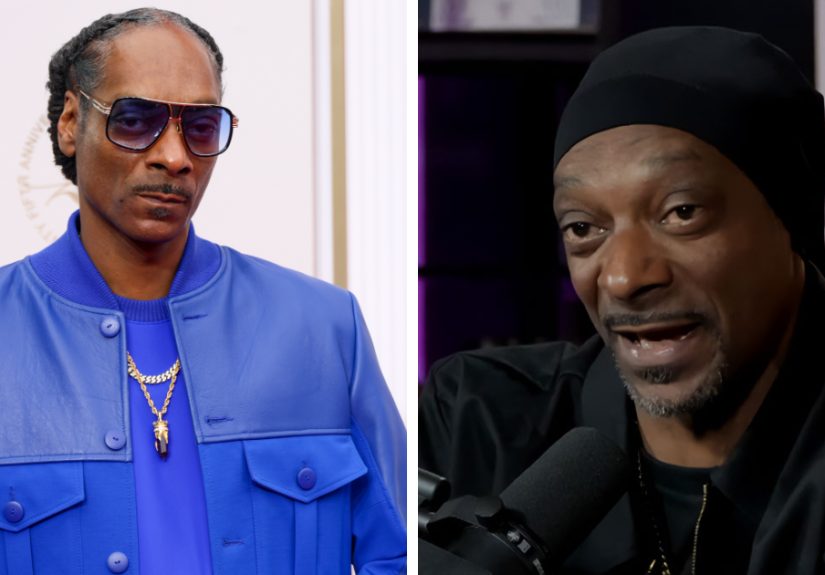
Snoop Dogg has built one of the strangest and most durable careers in American pop culture. He went from West Coast rap icon to cooking-show buddy, football dad, Olympic commentator, children’s music creator, and everyone’s favorite uncle who somehow knows exactly where the snacks are hidden. So when he criticized LGBTQ+ representation in kids’ films, especially Pixar’s Lightyear, the internet did what the internet does best: it grabbed a folding chair, opened the comment section, and prepared for a full family meeting.
The controversy started after Snoop discussed taking his grandson to see Lightyear, the 2022 Disney and Pixar movie that includes a same-sex couple raising a child. According to Snoop, his grandson asked how two women could have a baby, and the rapper said he felt caught off guard. He questioned whether children’s films should include such moments at a young age and said the scene made him “scared to go to the movies.” Critics quickly argued that the issue was not the movie but the adult discomfort around answering a simple question. One viral reaction summed up the pushback neatly: “That’s called parenting.”
That one sentence became the spark because it captured the larger debate. Are kids’ movies becoming too complicated, or are adults overcomplicating what children often understand with surprising ease? Is LGBTQ+ representation a political statement, or is it simply a reflection of families that already exist? And perhaps most importantly: when a child asks a question in a movie theater, is the correct response panic, silence, or a short answer whispered over popcorn?
What Snoop Dogg Said About LGBTQ+ Representation In Kids’ Films
Snoop’s comments centered on the moment in Lightyear involving Alisha Hawthorne, a female space ranger who has a wife and child. The storyline is not the main plot of the film. It is a brief part of a montage showing Alisha’s life moving forward while Buzz Lightyear remains stuck in his mission. Still, that short scene became one of the most discussed elements of the movie, both when it was released and again after Snoop’s remarks resurfaced the debate.
In his telling, Snoop’s grandson noticed the family structure and asked how two women could have a baby. Snoop said he did not have an answer ready and felt that the movie had placed him in the middle of a conversation he had not expected. His reaction was less a detailed cultural argument and more a grandfather admitting he was unprepared. But because the topic involved LGBTQ+ families, children’s entertainment, Disney, and one of the world’s most recognizable celebrities, the story exploded faster than a group chat after someone says, “We need to talk.”
Some listeners sympathized with Snoop, saying parents should be able to decide when and how to explain sexuality, reproduction, adoption, surrogacy, and family structure to young children. Others argued that a child seeing two moms or two dads is not automatically a discussion about sex. It can be as simple as saying, “Some families have a mom and dad, some have two moms, some have two dads, and some kids are raised by grandparents or other relatives.” In other words: keep it age-appropriate, keep it calm, and maybe do not turn a five-second movie scene into a national emergency.
Why The Backlash Was So Strong
The outrage was not just about Snoop Dogg asking questions. It was about the implication that LGBTQ+ families are somehow inappropriate for children’s media. For many LGBTQ+ parents and viewers, the frustration was obvious: their families already exist in real life. Their children go to school, attend birthday parties, watch cartoons, and sit in movie theaters just like everyone else. When a family film includes them, it is not “forcing” a topic into childhood; it is acknowledging the world children already live in.
That is why the phrase “that’s called parenting” resonated. Parenting is not only about controlling what children see. It is also about helping them understand what they see. Kids ask questions about everything: why the moon follows the car, why broccoli tastes like punishment, why a cartoon dog has a job, why someone uses a wheelchair, why a classmate has two homes, and yes, why a child in a movie has two moms. The job of adults is not always to deliver a university lecture. Sometimes it is to provide a sentence that is truthful, kind, and small enough for a child to carry.
Critics also pointed out that children’s films have always introduced kids to big subjects. Disney movies have included death, grief, adoption, war, abandonment, bullying, prejudice, blended families, and terrifying villains with excellent cheekbones. Nobody watched The Lion King and said, “Excuse me, I did not come here to explain monarchy, trauma, and wildebeest-related estate planning.” Yet the moment a same-sex couple appears, some viewers treat it as uniquely difficult. That double standard is exactly what many people found troubling.
The Lightyear Scene Was Already Controversial
The Lightyear scene was controversial long before Snoop Dogg discussed it. When the movie was released in 2022, it faced bans or release problems in several countries because of the same-sex kiss and LGBTQ+ family representation. The scene had also been part of a broader conversation inside and outside Disney about how much LGBTQ+ inclusion should appear in family entertainment.
To supporters of representation, the scene mattered precisely because it was ordinary. Alisha was not introduced as a “lesson.” She was a capable character with a career, a wife, a child, and a life. That kind of casual inclusion can be powerful because it tells viewers that LGBTQ+ people are not side quests in someone else’s story. They are neighbors, parents, heroes, friends, teachers, astronauts, and occasionally animated space rangers with better work-life balance than Buzz.
Opponents, however, saw the scene as another sign that studios are inserting culture-war issues into children’s content. That argument has become common in debates about Disney, Pixar, and other major studios. But it often depends on a narrow definition of what counts as “normal.” A prince and princess falling in love after knowing each other for roughly one musical number is treated as harmless. Two women raising a child is treated as a political seminar. That difference says more about adult assumptions than about children’s confusion.
Is LGBTQ+ Representation In Kids’ Movies Age-Appropriate?
The phrase “age-appropriate” is important, but it is often used as a fog machine. It can clarify a real concern, or it can hide discomfort behind parental language. Of course, young children do not need adult-level explanations of sexuality or reproduction. A six-year-old asking why a child has two moms does not need a biology documentary narrated at full volume in row G. A simple answer works: “Families are made in different ways. Some kids have two moms. They love and take care of their child.”
That type of explanation is not explicit. It is not graphic. It is not a campaign speech. It is the same kind of everyday explanation parents already give when children ask about adoption, divorce, remarriage, single parents, foster families, step-siblings, or grandparents raising grandchildren. Family structure is not automatically adult content. It becomes heavy when adults load it with fear.
For many families, representation is not abstract. A child with two moms may feel seen when a movie includes a family like theirs. A child with LGBTQ+ relatives may better understand that their aunt, uncle, cousin, teacher, or neighbor belongs in the same world as everyone else. A child who is not LGBTQ+ also benefits from learning that different families can be treated with respect. That is not indoctrination. That is basic social literacy, which is a fancy term for “please do not be weird to people at the playground.”
Why Parents Feel Caught Off Guard
Still, it is worth acknowledging why some parents and grandparents feel surprised. Many adults grew up in a media environment where LGBTQ+ characters were invisible, mocked, coded, or treated as adult-only subject matter. If a person spent decades seeing heterosexual romance presented as default and LGBTQ+ identity presented as controversy, then a same-sex couple in a family movie may feel sudden even when it is actually gentle.
That generational gap matters. Snoop Dogg is not alone in feeling unprepared. Many parents are still learning how to talk about gender, sexuality, and family diversity in a way that is accurate without being overwhelming. The problem is not needing help. The problem is turning personal discomfort into a public argument that certain families should remain unseen until adults feel ready.
Parents do not have to know everything. Nobody receives a secret manual at the hospital titled How To Answer Every Question Your Child Will Ask While You Are Holding Nachos. The healthiest response is often humility: “That is a good question. Families can be different. I can explain more later.” That answer gives the child security, keeps the conversation open, and prevents panic from becoming the lesson.
Snoop Dogg’s Later Shift: From Controversy To “Love Is Love”
The story also became more complicated because Snoop later took a very different public tone. After the backlash, he partnered with GLAAD around Spirit Day and promoted “Love Is Love” through his children’s series Doggyland. In that project, he supported messages about different kinds of families and emphasized love, respect, and inclusion. For many observers, the shift was surprising. For others, it was a reminder that public figures can stumble, listen, adapt, and still be held accountable.
That turn matters because it moves the conversation beyond punishment. The internet often treats controversy like a scoreboard: someone says something, everyone picks a team, and then the digital tomatoes begin flying. But cultural growth is rarely that clean. Sometimes people say the wrong thing, get challenged, and then take a step toward understanding. The key question is whether that step is sincere, useful, and followed by better behavior.
Snoop’s case shows how quickly a celebrity comment can become a symbol in a larger cultural argument. One grandfather’s discomfort became a debate about Disney, LGBTQ+ visibility, parental rights, childhood innocence, media responsibility, and whether adults should be expected to answer questions without short-circuiting like an old printer. The answer, inconveniently, is yes. Adults should try.
The Real Parenting Lesson Hidden In The Outrage
The most useful takeaway is not that every parent must agree with every creative decision in every children’s movie. Parents can and should choose media that fits their values, their child’s maturity, and their family context. The real lesson is that children’s questions are not emergencies. They are invitations.
If a child asks about two moms, two dads, adoption, surrogacy, or any other family structure, a parent can answer in a way that matches the child’s age. A preschooler may only need, “They are both parents.” An older child may ask about adoption or donors, and a parent can decide how much detail is appropriate. The goal is not to win a culture war in the aisle between the popcorn and the reclining seats. The goal is to teach kindness, accuracy, and confidence.
Parents who oppose certain content may still choose to preview movies, read reviews, or discuss family values afterward. But pretending LGBTQ+ families do not exist is not a long-term strategy. Children will meet different families in school, sports, neighborhoods, books, and television. If adults refuse to explain difference with calm respect, children may learn confusion or judgment instead.
Experiences Related To The Topic: What This Debate Feels Like In Real Family Life
Anyone who has spent time with children knows that kids have a special talent for asking the most complicated questions at the least convenient time. They do not wait until everyone is emotionally prepared, hydrated, and sitting in a circle with educational flashcards. They ask in the checkout line. They ask during dinner. They ask during a movie when the volume drops just enough for nearby strangers to hear. That is why the Snoop Dogg controversy feels so familiar to many parents, even if they disagree with his reaction.
Imagine a family watching a movie together. A child sees a character with two moms and asks, “Why does he have two moms?” The adult has a choice. One path turns the question into panic: “Never mind, watch the movie.” The other path treats it like any other curiosity: “Some kids have two moms. Families can be different.” The second answer is shorter, calmer, and less dramatic than explaining why the villain has a lava castle, yet adults often freeze because they worry the topic is bigger than the child’s actual question.
In real life, children usually accept simple explanations and move on faster than adults expect. A kid may hear “some families have two moms” and immediately return to asking whether Buzz Lightyear can beat Spider-Man in a race. Children are often not requesting a cultural thesis. They are updating their mental map of the world. Adults are the ones who bring decades of politics, religion, fear, embarrassment, and comment-section trauma into the room.
For LGBTQ+ families, these moments can feel deeply personal. When a movie includes a same-sex couple, their children may feel a quiet sense of recognition. They may think, “That family looks like mine.” That can matter in a culture where many kids still grow up seeing their families treated as exceptions, jokes, or controversies. Representation does not solve every problem, but it can reduce the feeling of being invisible.
For parents who are unsure how to respond, the best approach is preparation, not panic. Before watching new movies, they can check age ratings and content guides. Afterward, they can ask children what they noticed. If a question comes up, they can answer honestly and briefly. “Families are made in different ways” is not a radical sentence. It is a useful sentence. It leaves room for family values, future conversations, and the child’s emotional safety.
The experience also teaches adults something uncomfortable: children notice who gets treated as normal and who gets treated as a problem. If a child asks about two moms and the adult reacts with disgust or fear, the child learns more from the reaction than from the scene. If the adult responds with steadiness, the child learns that difference is not dangerous. That may be the heart of the issue. Parenting is not just about choosing what children see. It is about modeling how to respond when the world is bigger than expected.
Conclusion: A Movie Scene Became A Mirror
The controversy around Snoop Dogg and LGBTQ+ representation in kids’ films is bigger than one rapper, one Pixar scene, or one viral quote. It reflects a broader cultural question: do we trust children to understand that families can look different, or do we teach them that difference must be hidden until adults feel comfortable?
Snoop’s discomfort may have been genuine, but the backlash showed that many people are tired of LGBTQ+ families being framed as difficult content. A child asking about two moms is not a crisis. It is a parenting moment. It can be handled with honesty, warmth, and a sentence or two. No smoke machine required.
In the end, the simplest response may still be the strongest: families come in many forms, love is not confusing, and answering a child’s question with kindness is not an agenda. That is called parenting.