Table of Contents >> Show >> Hide
- Why Scrubs Trigger Such Strong Reactions
- Here’s the Important Reality: Scrubs Are Not Just for Nurses
- Where the Neighbor Had a Tiny Point, and Where She Completely Lost It
- Why Scrubs Outside Work Can Still Be a Gray Area
- Why the Online Crowd Mostly Took the Student’s Side
- What This Story Says About Identity, Respect, and Assumptions
- So, Was the Student in the Wrong?
- Experiences Related to This Topic: When Clothing Gets Mistaken for Credentials
- Conclusion
There are few outfits on earth more likely to inspire instant assumptions than scrubs. Put on a blazer and people think you have a meeting. Put on running shoes and they assume you’ve made peace with burpees. Put on scrubs, though, and suddenly the neighborhood decides you either save lives for a living or you’re running some kind of highly suspicious pajama-based scam.
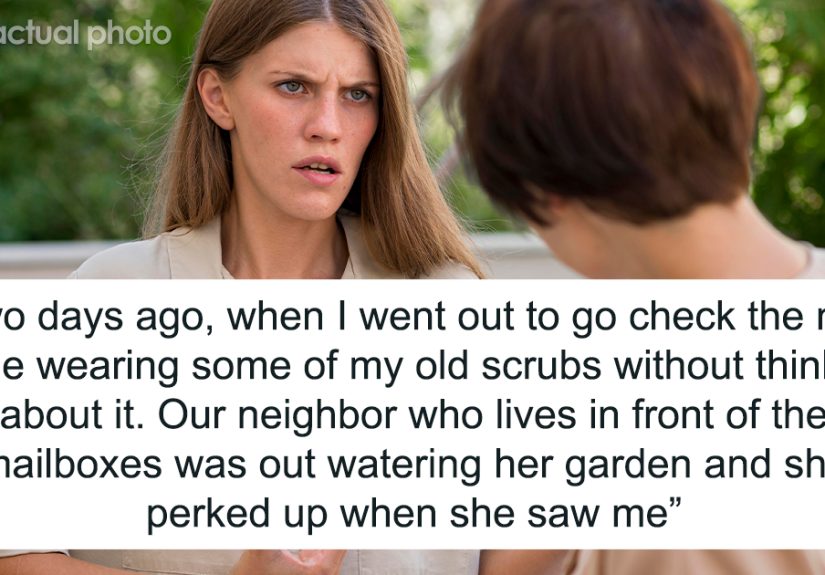
That was the strange little storm at the center of a viral online story about a student who said she was criticized by a neighbor for wearing scrubs even though she wasn’t a nurse. According to the retelling that spread online, the student had old scrub pants from a previous kennel tech job, wore them outside to check the mail, and got confronted by a neighbor who assumed she was studying nursing. When the student said no, the neighbor allegedly accused her of acting like an imposter and even tossed out the phrase “stealing valor,” which is a dramatic choice for a disagreement about drawstring pants.
The story struck a nerve because it touches on something bigger than one uncomfortable mailbox encounter. Scrubs carry social meaning. They are practical, recognizable, and tied in the public imagination to caregiving, hospital work, long shifts, and the people who keep modern medicine standing upright on caffeine and determination. At the same time, scrubs are not exclusive to one profession, one title, or one setting. That gap between public perception and real-world use is exactly why this story blew up online.
Why Scrubs Trigger Such Strong Reactions
Clothing is never just clothing, especially in health care. Patients often rely on visual cues to figure out who is who in a clinical setting. White coats, badges, embroidered titles, color-coded uniforms, and scrubs all help people sort a very busy human landscape into categories that feel understandable. Research on clinician attire has shown that clothing can shape patient impressions of trustworthiness, empathy, intelligence, and authority. In other words, people really do read a lot into what medical professionals wear, even when those snap judgments are incomplete or flat-out wrong.
That helps explain why the neighbor in this story jumped to a conclusion. She saw scrubs and immediately connected them to nursing. To be fair, lots of people would. Nurses are among the most visible professionals associated with scrubs, and for good reason. But recognition is not ownership. A familiar symbol is not the same thing as exclusive rights. If that were true, anyone in hiking boots would owe the Appalachian Trail an apology.
There is also a cultural layer here. Scrubs have become shorthand for service, sacrifice, and competence, especially after the pandemic years when public conversations about frontline workers became much more intense. That public respect is deserved. Nurses, doctors, techs, assistants, therapists, and support staff all do difficult work that matters. Still, admiration for a profession should not turn into wardrobe gatekeeping in the middle of a residential mail area.
Here’s the Important Reality: Scrubs Are Not Just for Nurses
The biggest problem with the neighbor’s accusation is simple: it rests on a false assumption. Scrubs are worn by far more people than nurses alone. In real life, they show up across a wide range of clinical, educational, and animal-care settings. Nursing students wear them. Medical assisting students wear them. Veterinary technology students wear them. Surgical staff wear them. Some facilities also use scrubs for technicians, aides, support workers, and other team members whose jobs involve cleanliness, movement, and practical uniform standards.
That broader use matters because it destroys the idea that scrubs are some sacred garment reserved for one license. They are workwear. Very important workwear, yes, but still workwear. They exist because they are washable, comfortable, functional, and easy to standardize. They help people move quickly, maintain a professional appearance, and follow hygiene expectations in demanding environments. They are not a private club with a secret zipper handshake.
Schools make this especially clear. Many nursing programs have specific scrub uniforms for clinicals and simulations, often with school logos, patches, badges, or required colors. Other programs do the same for medical assisting and veterinary training. Students in those settings are not pretending to be fully licensed professionals. They are training, learning, and participating in real-world environments where standardized attire supports safety, role clarity, and professionalism. That means a person can absolutely be in scrubs without being a licensed nurse, just as a person can carry a camera without directing the next blockbuster.
Where the Neighbor Had a Tiny Point, and Where She Completely Lost It
Now for the nuance. The neighbor was wrong about the clothing, but there is one issue worth separating from the drama: professional titles do matter. In the United States, titles such as “Registered Nurse” and abbreviations like “RN” are legally protected. In many places, you cannot present yourself as a nurse if you are not licensed to do so. That protection exists for public safety. Patients need to know who is qualified, who is in training, and who is responsible for different kinds of care.
But here is the key distinction: wearing scrub pants is not the same thing as claiming a protected title. If someone introduces themselves as a nurse, puts “RN” on a badge without a license, or misrepresents their credentials in a clinical setting, that is a real problem. If someone wears an old pair of scrub bottoms to the mailbox because they are comfortable and happen to have deep pockets, that is not impersonation. It is laundry with an audience.
Intent matters. Context matters. Details matter. The student in this story was not reportedly handing out blood pressure advice, wearing a fake badge, or advertising bedside wisdom near the hydrangeas. She was checking the mail. That distinction is so obvious it almost feels rude to explain it, and yet the internet thrives on situations that require very basic common sense to be spelled out like a kindergarten safety poster.
Why Scrubs Outside Work Can Still Be a Gray Area
This is where the conversation gets more interesting. Even though the neighbor was off base, many health care organizations and schools do have policies about when and where uniforms should be worn. Some nursing programs explicitly say their official student uniform should not be worn as casual streetwear. Certain clinical settings require badges, school identifiers, or “Student RN” markers to avoid confusion. In perioperative and surgical environments, infection-control guidance also takes attire seriously, especially when scrubs are used in restricted or semi-restricted areas.
That does not mean every pair of scrubs in America becomes illegal the moment it sees daylight. It means context changes the rules. Hospital-issued or clinical-use attire can come with hygiene and professional-image expectations. Some organizations want staff and students to change before leaving. Some schools want uniforms limited to class, simulation, clinical activities, or approved events. Some facilities emphasize laundering practices and discourage wearing clinical attire into public places.
So if the student in this story had been wearing a clearly branded nursing-school uniform complete with visible identification while lounging at a grocery store, the discussion might be different. Not because she would be “stealing valor,” but because official uniforms can come with rules tied to infection control, role clarity, and professional representation. But an old pair of scrub pants from a former kennel-tech job? That is a very different universe. That is not false representation. That is just breathable fabric winning the comfort war.
Why the Online Crowd Mostly Took the Student’s Side
Online commenters reportedly backed the student, and it is easy to see why. Most people instinctively understand the difference between wearing a style of clothing and lying about a profession. Society makes these distinctions all the time. Wearing camouflage is not the same as pretending to be in the military. Wearing steel-toe boots does not make you a contractor. Owning a chef’s knife does not mean you should be allowed to lecture strangers about béarnaise sauce.
The neighbor’s use of moral language probably made the exchange feel even more absurd. Calling a random student in comfy scrub pants an imposter turns an everyday misunderstanding into a courtroom drama nobody asked for. It also assumes that nursing identity is so fragile that it can be undone by a person standing near a mailbox in elastic-waist clothing. Nursing deserves respect, but respect is not protected by accusing every scrub-wearer of treason against the break room.
The stronger online reaction also reflects how people increasingly push back against public shaming over harmless behavior. A neighbor asking, “Oh, are you in nursing school?” is normal. A neighbor hearing “no” and then launching into a civic address about honor and fraud is something else entirely. Advice forums exist because people want a reality check, and in this case the reality check seems fairly clear: no claim was made, no protected title was used, and no one was harmed.
What This Story Says About Identity, Respect, and Assumptions
There is a subtle lesson hiding underneath the internet spectacle. People often confuse symbols with substance. Scrubs symbolize competence, care, and clinical work, but the symbol itself is not a license. Professional identity is built through education, regulation, ethical conduct, supervised practice, and public trust. Clothing can support that identity, but it does not create it by itself.
That is why many programs and workplaces use badges, logos, and clearly labeled titles. Research on role identification shows that patients and families can misunderstand who different clinicians are, and that misidentification can create frustration and even affect work experience for professionals. Better labels and clearer identifiers help because they reduce confusion without turning every wardrobe choice into a neighborhood scandal. The solution to public misunderstanding is clarity, not costume-policing by the rose bushes.
This story also reminds us that professions do not need mythology to deserve dignity. Nursing is honorable because of the work, not because scrub pants possess magical licensing powers. Medical assistants, veterinary techs, students, residents, and many other workers also wear similar clothing while doing meaningful jobs. Respect does not shrink when it is shared. If anything, it becomes more accurate.
So, Was the Student in the Wrong?
Based on the details that circulated online, probably not. She did not appear to claim she was a nurse. She wore leftover scrubs from an older job. She was at home, not in a hospital unit introducing herself to patients. The neighbor seems to have confused a common professional uniform with an exclusive title and then treated that misunderstanding like a five-alarm ethical emergency.
If there is any practical takeaway, it is this: if your scrubs are part of an active school or workplace uniform, follow the policy. If they have logos, badges, or identifiers, be mindful of where and how you wear them. If they are just old scrub pants from a previous role and you want to wear them while getting the mail, folding laundry, or pretending you will finally organize your closet this weekend, that is not fraud. That is adulthood, and sometimes adulthood looks like choosing the pants with the best pockets.
In the end, the internet tends to remember the funniest part of these stories, and here the funniest part is how quickly a quiet errand turned into a debate about honor, identity, and the spiritual ownership of polyester blends. But beneath the comedy, there is a useful truth: uniforms can mean something without meaning only one thing. Scrubs are important. Nurses are important. And no, the mailbox is not a credentialing board.
Experiences Related to This Topic: When Clothing Gets Mistaken for Credentials
Stories like this resonate because they feel weirdly familiar. A lot of students and early-career workers have had some version of this experience, even if nobody yelled at them beside a mailbox. A pre-nursing student wears school scrubs to lab and gets asked for medical advice at the pharmacy. A vet tech student leaves class in uniform and a stranger assumes she works in a hospital. A medical assisting student stops for coffee after externship and suddenly gets the “You must be a nurse” smile from three different people before she has even ordered. These moments are usually awkward, sometimes flattering, and occasionally exhausting.
For some people, the problem is not criticism but expectation. Once strangers connect scrubs with medical authority, they may start asking about symptoms, medications, or what to do about a rash they swear is “probably nothing, unless it’s something.” That can put students or non-nurse professionals in an uncomfortable spot. They do not want to seem rude, but they also do not want to pretend they have credentials they do not have. The safest answer is often simple and honest: “I’m not a nurse, but you should check with a licensed professional.” Clear, responsible, and far less likely to end in accidental neighborhood triage.
Others experience the flip side: disrespect through misidentification. Some nursing students have shared that people treat them like they are “just wearing a costume” until they explain how demanding clinical training really is. Residents, students, and women in medicine have also described being mistaken for the wrong role even when they are exactly where they are supposed to be, wearing the right badge, and doing the actual work. That is one reason role labels and visible identifiers matter. They reduce confusion without forcing everyone to become a walking résumé.
Then there is the comfort issue, which should not be underestimated. People keep old scrubs for the same reason they keep favorite hoodies, soft sweatpants, or suspiciously ancient college T-shirts that should probably be retired but have somehow become emotionally important. Scrubs are practical. They move well. They wash easily. They have pockets that seem designed by someone who has actually met a human being with belongings. Once that kind of comfort enters a wardrobe, it rarely leaves quietly.
That is why so many readers probably saw themselves in this story. Maybe not in the exact details, but in the basic situation of being judged for how an outfit is interpreted rather than what was actually meant. It happens with uniforms, work boots, badges, branded jackets, and school gear all the time. People see the symbol, write the story in their heads, and only later discover they cast the wrong lead. The healthiest response is usually not panic but perspective. Correct the misunderstanding if needed. Do not claim what is not yours. Follow any real dress-code rules that apply. And if somebody still decides your pants are a moral crisis, that may be their issue to launder, not yours.
Conclusion
The student-at-the-mailbox story became internet fuel because it mixed three ingredients that always get attention: uniforms, identity, and a neighbor who skipped straight past curiosity and into unnecessary drama. But the deeper takeaway is less sensational and more useful. Scrubs are meaningful, yes, but they are not exclusive to nurses. Professional titles deserve protection. Clothing deserves context. And the difference between those two ideas matters more than any viral comment thread ever will.
Good advice in situations like this is surprisingly ordinary: tell the truth about who you are, follow school or workplace rules when real uniforms are involved, and do not let strangers appoint themselves Supreme Court justices of casual wear. Nursing does not lose dignity because someone wears old scrub pants outside. If anything, the real dignity lies in understanding what the profession actually is: skill, discipline, service, and responsibility, none of which can be borrowed simply by getting dressed.