Table of Contents >> Show >> Hide
- Why Gold and Brass Get Confused in the First Place
- 1. Check the Marks, but Don’t Fall in Love with Them
- 2. Compare the Weight, Because Gold Is Shockingly Dense
- 3. Study the Surface: Wear, Tarnish, and the Truth at the Edges
- A Quick Side-by-Side Comparison
- The Most Common Mistakes People Make
- Final Takeaway
- Experience-Based Lessons: What People Usually Notice Too Late
- SEO Tags
Gold and brass have been fooling eyeballs for ages. Put a polished brass trinket under warm light, and suddenly everyone becomes an optimist. “Maybe it’s gold,” they whisper, already mentally spending the fortune. The trouble is that both metals can look richly yellow, especially when they are clean, shiny, and trying their hardest to impress. But if you know what to check, the act falls apart pretty quickly.
This guide breaks the mystery down into three practical methods you can use before you buy, sell, inherit, or dramatically announce that you have discovered treasure in your grandmother’s sewing tin. The short version is this: don’t trust color alone, don’t trust a stamp alone, and definitely don’t trust your cousin who says, “Bro, just bite it.” There are better ways.
If you want a reliable answer, start with marks, move to weight, and then study how the surface behaves over time. Those three steps will help you separate real gold from brass in most everyday situations without turning your jewelry into a chemistry experiment gone wrong.
Why Gold and Brass Get Confused in the First Place
Gold is a precious metal. Brass is a copper-zinc alloy. They are not close cousins, but visually they can overlap enough to confuse casual buyers. Brass can range from soft yellow to deep golden tones depending on its composition and finish, which is exactly why it shows up in decorative hardware, costume jewelry, lighting, and vintage accessories that look far fancier than their price tags suggest.
Gold, meanwhile, earns its reputation the old-fashioned way: by being dense, durable, valuable, and annoyingly good at looking luxurious with almost no effort. Pure gold is soft, so jewelry is usually made in karat alloys such as 10K, 14K, or 18K. That means even genuine gold jewelry is not usually pure 24K. This is where confusion begins. People hear “gold” and imagine one thing, but the market is full of solid gold, hollow gold, gold-filled, gold overlay, gold electroplate, vermeil, and gold-washed items. Some are valuable. Some are mostly marketing with a glossy finish.
That is why the smartest way to tell gold from brass is to use several clues together. One clue can flirt with you. Three clues tell the truth.
1. Check the Marks, but Don’t Fall in Love with Them
What you want to see on real gold
The first step is simple: look for a karat mark. On genuine gold jewelry sold in the United States, you will often see marks such as 10K, 14K, 18K, 22K, or 24K. Those marks tell you the alloy’s gold content. In practical terms, 14K means 14 parts gold out of 24, while 18K means 18 parts gold out of 24. Higher karat means more gold, but also a softer metal.
If the item is marked with a karat stamp, look nearby for a manufacturer’s name, initials, or registered trademark. That second mark matters more than many shoppers realize. A karat mark without a responsibility mark should make you cautious, especially if the piece is being sold as valuable jewelry and the seller is suddenly very eager to “make you a deal today only.”
What plated or non-solid items may say instead
This is where brass often sneaks into the story. A brass item coated with gold may be labeled in a way that sounds impressive but does not mean solid gold. Watch for terms such as gold-filled, gold overlay, rolled gold plate, gold electroplate, gold plated, gold flashed, or gold washed. These labels indicate some form of gold applied over another metal.
In many gold-filled products, that base metal is often brass. So a piece can have real gold on the outside and brass doing the heavy lifting underneath. That does not make it fake in the legal sense, but it does mean it is not the same as solid gold. If your goal is to tell gold from brass, those labels are a giant clue that brass may be part of the construction.
Why marks are useful, but never the final answer
Here is the catch: stamps can be misleading. They can wear down, be partially legible, be applied incorrectly, or be faked outright. In some suspicious pieces, even the hallmark itself can be attached separately rather than struck into the actual body of the item. That means a “14K” stamp can give you confidence while the metal underneath is quietly laughing.
So yes, marks matter. They are the first screening tool. But they are not a courtroom confession. Treat them like a résumé: helpful, but still worth verifying.
2. Compare the Weight, Because Gold Is Shockingly Dense
The quickest reality check your hand can perform
If two items are about the same size, gold should feel much heavier than brass. Not a little heavier. Not “maybe I’m imagining it” heavier. Real gold has a specific gravity around 19.3, while common yellow brass is around 8.44. That means a same-size gold piece can weigh a bit more than twice as much as a brass one.
This is why experienced buyers often do a simple hand test before they do anything else. They pick up the item and ask, “Does this feel like it should?” Gold has a kind of satisfying seriousness to it. Brass, even when it looks gorgeous, usually feels lighter than the appearance suggests.
How to use the weight clue in real life
Suppose you are comparing two chains of similar thickness and length. One is supposedly gold, the other clearly costume jewelry. If the “gold” chain feels only slightly heavier than the cheap one, that should make you suspicious. The same goes for a ring, bracelet, pendant, or small decorative object. Gold has density on its side, and density is hard to fake convincingly without using other heavy metals.
You can also do a rough density check at home by weighing the item and measuring water displacement, but that method comes with warnings. It is better for plain metal objects than for jewelry with stones, hollow interiors, moving parts, or trapped air. It is also better as a screening tool than as a precision answer. In other words, it can help you say, “This is probably not gold,” faster than it can help you say, “This is definitely 14K.”
Why weight is better than color
Color can be altered by polish, lacquer, plating, age, lighting, and wishful thinking. Weight is much less emotional. A brass item can cosplay as gold all day long under restaurant lighting. The minute you hold it, the performance may start to crack.
That is why weight is one of the most practical ways to tell gold from brass. Your eyes see “pretty.” Your hand sees physics.
3. Study the Surface: Wear, Tarnish, and the Truth at the Edges
Gold and brass age differently
Gold is famous for resisting tarnish and corrosion. Brass is more complicated. It has decent corrosion resistance, but it can still tarnish, darken, and develop brown, dull, or even gray-green surface films over time. If an item has greenish residue around seams, clasps, or worn corners, that is a pretty loud hint that brass or another copper-based alloy is involved.
Now, to be fair, old jewelry is messy. Dirt, cosmetics, hand oils, polish residue, and environmental exposure can make almost anything look suspicious. But the pattern of wear still tells a story. On gold-plated brass, the highest points often lose their coating first. Edges, corners, ring shanks, clasp areas, and the backs of pendants are where the disguise tends to get sloppy.
Where to inspect first
Use a loupe or magnifying glass and check these spots:
- Edges and corners
- Inside ring bands
- Clasp tongues and hinge points
- The underside of pendants or brooches
- Areas where the finish looks thinner or more rubbed
If the surface is flaking, peeling, or revealing a redder or duller yellow metal underneath, you may be looking at brass with a gold layer on top. If the color changes sharply between the outer surface and the worn interior, that is another clue. Solid gold can scratch and dull, but it does not usually peel like a sunburned tourist.
What about the magnet trick?
The magnet test is fine as a very limited filter, but it is not one of the three best ways to tell gold from brass. Why? Because it mostly helps you identify iron or steel components. If a “gold” item snaps strongly to a magnet, it is almost certainly not solid gold. But if it does not react, that still does not prove it is gold. Brass is usually not strongly magnetic either, so a failed magnet attraction test is not some magical gold certificate from the universe.
Think of the magnet as a bouncer, not a jeweler. It can throw out obvious impostors, but it cannot confirm who belongs in the VIP section.
When to stop guessing and get a pro involved
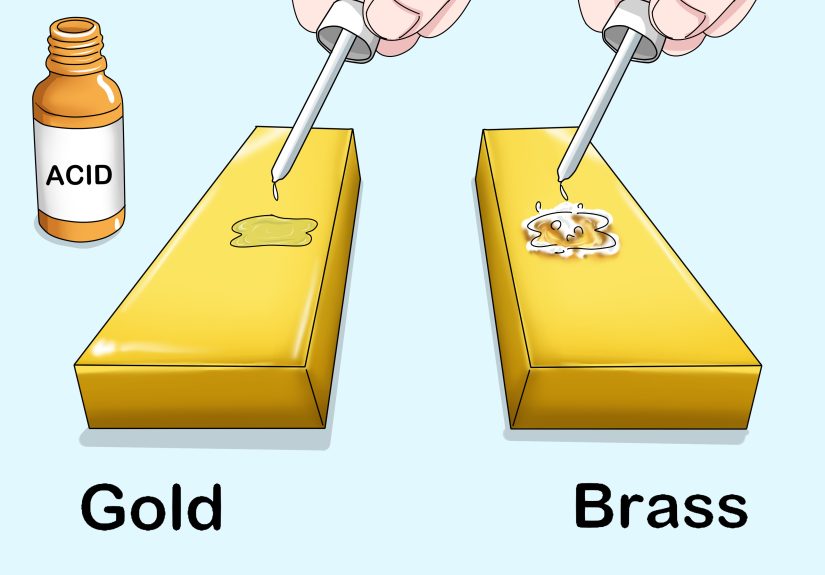
If the piece is valuable, sentimental, antique, or part of a sale, go to a reputable jeweler, appraiser, or assay service. Professionals may use touchstone acid testing, X-ray fluorescence, or other analytical tools depending on the item. Those methods have their own limits, but they are far better than internet folk wisdom and dramatically safer than attacking a family heirloom with sandpaper because someone online said it “worked for them.”
A professional test is especially smart when the item is marked, unusually heavy, or clearly plated but still potentially worth money. In those cases, the answer may not be a simple gold-versus-brass verdict. It may be “gold over brass,” “gold-filled on brass,” “hollow gold alloy,” or “electroformed item with deceptive markings.” Real life loves nuance.
A Quick Side-by-Side Comparison
| Feature | Gold | Brass |
|---|---|---|
| Basic identity | Precious metal used in jewelry and investment | Copper-zinc alloy used in hardware, décor, instruments, and costume pieces |
| Common marks | 10K, 14K, 18K, 22K, 24K, plus a maker’s mark | Usually no karat mark unless it is plated or gold-filled over brass |
| Weight | Very heavy for its size | Noticeably lighter than same-size gold |
| Surface aging | Resists tarnish and corrosion | Can tarnish, darken, or develop greenish corrosion products |
| Typical deception risk | Can be mis-marked or plated over other metals | Often polished or plated to imitate gold |
The Most Common Mistakes People Make
Mistake one: trusting color alone. Warm yellow is not proof of anything except that metal can be photogenic.
Mistake two: assuming a stamp ends the discussion. It starts the discussion.
Mistake three: using a single trick from social media. One test can mislead you. A combination of marks, weight, and wear patterns is much smarter.
Mistake four: forgetting that plated and filled items may contain real gold and real brass at the same time. The world is rude like that.
Mistake five: damaging the item with aggressive DIY testing. If it might be valuable, treat it like it might be valuable.
Final Takeaway
If you want the most reliable everyday answer to the question of how to tell gold from brass, use this order:
- Read the marks and wording carefully.
- Judge the weight against the size.
- Inspect worn areas, edges, and tarnish behavior.
Those three methods will solve most mysteries faster than guesswork and with far less drama. Real gold tends to have consistent markings, serious heft, and a surface that ages with dignity. Brass tends to be lighter, more likely to tarnish, and far more likely to reveal itself where the finish wears thin.
So the next time a flea market ring, estate-sale necklace, or suspiciously glamorous drawer pull catches your eye, remember this: gold and brass may look similar at first glance, but under a little scrutiny, they stop agreeing on the details. And in metal identification, the details are where the truth lives.
Experience-Based Lessons: What People Usually Notice Too Late
People tend to discover the difference between gold and brass in the most human way possible: after they have already fallen in love with the object. It happens at estate sales, thrift stores, flea markets, online auctions, antique malls, and family clean-outs. Someone sees a warm yellow bracelet in a glass case, notices a tiny mark, feels their pulse quicken, and starts planning what they will do with the money. Then reality strolls in wearing sensible shoes.
One of the most common experiences is the “too good to be true” deal. A seller claims a chunky necklace is old gold, but the price is weirdly low because they “just want it gone.” Buyers often focus on the color and ignore the feel. Later, when they get home and compare it with real gold jewelry they already own, the difference becomes obvious. The mystery necklace looks rich, but it feels strangely light, and the clasp area shows a darker metal where the finish has rubbed. That is usually the moment the fantasy quietly packs a suitcase.
Another common experience happens with inherited jewelry. A relative may have referred to every yellow piece as “gold,” even if some items were gold-filled, plated, or simply brass costume jewelry from a department store decades ago. There is no bad intent there. Families pass down stories faster than metallurgy. A person might grow up believing a brooch is precious, only to notice years later that the pin stem has green residue or the back has a different color than the front. It can be disappointing, but it is also incredibly common.
Online shopping creates its own category of heartbreak. Product photos are polished, filtered, warmly lit, and occasionally optimistic enough to deserve their own award. Brass can look magnificent on a screen. Buyers often do not realize what they purchased until a week or two later, when skin oils, humidity, perfume, and regular wear begin changing the surface. Suddenly the item that looked like treasure in the listing photos starts behaving like fashion jewelry in real life.
Then there is the experience of the overconfident DIY tester. This person reads one post, grabs one magnet, performs one dramatic kitchen-table test, and announces a conclusion with the energy of a detective in the final act. The problem is that metal identification rarely rewards theatrical confidence. Plenty of brass pieces will ignore a magnet. Plenty of gold-colored objects are layered constructions. Plenty of marks are incomplete, worn, or misleading. The people who get it right most often are not the loudest. They are the ones who slow down and use several clues together.
In the end, the most useful experience-based lesson is simple: real gold usually survives scrutiny, while brass usually survives only admiration from a distance. The closer you look, the more the truth starts volunteering.