Table of Contents >> Show >> Hide
- What Is the Yield French Press Filter?
- How the Yield French Press Filter Works
- Key Features of a Good Yield French Press Filter
- When Should You Replace a Yield French Press Filter?
- How to Brew Better Coffee with the Yield French Press Filter
- Cleaning the Yield French Press Filter
- Common Problems and Fixes
- Is the Yield French Press Filter Worth Replacing?
- Who Should Use a Yield French Press?
- Buying Tips for a Replacement Yield French Press Filter
- Experience Section: Living with the Yield French Press Filter
- Conclusion
- SEO Tags
A French press looks simple: glass or ceramic body, plunger, mesh screen, coffee, water, and a hopeful person standing nearby in slippers. But anyone who has brewed with one for more than a week knows the truth: the filter is the quiet hero. In the case of the Yield French Press Filter, that small stainless steel mesh mechanism is what separates a rich, full-bodied cup from a mug that feels like it came with beach sand at the bottom.
Whether you are replacing a worn filter mechanism, researching the Yield Design French press, or trying to understand why your morning coffee suddenly tastes like “almost but not quite,” this guide breaks it all down. We will cover what the Yield French Press Filter does, how it affects flavor, how to clean it, when to replace it, and how to brew better coffee with it. Consider this your friendly, slightly caffeinated manual.
What Is the Yield French Press Filter?
The Yield French Press Filter is the replacement filter mechanism designed for Yield’s French press coffee makers. Yield Design is known for modern kitchen and home goods with clean lines, durable materials, and a design-forward look that says, “Yes, I read architecture magazines, but I also need caffeine before 8 a.m.”
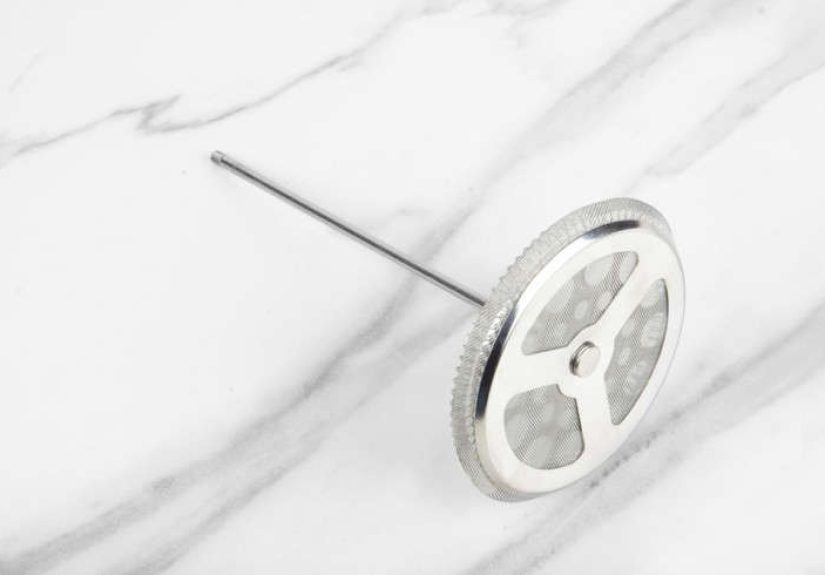
The Yield French press is commonly associated with an 850 ml capacity, a borosilicate glass or ceramic body, a fine stainless steel mesh filter, and a distinctive copper pull. The filter mechanism is the part that presses through the brewed coffee and helps keep the grounds below the surface while allowing brewed coffee to pass into your cup.
Why the Filter Matters
A French press filter is not just a screen. It controls texture, clarity, mouthfeel, and sediment. Unlike paper filters, a stainless steel mesh filter allows natural coffee oils to remain in the brew. That is why French press coffee often tastes heavier, rounder, and more aromatic than drip coffee. It is not “better” for everyone, but it is definitely bolder. Think of paper-filtered coffee as a clean button-down shirt and French press coffee as a cozy sweater with personality.
How the Yield French Press Filter Works
A French press is an immersion brewer. Instead of water passing quickly through a bed of coffee, the grounds sit in hot water for several minutes. During that time, flavor compounds, oils, acids, and aromatics dissolve into the water. When brewing is complete, the plunger pushes the filter downward, trapping most of the grounds at the bottom.
The Yield French Press Filter uses fine stainless steel mesh to separate coffee grounds from the finished brew. Because it is metal, it does not absorb flavors like paper can, and it can be washed and reused. A good filter should move smoothly, fit securely, and reduce the amount of floating grounds without making the plunge feel like a gym workout.
Mesh Filter vs. Paper Filter
The biggest difference between a French press mesh filter and a paper filter is what each one allows into the cup. Paper filters capture more fine particles and oils, creating a cleaner and lighter brew. Metal mesh filters allow more oils and microscopic sediment through, producing that classic French press body. If you love a coffee that feels rich and full, the mesh filter is your friend. If you prefer a cup with almost no sediment, you may want to decant carefully or use an additional paper-filter step after brewing.
Key Features of a Good Yield French Press Filter
1. Stainless Steel Construction
Stainless steel is popular in French press filters because it is durable, washable, and resistant to rust when properly cared for. It also handles repeated contact with hot water and coffee oils without breaking down quickly. With regular cleaning, a stainless steel mesh filter can last a long time.
2. Fine Mesh for Better Separation
A fine mesh filter helps keep larger grounds where they belong: at the bottom of the press, not floating around like tiny coffee sea monsters. However, even a quality French press filter will not remove every fine particle. A little sediment is normal. Too much sediment usually means the grind is too fine, the filter is damaged, or the plunger is not aligned correctly.
3. Easy Disassembly
One major advantage of a well-designed French press filter is that it can be taken apart for cleaning. Coffee oils cling to mesh, rods, plates, and edges. If those parts are not cleaned regularly, yesterday’s brew can haunt today’s cup. And coffee ghosts are not nearly as charming as they sound.
4. Compatibility with Yield French Press Models
Before buying a replacement Yield French Press Filter, check compatibility with your specific press. Yield has produced different French press styles, including glass and ceramic versions. A replacement filter mechanism should fit the plunger assembly and diameter of your model. If the fit is too loose, grounds may escape. If it is too tight, plunging can become difficult or risky.
When Should You Replace a Yield French Press Filter?
A French press filter does not need replacing after every few months, but it is not immortal. Even stainless steel eventually shows signs of wear, especially if it is used daily. Replacing the filter can refresh the brewing experience and improve cup quality.
Signs It Is Time for a New Filter
- The mesh is bent, torn, warped, or visibly loose.
- You notice more sediment than usual, even with a coarse grind.
- The plunger no longer presses evenly.
- Coffee tastes stale even after normal cleaning.
- The filter assembly no longer sits securely on the rod.
- You see rust, discoloration, or trapped buildup that will not clean off.
A worn filter can make brewing frustrating. It may let too many fines into the cup or fail to hold grounds down properly. If your French press used to make smooth, satisfying coffee and now tastes gritty or flat, the filter is a smart place to investigate before blaming your beans, your grinder, or your life choices.
How to Brew Better Coffee with the Yield French Press Filter
The filter is important, but it cannot perform miracles if the rest of the brew is chaotic. A great French press cup depends on grind size, water temperature, coffee-to-water ratio, steep time, and pouring technique.
Use a Coarse Grind
French press coffee works best with a coarse grind. The grounds should look somewhat like coarse sea salt or breadcrumbs. If the coffee is ground too fine, small particles can slip through the mesh and create a muddy cup. A burr grinder gives more consistent results than a blade grinder, which tends to create uneven pieces and coffee dust.
Start with a Reliable Ratio
A practical starting ratio is 1 gram of coffee to 15 grams of water. For an 850 ml French press, that means about 56 to 57 grams of coffee if you fill it close to capacity. If you prefer a lighter cup, try a 1:16 ratio. If you want more strength, try 1:14. The secret is to adjust gradually, not to throw in random scoops like you are feeding a tiny coffee dragon.
Use Hot, Not Boiling, Water
For most French press brewing, water around 195°F to 205°F works well. If you do not use a thermometer, bring water to a boil and let it sit for about 30 seconds before pouring. Water that is too cool may under-extract the coffee, making it sour or weak. Water that is aggressively boiling can bring out bitterness, especially in darker roasts.
Steep for About Four Minutes
Four minutes is the classic French press steep time. Some coffee enthusiasts use longer methods with stirring, skimming, and resting to reduce sediment and increase clarity. But for everyday brewing, four minutes is a dependable place to start. After steeping, press slowly and evenly. If you slam the plunger down, you may stir up fines and create a gritty cup.
Pour Immediately After Pressing
Once you press the coffee, pour it into cups or a separate carafe. Leaving brewed coffee sitting in contact with wet grounds can continue extraction and make the flavor more bitter. The French press is a brewer, not a long-term coffee storage tank. It is charming, but it does not pause chemistry.
Cleaning the Yield French Press Filter
Cleaning is where many French press owners go from “coffee lover” to “archaeologist discovering ancient sludge.” Coffee oils and fine particles collect in the mesh and around the filter plates. If not removed, they can turn rancid and affect flavor.
Daily Cleaning Routine
- Let the French press cool slightly after brewing.
- Scoop or shake used grounds into compost or trash, not the sink.
- Rinse the carafe and filter with warm water.
- Disassemble the filter if possible.
- Wash with mild dish soap and a soft brush or sponge.
- Rinse thoroughly and dry completely before reassembling.
Avoid using harsh scrubbers on delicate glass or polished metal parts. If your press has a copper pull, treat it gently and dry it well to preserve its look. Coffee gear does not need spa treatment, but a little kindness goes a long way.
Deep Cleaning for Coffee Oils
If the filter feels slick or smells stale, it needs deeper cleaning. Soak the filter parts in warm water with a coffee equipment cleaner or a small amount of baking soda. Use a soft brush to remove buildup from the mesh. Rinse carefully. A clean filter should smell neutral, not like a forgotten diner mug from 1998.
Common Problems and Fixes
Problem: Too Much Sediment
The most common cause is coffee ground too finely. Switch to a coarser grind and press more slowly. Also check whether the filter mesh is bent or separated from the frame. If the filter no longer sits flat, replacing it may solve the issue.
Problem: Weak Coffee
Weak French press coffee often comes from too little coffee, water that is too cool, or a steep time that is too short. Try a 1:15 ratio, use hotter water, and steep for four minutes. If the beans are old, no filter can save them. Stale beans are basically coffee-flavored cardboard with ambition.
Problem: Bitter Coffee
Bitterness may come from over-extraction, too fine a grind, water that is too hot, or leaving brewed coffee in the press too long. Use a coarser grind, pour immediately after plunging, and experiment with slightly cooler water for dark roasts.
Problem: Hard-to-Press Plunger
If the plunger is difficult to push, the grind may be too fine or the filter may be misaligned. Never force the plunger. Hot coffee under pressure is not the kind of excitement anyone needs before breakfast. Lift slightly, wait a moment, and press gently again.
Is the Yield French Press Filter Worth Replacing?
If you already own a Yield French press and enjoy its look, replacing the filter is usually more practical than buying a whole new brewer. The body of a glass or ceramic French press can last for years if it is not cracked or chipped. A fresh filter mechanism can restore smoother plunging and cleaner separation.
It is also a more sustainable choice. Replacing one part instead of discarding the entire press reduces waste and keeps a well-designed item in use. That matters, especially in a kitchen world filled with gadgets that promise enlightenment and then retire to the back of a cabinet after two uses.
Who Should Use a Yield French Press?
The Yield French press is a strong match for people who care about both form and function. It suits coffee drinkers who like a full-bodied cup, appreciate reusable brewing equipment, and want a press that looks good on the counter. It is also useful for tea, though tea drinkers should clean the filter carefully if switching between tea and coffee.
Best For
- Fans of rich, textured coffee
- Design-conscious kitchens
- People who prefer reusable filters
- Small households or slow weekend brewing
- Anyone who wants a manual coffee method without electricity
Not Ideal For
- People who want completely sediment-free coffee
- Drinkers who prefer very light, paper-filtered clarity
- Anyone unwilling to clean the mesh filter regularly
- Large groups needing multiple big batches at once
Buying Tips for a Replacement Yield French Press Filter
When shopping for a Yield French Press Filter, look for the correct replacement mechanism rather than a generic mesh screen. Measure your press if needed, and check whether the replacement includes the full assembly or only the screen. Product descriptions may mention a full replacement filter mechanism, stainless steel mesh, replacement lids, or copper pulls.
If your press is older, confirm that the part matches the original model. A filter that almost fits is not good enough. In French press brewing, “almost fits” often means “surprise grit festival.”
Experience Section: Living with the Yield French Press Filter
Using a Yield French Press Filter in everyday life is less about chasing coffee perfection and more about building a pleasant ritual. The first thing most people notice is the feel of the plunger. When the mesh is clean and the grind is right, the press should move with steady resistance. It should not drop like an elevator with a broken cable, and it should not fight back like it has personal issues. That smooth press is one of the small pleasures of manual coffee.
A typical morning experience starts with grinding beans just coarse enough to stay behind the mesh. The sound of coarse grinding is already a little promise. Add the coffee to the Yield press, pour hot water over the grounds, and the bloom rises with that warm, toasted aroma that makes even a sleepy kitchen feel organized. After a gentle stir and a few minutes of steeping, the filter becomes the final judge. Press slowly, and the coffee turns from floating grounds into a deep, glossy brew.
The flavor experience is where the Yield French Press Filter shows its personality. Because it is a metal mesh filter, it lets through the oils that give French press coffee its round body. A medium roast may taste chocolatey and smooth. A light roast may feel fruitier but still heavier than it would in a pour-over. A dark roast can become bold and smoky, though it needs careful timing so it does not turn bitter. The cup is not crystal-clear, but that is part of the charm. French press coffee has texture. It has bass notes. It wears boots.
The filter also teaches good habits. If the cup tastes muddy, the grind is probably too fine. If the plunger is hard to push, do not blame the filter immediately; check the grinder first. If the coffee tastes stale, clean the mesh more thoroughly. Over time, you learn that French press brewing is a conversation between grind, water, time, and filter. The filter does not shout, but it always has something to say.
Cleaning becomes part of the experience too. At first, disassembling the filter may feel like extra work. After a few brews, it becomes routine: rinse, loosen the parts, wash the mesh, dry everything, reassemble. The reward is noticeable. Clean metal mesh produces fresher-tasting coffee, while neglected mesh can hold old oils that dull the flavor. If your coffee ever tastes oddly flat despite good beans, the filter may be quietly begging for a bath.
Another real-world advantage is durability. A replacement filter can extend the life of the press without replacing the entire brewer. That feels especially satisfying when the body is still beautiful and functional. Instead of sending a good coffee maker into retirement, you give it a new working part and keep the morning ritual alive. It is practical, economical, and just a little heroic in a kitchen-counter sort of way.
The best experience comes from accepting what the Yield French Press Filter is designed to do. It will not turn a French press into a paper-filter pour-over. It will not remove every microscopic particle. It will, however, help create a full-bodied, aromatic, satisfying cup when paired with the right grind and technique. For coffee drinkers who enjoy flavor with weight and warmth, that is exactly the point.
Conclusion
The Yield French Press Filter may be a small component, but it has a big influence on brewing quality. It shapes the texture of the coffee, controls sediment, supports the classic French press body, and keeps a well-loved brewer working longer. If your Yield French press is producing gritty, stale, or uneven coffee, the filter deserves your attention.
For the best results, use a coarse grind, brew with hot water around 195°F to 205°F, start with a 1:15 coffee-to-water ratio, steep for about four minutes, and clean the filter after each use. With a properly maintained filter, the Yield French press can deliver the kind of rich, flavorful coffee that makes mornings feel less like a system error and more like a fresh start.
Note: This article is written for general coffee education and product research. Always check the exact replacement part compatibility for your specific Yield French press model before purchasing.