Table of Contents >> Show >> Hide
- Why This Story Is Bigger Than Royal Gossip
- Meghan Markle and the Stigma of Speaking Up
- Why Doctors Hear This Story Differently
- The Pressure of Performing “Fine”
- Online Harassment Is Not Just Noise
- What Meghan’s Story Teaches About Asking for Help
- Why Public Figures Can Change Private Conversations
- The Problem With “But She’s a Duchess”
- Motherhood, Identity, and Mental Health
- How We Should Respond When Someone Says They Are Not Okay
- My Experience With This Topic: Why It Still Stays With Me
- Conclusion: The Human Being Behind the Headline
There are two ways people tend to talk about Meghan Markle. One is the tabloid way: gowns, tiaras, family drama, palace exits, duchess this, duchess that, as if life were one long royal group chat with better hats. The other is the human way: a woman described feeling trapped, isolated, and so low that she did not want to be alive. That second conversation is the one that matters.
When Meghan, Duchess of Sussex, publicly shared that she had experienced suicidal thoughts during her time as a working royal, the world did what the world does best: it split into teams. Some people believed her. Some questioned her. Some turned a mental health disclosure into a courtroom drama where everyone online appointed themselves judge, jury, and palace corgi. But mental health does not become less real because the person describing it is famous, wealthy, stylish, controversial, or married to a prince.
That is why Meghan Markle’s mental health matters to me. Not because I think celebrities should be worshipped. Not because duchesses are more important than doctors, teachers, nurses, parents, students, or the neighbor quietly crying in the parked car before work. It matters because when a very public woman says, “I needed help,” our reaction reveals how seriously we take mental health for everyone else.
Why This Story Is Bigger Than Royal Gossip
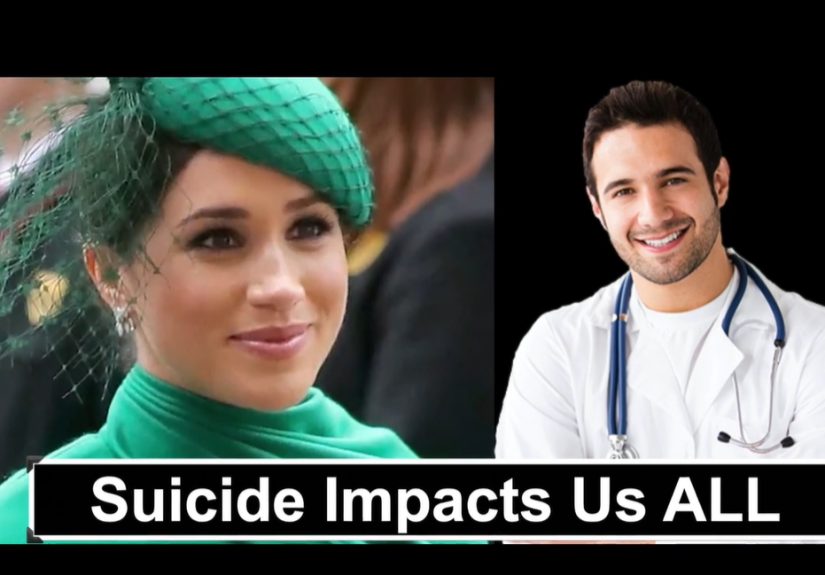
The phrase “Duchess vs. doctor” sounds like a battle between glamour and medicine, but the real conflict is simpler: image versus illness. Meghan was expected to look polished, gracious, and grateful while living under an international microscope. That is a familiar trap, even without a royal title. Many people are expected to keep smiling while anxiety, depression, burnout, grief, trauma, or postpartum distress quietly chew through the wiring behind the scenes.
Public life can exaggerate that pressure. Meghan has spoken about the emotional weight of media criticism, online attacks, and feeling unsupported. Whether someone loves or loathes her public persona is beside the point. The health question is this: What happens when a person asks for help and feels the door is locked?
That question belongs in clinics, classrooms, workplaces, homes, and social media comment sections. It is not only about one duchess. It is about the culture we create around distress. Do we listen? Do we minimize? Do we say, “But you have so much to be thankful for”? Do we confuse privilege with immunity from pain? Spoiler alert: privilege can buy privacy gates, but it cannot buy a depression-proof brain.
Meghan Markle and the Stigma of Speaking Up
One of the most powerful parts of Meghan’s mental health story is not simply that she struggled. It is that she said it out loud. Mental health stigma thrives in silence. It feeds on shame, embarrassment, fear, and that awful little voice that says, “People will think I’m dramatic.”
For women, that stigma has an especially long history. Women in distress have been dismissed as “hysterical,” “crazy,” “too emotional,” “difficult,” or “attention-seeking.” Meghan explored this very issue in her podcast conversations, including discussions about how labels can make women afraid to admit they need help. That point matters because language is not just decoration. Words can become locks. A person who fears being called unstable may stay quiet until the crisis becomes much harder to treat.
When Meghan discussed suicidal thoughts, she gave people permission to name something many families whisper about. She also showed why responses matter. If someone says they are in danger, the correct first move is not cross-examination. It is care. You do not need to be a psychiatrist to say, “I’m glad you told me. Let’s get help right now.”
Why Doctors Hear This Story Differently
From a medical and public health perspective, Meghan’s story is not a celebrity confession. It is a case study in warning signs, barriers to care, social stress, and the importance of timely support. Doctors and mental health professionals are trained to take suicidal thoughts seriously because suicidal distress can be urgent, frightening, and treatable.
There is a dangerous myth that people who talk about suicidal thoughts are merely seeking attention. In reality, talking about it may be a life-saving attempt to connect. It may be the moment when someone is still reachable. The response from loved ones, institutions, employers, and communities can make a profound difference.
That is why the Meghan Markle mental health conversation should not be reduced to whether someone likes her interviews, her Netflix projects, her podcast, her jam jars, or whatever the internet is mad about this week. The clinical issue is bigger: people in distress need access to support before a crisis deepens. A person should not have to be “perfectly sympathetic” to deserve help.
The Pressure of Performing “Fine”
Meghan’s situation also highlights one of the sneakiest problems in mental health: high-functioning suffering. Some people are falling apart internally while still showing up, smiling, answering emails, attending events, raising children, or making everyone else comfortable. Because they look “fine,” their pain is underestimated.
This is especially common among people in visible roles. Leaders, caregivers, doctors, teachers, executives, entertainers, and parents often feel pressure to be composed. The world rewards performance. It applauds productivity. It loves a polished photo. It is much less fluent in the language of exhaustion.
Meghan’s Royal Albert Hall example from her 2021 interview became memorable because it captured that contrast: a glamorous public appearance on the outside, despair on the inside. That image stuck with many people because it is a more dramatic version of something ordinary people experience every day. The outside says “I’m okay.” The inside says “I am barely holding on.”
Online Harassment Is Not Just Noise
Another reason Meghan Markle’s mental health matters is the role of online hostility. It is tempting to shrug off internet cruelty as “just comments,” but repeated harassment, cyberbullying, racism, sexism, body shaming, and public humiliation can affect mental well-being. Social media can connect people beautifully, but it can also become a factory that produces shame at industrial speed.
Meghan and Prince Harry have increasingly connected their advocacy to digital safety, especially through Archewell’s Parents’ Network. The initiative focuses on families affected by online harm and social media-related trauma. Whether one agrees with every Sussex project or not, the issue itself is real. Parents, physicians, educators, and policymakers are all grappling with how digital platforms affect children and teens.
The U.S. Surgeon General has warned that social media cannot currently be assumed safe enough for young people, and psychologists have called for developmentally appropriate guardrails. That does not mean every app is evil or every teen with a phone is doomed. It means the digital world needs the same seriousness we bring to seat belts, playground equipment, food safety, and medication labels. If a product touches millions of young minds, “good luck out there” is not a safety plan.
What Meghan’s Story Teaches About Asking for Help
The most useful lesson from Meghan’s story is painfully practical: asking for help should not be made harder than suffering in silence. Yet for many people, it is. They worry they will be judged. They fear losing status, work, custody, credibility, relationships, or dignity. They do not know where to go. They may have been dismissed before. They may think their pain is not “serious enough.”
This is why mental health education matters. People should know the signs that someone may be in crisis: talking about wanting to die, feeling trapped, withdrawing, showing extreme mood changes, increasing substance use, giving away belongings, or saying they are a burden. These signs do not always appear neatly, and not every person shows them. But awareness can help families and friends respond faster.
In the United States, anyone experiencing suicidal thoughts or emotional crisis can call or text 988 to reach the Suicide & Crisis Lifeline. If someone is in immediate danger, emergency services are appropriate. This information should be as common as knowing how to call a plumber when the ceiling starts raining. Mental health emergencies are real emergencies.
Why Public Figures Can Change Private Conversations
Some people roll their eyes when celebrities talk about mental health. I understand the fatigue. Celebrity culture can be exhausting. Sometimes it feels like every famous person has a “vulnerable era,” a candle line, and a 12-part docuseries. But public disclosures can still help ordinary people. They can give language to experiences that were previously hidden.
When someone recognizable says, “I struggled too,” it can puncture the illusion that mental illness only happens to people whose lives look visibly broken. Depression does not require permission from your bank account. Anxiety does not check your résumé. Trauma does not politely avoid people with nice shoes. Suicidal thoughts can affect people who appear successful, loved, beautiful, powerful, or enviable.
That does not make famous pain more important. It makes it harder to deny that pain can happen anywhere. Meghan’s disclosure created an opening for families to ask better questions at dinner tables, in group chats, and in doctor’s offices. That is valuable.
The Problem With “But She’s a Duchess”
One of the least helpful responses to Meghan’s mental health story is: “But she was a duchess. How bad could it be?” This misunderstands mental health on a basic level. Status can reduce some stressors, but it can create others. Fame can bring wealth and opportunity, but it can also bring surveillance, isolation, threats, loss of privacy, and constant public judgment.
More importantly, suffering is not a contest. A person does not have to win the gold medal in hardship before they are allowed to need help. Pain is not invalid because someone else has less money, more trauma, fewer resources, or a harder childhood. Compassion is not a limited-edition handbag. We do not run out of it by offering it to more than one person.
The better question is not, “Did she have enough reasons to suffer?” The better question is, “What can we learn about how people fall through the cracks even when they seem surrounded by power?” If a duchess can feel unable to access help, imagine how many ordinary people feel the same in workplaces, marriages, schools, churches, and families where appearances matter more than honesty.
Motherhood, Identity, and Mental Health
Meghan’s mental health story also intersects with motherhood. Pregnancy and the postpartum period can be emotionally complex, even in loving circumstances. Hormonal changes, sleep disruption, identity shifts, public judgment, and pressure to be a “good mother” can intensify distress. Add global media scrutiny and family conflict, and the emotional load becomes heavier.
For many mothers, asking for help feels tangled with guilt. They may think, “I should be happy.” They may fear people will question their fitness as parents. They may minimize their symptoms because the baby’s needs seem more urgent. But parental mental health is not separate from family health. Supporting a parent supports the child.
This is where Meghan’s later advocacy around children, parents, and online harm fits into a broader pattern. Her public message has often circled back to care: care for women who are dismissed, care for families navigating digital risk, care for people who are ashamed to say they are struggling. Again, one does not need to treat her as a saint to see the importance of the subject.
How We Should Respond When Someone Says They Are Not Okay
Meghan’s story gives us a chance to practice a better response. If someone tells you they are depressed, overwhelmed, or having thoughts of self-harm, do not turn into a detective looking for inconsistencies. Do not lead with advice like, “Try yoga,” “Think positive,” or “Other people have it worse.” Yoga is lovely, but it is not a crisis plan. Gratitude is healthy, but it is not a substitute for treatment.
A better response is direct and compassionate: “I’m sorry you’re going through this. Are you safe right now? Have you thought about hurting yourself? I can stay with you while we call for help.” Asking about suicide does not plant the idea. It opens a door. It tells the person they do not have to carry the thought alone.
For ongoing support, encourage professional care: a primary care doctor, therapist, psychiatrist, crisis line, employee assistance program, campus counseling center, or community clinic. Offer practical help, such as making a call, driving them to an appointment, watching the kids, or sitting beside them while they send the first message. Tiny logistics can feel like mountains when someone is depressed.
My Experience With This Topic: Why It Still Stays With Me
The reason Meghan Markle’s mental health matters to me is not that I have ever lived in a palace, worn a tiara, or had British tabloids analyze my facial expressions like they were ancient hieroglyphs. My experience is much more ordinary, which is exactly the point. I have seen how quickly people judge distress when it arrives in a package they do not expect.
I have known people who looked successful and sounded cheerful while privately fighting panic attacks. I have seen hardworking parents insist they were “just tired” when the exhaustion had become something heavier. I have watched friends laugh at lunch and then confess later that they cried in the bathroom before ordering a salad. Mental health struggles often do not announce themselves with dramatic music. Sometimes they arrive wearing a blazer, holding coffee, and replying, “No worries!” to an email that absolutely caused worries.
What Meghan’s story brings up for me is the memory of how easily we can miss pain when we are distracted by image. We think the confident person is fine. We think the wealthy person is fine. We think the funny person is fine. We think the mother with the cute baby photos is fine. We think the colleague who never misses a deadline is fine. Then, when that person finally says, “I am not okay,” we are surprised, as if suffering should have sent a calendar invite.
I have also learned that people often test the waters before they tell the full truth. They may say, “I’m overwhelmed,” when they mean, “I’m scared of what I might do.” They may say, “I need a break,” when they mean, “I cannot keep living like this.” They may joke about disappearing because saying the serious version feels too risky. If the first response they receive is dismissal, sarcasm, or suspicion, they may never try again.
That is why public conversations matter. When a famous woman says she experienced suicidal thoughts and the response becomes a debate about whether she is likable enough to deserve empathy, it sends a message to everyone watching. It tells the teenager, the new mother, the burned-out doctor, the bullied employee, and the lonely retiree what might happen if they speak. But if the response is humane, it sends a different message: your pain will be taken seriously, even if your life looks good from the outside.
My personal takeaway is simple. I want to become the kind of listener who does not require someone to prove their suffering beyond a reasonable doubt. I want to notice when “I’m fine” sounds too polished. I want to ask twice. I want to remember that people can be grateful and depressed, loved and lonely, privileged and in pain. Human beings are annoyingly complex that way; we refuse to fit into tidy comment-section categories.
Meghan Markle’s mental health matters to me because the conversation is not really about royalty. It is about whether we believe people when they say they are hurting. It is about whether institutions protect reputations or people. It is about whether families make room for hard truths. It is about whether women can speak about distress without being labeled dramatic, unstable, or manipulative. And it is about whether the rest of us are brave enough to replace gossip with care.
Conclusion: The Human Being Behind the Headline
Meghan Markle will always be a complicated public figure because all public figures eventually become mirrors. People project admiration, resentment, politics, fantasy, and frustration onto them. But mental health should not depend on popularity. A duchess can struggle. A doctor can struggle. A critic can struggle. A person who seems to have everything can still need help.
The real lesson is not that everyone must agree with Meghan, defend every choice she has made, or follow every royal update. The lesson is that suicidal thoughts, depression, stigma, online harassment, and barriers to care are serious issues. When someone speaks about them, our first instinct should be humanity.
If Meghan’s story helps even one person say, “I need help,” or helps one listener respond, “I’m here, and we’re getting support,” then the conversation is worth having. The crown is not the point. The courage to speak is.