Table of Contents >> Show >> Hide
- 1. The Royal Birth That Started With Disaster
- 2. The Grandson of Queen Victoria Who Could Not Stop Irritating Britain
- 3. He Fired Bismarck, The Man Who Built The Empire
- 4. The Kruger Telegram Turned A Message Into A Diplomatic Grenade
- 5. He Wanted A Navy So Badly That Britain Heard Alarm Bells
- 6. The "Hun Speech" Became A Propaganda Gift To Germany's Enemies
- 7. The Eulenburg Affair Made The Imperial Court Look Like A Scandal Factory
- 8. The Daily Telegraph Interview Was A Public Relations Train Wreck
- 9. The "Willy-Nicky" Telegrams Were A Family Chat At The Edge Of Apocalypse
- 10. He Abdicated, Fled, And Became The Woodchopper Of Doorn
- Why Wilhelm II Still Fascinates Readers Today
- Experiences And Lessons From The Life Of Germany's Last Emperor
- Conclusion
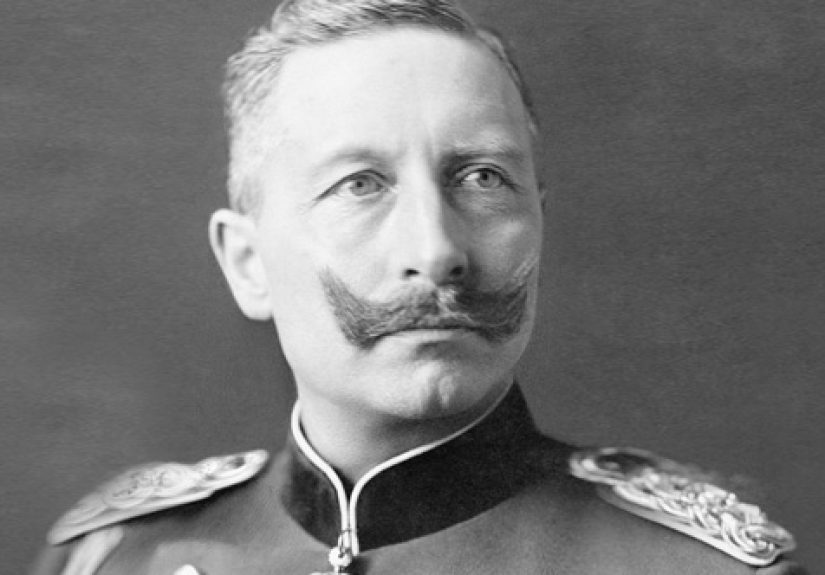
Germany’s last emperor, Kaiser Wilhelm II, was not the sort of monarch who could quietly wave from a balcony and let the paperwork handle itself. He was theatrical, restless, prickly, ambitious, insecure, and addicted to uniforms in the way some people are addicted to coffee. He ruled from 1888 until 1918, presided over Germany’s rise as an industrial and military powerhouse, helped push Europe into one of history’s most catastrophic wars, and then spent his final decades as an exiled wood-chopper in the Netherlands. That is not a life arc. That is a prestige drama with too many costume changes.
These 10 mad tales from the life of Germany’s last emperor are not fictional legends. They come from real events, scandals, diplomatic disasters, medical history, and the strange personality of a ruler who wanted to be loved by Britain, feared by France, obeyed by Germany, admired by Russia, and photographed from the correct angle. Wilhelm II was not solely responsible for World War I, but his life shows how ego, empire, family rivalry, and bad timing can turn politics into a bonfire.
1. The Royal Birth That Started With Disaster
Wilhelm II entered the world in 1859 after a difficult breech birth that left him with a permanently damaged left arm. Modern medical discussion often identifies the injury as Erb’s palsy, caused by damage to the nerves around the shoulder and neck. His left arm remained shorter and weaker than his right, and the future emperor spent much of his life trying to hide it.
That detail mattered. A disabled prince in a militarized Prussian court grew up surrounded by expectations of physical perfection, discipline, horseback riding, swordplay, and heroic masculinity. Wilhelm learned early that a ruler was supposed to look invincible. So he developed strategies: posing with gloves, holding a sword, arranging his body carefully in photographs, and building an image of iron confidence. Beneath all the medals and feathers was a man who knew the camera could betray him.
2. The Grandson of Queen Victoria Who Could Not Stop Irritating Britain
One of the strangest facts about Kaiser Wilhelm II is that he was Queen Victoria’s eldest grandson. In theory, this should have made Anglo-German relations warmer. In practice, it gave Europe a family group chat with cannons. Wilhelm admired Britain, envied Britain, resented Britain, and repeatedly annoyed Britain with the dedication of a man trying to win a popularity contest by kicking the judge’s chair.
His mother, Victoria, Princess Royal, was British and liberal-minded. Wilhelm often resisted her influence and leaned into Prussian militarism instead. This family tension became political theater. He wanted Germany to be treated as Britain’s equal on the world stage, but his speeches, naval ambitions, and diplomatic blunders helped convince many Britons that Germany was not a charming cousin but a rising threat with a very large mustache.
3. He Fired Bismarck, The Man Who Built The Empire
In 1890, Wilhelm pushed out Otto von Bismarck, the legendary chancellor who had helped create the German Empire. Imagine inheriting a complex machine built by the greatest engineer in Europe and immediately deciding, “Thanks, old man, I will drive from here.” That was Wilhelm at 29: energetic, confident, and not especially interested in sharing the spotlight.
Bismarck had balanced alliances with ruthless skill. Wilhelm wanted a “New Course” and a more personal style of rule. The problem was that the young emperor loved gestures more than patience. Removing Bismarck did not automatically doom Germany, but it removed the most experienced operator in the room. After that, German foreign policy became louder, riskier, and more eager to demand respect. Respect, unfortunately, is not something Europe usually hands over because someone has purchased a shinier helmet.
4. The Kruger Telegram Turned A Message Into A Diplomatic Grenade
In 1896, Wilhelm sent a congratulatory telegram to Paul Kruger, president of the South African Republic, after the failure of the British-backed Jameson Raid. On paper, it was a message about South African politics. In reality, it landed in Britain like a slap delivered with a silver glove.
British readers saw the telegram as German interference in their imperial sphere. Anti-German feeling surged. Wilhelm later tried to soften the meaning, but the damage had already been done. The Kruger Telegram is a classic Wilhelm episode: a short communication, a huge reaction, and a leader who seemed surprised that words sent by an emperor might have consequences. If diplomacy were a kitchen, Wilhelm kept touching the hot pan and then blaming the pan for being dramatic.
5. He Wanted A Navy So Badly That Britain Heard Alarm Bells
Wilhelm II adored ships. He believed Germany deserved a powerful navy to match its global ambitions, and he supported the naval expansion associated with Admiral Alfred von Tirpitz. The German Navy Laws of 1898 and 1900 helped launch a major fleet-building program. In Berlin, this looked like national prestige. In London, it looked like a direct challenge to the Royal Navy.
The Anglo-German naval arms race became one of the great anxieties before World War I. Britain depended on sea power for trade, empire, and survival. A Germany building battleships across the North Sea was not just collecting expensive toys; it was changing the strategic map. Wilhelm wanted recognition as a world power, but the naval race helped push Britain closer to France and Russia. In other words, he built ships to make Germany safer and helped make Germany more isolated.
6. The “Hun Speech” Became A Propaganda Gift To Germany’s Enemies
In 1900, during the Boxer Rebellion in China, Wilhelm gave a fiery speech to German troops departing for East Asia. The speech became infamous for its ruthless tone and its comparison to the fearsome memory of the Huns. German officials reportedly tried to manage the text because even they understood that the emperor had produced another diplomatic headache in full ceremonial packaging.
The speech later became useful to Allied propaganda during World War I, when “Hun” became a common anti-German label. The episode showed Wilhelm’s worst rhetorical habit: he performed power so aggressively that he handed his opponents the perfect sound bite. A calmer ruler might have said, “Serve honorably.” Wilhelm preferred thunder. Thunder is exciting, but it also tells everyone exactly where the storm is.
7. The Eulenburg Affair Made The Imperial Court Look Like A Scandal Factory
From 1907 to 1909, the Eulenburg Affair shook Imperial Germany. It involved accusations of homosexual conduct among men close to the emperor, especially Prince Philipp zu Eulenburg and General Kuno von Moltke, along with libel trials, press warfare, and political intrigue. Because same-sex relations were criminalized and heavily stigmatized at the time, the scandal became explosive.
The affair was not just gossip. It damaged the emperor’s image and exposed how much politics depended on personal circles, court influence, and whispers behind velvet curtains. Critics used the scandal to attack Wilhelm’s judgment and the informal networks around him. The result was a monarchy that looked less like a disciplined command center and more like a palace hallway where everyone had a secret, a lawyer, or both.
8. The Daily Telegraph Interview Was A Public Relations Train Wreck
In 1908, Wilhelm gave comments that appeared in Britain’s Daily Telegraph. The interview was meant to improve relations with Britain. Instead, it caused outrage in Britain and embarrassment in Germany. Wilhelm claimed, among other things, that he was friendly to Britain, but his remarks were so tactless and self-important that even Germans began to worry about his unpredictability.
The Daily Telegraph Affair weakened Wilhelm’s authority at home. It became painfully clear that the emperor’s mouth was a strategic liability. In modern terms, it was like watching a head of state go viral for all the wrong reasons, except the Wi-Fi was slower and the consequences involved dreadnoughts. The scandal forced German leaders to consider limiting Wilhelm’s public comments, proving that sometimes the most dangerous weapon in an empire is not a battleship but an unsupervised interview.
9. The “Willy-Nicky” Telegrams Were A Family Chat At The Edge Of Apocalypse
In July 1914, as Europe moved toward war, Wilhelm II and Tsar Nicholas II of Russia exchanged urgent telegrams. They were cousins and used the familiar nicknames “Willy” and “Nicky.” The messages are haunting because they show two monarchs trying to slow events while also trapped by military plans, alliance obligations, national pride, and pressure from advisers.
The telegrams did not stop the war. Germany declared war on Russia on August 1, 1914. The personal tone of the exchange makes the disaster feel even stranger. Two royal relatives were writing like concerned family members while their empires prepared to mobilize millions of men. It was not that nobody saw danger coming. It was that the machinery of war had become stronger than the men who claimed to command it.
10. He Abdicated, Fled, And Became The Woodchopper Of Doorn
By late 1918, Germany was collapsing. Military defeat, revolution, naval mutiny, and political pressure forced the end of Wilhelm’s reign. On November 9, 1918, his abdication was announced, and he fled to the neutral Netherlands. The German Empire was over. The Hohenzollern monarchy, which had seemed so armored in ceremony, disappeared with shocking speed.
Wilhelm eventually settled at Huis Doorn, a manor house in the Netherlands, where he lived until his death in 1941. In exile, he spent enormous amounts of time cutting trees and splitting logs, earning the nickname “the Woodchopper of Doorn.” The image is almost too symbolic: the man who once dreamed of world power reduced to chopping wood in a garden, still surrounded by imperial furniture, still hoping history might change its mind.
Why Wilhelm II Still Fascinates Readers Today
Kaiser Wilhelm II remains fascinating because he was not a simple cartoon villain. He could be charming, intelligent, energetic, and modern in some ways. He promoted technology, admired industry, and understood spectacle before spectacle became a political science. Yet he was also impulsive, vain, militaristic, and dangerously inconsistent. His personality did not create every crisis of his age, but it often made crises louder.
His life also reveals the weakness of hereditary power. Wilhelm inherited a throne, an army, a bureaucracy, a court, and a national myth. What he did not inherit was restraint. The German Empire had brilliant scientists, productive factories, strong universities, and a formidable military. It also had a political system where one man’s moods could become international news. That combination was thrilling until it became catastrophic.
Experiences And Lessons From The Life Of Germany’s Last Emperor
Power Without Self-Control Becomes Performance
The first experience modern readers can take from Wilhelm’s life is that leadership is not the same as performance. Wilhelm understood ceremony beautifully. He knew uniforms, parades, speeches, military reviews, and dramatic gestures. He could look like power. But looking like power is not the same as using power wisely. Many of his worst moments came when he treated diplomacy like theater and assumed a bold pose could solve a delicate problem.
This lesson applies far beyond royal history. In business, politics, media, and everyday life, people often confuse confidence with competence. Wilhelm’s career is a warning that charisma without discipline can become expensive chaos. A leader who always needs applause may eventually make decisions designed for the balcony rather than the situation. The applause fades. The consequences remain.
Insecurity Can Wear A Very Loud Uniform
Wilhelm’s damaged arm is not an explanation for everything he did, and it should never be used as a cheap psychological shortcut. Still, his lifelong effort to hide physical vulnerability helps explain the emotional pressure he carried. He lived in a court culture that worshiped military bearing, physical command, and masculine display. His response was not quiet acceptance. It was overcompensation: more uniforms, more speeches, more martial imagery, more insistence on strength.
That experience feels familiar even today. People who feel secretly inadequate may build public armor. They may talk louder, dominate conversations, collect symbols of success, or attack criticism before it lands. Wilhelm’s story reminds us that insecurity does not always look timid. Sometimes it marches into the room wearing medals and demanding a bigger navy.
Bad Communication Can Become Historical Evidence
Another lesson is brutally simple: words matter. The Kruger Telegram, the Hun Speech, and the Daily Telegraph interview all show Wilhelm creating trouble through communication. He did not always intend the worst interpretation, but he repeatedly ignored how his words would sound to others. That is a timeless mistake. The message you send is not only what you meant; it is also what your audience can reasonably hear.
For writers, creators, executives, and public figures, Wilhelm is a walking caution sign. Before publishing, speaking, posting, or sending the “quick note” that feels brilliant at midnight, ask how it will look in daylight. Wilhelm lived before social media, yet his mistakes were extremely social and extremely public. He was, in a sense, a pre-digital masterclass in reputation damage.
Systems Matter More Than Personal Drama
The most serious lesson is that one dramatic personality becomes truly dangerous when the system around him cannot manage him. Wilhelm had ministers, generals, diplomats, advisers, and relatives, yet the imperial structure often enabled his impulses instead of containing them. Germany’s problem was not merely that Wilhelm said reckless things. It was that his office gave reckless things weight.
Healthy systems create friction around power. They slow decisions, test assumptions, invite disagreement, and prevent one person’s mood from becoming policy. Wilhelm’s Germany had talent everywhere, but its constitutional design left too much room for personal monarchy. The result was a state that could be modern in industry and old-fashioned in political accountability at the same time.
The Final Image Is The Most Human One
The exiled Kaiser chopping wood at Doorn is unforgettable because it strips away the imperial fantasy. No throne, no empire, no command over Europe; just an aging man cutting trees and replaying the past. It is tempting to laugh, and honestly, history sometimes invites a nervous laugh. But the image is also sad. Wilhelm had spent his life chasing grandeur, and in the end grandeur could not save him from defeat, loneliness, or irrelevance.
That final scene gives the whole story its sharpest edge. Ambition is not wrong. Confidence is not wrong. National pride, technological progress, and public service can all be honorable. But when ambition becomes vanity, confidence becomes bluster, and pride becomes entitlement, the ending can be smaller than anyone expected. Germany’s last emperor wanted to be remembered as a world-historical ruler. He is remembered, instead, as a warning with a waxed mustache.
Conclusion
The life of Kaiser Wilhelm II is packed with mad tales because he lived at the meeting point of old monarchy and modern mass politics. He was born into royal Europe, ruled an industrial giant, challenged Britain’s naval confidence, embarrassed his own government, helped intensify prewar tensions, failed to stop the catastrophe of 1914, and died in exile while another German regime occupied the Netherlands. His story is dramatic, funny in places, disturbing in others, and deeply instructive.
Germany’s last emperor shows how personality can shape history without fully controlling it. Wilhelm did not single-handedly cause World War I, but his impulsive leadership, theatrical militarism, and hunger for prestige made Europe more combustible. The mad tales are entertaining; the lesson is serious. When power, ego, and insecurity sit on the same throne, everyone else should check the exits.