Table of Contents >> Show >> Hide
- Why Recycled Wood Feels Like the Perfect Canvas
- How I Choose the Right Wood for Drawing
- My Prep Process Before I Start Drawing
- Where Nature Shows Up in My Work
- What Recycled Wood Adds That Paper Never Could
- The Challenges That Make the Work Better
- My Favorite Subjects for This Kind of Art
- Why This Process Means More to Me Over Time
- Extended Studio Reflections: What This Practice Has Taught Me
- SEO Tags
Some artists start with pristine white paper, a spotless desk, and the kind of calm that only exists in movies. I start with old wood. Not elegant, gallery-whisper wood. I mean rescued planks, weathered scraps, retired drawer fronts, and the occasional board that looks like it survived three decades in a garage and at least one family argument. And honestly? That is exactly why I love it.
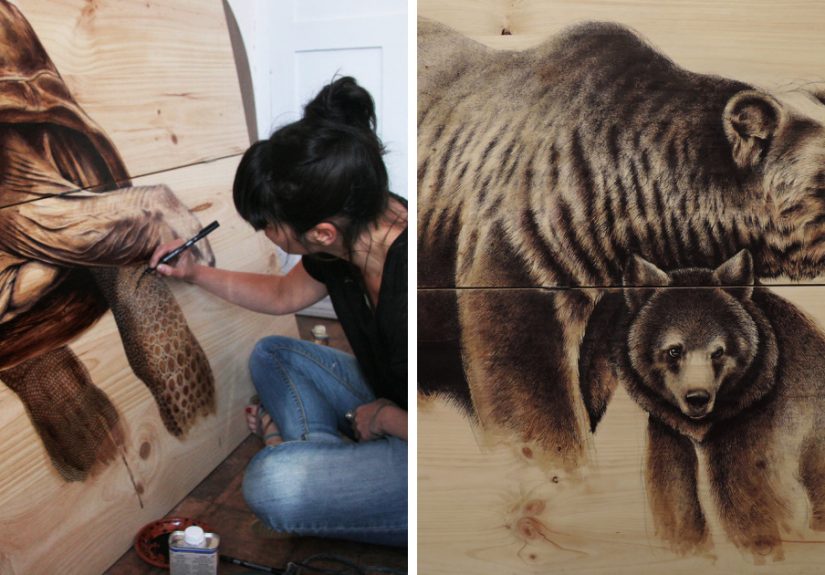
Creating nature-inspired drawings on recycled wood feels less like making art from scratch and more like collaborating with a material that already has opinions. The grain gives me movement. Knots become moons, nests, or tree eyes. Tiny cracks suggest river paths. Old nail holes act like punctuation marks from a former life. Instead of fighting those imperfections, I work with them. Nature is not polished, symmetrical, or overly rehearsed, and recycled wood gets that memo better than most surfaces.
What draws me to this process is the way it blends beauty, sustainability, and storytelling. Recycled wood carries history. Nature-inspired drawing carries observation. Put the two together, and suddenly a simple sketch of a fern, owl, moth, wildflower, or mountain line becomes something richer. It is not just an image. It is an object with memory. It has texture, character, and a little bit of attitude. Basically, it is the opposite of boring.
Why Recycled Wood Feels Like the Perfect Canvas
There is a reason wood has been used as an art support for centuries: it is strong, stable when prepared correctly, and wonderfully tactile. For an artist who likes drawing natural forms, recycled wood offers what plain paper cannot. It gives resistance. It gives warmth. It gives the image a physical presence before the first line is even drawn.
When I choose a piece of reclaimed wood, I am not just choosing a size. I am choosing a mood. A smooth, pale panel might be perfect for delicate botanical drawing. A darker, rougher board might be ideal for ravens, forest silhouettes, insects, or stormy landscapes. Even the direction of the grain can suggest motion, almost like the board is quietly art-directing the composition before I pick up a pencil.
That visual character is what makes recycled wood such a strong partner for nature-inspired art. Nature is full of pattern, rhythm, and irregular beauty. Wood grain echoes all of that. It has growth rings, subtle color shifts, ripples, streaks, and scars. In other words, the surface already speaks the same language as leaves, bark, feathers, wings, roots, and water.
How I Choose the Right Wood for Drawing
Not every scrap of wood is ready for its artistic comeback tour. I look for pieces that are dry, reasonably flat, and structurally sound. If a board is actively splitting, warping like a dramatic soap opera character, or shedding questionable dust, it probably needs more help than I can offer with a pencil and good intentions.
I also pay attention to what the wood used to be. Old furniture parts, cabinet panels, shelving, and hardwood offcuts can work beautifully. Barn wood and heavily weathered lumber can be gorgeous too, but they usually require more cleaning and prep. If I find metal fasteners, staples, or tiny buried surprises, those need to go. Reclaimed wood is charming, but it should not double as a booby trap.
One of the biggest lessons I have learned is that romance should never replace common sense. If the wood has layers of old paint or unknown coatings, I treat it carefully. Older painted surfaces can present safety concerns, especially if sanding is involved. So no, I do not charge into the studio like a caffeinated raccoon with a power sander. I inspect first, prep carefully, and keep the process safe.
My Prep Process Before I Start Drawing
The prep stage is where recycled wood stops being “random board from the universe” and starts becoming a real art surface. It is not the flashiest part of the process, but it matters. A lot.
1. Clean the surface
I brush away dirt, cobwebs, loose fibers, and whatever else the board picked up in its previous life. Sometimes a dry scrub is enough. Sometimes the board requires more patience and a little gentle cleaning. The goal is to preserve the character, not erase the story.
2. Sand just enough
I sand the surface enough to make it workable, but not so much that it loses its soul. I want the wood to feel touchable, not factory-fresh. If I am planning a highly detailed drawing, I go smoother. If I want a rustic, earthy result, I leave more texture behind.
3. Seal the wood
This is the step too many people skip, and then the wood politely returns the favor by staining, absorbing, yellowing, or otherwise misbehaving. Sealing helps create a barrier so the support does not interfere with the artwork over time. If I want the grain to remain visible, I may use a clear ground. If I want a more traditional drawing or painting surface, I build up a primed layer.
4. Match the ground to the artwork
For graphite, ink, colored pencil, or acrylic line work, I choose a surface with enough tooth to grab the media without turning every line into a wrestling match. If the drawing is subtle and detailed, smoother is better. If the piece is expressive and layered, a bit more texture can make the final result feel alive.
Where Nature Shows Up in My Work
I do not use nature as decoration. I use it as structure. Most of my drawings begin with observation: the curl of a fern, the symmetry of a moth, the geometry of seed pods, the branching logic of roots, the repetition in feathers, the edge of a mountain ridge, the way fungi cluster like tiny villages. Nature is endlessly designed, and it never runs out of ideas.
What makes it even more exciting on wood is that the board can guide the image. A knot might become the center of a sunflower. A long stain may turn into a flight path for birds. A vertical crack can become the trunk of a pine. Rather than forcing a perfect sketch onto an indifferent surface, I let the wood participate. It is half drawing, half conversation.
That collaboration gives the finished work a quieter, more grounded feeling. Even when the subject is simple, the piece tends to feel layered because the surface is already doing part of the emotional work. The wood is not a blank background. It is a living visual element with its own texture, temperature, and pace.
What Recycled Wood Adds That Paper Never Could
Paper is lovely. Canvas is dependable. But recycled wood brings a sense of permanence and presence that changes the whole mood of a drawing. The artwork feels object-like rather than purely image-based. You do not just look at it; you notice its edges, weight, surface shifts, and little irregularities. It invites a slower kind of attention.
That matters for nature-inspired work because nature itself rewards slow looking. A feather is not just a feather when you actually study it. It is architecture. Moss is not just green fuzz. It is a tiny forest with mood lighting. Recycled wood supports that kind of close observation because it already asks the viewer to look carefully.
There is also an emotional layer I cannot ignore. Making art on reclaimed materials feels like an act of extension rather than consumption. I am not always buying something new to make something meaningful. Sometimes I am rescuing a surface that might have been discarded and giving it a second life. That changes the energy of the work. It feels more thoughtful, more grounded, and frankly less wasteful.
The Challenges That Make the Work Better
Of course, this process is not all poetic grain lines and magical forest vibes. Recycled wood can be unpredictable. Some boards absorb more than expected. Some reveal stains after sealing. Some are smooth in one area and stubbornly rough in another. Humidity can matter. Storage can matter. Rushing definitely matters, usually in the “I regret everything” sense.
But those challenges are part of the appeal. Working on recycled wood teaches patience. It teaches surface awareness. It teaches respect for material. You cannot treat every board the same and expect a beautiful result. Each one asks for a slightly different approach, and that keeps me from making the same piece over and over again.
It also makes me a better observer. Because I spend time reading the wood before I draw, I enter the actual drawing with more focus. I notice pattern faster. I become more deliberate about placement, pressure, contrast, and negative space. In a funny way, the prep work becomes part of the artistic practice. The board slows me down just enough to make me pay attention.
My Favorite Subjects for This Kind of Art
Some subjects just belong on wood. Birds are a natural fit because feather textures play beautifully against grain. Wildflowers feel right because the organic lines echo the surface. Mushrooms, moths, beetles, tree silhouettes, foxes, hares, antlers, shells, and moonlit landscapes also work especially well.
I love botanical drawings on lighter wood where the natural color acts like a soft background wash. On darker reclaimed boards, I lean into contrast and create pieces with white pencil, paint marker, or layered mixed media. Sometimes I let large areas of the board remain exposed. That negative space keeps the work breathable and reminds the viewer that the material matters just as much as the image.
Seasonal themes also shine here. Autumn leaves on warm-toned wood feel almost unfairly pretty. Winter branches on gray weathered boards create instant atmosphere. And spring florals on recycled wood strike a nice balance between delicate and rugged, like a bouquet that knows how to use power tools.
Why This Process Means More to Me Over Time
The longer I work this way, the more I realize I am not just making drawings. I am practicing a way of seeing. I am paying attention to overlooked materials and overlooked details in the natural world. I am noticing how a discarded board can still be beautiful, how a crack can become composition, how wear can read as texture, and how age can add value instead of taking it away.
That mindset has changed my work for the better. It has made me less obsessed with perfection and more interested in presence. I do not need every line to be flawless when the piece itself already feels honest. Recycled wood reminds me that beauty does not have to be pristine to be powerful. Nature has never been interested in perfection anyway. Trees twist. Stone erodes. Petals bruise. Rivers change course. Everything good is textured.
So when I create nature-inspired drawings on recycled wood, I feel like I am bringing two truths together: the natural world is full of wild intelligence, and old materials still have stories worth telling. That combination keeps me curious. It keeps the work human. And it keeps my studio from becoming a shrine to over-priced blank surfaces, which is a win for both art and my wallet.
Extended Studio Reflections: What This Practice Has Taught Me
Over time, this process has become more personal than I expected. At first, I was simply drawn to the look of reclaimed wood. I liked the weathered edges, the faded tones, and the fact that every piece felt one of a kind. But after making more work this way, I started to understand that the material was affecting my mindset just as much as my visuals.
When I sit down with a recycled board, I cannot rush into a drawing the way I sometimes can on paper. I have to look first. I have to ask questions. Is the grain loud or subtle? Are there stains I should work around? Is there a knot that could become a focal point? Does the shape of the board suggest a vertical forest scene, a horizontal landscape, or a centered botanical study? That pause has made me more intentional as an artist. I am not just placing an image on a surface. I am building a relationship with it.
I have also learned that viewers respond differently to these pieces. People do not only comment on the drawing itself; they comment on the object. They ask where the wood came from. They touch the edges. They notice saw marks, old screw holes, and variations in tone. The story of the material becomes part of the story of the artwork. That is something I deeply value. It means the piece has more than one entry point. Someone might connect with the owl, the leaf, or the mountain line. Someone else might connect with the idea that the board once had another life and still became something beautiful.
There is a quiet emotional comfort in that. Recycled wood art reminds me that usefulness does not end when a first purpose is over. Things can be changed, re-seen, repaired, and reintroduced with dignity. That idea shows up in nature all the time. Fallen trees feed new growth. Broken shells wash ashore and become texture in the landscape. Weathering does not always mean loss; sometimes it means transformation. Bringing that philosophy into my art has made the work feel more grounded and, honestly, more hopeful.
It has also made my studio practice more playful. Because no two boards are the same, I stay curious. I experiment more. I let accidents lead. If a stain bleeds through in an interesting way, I may turn it into fog or shadow. If the grain is especially dramatic, I may simplify the drawing to let the wood speak louder. That balance between control and response has helped me loosen up creatively. Not every piece needs to dominate the surface. Some of the strongest ones simply listen to it.
In the end, that is why I keep returning to nature-inspired drawings on recycled wood. The process gives me beauty, challenge, sustainability, and surprise all at once. It feels tactile, thoughtful, and alive. And in a world that constantly pushes us toward newer, shinier, faster things, I like making artwork that proves old materials can still hold wonder.