Table of Contents >> Show >> Hide
- Why 2025 Was A Standout Year For Nature Photography
- International Photography Awards 2025: Nature Winners With A Global Lens
- International Landscape Photographer Of The Year 2025: The Power Of Place
- World Nature Photography Awards 2025: A Snowy Vineyard Steals The Show
- Wildlife Photographer Of The Year 2025: The Ghost Town Visitor
- BigPicture 2025: Biodiversity With A Conservation Pulse
- Audubon Photography Awards 2025: Birds Without Borders
- Annual Photography Awards 2025: Nature In The Details
- Nature Photographer Of The Year 2025: Motion, Mood, And Mystery
- Nature’s Best Photography Awards 2025: Conservation Takes Center Stage
- What The 2025 Winners Teach Photographers
- Experience Notes: What It Feels Like To Chase A Winning Nature Photograph
- Conclusion
The best nature photography of 2025 did not simply say, “Look, a pretty bird.” It whispered, shouted, and occasionally kicked the door open: look at the planet, look at what is disappearing, look at what is still gloriously alive. Across major international photo awards, the winning images of 2025 showed a fascinating shift. Beauty still matters, of course. Nobody is giving trophies to blurry squirrel mugshots unless the squirrel has discovered jazz. But this year, the strongest nature photos also carried tension, patience, conservation urgency, and a deep respect for wild subjects.
From a brown hyena prowling through a Namibian ghost town to deer crossing a snowy Slovenian vineyard, from blackwater sea life to explosive kingfisher action, the 2025 winners prove that nature photography has grown far beyond postcard landscapes. It has become visual storytelling with claws, feathers, ice, fungus, lava, and occasionally a photographer lying in mud while pretending this was always the plan.
Why 2025 Was A Standout Year For Nature Photography
Nature photography competitions in 2025 rewarded three big things: patience, ecological meaning, and originality. Judges seemed especially drawn to images that did more than capture an animal or landscape. The winning photographs often showed relationships: wildlife reclaiming human spaces, birds crossing national borders, insects living hidden lives, and fragile ecosystems under pressure.
This is why the year’s best images feel so memorable. They are not just “nice shots.” They are small visual essays. A deer in snow becomes a lesson in timing. A bird in flight becomes a symbol of motion, survival, and luck. A ghost-town hyena turns into a story about abandoned industry and wildlife’s quiet return. In 2025, the best nature photography winners made one thing clear: the planet is still showing off, but it would appreciate it if humanity stopped tracking dirt across the carpet.
International Photography Awards 2025: Nature Winners With A Global Lens
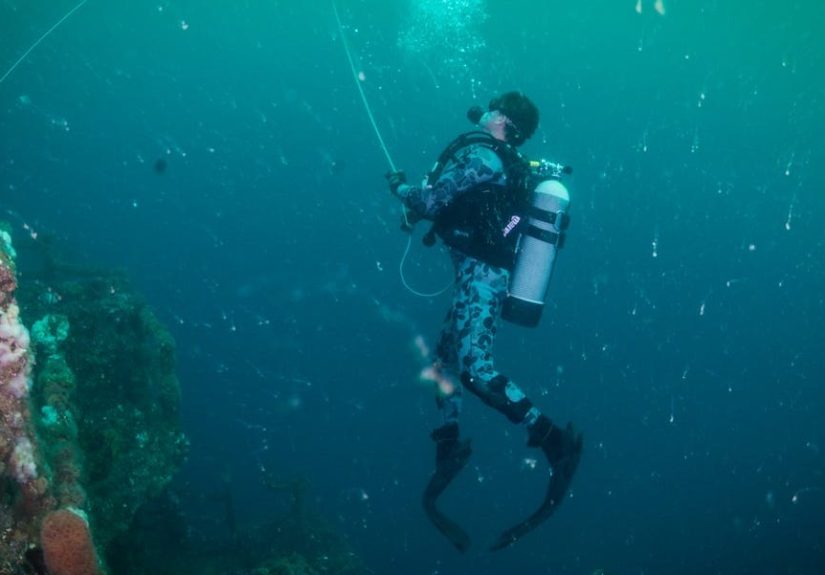
The International Photography Awards, often called IPA, announced its 2025 category winners across professional and non-professional divisions. In the professional nature category, Sho Otani of Japan earned Nature Photographer of the Year for The Beautiful of Floating Babies, a blackwater-style image that highlights the mysterious elegance of tiny marine life. The image stands out because it does not rely on a giant predator or dramatic mountain range. Instead, it invites viewers into a delicate underwater world where small creatures look almost cosmic.
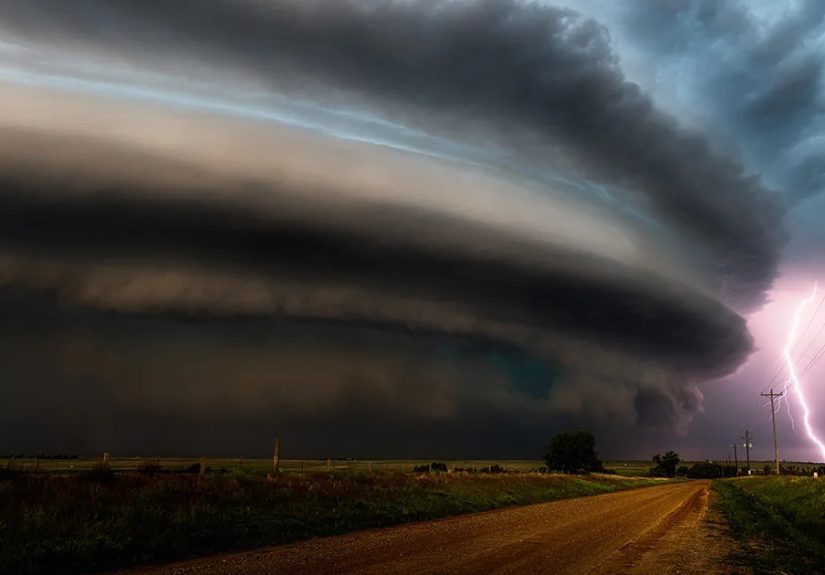
On the non-professional side, Ilene Meyers of the United States was recognized for Iowa Storm Cell, a powerful weather image that turns the sky into architecture. Storm photography can easily become a contest of “who found the angriest cloud,” but this kind of winning frame depends on structure, timing, atmosphere, and safety. The result is nature photography as drama, but with better lighting than most Hollywood finales.
International Landscape Photographer Of The Year 2025: The Power Of Place
The 2025 International Landscape Photographer of the Year Awards placed J. Fritz Rumpf of the United States at the top as Photographer of the Year. Karol Nienartowicz of Poland took second place, and Joyce Bealer of the United States took third. For single-image honors, Lukas Trixl of Austria was named Photograph of the Year, followed by Albert Dros of the Netherlands and Dave Drost of the United States.
What makes these results especially useful for anyone studying nature photography is the distinction between one spectacular image and a strong portfolio. A single winning landscape can be a lightning strike. A winning portfolio is more like weather: consistent, atmospheric, and impossible to fake for long. Landscape photography in 2025 rewarded photographers who could combine mood, composition, color discipline, and post-processing restraint without making Earth look like it had been dipped in neon syrup.
Special Award Highlights
The special awards also showed how diverse landscape work has become. Categories such as Black and White, Seascape, Snow and Ice, Stormy Sky, and Lone Tree allowed photographers to focus on specific visual challenges. These subcategories matter because they encourage deeper seeing. A lone tree is not just a tree. In the right frame, it becomes scale, solitude, weather, endurance, and maybe the world’s most patient model.
World Nature Photography Awards 2025: A Snowy Vineyard Steals The Show
One of the most widely discussed winners of the year came from the World Nature Photography Awards. Slovenian photographer Maruša Puhek was named World Nature Photographer of the Year for Run, an aerial image of two deer moving through a snow-covered vineyard in Murščak, Slovenia. The photograph works because it resists the temptation to zoom too tightly. The surrounding vineyard rows, blanketed in white, become part of the story. The deer are not isolated trophies; they are small living notes inside a larger winter composition.
That is a useful lesson. Beginners often think nature photography means getting closer. Sometimes it does. Sometimes the better image is the one that steps back and lets the environment speak. In Run, the negative space is not empty. It is the quiet that makes the movement feel alive.
The 2025 World Nature Photography Awards also highlighted category winners across animal portraits, behavior, birds, invertebrates, photojournalism, landscapes, plants, fungi, and underwater subjects. The variety matters because “nature” is not one genre. It is a giant neighborhood, and every resident has a different personality. Some are majestic. Some are microscopic. Some are mushrooms looking suspiciously magical without even paying rent.
Wildlife Photographer Of The Year 2025: The Ghost Town Visitor
The Wildlife Photographer of the Year 2025 title went to South African photographer Wim van den Heever for Ghost Town Visitor. The image shows a rare brown hyena moving through the abandoned diamond-mining town of Kolmanskop in Namibia. Selected from more than 60,000 entries from 113 countries and territories, the photograph became one of the year’s defining nature images because it combines wildlife, history, architecture, and atmosphere in a single frame.
The photograph is not loud. It does not need to be. A brown hyena in a ruined human space already carries enough narrative weight to make a paragraph sit down and behave. The image suggests resilience, decay, adaptation, and the strange poetry of places humans leave behind. It is urban wildlife photography, but with the mood of a ghost story and the ecological message of a documentary.
Young Wildlife Photographer Of The Year
Andrea Dominizi won Young Wildlife Photographer of the Year 2025 with After the Destruction, a close-up of a longhorn beetle set against the background of abandoned machinery in Italy’s Lepini Mountains. The image is small in subject but large in meaning. It turns a beetle into a witness. That is the kind of visual intelligence judges love: technical detail paired with a story about habitat change.
BigPicture 2025: Biodiversity With A Conservation Pulse
The BigPicture Natural World Photography Competition, organized by the California Academy of Sciences, named Donglin Zhou’s Lemur’s Tough Life as the 2025 Grand Prize winner. The photograph captures a mother brown lemur leaping across the sharp limestone formations of Tsingy de Bemaraha Strict Nature Reserve in Madagascar, with her baby clinging to her back. It is action, risk, and family drama packed into one airborne moment.
BigPicture has always leaned strongly into conservation, and the 2025 winners continued that identity. Zhou also won the Terrestrial Wildlife category with For Survival, while other honored work explored aquatic life, human-nature relationships, insects, and endangered habitats. The competition’s best images feel less like decorations and more like invitations: come closer, learn something, and maybe stop treating biodiversity as background wallpaper.
Audubon Photography Awards 2025: Birds Without Borders
The 2025 Audubon Photography Awards expanded beyond the United States and Canada to include Chile and Colombia, a major move that reflects how birds actually live. Birds do not pause at passport control. They migrate across regions, climates, and political boundaries, which makes bird photography a natural tool for talking about hemispheric conservation.
Felipe Esteban Toledo Alarcón won the Grand Prize for a dynamic image of a Ringed Kingfisher diving in Valdivia, Chile. The winning frame captures speed, precision, and the explosive energy of a bird entering water. In the U.S. and Canada contest, Parham Pourahmad won the Youth Prize for a Long-eared Owl photographed in Fremont, California, showing the bird in flight within its habitat. These images prove that bird photography is not only about feather detail. It is about behavior, environment, and that magical half-second when the bird does something spectacular and the photographer does not accidentally photograph a branch.
Annual Photography Awards 2025: Nature In The Details
The Annual Photography Awards named Przemysław Kryściak the 2025 Nature Grand Prize winner for Microcosm. The title alone tells you where the strength lies: in the close, overlooked, intricate world that many people walk past without noticing. Macro and small-scale nature photography had a strong year because it challenges the idea that “epic” must mean enormous. Sometimes epic is a tiny universe living on a leaf, in water, or under a patch of light most people would ignore.
That is one reason nature photography remains so democratic. Not everyone can travel to Antarctica, Madagascar, or Namibia. But careful observation can begin in a yard, a park, a garden, or even beside a sidewalk after rain. The winners of 2025 remind photographers that the real equipment upgrade is often attention.
Nature Photographer Of The Year 2025: Motion, Mood, And Mystery
Norwegian photographer Åsmund Keilen earned the Nature Photographer of the Year 2025 title for Sundance, an ethereal image of a bird flying against the glowing sun. The photograph feels almost abstract, using light, silhouette, and motion to transform a familiar subject into something dreamlike.
That kind of image is difficult because it sits between documentation and art. Too literal, and it becomes ordinary. Too manipulated-looking, and viewers may stop trusting it. The best nature photography in 2025 often lived in this middle space: truthful enough to carry documentary value, artistic enough to make people stop scrolling, and elegant enough to avoid screaming, “I found the saturation slider and nobody can stop me.”
Nature’s Best Photography Awards 2025: Conservation Takes Center Stage
Nature’s Best Photography Awards 2025 showcased a broad range of wildlife, landscape, ocean, polar, conservation, and youth photography. Recognized works included dramatic polar scenes, underwater life, conservation stories, animal behavior, and landscapes that reveal the beauty and vulnerability of wild places. The awards continue to be important because they connect visual excellence with conservation awareness, showing that a beautiful photograph can also carry responsibility.
In 2025, conservation-focused images felt especially urgent. A sea turtle rescue, wildlife near pollution, polar animals in changing environments, and marine ecosystems all pointed toward the same message: nature photography is not just about what we admire. It is about what we may lose if admiration never becomes action.
What The 2025 Winners Teach Photographers
1. Story Beats Spectacle
A technically perfect photograph can still feel forgettable if nothing is happening emotionally or narratively. The strongest 2025 winners had story built into the frame: a hyena reclaiming a ghost town, a beetle framed by signs of habitat destruction, a lemur leaping with her baby, deer carving movement through snow.
2. Small Subjects Can Win Big
Blackwater subjects, insects, birds, fungi, and tiny ecological details earned serious attention. This is encouraging for photographers without giant travel budgets. You do not need a private helicopter and a lens the size of a submarine sandwich. You need patience, curiosity, and the humility to notice small things.
3. Habitat Matters
Many winning images placed animals inside meaningful environments. Habitat gives context. A close-up can be powerful, but a subject within its world often tells a fuller story. The background is not decoration; it is evidence.
4. Ethics Are Part Of The Image
Modern nature photography increasingly values ethical field behavior. That means avoiding disturbance, respecting protected areas, not baiting animals irresponsibly, and never treating wildlife like unpaid studio talent. The best image is not worth harming the subject. No award can fix that.
Experience Notes: What It Feels Like To Chase A Winning Nature Photograph
Anyone who looks at the best nature photography of 2025 might imagine the process as glamorous: golden light, dramatic landscapes, rare animals, and a photographer calmly clicking the shutter while looking like a jacket model for an outdoor brand. The reality is usually less elegant. Nature photography is often a long conversation with discomfort. You wait. Your legs fall asleep. The bird leaves. The light improves exactly three minutes after you pack your bag. A mosquito treats your ankle like an all-you-can-eat buffet. Then, once in a while, everything lines up.
The 2025 international photo awards winners show that memorable images are rarely accidents, even when luck is involved. Maruša Puhek’s snowy vineyard deer worked because she carried a camera during a daily project. Wim van den Heever’s ghostly hyena image worked because he studied a location and trusted a long-term idea. Donglin Zhou’s lemur photograph worked because she was ready for a decisive moment in a difficult environment. These examples teach a simple but slightly annoying truth: luck visits prepared photographers more often.
One useful experience for aspiring nature photographers is to practice “slow looking.” Pick one location and return again and again. It can be a local pond, a city park, a coastal path, a wooded trail, or a backyard corner where insects stage tiny dramas like Shakespeare with antennae. At first, the place may seem ordinary. After several visits, patterns appear. Birds land on the same branches. Light hits one patch of grass at the same hour. Dragonflies patrol a route. Leaves create natural frames. The location starts giving away secrets, but only after it decides you are not just passing through.
Another lesson from the 2025 winners is that weather is not the enemy. Snow made Run memorable. Sea fog helped shape the mood of Ghost Town Visitor. Storm structure gave power to Iowa Storm Cell. Mist, rain, cold, dust, and darkness can all become collaborators if handled safely. Clear blue noon light is pleasant for picnics, but for photography it can be about as dramatic as a spreadsheet wearing socks.
Field experience also teaches restraint. When a scene is beautiful, the urge is to photograph everything from every angle at the speed of a startled squirrel. But stronger images often come from asking better questions: What is the story? What should be included? What should be left out? Is the subject stronger close-up or small within the landscape? Does the frame explain something about behavior, habitat, or mood? The best photographers are not just collectors of scenes; they are editors in real time.
Finally, the emotional experience matters. Nature photography builds patience, attention, and respect. You begin to understand that wildlife is not performing. Landscapes are not props. Weather does not care about your schedule. That humility is part of the craft. The best nature photography of 2025 is inspiring not because every viewer can immediately reproduce it, but because it reminds us to look harder. The world is still full of astonishing scenes. Some are in Madagascar. Some are in Namibia. Some are in a patch of grass five minutes from home, waiting for someone to notice.
Conclusion
The best nature photography of 2025 proves that award-winning images are no longer judged by beauty alone. The strongest winners combine technical excellence with story, ethics, timing, and ecological meaning. From the International Photography Awards to Wildlife Photographer of the Year, from BigPicture to Audubon, the year’s most memorable photographs show a planet that is fragile, funny, fierce, and still wildly photogenic.
For photographers, the message is refreshingly practical: learn your subject, respect the environment, return often, and be ready when the ordinary suddenly becomes extraordinary. Nature does not always pose on command. But when it does, try not to leave the lens cap on. That is not an official rule, but it probably should be.
Note: This publication-ready article was written from verified 2025 award results and reputable photography coverage. Source links were not inserted into the body text to keep the HTML clean for web publishing.