Table of Contents >> Show >> Hide
- What Is Syringe Painting?
- The Story Behind “Inject Art”
- Why A Nurse’s Eye Makes The Art Different
- The Visual Language Of Syringe Art
- Art, Stress, And The Nurse’s Need To Breathe
- Safety Matters: The Studio Is Not A Hospital Supply Closet
- Why This Kind Of Art Goes Viral
- The Vermilion Series: Why Red Speaks So Loudly
- What Artists Can Learn From Syringe Painting
- What Nurses Can Learn From The Story
- Experience Section: What Syringe Painting Feels Like From The Inside
- Conclusion
Most people see a syringe and think of medicine, lab work, vaccines, hospital routines, or that tiny moment when everyone suddenly becomes very interested in the ceiling tiles. But in the hands of a nurse-artist, the same familiar medical tool can become something wildly unexpected: a paint applicator, a line-maker, a storytelling device, and, yes, the world’s most dramatic substitute for a brush.
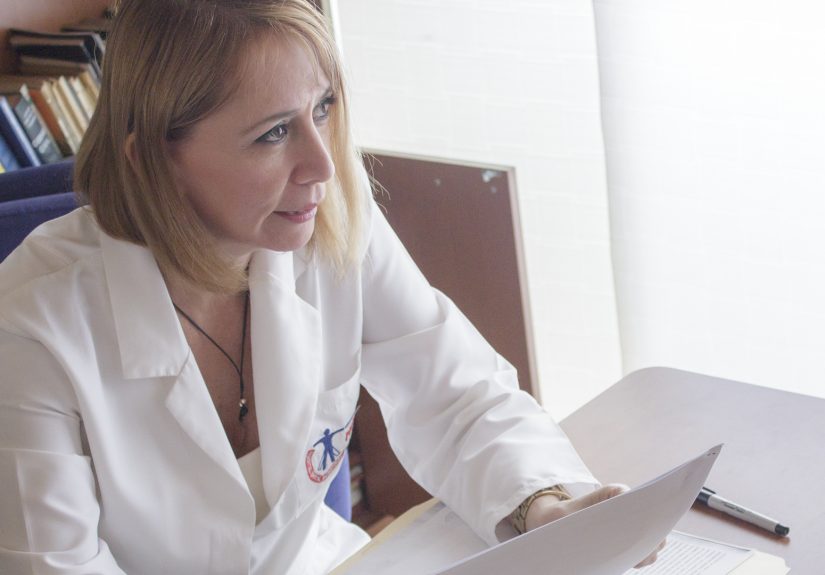
“I’m A Nurse And I Use Syringes To Paint (Part 4)” is more than a quirky headline. It points to a fascinating creative crossover where clinical precision meets emotional expression. The idea became popular through the work of Kimberly Joy Mallo Magbanua, a nurse-artist known online for turning syringes into tools for vibrant, energetic paintings. Her work, often associated with the phrase “Inject Art,” blends healthcare, self-taught creativity, color, and a surprising amount of patience. Because apparently painting with a regular brush was not challenging enough.
This article takes a deeper look at syringe painting as an art form, why it connects so strongly with audiences, how nursing and creativity overlap, and why safe handling matters when medical imagery enters the studio. It also explores the emotional side of making art after long shifts, because anyone who has worked in healthcare knows that stress does not clock out politely at the end of the day.
What Is Syringe Painting?
Syringe painting is a nontraditional painting technique in which paint is applied through a syringe-like tool instead of a conventional brush. The result can look like controlled scribbles, delicate strands, layered lines, textured loops, or splashes of color that feel both spontaneous and intentional. It is not quite drip painting, not quite drawing, and not quite calligraphy. It sits somewhere in the wonderfully weird middle, wearing scrubs and carrying a color palette.
In the context of a nurse-artist, the syringe becomes symbolic. It is not just a tool; it is a bridge between two identities. For a nurse, syringes are associated with care, precision, responsibility, and routine. For an artist, they become instruments of freedom, motion, and emotional release. That contrast is what makes the concept so memorable. A medical object normally connected to treatment becomes a source of beauty.
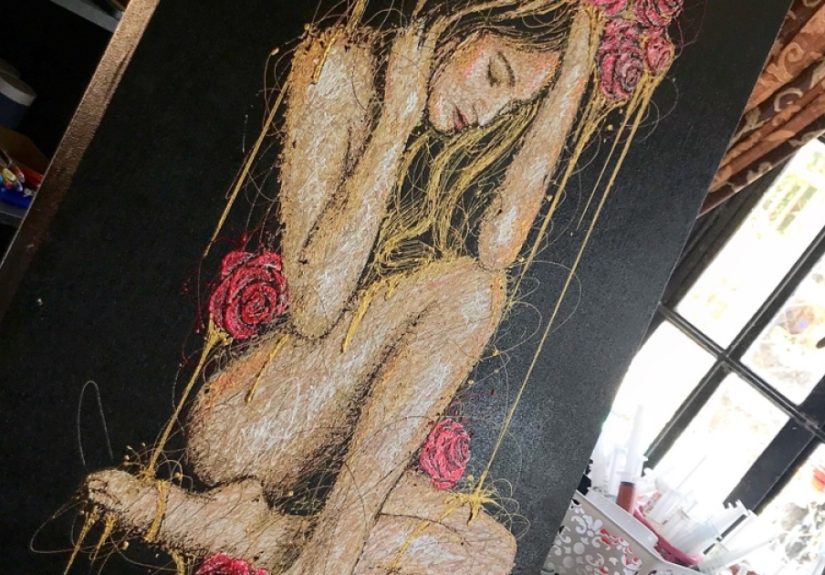
The appeal also comes from the visual effect. Syringe-applied paint can create thin, energetic lines that look almost alive. On dark backgrounds, bright colors appear electric. The marks can seem nervous, joyful, chaotic, or meditative depending on the subject. A flower can feel like it is vibrating. A portrait can look like it is made of memories. A bird can appear ready to fly straight off the canvas and complain about hospital coffee.
The Story Behind “Inject Art”
The nurse-artist associated with this viral style, Kimberly Joy Mallo Magbanua, has been described as a self-taught creative who found a way to merge her profession and passion. Reports about her work describe how the idea came to her while she was performing ordinary nursing duties. The object in her hand was practical, familiar, and clinical. Then the creative part of her brain did what creative brains love to do: it asked, “What else could this be?”
That question is the birthplace of many great art experiments. A cardboard box becomes a sculpture. Old fabric becomes a quilt. A coffee stain becomes a suspiciously good abstract painting. In Magbanua’s case, a syringe became a paintbrush with a medical-school accent.
Her early syringe paintings included portraits, animals, religious imagery, floral themes, and pieces connected to her personal reflections. The Part 4 work, known through Bored Panda’s feature, included “Bare Vermilion” as part of her Vermilion Series. The color choice is important. Vermilion is bold, warm, and emotionally loud. It does not enter a room quietly. It brings snacks, starts a conversation, and somehow becomes the center of attention.
Why A Nurse’s Eye Makes The Art Different
Nursing is often described as both a science and an art. That is not just a pretty sentence people print on mugs. Nurses observe subtle changes, work under pressure, use their hands with accuracy, and constantly translate human needs into action. Those same skills can shape visual art.
A nurse learns to notice small details: the change in a patient’s breathing, the angle of a hand, the tension in a face, the silence that says more than words. In art, those details matter too. A slight curve can change an expression. A tiny color shift can make a flower feel warm instead of flat. A line placed one millimeter differently can turn “thoughtful” into “why did I just send that text?”
Syringe painting rewards that kind of attention. The artist must manage pressure, direction, flow, timing, and layering. Too much pressure and the line can become messy. Too little and the mark may disappear. It is a delicate balance, much like nursing itself, where skill often lives in the space between speed and care.
The Visual Language Of Syringe Art
One of the strongest features of syringe painting is its line quality. Brushes can glide, smear, feather, and blend. Syringes, by contrast, can create raised threads, sharp curves, dots, and sudden bursts. The marks often carry a sense of motion. They look like they were made quickly, but good results require control.
Color That Feels Alive
Many syringe paintings stand out because of their use of high-contrast color. Bright pigments over black or dark backgrounds create a glowing effect. This approach gives the artwork intensity, almost like neon signage met fine art and decided to become emotionally complicated.
Texture That Adds Energy
Because syringe-applied paint can sit on the surface in raised lines, the artwork gains physical texture. Viewers do not just see color; they sense movement. The surface can feel active, as though the image is still forming itself.
Controlled Chaos
The technique can look loose, but that looseness is part of the charm. Syringe painting often creates a balance between chaos and structure. It may appear spontaneous at first glance, yet the finished image still holds together. That tension keeps the viewer looking.
Art, Stress, And The Nurse’s Need To Breathe
Healthcare work can be deeply meaningful, but it can also be exhausting. Nurses often carry emotional weight from long shifts, patient suffering, staffing pressure, and the constant need to stay alert. Creative work can become a personal outlet, a way to process what words cannot easily explain.
Professional art therapy is a clinical mental health field led by credentialed art therapists, and it is different from simply making art at home. Still, creative activities can support relaxation, reflection, and emotional expression. For many people, including healthcare workers, painting becomes a form of personal grounding. It offers a place where the day’s noise can settle into color.
That is part of why the nurse-painting-with-syringes story resonates. It is not only about a surprising technique. It is about reclaiming a familiar object from the workplace and turning it into something personal. The syringe no longer represents only urgency or routine. It becomes a tool for imagination.
Safety Matters: The Studio Is Not A Hospital Supply Closet
Any discussion of syringe painting should include a clear safety note. Medical sharps are not casual craft supplies. In healthcare settings, organizations such as the CDC and OSHA emphasize the risks of needlestick and sharps injuries, especially when devices are contaminated or handled carelessly. That is why safety-engineered devices, proper disposal, training, and exposure-control practices matter.
For art inspiration, the safest approach is to avoid sharp needles entirely and use non-sharp applicators, blunt-tip tools designed for craft use, squeeze bottles, piping tools, or other art-safe alternatives. The goal is creativity, not turning a studio table into a miniature occupational safety seminar with glitter.
Magbanua’s story has been described in coverage as involving clean, unused tools and careful hygiene. That distinction matters. The artistic idea is exciting, but it should never be confused with reusing medical waste or handling clinical supplies irresponsibly. Art should leave viewers breathless because it is beautiful, not because someone ignored basic safety.
Why This Kind Of Art Goes Viral
People love art that comes with a story. A beautiful painting is already interesting, but a beautiful painting made with an unexpected tool becomes instantly shareable. The internet has a soft spot for “wait, how did they do that?” moments. Syringe painting fits perfectly into that category.
There is also a strong emotional hook. A nurse making art with a tool from her profession feels sincere and human. It reminds viewers that healthcare workers are not only uniforms and job titles. They are painters, poets, parents, students, musicians, gardeners, bakers, and people who may own far too many half-used sketchbooks. The artwork widens the image of what a nurse can be.
In a culture that often talks about nurses only during crises, creative stories offer another view. They show nurses as whole people with imagination, humor, talent, and private worlds beyond the hospital corridor.
The Vermilion Series: Why Red Speaks So Loudly
The Vermilion Series carries a strong visual and symbolic punch. Vermilion, a vivid red-orange tone, naturally suggests warmth, life, energy, passion, urgency, and emotion. In the hands of a nurse-artist, it can also echo the intensity of clinical life without needing to become literal or graphic.
Color psychology is not a magic decoder ring, but color does influence how viewers experience an artwork. Red tones tend to feel active. They move forward visually. They demand attention. In floral artwork, vermilion can make petals feel dramatic and alive. In abstract lines, it can create a sense of motion. In portraits, it can suggest heat, courage, or vulnerability.
That is why a title like “Bare Vermilion” works well. It sounds stripped down, emotional, and bold. It suggests that the painting is not hiding behind softness. It is showing its pulse.
What Artists Can Learn From Syringe Painting
Syringe painting teaches a valuable creative lesson: tools do not define art; intention does. A brush is wonderful, but it is not the only path to expression. Artists have used palette knives, sticks, sponges, toothbrushes, fingers, thread, air, gravity, and more. A syringe, used safely in an art context, becomes another example of material curiosity.
The technique also reminds artists to experiment. Sometimes a fresh method changes the way you think. A different tool can break old habits. It can force the hand to move differently, make lines less predictable, and help the artist discover a new visual rhythm.
For beginners, the lesson is not “copy the tool exactly.” The lesson is “look at ordinary objects differently.” Maybe your next art breakthrough is not hiding in an expensive supply store. Maybe it is sitting in a drawer, pretending to be boring.
What Nurses Can Learn From The Story
For nurses, this story offers something deeper than novelty. It shows that professional identity and personal creativity do not have to compete. The same discipline that helps someone care for patients can also shape meaningful art. The same hands that perform careful clinical tasks can create color, motion, and beauty.
It also supports a wider conversation about nurse well-being. Creative outlets are not a cure-all for burnout, and they cannot replace safe staffing, strong leadership, fair schedules, or mental health support. Let us not hand someone a paint set and pretend it solves a twelve-hour shift with no lunch break. But creative expression can be one meaningful piece of a healthier life outside work.
Making art allows a nurse to step out of constant service mode. It creates a space where there is no call light, no charting queue, no alarm tone, and no one asking where the extra blankets are. There is just color, breath, and the next line.
Experience Section: What Syringe Painting Feels Like From The Inside
Imagine finishing a long shift and coming home with your mind still buzzing. The day has ended, but your thoughts have not received the memo. You wash your hands, change clothes, drink water, and sit in front of a blank canvas. At first, the silence feels strange. After a hospital shift, quiet can be so rare that it almost sounds suspicious.
Then the paint comes out. The colors wait like tiny bottled moods. Red for urgency. Yellow for relief. Blue for the breath you forgot to take. Green for the patient who smiled. White for the part of the day that still feels unfinished. The tool in your hand is familiar, but the purpose is completely different. Instead of delivering medicine, it delivers color. Instead of following an order, it follows feeling.
The first line is always the hardest. It is a small act of trust. You press gently, and paint moves across the surface. Maybe it comes out too fast. Maybe the line breaks. Maybe it makes a weird little blob that looks like a confused tadpole. Fine. Art is generous that way. It allows accidents to become texture.
As the painting grows, the body starts to relax. The focus shifts from everything that happened during the shift to what is happening right now. A curve. A dot. A strand of paint. A color crossing another color. The process becomes almost meditative. You are not trying to explain the day anymore. You are translating it.
There is something powerful about using a healthcare-associated shape in a creative way. It does not erase the seriousness of nursing. It does not make hard days magically easy. But it does reclaim a little space. It says, “This tool belongs to care, but it can also belong to imagination.” That shift can feel surprisingly healing.
Viewers may see the finished painting and focus on the unusual technique. They may ask how it was made, how long it took, or whether the lines were difficult to control. Those questions are fair. But behind the technique is an emotional routine: the decision to create after giving so much energy to others. That decision matters.
For a nurse-artist, painting can become a private after-shift ritual. It may begin with fatigue, but it often ends with a small sense of return. The artist returns to herself. The day becomes less heavy. The canvas holds what the mind no longer has to carry alone.
And yes, there will be mistakes. Paint may clog. Lines may misbehave. A planned flower may turn into something that looks like a dramatic sea creature. But that is part of the fun. Creative practice is not about perfect control. It is about showing up, experimenting, and letting the work become honest.
That is the real charm of “I’m A Nurse And I Use Syringes To Paint (Part 4)”. It is not just a clever art gimmick. It is a reminder that creativity can grow from the most unlikely places. Even in a profession built around pressure, precision, and responsibility, there is still room for play. There is still room for color. There is still room to inject a little art into life, preferably with excellent safety habits and absolutely no glitter near the charting station.
Conclusion
Syringe painting stands out because it transforms expectation. A tool associated with clinical care becomes a vehicle for color, rhythm, and self-expression. In the work of a nurse-artist like Kimberly Joy Mallo Magbanua, that transformation feels especially meaningful. It reflects the precision of nursing, the emotional release of painting, and the universal human need to make something beautiful from the materials life places in our hands.
Part 4 of this story continues the appeal of syringe art by showing how an unusual method can become a recognizable artistic voice. Whether viewers come for the technique, the colors, the nursing connection, or the simple joy of seeing something unexpected, the message is clear: creativity does not always arrive with a fancy brush. Sometimes it shows up wearing scrubs.