Table of Contents >> Show >> Hide
- VIN Basics in Plain English
- Way #1: Decode a VIN by Hand (Yes, Like a Car Detective)
- Way #2: Use the Official NHTSA / vPIC VIN Decoder (The “Government-Backed” Option)
- Way #3: Decode Through the Manufacturer (and the People Who Fix These Things)
- Way #4: Decode + Validate With Vehicle History Databases (Because Life Happens to Cars)
- How to Spot a VIN That Doesn’t Smell Right
- FAQ: Quick VIN Questions People Actually Ask
- Real-World Experiences Decoding a VIN (The “This Is Why It Matters” Stories)
- Conclusion: Decode Smart, Not Hard
A VIN (Vehicle Identification Number) is your car’s fingerprint, barcode, and government-issued name tag all rolled into one.
It’s 17 characters long (for most modern vehicles), and it can tell you who built the vehicle, what kind of vehicle it is,
and a surprising amount of detailif you know how to read it (or where to plug it in).
Whether you’re shopping for a used car, ordering parts, checking a listing that feels a little “too good to be true,” or just
trying to win an argument at a family cookout (“No, Uncle Dan, it’s not a 2022… it’s a 2012”), decoding a VIN can save you time,
money, and headaches.
Below are four practical ways to decode a VIN, from old-school DIY decoding to official databases. Along the way,
you’ll get examples, a quick VIN anatomy lesson, and a few “red flag” tips to help you spot VIN weirdness.
VIN Basics in Plain English
In the United States, the VIN format used on modern road vehicles is standardized. That means the VIN isn’t randomeach position has a job.
Think of it like a 17-character sentence where every character is a word with a specific role.
Where you’ll usually find the VIN
- Driver-side dashboard near the windshield (visible from outside)
- Driver-side door jamb (on a sticker/plate)
- Paperwork like registration, insurance documents, and sometimes the title
Quick VIN anatomy (the “who, what, and which one”)
| VIN positions | What it generally means | Why you care |
|---|---|---|
| 1–3 | World Manufacturer Identifier (WMI) | Identifies the manufacturer and vehicle type |
| 4–8 | Vehicle Descriptor Section (VDS) | Describes key attributes (varies by maker) |
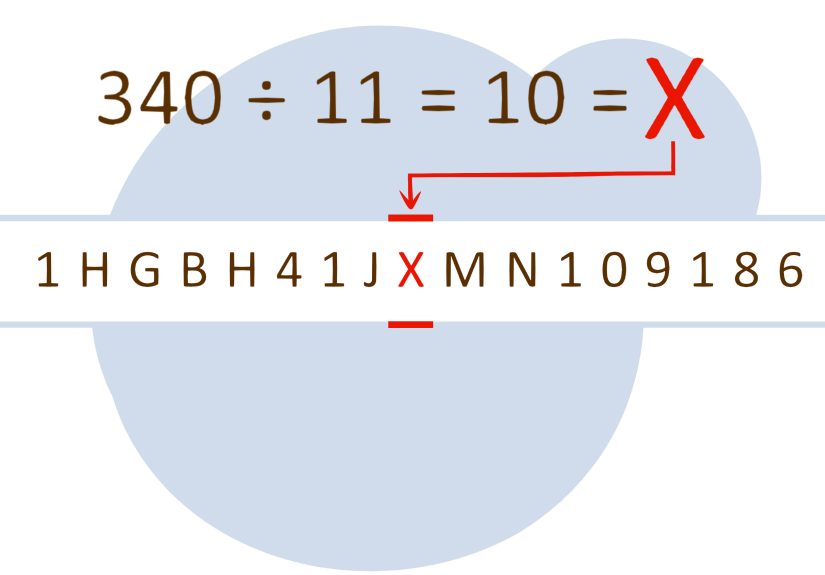
| 9 | Check digit | Helps verify the VIN wasn’t mistyped |
| 10 | Model year code | Helps identify the vehicle’s model year |
| 11 | Plant code | Identifies the assembly plant (maker-specific) |
| 12–17 | Serial/production number | Identifies the specific vehicle in production |
Also, a fun VIN trivia nugget you can use exactly once at a party: VINs generally avoid confusing letters like
I, O, and Q (because they look like 1, 0, and… chaos).
Way #1: Decode a VIN by Hand (Yes, Like a Car Detective)
Hand decoding is the best option when you want a quick read on the basicsespecially if you’re looking at a vehicle in person,
reviewing paperwork, or you don’t want to rely on a single online result.
Step-by-step: A real-world example
Let’s use a sample VIN to show how the pieces fit together:
1HGCM82633A004352
-
Positions 1–3 (WMI): 1HG
This identifies the manufacturer and vehicle type. The first character also points to the country/region where the manufacturer is registered. -
Positions 4–8 (Descriptor): CM826
This is where things get brand-specific. These characters describe attributes like model line, body style, engine type,
restraint systems, and more. The exact meaning depends on the manufacturer’s coding. -
Position 9 (Check digit): 3
This character is calculated from the rest of the VIN using a standardized formula. It’s mainly there to catch typos
(not to guarantee the vehicle is honest and noble). -
Position 10 (Model year): 3
In the model year code system, a “3” can correspond to a model year ending in 3 (the exact decade depends on context).
This is why decoding often works best when you pair the VIN with other clues (listing year, body style, safety tech, etc.). -
Position 11 (Plant): A
The plant code identifies where the vehicle was assembled. The meaning of “A” varies by manufacturer. -
Positions 12–17 (Serial number): 004352
This is the production sequence numberbasically the vehicle’s “unique ID” within that plant/line/year setup.
A mini cheat sheet for the model-year code
The 10th character represents the model year, but the codes repeat over timeso you should always sanity-check the decade.
Here’s a small slice of the year-code idea (helpful for modern vehicles):
| 10th character | Common model-year mapping (recent examples) |
|---|---|
| L | 2020 |
| M | 2021 |
| N | 2022 |
| P | 2023 |
| R | 2024 |
| S | 2025 |
| T | 2026 |
| V | 2027 |
| W | 2028 |
| X | 2029 |
Pro tip: The model year is not always the same as the build date. A late-year build (say, August–December) may be sold as the next model year.
That’s normal. The VIN is often your most reliable “official” clue for model-year identification.
When hand decoding is enough
- You want to confirm the model year quickly.
- You’re checking that a seller’s listing matches the car in front of you.
- You need the basic identity for insurance, registration, or parts.
- You’re verifying that the VIN is formatted correctly and doesn’t look “off.”
Way #2: Use the Official NHTSA / vPIC VIN Decoder (The “Government-Backed” Option)
If you want an authoritative baseline decode for many vehicles sold in the U.S., using the official NHTSA-powered VIN decoder
is one of the simplest and most credible methods. It’s designed to pull standardized vehicle details associated with VIN patterns.
How it works (in real life)
- Copy the VIN (triple-check characters like 5/S and 8/B).
- Paste it into the VIN decoder.
- If you have the model year from the listing or paperwork, include it when possible to reduce ambiguity.
- Review decoded fields like make, model, body class, engine info, and safety-related descriptors.
Why this method is great
- Consistency: It uses a standardized decoding approach tied to regulatory VIN structure.
- Clarity: It can confirm core identity details fast (make, model, year range, body class, etc.).
- Scale: The vPIC API also supports decoding for workflows (handy for dealerships, shops, or data nerds).
Limitations (so you don’t over-trust it)
- Options may be incomplete: Some trims/packages aren’t fully represented in VIN decoding outputs.
- “Not Applicable” happens: Data can be missing or standardized fields may not map cleanly for every vehicle.
- Older vehicles vary: Pre-standardization VINs (often pre-1981) can be tricky or unsupported in typical decoders.
In other words: the official decoder is excellent for verifying fundamentals, but if you’re trying to confirm a very specific trim
(“Is this the turbo-with-the-moonroof-and-the-secret-handshake package?”), you may need method #3.
Way #3: Decode Through the Manufacturer (and the People Who Fix These Things)
Manufacturers and repair ecosystems use VINs as precision tools. Dealership parts counters, OEM service platforms, and repair databases
often decode VINs down to the “exactly which version of this model” levelbecause ordering the wrong component is expensive,
time-consuming, and makes everyone grumpy.
What you can often get from manufacturer-based decoding
- Exact engine and transmission family
- Specific restraint system configuration
- Factory-installed packages or major equipment groups (varies widely)
- Build/production details used for parts compatibility
A practical example: the “same model, different parts” problem
Let’s say two vehicles have the same year, make, and model on paper. One has a different brake package, alternator amperage, or
emissions equipment configuration. That difference can be hidden in the descriptor portion of the VIN or mapped in the manufacturer’s system.
This is why you’ll often see parts listings ask for a VIN: it’s not personal. It’s accuracy.
Where this method shines
- You’re ordering parts and want to avoid the dreaded “it doesn’t fit” return cycle.
- You’re confirming a trim/package when buying used.
- You’re checking for vehicle-specific service details or configurations.
If you’re not a dealership and don’t have access to factory systems, many repair-data platforms and shops can still help decode VIN-specific
configurations for common service and parts identification tasks.
Way #4: Decode + Validate With Vehicle History Databases (Because Life Happens to Cars)
Decoding tells you what the vehicle is. Vehicle history tools help you understand what the vehicle has been through.
If you’re buying used, this is where VIN decoding becomes a practical superpower rather than a trivia skill.
Free validation: NICB VINCheck
A smart (and free) move is running the VIN through NICB VINCheck, which can flag whether a vehicle has been reported as stolen (and not recovered)
or reported as salvage by participating insurers. It’s not a full history report, but it’s a helpful safety net.
Paid history reports: CARFAX / AutoCheck (and similar)
Paid vehicle history reports often compile information from multiple sources and present it as a timeline. Depending on what data is available,
a report may include:
- Title history (including brands like salvage/rebuilt/junk, where reported)
- Accident or damage events (where recorded)
- Odometer readings and potential inconsistencies
- Ownership history (number of owners, usage like rental/fleet, etc.)
- Service and inspection entries (when shared/reportable)
Reality check: A history report is powerful, but it isn’t omniscient. Some repairs never hit databases,
some events are reported late, and some details vary by state systems and reporting channels. The best approach is “report + inspection + common sense.”
How to Spot a VIN That Doesn’t Smell Right
VIN decoding is also a fraud-prevention tool. You don’t need to be a mechanic to notice VIN red flagsjust a little observant.
Common red flags
- VIN mismatch between the dashboard plate, door jamb sticker, and paperwork.
- Odd-looking rivets, scratched plates, misaligned stickers, or signs of tampering around VIN plates.
- Characters that shouldn’t appear (like I, O, or Q) or a VIN length that doesn’t match the vehicle’s era.
- A seller who gets weirdly defensive when you ask for the VIN (this is not a normal reaction from honest people).
If something feels off, don’t argue. Just step back, verify with official sources, and consider a professional inspection or walking away.
There will always be another car.
FAQ: Quick VIN Questions People Actually Ask
Is a VIN the same as a license plate number?
Nope. License plates can change. A VIN is assigned to the vehicle and is designed to uniquely identify it.
Can two vehicles share the same VIN?
In legitimate manufacturing, no. If you find duplicates in listings or paperwork, that’s a serious red flag worth investigating.
Why does my VIN decode show missing fields?
Some databases don’t have every detail for every vehicle, and some features aren’t reliably encoded in the VIN for all manufacturers.
Try a second reputable decoder and cross-check with paperwork or the manufacturer when it matters.
What if the car is older and doesn’t have a 17-character VIN?
Many older vehicles used non-standardized VIN formats. You’ll need manufacturer-specific references, classic vehicle resources,
and sometimes state inspection/verification processes to confirm identity.
Real-World Experiences Decoding a VIN (The “This Is Why It Matters” Stories)
VIN decoding sounds a little nerdy until you’re standing in a parking lot staring at a used car that looks perfect… and you’re trying to figure out
whether it’s actually the trim level the seller promised. In real life, decoding a VIN is less “fun fact” and more “financial self-defense.”
One common experience happens during used-car shopping: the listing says “one-owner, clean title, top trim,” and the photos look great.
But when a buyer runs the VIN through an official decoder and a vehicle history report, the story gets more complicated. The decoded basics might still match
(make/model/year), but the history timeline could reveal a prior total loss record, a salvage brand, or an odometer inconsistency that wasn’t mentioned.
Even when the seller isn’t intentionally hiding anything, the VIN acts like a truth filterquiet, objective, and refreshingly unbothered by sales pitch energy.
Another very normal scenario: ordering parts. Plenty of drivers have learned the hard way that “same year, same model” does not guarantee “same part.”
A shop might ask for the VIN when you’re buying something as boring as a radiator capbecause there may be multiple engine configurations, emissions packages,
or mid-year changes that affect fitment. In those moments, the VIN is basically the bouncer at the club: it decides what gets in, what doesn’t,
and it absolutely does not care that you “bought this part last time.”
Insurance and theft situations are another place VINs get real fast. If a car is stolen, the VIN is the identifier that matters for police reports and insurance claims.
Drivers often discover they don’t know their VIN until they need it urgentlyso a surprisingly useful life tip is to keep it stored securely (not taped to your window
like a “free car, please take me” sign). People also run VIN checks before buying to avoid stolen or unrecovered vehicles or vehicles that have been branded salvage in insurer records.
VIN decoding also shows up in “moving across states” paperwork moments, when you’re registering a vehicle or dealing with title corrections.
Someone might notice that one character is wrong on a formmaybe a “5” typed as an “S”and suddenly the vehicle doesn’t match the record.
That’s when the check digit and VIN structure become more than trivia. They’re the difference between a quick fix and a DMV saga that feels like it has sequels.
Finally, there’s the everyday “peace of mind” experience: you’re not buying a car, you’re not making a claimyou just want to verify what you have.
People decode VINs to confirm model year for resale value, check configuration before a big repair, or double-check details when comparing insurance quotes.
The VIN is one of the few vehicle details that’s designed to be consistent across documents, databases, and time. Once you learn how to decode it in a few different ways,
you start noticing how often it quietly solves problems before they turn into expensive surprises.
Conclusion: Decode Smart, Not Hard
If you remember nothing else, remember this: a VIN can help you verify identity, confirm the model year, and spot potential red flagsespecially when you combine
manual decoding with an official decoder and (when buying used) a history check.
It’s one of the simplest ways to make a car decision with more facts and fewer vibes.
Use hand decoding for quick verification, use official tools for a strong baseline, lean on manufacturer/repair ecosystems for precision, and use history databases
to understand what the vehicle has lived through. That’s the full “VIN decoding” toolkitno trench coat required.