Table of Contents >> Show >> Hide
- What Made a Tool Stand Out in 2025?
- Best Saws of 2025: Cutting Tools That Earned Their Space
- Best Jobsite Table Saw: DeWalt DWE7491RS 10-Inch Table Saw
- Best Value Table Saw: Skil 15-Amp 10-Inch Portable Table Saw
- Best Circular Saw for General Workshop Use: Makita 5007 Magnesium Circular Saw
- Best Track Saw for Clean Sheet-Good Cuts: Makita SP6000J1
- Best Jigsaw Upgrade: Bosch Barrel-Grip Jigsaw
- Best Drilling and Driving Gear of 2025
- Best Workshop Storage of 2025
- Best Dust Control and Cleanup Gear
- Best Lighting and Safety Gear
- Best Hand Tools and Everyday Workshop Essentials
- How to Choose the Best Workshop Gear for Your Needs
- Experience Notes: What Using 2025 Workshop Gear Taught Us
- Conclusion
A great workshop tool does not need to arrive in a gold-plated case or whisper, “I am professional grade,” when you open the box. It just needs to make your work cleaner, faster, safer, and less likely to end with you standing in the garage at 10:47 p.m. asking why the board is crooked, the bit is missing, and the screw has become emotionally attached to the wall.
In 2025, the best tools and workshop gear were not just the biggest, loudest, or most expensive. The real winners were the tools that solved everyday problems: saws that stayed accurate, drills that fit into awkward corners, storage systems that stopped the great socket migration, lights that actually lit the cut line, and safety gear comfortable enough that people would wear it without acting like they were being punished.
This guide focuses on the best workshop tools of 2025 across saws, storage, drilling, dust control, lighting, safety, and hand tools. Whether you are building cabinets, trimming baseboards, fixing a fence, remodeling a bathroom, or simply trying to turn a chaotic garage into something that does not resemble a hardware store after a raccoon invasion, these are the tool categories and standout examples worth knowing.
What Made a Tool Stand Out in 2025?
The biggest trend in 2025 was not one flashy gadget. It was refinement. Cordless tools became more capable, compact designs got more serious, and workshop storage finally started acting like part of the workflow instead of a plastic tower of regret. Tool brands leaned into brushless motors, better battery platforms, modular boxes, brighter LED work lights, and jobsite-friendly ergonomics.
But the best tools were not judged only by specs. A saw with a high RPM number still has to track straight. A rolling tool box still has to roll when loaded. A shop vac still has to pick up sawdust without coughing half of it back into the room like a dusty dragon. In real use, the best workshop gear balances power, control, durability, convenience, and value.
Best Saws of 2025: Cutting Tools That Earned Their Space
Best Jobsite Table Saw: DeWalt DWE7491RS 10-Inch Table Saw
For serious cutting capacity in a portable jobsite format, the DeWalt DWE7491RS remained one of the most trusted table saw choices. Its 10-inch blade, strong rip capacity, rolling stand, and stable fence system make it a reliable pick for contractors, remodelers, and ambitious DIYers who want repeatable cuts without building a permanent cabinet-saw shrine in the garage.
What makes a jobsite table saw great is not just power. It needs a fence that locks square, a stand that does not wobble like a folding card table, and enough rip capacity for sheet goods and framing lumber. The DeWalt checks those boxes well. It is not tiny, but that is part of the point: when cutting plywood, shelving, deck boards, or trim stock, stability is not a luxury. It is the difference between “nice cut” and “well, caulk exists.”
Best Value Table Saw: Skil 15-Amp 10-Inch Portable Table Saw
The Skil 15-amp portable table saw deserves attention because it brings solid cutting power and approachable usability to a price range that makes sense for many homeowners. It is the kind of table saw that works well for weekend builders, garage woodworkers, and first-time remodelers who need clean rips but are not ready to spend professional cabinet-saw money.
Its folding stand, 15-amp motor, and practical fence setup make it especially appealing for small shops. The best value tools are not cheap toys; they are tools that do 90 percent of the work most users actually need. For cutting shelving, trim, plywood, and project lumber, this saw hits that sweet spot.
Best Circular Saw for General Workshop Use: Makita 5007 Magnesium Circular Saw
A circular saw is still the workhorse of the workshop. The Makita 5007 Magnesium stands out because it combines strong cutting speed, a durable magnesium build, and useful visibility features. With a 15-amp motor and a reputation for smooth cutting, it is well suited for framing lumber, sheet goods, deck boards, and everyday jobsite work.
The reason circular saws remain essential is simple: they go where table saws cannot. Need to break down plywood in the driveway? Circular saw. Need to trim a board before carrying it inside? Circular saw. Need to make one cut and avoid rearranging half the shop? Absolutely circular saw. Pair it with a straightedge or track guide, and it becomes even more useful.
Best Track Saw for Clean Sheet-Good Cuts: Makita SP6000J1
For cabinet work, built-ins, shelving, and furniture projects, a track saw can feel like a cheat code. The Makita SP6000J1 is a standout because it delivers clean, controlled cuts in plywood, hardwood, laminate, and other sheet goods. Its variable speed control helps match the blade speed to the material, and the plunge action gives users more control than a standard circular saw.
A track saw is not always the first saw people buy, but it is often the one that makes them say, “Why did I wait so long?” If your projects involve plywood panels, countertops, doors, or furniture parts, the clean edge and controlled straight-line cutting can save hours of sanding, trimming, and muttering.
Best Jigsaw Upgrade: Bosch Barrel-Grip Jigsaw
The Bosch barrel-grip jigsaw style continued to earn praise in 2025 because it puts your hand closer to the blade, giving more control during curves and detailed cuts. A good jigsaw should cut cleanly, track predictably, and avoid the bouncy, wandering feeling that makes curves look like they were drawn during an earthquake.
Look for features such as variable speed, tool-free blade changes, a dust blower, LED lighting, and solid blade support. For cutting sink openings, curves, notches, and interior cutouts, a quality jigsaw is one of the most useful “second saws” in a workshop.
Best Drilling and Driving Gear of 2025
Best Compact Problem Solver: DeWalt Atomic Multi-Head Drill/Driver
The DeWalt Atomic 20V MAX multi-head drill/driver is the kind of tool that makes sense the first time you are installing hardware inside a cabinet or driving fasteners between joists. With interchangeable heads, including right-angle and offset attachments, it turns one compact drill into a problem-solving system.
This matters because many real projects do not happen in open space. They happen under sinks, inside closets, behind framing, against walls, and in corners apparently designed by someone who disliked wrists. A multi-head drill/driver lets you work where a standard drill cannot fit, and that can be the difference between finishing the job and inventing new vocabulary.
Best High-Torque Category: Advanced Brushless Hammer Drills
In 2025, brushless hammer drills kept getting smarter. The best models delivered more torque, better runtime, and electronic controls that helped users drill straighter and repeat angles more accurately. For homeowners, a standard drill/driver is enough for everyday tasks. But for masonry, lag screws, deck building, anchors, and heavy renovation work, a hammer drill brings the muscle.
When shopping, pay attention to battery platform, chuck quality, weight, grip comfort, and clutch control. The strongest drill is not always the best drill if it feels like holding a bowling ball with a trigger. Balance matters, especially when working overhead.
Best Workshop Storage of 2025
Best Modular Storage System: Flex Stack Pack
Modular storage became one of the most important workshop categories in 2025. The Flex Stack Pack system stood out in testing because of its sturdy latching, drawer access, and jobsite practicality. Drawer-style boxes are especially useful because they let you access lower storage without unstacking everything above it.
If you have ever needed a drill bit from the bottom box while three other boxes were stacked on top, you understand the emotional value of drawers. It is the difference between working and performing a tiny plastic-box demolition project every 12 minutes.
Best Value Modular Storage: Ridgid Pro Gear 2.0
Ridgid Pro Gear 2.0 earned attention as a smart value pick because it offers durable construction, useful drawer options, and weather-resistant storage at a friendlier price. For DIYers and pros who need reliable mobile storage without paying premium-platform prices, Ridgid is a practical choice.
The best modular storage system depends on how you work. Electricians, plumbers, carpenters, mechanics, and homeowners all organize differently. Some need small-parts organizers for fasteners. Some need deep boxes for power tools. Some need drawers for daily-access items. The key is to build a system around tasks, not around whatever happened to be on sale next to the checkout aisle.
Best Rolling Tool Chest for the Garage: Craftsman 26-Inch 5-Drawer Tool Chest Combo
For garage organization, a rolling chest still beats a pile of bags and bins. The Craftsman 26-inch 5-drawer tool chest combo is a strong option for storing sockets, wrenches, pliers, screwdrivers, bits, and other small tools while keeping larger gear in the lower cabinet.
Drawers are underrated. They turn chaos into categories. They keep tools visible. They prevent the classic garage mystery where you own six tape measures but can only find the one with a cracked case and a suspicious bend at the two-inch mark.
Best Dust Control and Cleanup Gear
Best Full-Size Shop Vac: Craftsman Heavy-Duty Wet/Dry Vac
A workshop without a shop vac is just a room slowly becoming sawdust. The Craftsman heavy-duty wet/dry vac category remains a smart pick for general garage and workshop cleanup because a large-capacity tank, strong suction, blower function, and onboard accessories make it versatile.
A good shop vac should handle sawdust, drywall crumbs, small debris, wet spills, and the mysterious gravel that appears in garages even when no one invited it. For woodworking, pair your vac with proper filters and dust collection attachments. Fine dust is not just messy; it is bad for lungs, finishes, motors, and the general vibe of a clean workspace.
Best Portable Cleanup Option: Cordless Wet/Dry Vac
Cordless wet/dry vacs became increasingly useful in 2025 because they are easy to grab for small messes. They will not replace a full-size dust collector, but they are excellent for cleaning inside cabinets, cars, tool drawers, window tracks, and small workshop spills.
If you already own batteries from a major cordless platform, a cordless vac can be one of the most convenient add-ons in your shop. The best tool is sometimes the one you actually use because it is not buried behind the lawn spreader.
Best Lighting and Safety Gear
Best Work Light: Milwaukee M18 Rocket Dual Power Tower Light
Lighting is one of those workshop upgrades people delay until they finally try a good work light and realize they have been woodworking in a cave. The Milwaukee M18 Rocket Dual Power Tower Light stands out because it offers strong area lighting, adjustable height, battery or corded power, and jobsite-ready durability.
Good lighting improves accuracy and safety. It helps you see pencil lines, blade paths, screw heads, glue squeeze-out, finish flaws, and the small part you dropped five seconds ago but somehow traveled eight feet under the bench. For workshops, prioritize bright, neutral-white light and adjustable positioning.
Best Eye Protection: Comfortable Wraparound Safety Glasses
Safety glasses only work if people wear them. Lightweight wraparound glasses with anti-fog lenses and foam gaskets became a practical favorite because they block dust and debris without feeling bulky. When cutting, drilling, sanding, or using outdoor power equipment, eye protection should be automatic.
The best safety gear is boring in the best way. It sits there, does its job, and prevents a tiny metal shaving from turning your Saturday project into an urgent-care field trip. Add hearing protection, dust masks or respirators, and gloves where appropriate, and your workshop becomes much more pleasant to use.
Best Hand Tools and Everyday Workshop Essentials
Best Precision Hand Saw: Rob Cosman Dovetail Back Saw
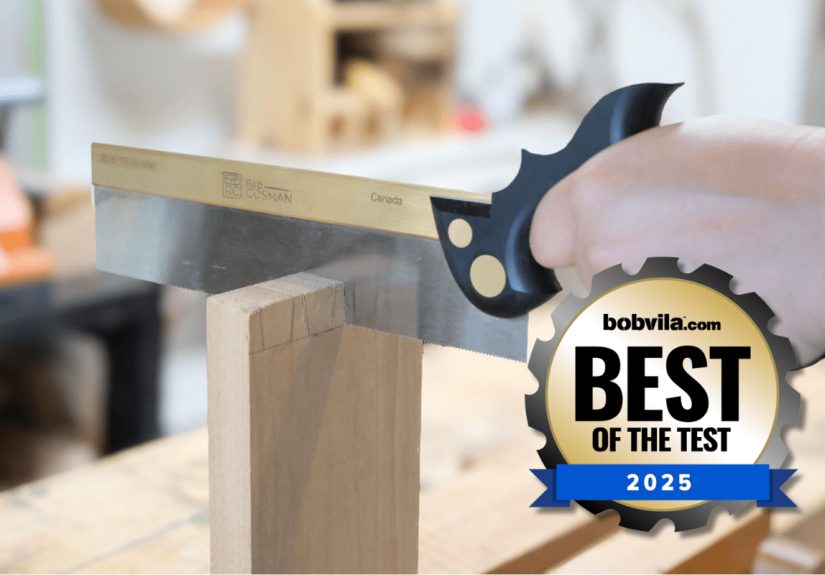
Not every great tool has a battery. The Rob Cosman dovetail back saw represents the kind of premium hand tool that serious woodworkers appreciate because of its controlled start, fine teeth, brass back, and careful balance. For dovetails, joinery, and precise hand-cut work, a well-made backsaw provides feedback that power tools cannot duplicate.
Hand tools also slow the work down in a useful way. They make you read grain direction, watch your line, and feel the cut. That is not old-fashioned romantic nonsense; it is how clean joinery happens.
Best Screwdriver Set for General Use: Magnetic Ergonomic Screwdrivers
A good screwdriver set should include common slotted and Phillips sizes, comfortable handles, clear labels, and magnetic tips. Magnetic tips are not a gimmick. They save screws from falling into cabinets, engine bays, wall cavities, and whatever alternate dimension exists beneath workbenches.
For modern workshops, keep both traditional screwdrivers and driver bit sets. Hand screwdrivers give more control for delicate work, while bit sets pair with drills and impact drivers for speed. Together, they cover furniture assembly, electrical plates, cabinet hardware, hinges, and everyday repairs.
Best Tool Bag: DeWalt 33-Pocket Tool Bag
For quick jobs away from the main bench, a well-organized tool bag can save multiple trips. A 33-pocket style tool bag gives space for screwdrivers, pliers, bits, tape measures, utility knives, small levels, and compact power tools. Look for a wide-mouth opening, reinforced base, strong handles, and enough pockets to organize without turning the bag into a fabric junk drawer.
How to Choose the Best Workshop Gear for Your Needs
Match Tools to Projects, Not Hype
Before buying any tool, ask what project it will actually help you complete. A track saw makes sense for sheet goods. A miter saw shines on trim and repeat crosscuts. A table saw is ideal for ripping boards and repeatable shop work. A compact drill solves tight-space problems. A rolling chest helps if your tools live in one garage. Modular boxes help if your tools travel.
Think in Systems
Battery platforms matter. Storage systems matter. Dust collection compatibility matters. A tool is rarely just one tool anymore; it is part of a workflow. If you already use DeWalt, Milwaukee, Makita, Bosch, Ryobi, Ridgid, or another major platform, staying within that ecosystem can save money on batteries and chargers.
Spend More Where Accuracy and Safety Matter
Not every tool needs to be premium. But spend wisely on tools that affect safety, accuracy, and long-term durability. Saws, blades, eye protection, dust control, and measuring tools are not great places to gamble. A cheap tool that ruins material or makes work unsafe is not a bargain. It is a future apology letter to yourself.
Experience Notes: What Using 2025 Workshop Gear Taught Us
The biggest lesson from using and comparing the best tools and workshop gear of 2025 is that convenience is not laziness. Convenience is productivity wearing comfortable shoes. The tool you can reach, set up, adjust, and trust is the tool that keeps the project moving. The most powerful saw in the room is not helpful if it takes 20 minutes to drag out, find the wrench, clear the table, and remember where you put the push stick.
One common experience with newer saws is that accuracy depends as much on setup as the motor. A table saw with a good fence feels wonderful only after the blade is aligned, the stand is stable, and the outfeed area is not blocked by last month’s “temporary” pile of scrap wood. A track saw can deliver cabinet-grade cuts, but only if the track is clean, the material is supported, and the blade is sharp. Even the best circular saw behaves better when paired with a proper straightedge and a blade suited to the material.
Storage made the biggest emotional difference. That may sound dramatic, but anyone who has spent 18 minutes searching for a 10mm socket understands. Modular boxes with drawers changed the rhythm of work because frequently used tools stayed accessible. A rolling chest made bench work cleaner because tools had homes. Small-parts organizers reduced the number of random jars, coffee cans, and mystery bags labeled “important screws probably.” The experience was clear: organization does not make you a better craftsperson by magic, but it removes friction so your actual skills can show up on time.
Lighting was another surprisingly major upgrade. A bright, adjustable work light made cut lines easier to see and reduced mistakes during sanding, painting, fastening, and layout. Poor lighting causes fatigue. It also encourages bad guesses, and bad guesses are how shelves become “rustic” against their will. A tower light or portable LED work light made the shop feel more professional immediately.
Dust control was the less glamorous but more important improvement. A good shop vac connected to sanders and saws kept the workspace cleaner, protected tools, and made cleanup less miserable. It also made projects feel less chaotic. When sawdust is under control, your bench stays usable longer, your finishes come out better, and your lungs are not asked to participate in woodworking quite so directly.
The final experience-based takeaway is simple: buy fewer tools, but buy better-fitting tools. The best workshop is not the one with the most gear. It is the one where the saw cuts straight, the drill fits the job, the storage makes sense, the light is where you need it, and the safety glasses are comfortable enough to wear. In 2025, the best workshop gear helped users spend less time fighting tools and more time building things worth keeping.
Conclusion
The best tools and workshop gear tested in 2025 prove that modern workshops are becoming smarter, cleaner, and more organized. Saws are more accurate, cordless tools are more capable, storage systems are more practical, and cleanup gear is finally being treated as essential instead of optional. For most DIYers and pros, the smartest upgrades are not always the flashiest. A reliable table saw, a clean-cutting circular saw, a compact multi-head drill, a modular storage system, a strong shop vac, and a bright work light can transform how a workshop feels and functions.
If you are building your tool collection, start with the projects you actually do. Choose tools that solve real problems, fit your space, match your battery platform, and make cleanup and organization easier. A workshop should help you work better, not make you feel like you need a search party every time you need a pencil.
Note: Product availability, pricing, and model versions can change. Before buying, compare current specifications, warranty details, and retailer listings to make sure the tool fits your workshop, battery platform, and project needs.