Table of Contents >> Show >> Hide
- The Aircraft Carrier’s First Century: From Experiment to Ocean Giant
- Why People Think Aircraft Carriers Are Obsolete
- Why Aircraft Carriers Are Not Dead Yet
- The Ford-Class Question: Innovation or Overreach?
- What Would Actually Make the Carrier Obsolete?
- The Smarter Future: Not Fewer Ideas, but Better Balance
- So, Is the Aircraft Carrier Obsolete?
- Experience-Based Reflections: What a Century of Carriers Teaches Us
- Conclusion
Note: This article is written for public, historical, and policy analysis. It discusses aircraft carriers, naval warfare, and defense technology at a high level without offering operational guidance.
Every few years, somebody declares the aircraft carrier dead. Usually the announcement arrives with the confidence of a movie villain, a chart full of scary arrows, and a missile acronym that sounds like a rejected Wi-Fi password. Yet the aircraft carrier keeps floating along, launching aircraft, anchoring alliances, and making defense budget committees reach for the extra-strength coffee.
So, as the aircraft carrier begins its second century, the question is fair: is this giant symbol of naval power obsolete, or is it simply entering another awkward but necessary upgrade cyclelike your phone, except nuclear-powered and several football fields long?
The honest answer is neither simple nor dramatic. The aircraft carrier is not obsolete in the way the battleship became obsolete after World War II. But it is no longer untouchable, no longer automatically dominant, and no longer useful in every scenario at any price. In the 21st century, the carrier is less a king on the chessboard and more a queen: powerful, flexible, expensive, and absolutely worth protecting.
The Aircraft Carrier’s First Century: From Experiment to Ocean Giant
The U.S. Navy’s carrier story began with USS Langley, commissioned in 1922 after being converted from a collier named USS Jupiter. At the time, the idea of launching aircraft from a ship still felt experimental, almost like trying to build an airport on a moving parking lot. Early carriers were not yet the centerpiece of naval power. Battleships still wore the crown, bristling with big guns and old-school prestige.
Then came World War II, and the ocean learned a new language: range. Aircraft carriers could strike far beyond the horizon, scout vast areas, and project power without waiting for opposing fleets to line up politely for a gun duel. Battleships did not vanish overnight, but their role changed dramatically. The carrier became the Navy’s primary instrument for sea-based airpower.
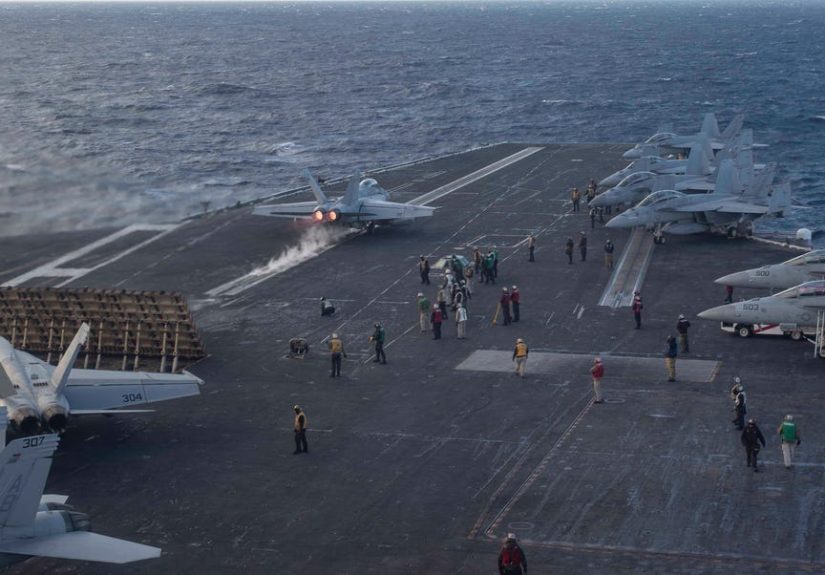
After World War II, carriers evolved again. Jet aircraft, angled flight decks, steam catapults, nuclear propulsion, airborne early warning, and carrier strike groups turned the flattop into a mobile air base. During the Cold War and beyond, carriers became tools of deterrence, crisis response, diplomacy, and combat operations. When Washington wanted to ask, “Where is the nearest airfield?” the answer was often, “We brought one.”
Why People Think Aircraft Carriers Are Obsolete
The case against aircraft carriers is not silly. In fact, it is serious enough that anyone dismissing it with a patriotic bumper sticker is missing the point. Modern carriers face a threat environment that is more crowded, more precise, and more technologically layered than anything their designers imagined in the mid-20th century.
Long-Range Missiles Have Changed the Geometry
The biggest concern is distance. Advanced anti-ship missiles, including ballistic and cruise missile systems, are designed to threaten large ships from far away. Potential adversaries have invested heavily in sensors, satellites, aircraft, submarines, and missile forces intended to make the sea a dangerous place for high-value naval assets.
This does not mean a carrier can be casually removed from the board. Hitting a moving carrier at sea is a complex problem that requires detection, tracking, targeting, communication, and successful weapon delivery through defenses. But the danger is real. The carrier’s survivability now depends less on thick armor and more on the performance of an entire network: escorts, aircraft, submarines, electronic warfare, decoys, cyber resilience, and command decisions.
Drones Have Made Numbers Matter Again
Drone warfare has added another challenge. Small, relatively inexpensive unmanned systems can create problems for very expensive ships and aircraft. Even when individual drones are not highly advanced, large numbers can stress defenses, drain magazines, and complicate decision-making.
This is one reason navies are paying more attention to layered defenses and lower-cost interceptors. It is also why the carrier air wing itself is changing. The future of carrier aviation will likely include more uncrewed aircraft for refueling, surveillance, electronic warfare, and eventually strike missions. In plain English: the carrier is not escaping the drone age. It is being drafted into it.
The Cost Is Enormous
The aircraft carrier is not merely a ship; it is a national budget event with propellers. Ford-class carriers cost many billions of dollars each, and that figure does not include the air wing, escort ships, submarines, logistics, maintenance, training, or lifetime operating expenses. When defense planners debate carriers, they are not just asking, “Can it fight?” They are asking, “Could this money buy more submarines, missiles, drones, satellites, or smaller ships?”
That question matters. A single carrier strike group can deliver tremendous capability, but it also concentrates value in one place. Distributed fleetsspread across more platforms, sensors, and weaponsmay offer more resilience in some scenarios. The future Navy may need both: big-deck carriers for global power projection and a wider mix of smaller, unmanned, and missile-capable platforms for contested waters.
Why Aircraft Carriers Are Not Dead Yet
For all the warnings, aircraft carriers remain useful because war is not only about one dramatic missile-versus-ship scenario. Most naval operations are not blockbuster duels in which a carrier parks itself in the most dangerous possible location and waits for trouble like it forgot how maps work.
Carriers Provide Mobile Airpower
The carrier’s basic value is still compelling: it can move airpower across oceans without depending entirely on foreign bases. Land bases may be politically unavailable, geographically distant, vulnerable to attack, or limited by host-nation restrictions. A carrier is not politically frictionless, but it gives national leaders options.
That flexibility matters in crises. Carriers can support evacuations, reassure allies, patrol sea lanes, conduct limited strikes, enforce air presence, and respond to disasters. A land air base cannot sail closer to the problem. A carrier can.
Presence Still Has Strategic Weight
When a carrier strike group enters a region, people notice. Allies notice. Rivals notice. Financial markets may even glance up from their spreadsheets. The carrier’s value is partly military and partly political. It signals commitment in a way that is visible, flexible, and reversible. You can move it in. You can move it out. You can keep it over the horizon.
This is why carriers are often used before shots are fired. Their presence can deter escalation, support diplomacy, and provide a platform for intelligence and surveillance. Critics sometimes judge carriers only by their performance in a hypothetical high-end war, but much of their value comes from everything short of that.
Carrier Strike Groups Are Systems, Not Single Targets
The phrase “floating target” sounds catchy, but it is incomplete. A modern carrier does not sail alone like a confused cruise ship. It operates as part of a carrier strike group with destroyers, cruisers, submarines, logistics ships, aircraft, sensors, and command networks. Its defense is layered, mobile, and adaptive.
That does not make the carrier invincible. Nothing is invincible, except maybe the office printer’s ability to jam when you are late. But it does mean that the debate should focus on the entire system. The real question is not, “Can a carrier be threatened?” Of course it can. The better question is, “Can a carrier strike group create more strategic value than the risks and costs it imposes?” In many situations, the answer remains yes.
The Ford-Class Question: Innovation or Overreach?
The Gerald R. Ford class represents the U.S. Navy’s attempt to build the carrier for the next half-century. It includes major changes such as electromagnetic aircraft launch systems, advanced arresting gear, improved electrical capacity, redesigned flight deck operations, and automation intended to reduce workload and improve sortie generation.
That sounds excellent on a brochure. In reality, first-in-class ships often arrive with growing pains, and Ford has had plenty. New systems have faced testing, reliability, cost, and integration challenges. This is not unusual in military modernization, but it is especially visible when the ship costs as much as a small moon colony and appears in every naval debate.
The Ford-class debate reveals a deeper issue: the Navy is trying to modernize the carrier at the same time the carrier’s future is being questioned. If Ford-class technologies mature, they could make carriers more efficient and adaptable. If costs keep rising and reliability lags, critics will argue that the Navy is polishing a very expensive tradition instead of building a more distributed future.
What Would Actually Make the Carrier Obsolete?
A military platform becomes obsolete when it can no longer perform its mission at acceptable risk and cost. Obsolescence is not about whether something can be destroyed. Tanks can be destroyed. Aircraft can be destroyed. Satellites can be disrupted. That does not automatically make them useless.
For aircraft carriers, true obsolescence would require several conditions to become permanent. First, adversaries would need reliable, repeatable ways to find and target carriers at long range. Second, carrier defenses would need to fail consistently against those threats. Third, the carrier air wing would need to lack enough range, stealth, endurance, or unmanned support to operate effectively. Fourth, alternative systems would need to provide the same political and military flexibility at lower cost.
That final point is often overlooked. Submarines are powerful, but they do not provide visible reassurance in the same way. Land-based missiles are useful, but they depend on geography and politics. Long-range bombers are important, but they cannot loiter offshore indefinitely. Drones are promising, but they need networks, logistics, and command structures. The carrier may be vulnerable, but many alternatives have their own awkward footnotes.
The Smarter Future: Not Fewer Ideas, but Better Balance
The future probably does not belong to carriers alone. It also does not belong to tiny drone swarms alone, despite what some technology evangelists might suggest after one exciting conference panel and too much cold brew.
The smarter direction is balance. The U.S. Navy and allied navies are likely to keep large-deck carriers while adding more unmanned systems, longer-range aircraft, improved defenses, resilient communications, and distributed maritime forces. Carriers may serve farther from the most dangerous zones while uncrewed aircraft, submarines, and other platforms extend their reach. Smaller carriers or drone-focused ships may also become more attractive for certain missions.
In other words, the carrier is evolving from a centerpiece into part of a wider web. It will still matter, but it must share the stage. That is not failure. That is adaptation.
So, Is the Aircraft Carrier Obsolete?
No, the aircraft carrier is not obsolete. But the old idea of the carrier as an untouchable symbol of guaranteed dominance is obsolete. That distinction is important.
The carrier remains one of the most flexible tools of American naval power. It can move, signal, deter, support allies, launch aircraft, and respond to crises without waiting for permission to build a runway. But it is also expensive, vulnerable to new forms of pressure, and increasingly dependent on networks, escorts, unmanned systems, and smart operational choices.
Its second century will not look like its first. The next great carrier will not simply be bigger, shinier, and more dramatic. It will need to be more connected, more survivable, more integrated with drones, and more realistic about risk. The carrier’s future is not about nostalgia. It is about whether navies can keep turning a floating airfield into a useful tool in a world full of sensors, missiles, cyber threats, and budget math that bites.
If the aircraft carrier is a dinosaur, it is not the lumbering kind waiting for the asteroid. It is more like a bird: descended from something enormous, still adapting, still flying, and still capable of surprising anyone who assumes evolution is finished.
Experience-Based Reflections: What a Century of Carriers Teaches Us
Looking at the aircraft carrier through a century of experience, the first lesson is that military technology rarely disappears just because a new threat arrives. It changes roles. The battleship did not become irrelevant because steel suddenly stopped working; it became less central because aircraft extended naval combat beyond gun range. The same pattern may now be happening to the carrier. Long-range missiles, drones, satellites, and submarines are not magic erasers. They are pressure. They force the carrier to adapt.
The second lesson is that mobility remains underrated. A carrier’s ability to move may sound obvious, but in real-world strategy it is enormous. Fixed bases can be mapped, watched, pressured diplomatically, or targeted. A carrier is not invisible, but it is not bolted to concrete. That mobility gives decision-makers time and options. In many crises, options are worth more than elegant theories.
The third lesson is that people often underestimate logistics. A carrier strike group is not just a ship and aircraft; it is fuel, food, maintenance, spare parts, trained crews, flight deck procedures, repair capacity, and supply lines. This is where the carrier’s experience cuts both ways. On one hand, the U.S. Navy has decades of practical knowledge operating carriers worldwide. On the other hand, sustaining them is incredibly demanding. A weapon system that is powerful but hard to maintain can become a strategic headache.
The fourth lesson is that symbols matter. Critics sometimes treat symbolism as fluff, but international politics does not work that way. A carrier visit can reassure an ally, warn a rival, or support diplomacy without firing a shot. The ship’s visibility is part of its utility. Submarines may be more survivable, but their strength is secrecy. Carriers work partly because everyone can see them.
The fifth lesson is humility. Every era has experts who declare the future settled. Before World War II, many believed battleships would remain decisive. During the missile age, some believed manned aircraft were finished. During the drone age, some now argue that every large platform is doomed. Sometimes they are partly right. Rarely are they completely right. Warfare is a contest of adaptation, not a single technology tournament.
The most realistic experience-based conclusion is that aircraft carriers must earn their place every decade. They cannot rely on past glory, patriotic imagery, or the fact that they look spectacular in sunset photographs. They must justify their cost through flexibility, survivability, and integration with emerging systems. The carrier that survives the second century will not be the carrier that refuses to change. It will be the carrier that becomes a command hub, drone partner, mobile air base, diplomatic signal, and networked combat platform all at once.
That is a difficult job description. But the aircraft carrier has spent a hundred years doing difficult things on moving water. Counting it out now would be bold. Counting on it without reform would be foolish. The truth, as usual, is less dramatic and more useful: the aircraft carrier is not obsolete, but complacency about the aircraft carrier absolutely is.
Conclusion
The aircraft carrier enters its second century under pressure from missiles, drones, submarines, cyber threats, rising costs, and changing naval strategy. Yet pressure is not the same as extinction. Carriers still offer mobile airpower, global presence, alliance reassurance, and crisis response in ways no single alternative fully replaces. Their future will depend on adaptation: longer-range air wings, unmanned systems, better defenses, distributed operations, and smarter budgeting.
The age of the effortless supercarrier is over. The age of the adaptive carrier is just beginning.