Table of Contents >> Show >> Hide
- What Is a Cardiac Stress Test?
- Why Doctors Order Stress Tests
- Types of Stress Tests
- How to Prepare for a Stress Test
- What Happens During a Stress Test: Step-by-Step
- Understanding Results (Without Panicking)
- Risks: What Could Go Wrong (and How Often Does It?)
- When a Stress Test Might Be Modified, Postponed, or Swapped
- Questions Worth Asking Before (or After) Your Test
- Real-World Experiences: What It Feels Like (and What People Wish They’d Known)
- The “I’m nervous and my heart is already stressed” moment
- Electrodes feel weird, not painful
- The treadmill is less “athletic” than people imagineuntil it isn’t
- Breathing through a tube can feel awkward
- Medication stress tests: the sensation can be surprising, but it’s usually short
- Nuclear stress tests: the waiting is often the biggest inconvenience
- After the test: relief, a little fatigue, and lots of questions
- What patients say helps most
A “stress test” sounds like something your boss schedules right before a deadline. In medicine, it’s a lot more helpfuland usually a lot less personal.
A cardiac stress test checks how your heart behaves when it has to work harder than usual, either through exercise (treadmill/bike) or with medication
that mimics exercise. The goal is simple: see whether your heart is getting the blood and oxygen it needs under pressure, and gather clues that aren’t
obvious when you’re sitting still. A stress test can also help your care team decide what kind of activity is safe for you, or whether you need more
testing or treatment.
This guide breaks down what a stress test is, why it’s ordered, what happens step-by-step, and what the real-world risks look like (spoiler: serious
complications are uncommon, and the test is closely monitored). If you’re reading this because you’re scheduled for one, you’ll walk away knowing
what to expectwithout needing to bring a medical dictionary as a plus-one.
What Is a Cardiac Stress Test?
A cardiac stress test (often called an exercise stress test) measures how your heart performs when it’s pumping harder and faster. During stress
(exercise or medication), your heart needs more oxygen, so it must pump more blood. If blood flow through the coronary arteries is reducedoften due
to narrowing or blockagessigns of that can show up in symptoms, changes on an EKG, blood pressure response, or imaging findings.
The “basic” version is an exercise treadmill test that tracks your heart rhythm (EKG), heart rate, and blood pressure while you walk on a treadmill or
pedal a bike. More advanced versions add imaging (like ultrasound or nuclear imaging) to look for changes in how your heart muscle moves or how blood
flows through it. If you can’t exercise adequately, medications can be used to create a similar effect.
What a stress test can (and can’t) do
- Can: help diagnose or evaluate coronary artery disease, explain symptoms like chest pain or shortness of breath, guide safe exercise levels, and assess treatment effectiveness.
- Can: help estimate future risk (for example, risk of heart-related events) based on how your heart responds to stress and how long you can exercise.
- Can’t: guarantee you’ll never have a heart problem (no test is a crystal ball), and it may not be the best test for every situationespecially if your baseline EKG is hard to interpret.
Why Doctors Order Stress Tests
Stress tests are ordered for several practical, real-life reasonsusually because a provider wants answers you can’t get from a resting EKG alone.
Common reasons include:
1) To investigate symptoms
If you’ve had chest pain, pressure, unexplained shortness of breath, lightheadedness, or exercise intolerance, a stress test can help determine whether
reduced blood flow to the heart might be involvedespecially when symptoms appear during activity, not at rest.
2) To check for coronary artery disease (CAD) or estimate how severe it might be
Coronary artery disease is caused by narrowing in the arteries that supply the heart muscle. A stress test can suggest whether blood flow is reduced
during exertion and whether additional testing is needed. Imaging-based stress tests (like nuclear stress tests) can also help show areas of poor blood
flow or prior damage.
3) To guide safe activity and rehabilitation
Stress testing is often used to determine what level of exercise is appropriateespecially if you’re starting cardiac rehabilitation or returning to activity
after a cardiac event or procedure. It’s basically a supervised way to answer, “How hard can I safely push?”
4) To evaluate treatment effectiveness or help plan next steps
Providers may use stress test information to evaluate how well treatments are working or to decide whether changes are needed (medications, procedures,
additional imaging, etc.). Depending on results, next steps might include lifestyle changes, medication adjustments, or further evaluation.
5) To assess risk before certain surgeries or procedures
In some cases, a stress test is part of a preoperative cardiovascular evaluation to estimate how your heart may handle the stress of surgery.
Types of Stress Tests
“Stress test” is an umbrella term. Your provider chooses the version that best fits your symptoms, your ability to exercise, and what information they
need. Here are the most common types:
Exercise treadmill (EKG) stress test
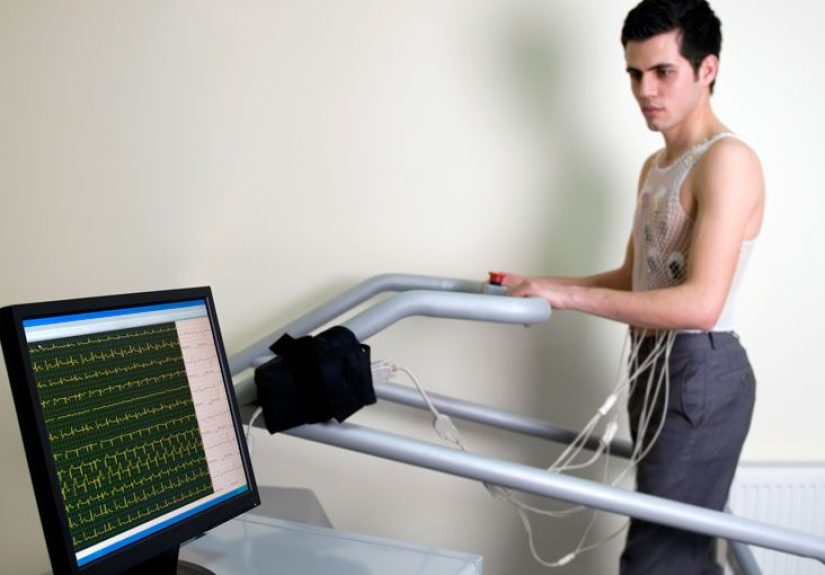
This is the classic version. You walk on a treadmill (or pedal a bike) while an EKG tracks your heart rhythm and a cuff checks your blood pressure.
The treadmill speed and incline typically increase in stages. The test continues until you reach a target heart rate, develop concerning symptoms or
changes, or you’re too tired to continue. Afterward, you’re monitored while your heart rate returns toward baseline.
Stress echocardiogram
A stress echo combines a stress test with ultrasound images of your heart (an echocardiogram). Images are taken at rest and again at peak stress or
immediately after exercise. This can help detect changes in heart muscle motion that may suggest reduced blood flow. If you can’t exercise, medication
such as dobutamine may be used to raise your heart rate and mimic exercise.
Nuclear stress test (myocardial perfusion imaging)
A nuclear stress test uses a small amount of radioactive tracer given by IV, plus special imaging (often PET or SPECT) to compare blood flow to your heart
muscle at rest and under stress. If a part of your heart gets less blood flow during stress, it may “light up” differently than healthy areas. Nuclear
stress tests can be done with exercise or with medication that increases blood flow in a way that simulates exercise.
Stress MRI (in select settings)
Some centers use stress MRI to evaluate blood flow and heart function under stress, typically using medication rather than treadmill exercise. The choice
depends on your specific clinical situation and what your care team is trying to learn.
One important nuance: if your baseline EKG is already abnormal (for example, certain rhythm or conduction patterns), an exercise-only stress test may be
less useful, and your provider may recommend imaging or pharmacologic testing instead.
How to Prepare for a Stress Test
Preparation varies depending on the type of test, but most instructions fall into a few predictable buckets. Your facility will give you specificsfollow
those first. In general, many patients are asked to:
Wear the right outfit
- Comfortable clothes you can exercise in
- Walking or athletic shoes (not flip-flops; your treadmill will not respect your fashion choices)
Adjust food, caffeine, and smoking beforehand
- You may be asked to fast (no food/drink) for a period before the test.
- You may be asked to avoid smoking for several hours beforehand.
- Many protocols ask you to avoid caffeinesometimes longerespecially if medication-based stress agents are used or if imaging is involved.
Talk about medications and supplements
Tell your care team about everything you takeincluding over-the-counter medications, supplements, herbs, and vitamins. Some medicines can interfere
with results, but you should never stop a medication unless your provider specifically tells you to. If you use an inhaler for asthma or breathing issues,
bring it and make sure the team knows.
Avoid lotions on test day (for some tests)
Especially for nuclear stress tests, you may be asked not to apply oils, lotions, or creams to your skin because they can interfere with electrode
adhesion and sometimes imaging prep.
What Happens During a Stress Test: Step-by-Step
The details differ by test type, but most stress tests follow the same basic storyline: baseline measurements, the “stress” part, then a monitored recovery.
Here’s what that usually looks like.
1) Check-in and baseline setup
You’ll answer questions about symptoms, medical history, and activity level. Staff place sticky electrode patches on your chest (sometimes arms/legs)
and connect them to an EKG monitor. A blood pressure cuff is applied, and baseline heart rate, rhythm, and blood pressure are recorded.
2) The stress phase (exercise or medication)
Exercise-based testing
You’ll walk on a treadmill or pedal a stationary bike. The workload increases graduallyoften in stagesso your heart has to work harder. Throughout
the test, clinicians monitor your EKG, blood pressure, symptoms, and how hard you feel you’re working.
The test typically stops when you reach a target heart rate, develop concerning symptoms (like chest pain, severe shortness of breath, dizziness), show
concerning blood pressure changes, or show EKG changes suggesting the heart muscle isn’t getting enough oxygen. You can also ask to stopthis is a
medical test, not a reality show challenge.
Medication-based (pharmacologic) testing
If you can’t exercise adequately (because of joint issues, mobility limitations, or other reasons), medication can “stress” the heart. Different agents do
this in different ways. Some increase blood flow through the coronary arteries; others (like dobutamine) increase heart rate and contractility more directly.
In these tests, you’ll still be monitored with electrodes and vital signs checks, and the medication is given through an IV.
What it feels like depends on the medication. People commonly report sensations such as flushing, headache, mild nausea, shortness of breath, or chest
discomfort that typically resolves quickly after the medication ends. Some centers use caffeine (or medications like aminophylline in certain cases) to
help reverse lingering side effects from some agents.
3) Imaging (if ordered)
If your stress test includes imaging, this is where the script changes a bit:
- Stress echo: ultrasound images are taken at rest and again at peak stress or immediately after exercise (or during medication-induced stress).
- Nuclear stress test: a tracer is injected through an IV, and images are taken at rest and again under stress to compare blood flow patterns.
Imaging adds time, especially with nuclear tests, which may take a couple of hours or more depending on the protocol and tracer.
4) Recovery and monitoring
After the stress portion ends, you’ll be monitored for a short period while your heart rate returns closer to baseline. Your blood pressure and EKG are
rechecked, and staff make sure you feel stable before you leave. Some tests include a longer observation window; your team will tell you when you can
resume normal activities.
Understanding Results (Without Panicking)
Stress test results generally fall into “reassuring,” “concerning,” or “unclear.” Your provider interprets the findings in the context of your symptoms,
risk factors, and baseline exam.
Possible “normal” or reassuring results
- No concerning EKG changes during stress
- Appropriate blood pressure response
- No symptoms suggesting reduced blood flow
- On imaging tests: normal blood flow at rest and under stress
A normal result often lowers the likelihood of significant coronary artery blockages and may mean no additional testing is neededdepending on your
overall risk and symptoms.
Possible abnormal findings
- Symptoms during stress (such as chest pain, marked shortness of breath, dizziness)
- EKG changes that suggest reduced oxygen to the heart muscle
- Blood pressure or rhythm changes that raise concern
- Imaging patterns showing reduced blood flow during stress (suggesting ischemia) or reduced flow at rest and stress (suggesting more severe disease or prior damage)
If results are abnormal, the next step may be medication adjustments, lifestyle changes, additional imaging, or invasive evaluation such as coronary
angiographyagain, depending on your overall clinical picture.
False positives and false negatives (yes, they happen)
No cardiac test is perfect. Some results look abnormal even when coronary arteries aren’t significantly blocked (false positives), and occasionally results
look normal even when disease is present (false negatives). That’s why your provider considers your “pretest probability” (your risk based on symptoms and
history) and may choose imaging-based testing if a standard treadmill test is unlikely to be definitive.
Risks: What Could Go Wrong (and How Often Does It?)
Stress tests are generally considered safe and are performed under close medical supervision with equipment and trained professionals ready to respond
if something unexpected happens. Still, “safe” doesn’t mean “zero risk,” so it’s worth knowing the realistic possibilities.
Risks with exercise stress tests
- Low blood pressure during or after exercise, sometimes causing dizziness or fainting
- Irregular heart rhythms (arrhythmias), which often resolve when exercise stops
- Chest pain or worsening symptoms during exertion
- Heart attack is possible but very rare in supervised testing settings
- Minor skin irritation from electrode patches
The reason teams monitor you continuously is to catch warning signs early and stop the test immediately if needed. Your safety is literally the main
character in the room.
Risks with pharmacologic (medication) stress testing
Medication-induced stress tests can cause temporary side effects related to how the drug works. Commonly reported symptoms include flushing, headache,
nausea, dizziness, low blood pressure, shortness of breath, or chest discomfort. More serious effectslike bronchospasm (airway tightening) or certain
heart rhythm conduction issuescan occur with some agents, which is why your history (especially asthma/COPD) matters and why monitoring is constant.
Risks with nuclear or MRI stress tests
- IV-related issues: bruising or soreness at the injection site
- Allergic reactions to tracers or dyes are rare but possible
- Radiation exposure occurs with nuclear tests (the dose is controlled and used only when the clinical benefit is expected)
If you’re pregnant, could be pregnant, or are breastfeeding, tell your providerthis can affect test selection and timing.
When a Stress Test Might Be Modified, Postponed, or Swapped
Not everyone should do the same type of stress test on the same day. Your provider may choose a pharmacologic test instead of exercise if you can’t
exercise adequately, or may recommend a different test if your baseline EKG makes a standard treadmill test hard to interpret.
Stress testing may be postponed or modified when certain conditions make testing riskier (for example, unstable symptoms or severe uncontrolled issues).
Your care team will screen for this, and they may ask you about recent cardiac symptoms, recent heart events, and other medical conditions during
pre-test evaluation.
Questions Worth Asking Before (or After) Your Test
- What question are we trying to answer with this test?
- Why exercise vs medication stress (or vice versa) for me?
- Should I avoid caffeine? For how long?
- Should I take my usual medications the morning of the test?
- How long will the appointment take, including recovery?
- When will I get results, and what might the next step be if results are abnormal?
If you develop severe chest pain, fainting, or severe shortness of breath at any timeduring the test or latertreat it as an emergency and seek
immediate medical care. Stress tests are designed to be safe, but your symptoms always deserve respect.
Real-World Experiences: What It Feels Like (and What People Wish They’d Known)
The medical description of a stress test is tidy: electrodes, treadmill, data, done. The human experience is usually a little messierbecause you’re not
a spreadsheet. Here are common experiences patients report, plus a few practical observations from the way these tests are typically run in real clinics.
The “I’m nervous and my heart is already stressed” moment
A lot of people walk in thinking, “Isn’t this going to give me the very problem we’re checking for?” That anxiety is normal. Many facilities start with
a calm explanation of the process and remind you that the test is monitored in real time and can be stopped anytime. Knowing you’re not trapped on the
treadmill helps. So does asking, up front, what symptoms they want you to report immediately (chest pain, dizziness, unusual shortness of breath).
Electrodes feel weird, not painful
The sticky patches are usually the most “annoying” part of setup. Some people feel a quick sting when removing them, especially if there’s chest hair
involved (your body: a magnificent forest; their adhesive: a determined lumberjack). Mild skin irritation can happen, but it’s usually short-lived.
The treadmill is less “athletic” than people imagineuntil it isn’t
Many patients expect sprinting. Most protocols start at a walk and increase gradually, often every few minutes. Early stages can feel easy, almost too easy,
and then the incline climbs and you realize you’re essentially doing “uphill errands” at a medically supervised pace. People often say the hardest part is
not speedit’s the incline and the sustained effort. It’s also common to feel embarrassed about getting tired. Clinics see every fitness level imaginable.
The test is not a judgment; it’s information.
Breathing through a tube can feel awkward
Some stress tests include breathing into a tube briefly, which can feel odd but usually isn’t painful. If you’re prone to anxiety, telling the technician
“This makes me a little panicky” can helpthey can coach you through it or explain what they’re measuring.
Medication stress tests: the sensation can be surprising, but it’s usually short
People who have pharmacologic stress testing often describe a sudden wave of warmth or flushing, a sense of chest heaviness, or shortness of breath that
feels “not like my usual breathing.” The key detail is that staff expects this, and they watch closely. With some agents, side effects can fade quickly
when the infusion ends. Some patients are offered caffeine afterward because it can help reverse certain medication effects. Knowing this in advance can
keep you from thinking, “I’m dying,” when what’s happening is, “My blood vessels are responding exactly as planned.”
Nuclear stress tests: the waiting is often the biggest inconvenience
For nuclear testing, patients commonly mention that the appointment feels longnot because anything hurts, but because imaging takes time. You may have an
IV, receive tracer, wait while it circulates, then lie still for imaging. Some people dislike lying still in the scanner position more than the treadmill.
Others say the hardest part is avoiding caffeine beforehand. Pro tip: if you’re a serious coffee person, plan something pleasant for afterwardlike
enjoying your first sip as if you’ve crossed a desert (because, emotionally, you have).
After the test: relief, a little fatigue, and lots of questions
Many people feel tired afterward, especially after a treadmill test. Others feel fine and immediately want to know results. Facilities vary: sometimes you
get preliminary feedback right away (“The test looked okay today”), and sometimes results require a cardiologist’s formal review and you’ll hear back later.
Patients often say they wish they’d asked: “What should I do while waiting for results?” If you’re in that window, the safest approach is to follow your
provider’s guidance about activity and medications, and report any new or worsening symptoms promptly.
What patients say helps most
- Clarity: asking what “normal sensations” to expect during the test and what is not normal
- Comfort: wearing shoes you can actually walk in and clothes you don’t have to fight
- Honesty: telling the team if you’re anxious, have asthma/COPD symptoms, or are feeling chest discomfort
- Perspective: remembering the test is designed to find problems earlywhen you can do something about them
In short: most people describe stress testing as more “uncomfortable and weird” than “painful,” and many leave feeling empoweredbecause uncertainty is
often scarier than information. A supervised stress test replaces guesswork with measurable data, and that’s a trade most hearts are happy to make.