Table of Contents >> Show >> Hide
- Syngonium Albo at a glance
- What is Syngonium Albo, exactly?
- Light: the secret sauce for strong variegation (without sunburn)
- Water: the fastest way to love (or lose) a Syngonium Albo
- Soil and potting: think “airy aroid mix,” not “mud spa”
- Temperature and humidity: keep it cozy
- Fertilizer: feed lightly, not like you’re basting a turkey
- Pruning and training: bushy, trailing, or climbingyour choice
- Repotting: how often (and how to avoid a meltdown)
- Propagation: multiply your plant (and your bragging rights)
- How to keep Syngonium Albo variegated (without weakening it)
- Common problems (and what they’re trying to tell you)
- Pests: the usual indoor suspects
- Pet and people safety: important, not optional
- Outdoor caution: don’t accidentally turn a houseplant into a neighborhood problem
- FAQ
- Real-world grower experiences (the stuff you only learn by doing)
- Conclusion
- SEO tags (JSON)
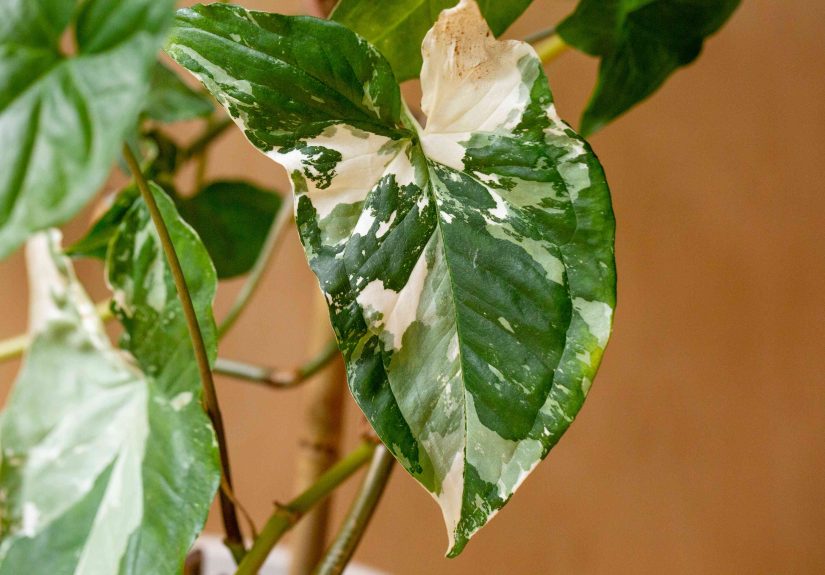
Syngonium Albo (often sold as Syngonium podophyllum ‘Albo Variegatum’) is the kind of houseplant that makes you
stop mid-scroll and whisper, “Okay wow.” Those crisp white splashes look like someone flicked a paintbrush at a perfectly
good arrowhead vineand somehow made it better.
But here’s the twist: the same variegation that makes Syngonium Albo famous also makes it a little… dramatic. The whiter the
leaf, the less chlorophyll it has, which means the plant has less “solar panel” surface to power itself. So your mission is
simple: keep it happy, keep it growing, and keep the variegation without turning the leaves into crispy confetti.
Syngonium Albo at a glance
- Plant type: Tropical aroid vine (arrowhead vine)
- Why it’s special: Bold white-and-green variegation
- Light: Bright, indirect light (the “goldilocks zone”)
- Water: When the top 1–2 inches of soil dry out
- Humidity: Prefers moderate to higher humidity (aim for “comfortable skin” levels)
- Best vibe: Airy, well-draining mix + steady care + no direct sun roast sessions
What is Syngonium Albo, exactly?
Syngoniums are commonly called arrowhead plants because young leaves are shaped likeyeparrowheads. As they mature, the leaves
can develop deeper lobes and a more “grown-up” look. In cultivation, Syngonium podophyllum is widely grown as a
houseplant, and many cultivars exist (from pink-toned varieties to silver-veined types). Syngonium Albo is prized for high-contrast
variegation that can range from subtle marbling to big white blocks.
Expect a fast grower when conditions are right. Indoors, it can trail from a shelf, spill from a hanging planter, or climb a moss pole
like it’s training for the Plant Olympics.
Light: the secret sauce for strong variegation (without sunburn)
If Syngonium Albo had a dating profile, it would say: “Seeking bright, indirect light. No drama. No direct sun.” Variegated leaves
need more light than solid-green leaves because the white sections can’t photosynthesize much. However, those same white areas are
also more sensitivedirect sunlight can scorch them quickly.
Where to place it indoors
- Best: A spot near an east-, west-, or bright north-facing window, filtered by a sheer curtain if needed.
- Also great: Under a quality grow light for 10–12 hours a day if your home runs dim.
- Avoid: Hot midday sun blasting through glass (leaf crisping speedrun).
A practical light target (for the nerds among us)
Commercial interiorscape guidance for Syngonium often places it in a moderate indoor light range. For a home grower, that usually translates to
“bright enough to read comfortably without a lamp,” but not a sunbeam spotlight. If you use a light meter, moderate ranges are a helpful reference point.
Signs your light is off
- Too little light: Smaller leaves, leggy stems, slower growth, and variegation fading toward greener leaves.
- Too much direct light: Bleached patches turning tan or crispy, especially on white sections.
Water: the fastest way to love (or lose) a Syngonium Albo
Most Syngonium heartbreak stories begin with water. Too much, and roots suffocate. Too little, and leaves droop like they just heard a sad song.
The goal is even moisture with breathing room.
When to water
Use the finger test: water when the top 1–2 inches of soil feel dry. In many homes, that’s about every 7–12 days in active growth seasons,
and less often in winter. But your mileage varies based on pot size, light, temperature, and humidity.
How to water correctly
- Water thoroughly until it drains from the bottom.
- Empty the saucerdon’t let the pot sit in water.
- Wait until the top layer dries again before watering next time.
Example watering scenario
If your Syngonium Albo is in a 6-inch pot near a bright window, you might water weekly during spring/summer. Move it to a lower-light shelf,
and it could shift to every 10–14 days. Same plant, different lifestyle.
Soil and potting: think “airy aroid mix,” not “mud spa”
Syngonium Albo does best in a chunky, well-draining mix that still holds some moisture. The easiest approach is to start with a quality indoor potting mix
and add drainage boosters.
A simple DIY aroid-style mix
- 2 parts potting mix
- 1 part orchid bark
- 1 part perlite or pumice
- Optional: a small handful of horticultural charcoal for freshness
Pot choice matters
- Must-have: Drainage hole(s). Non-negotiable.
- Material tip: Terracotta dries faster (great if you overwater), plastic holds moisture longer (great if you underwater).
- Size rule: Only pot up 1–2 inches wider than the current pot. Huge pots stay wet too long and invite root issues.
Temperature and humidity: keep it cozy
Syngonium is tropical, so it prefers typical indoor comfort temperatures. Keep it away from cold drafts, heater vents, and AC blasts.
Consistency is the love language here.
Humidity goals
Syngonium can tolerate average household humidity, but it looks its best with moderate humidity. If your air is very dry, you may notice crispy edges
(especially on white areas). You can boost humidity by grouping plants, using a pebble tray, or running a small humidifier nearby.
Fertilizer: feed lightly, not like you’re basting a turkey
Variegated plants generally don’t need heavy fertilizing. Too much can cause salt buildup and stressed roots. During spring and summer,
feed with a balanced liquid fertilizer at half strength about once a month. In fall and winter, reduce or pause feeding if growth slows.
Pruning and training: bushy, trailing, or climbingyour choice
Syngonium Albo can be styled in multiple ways:
- Bushy tabletop plant: Pinch or trim stems to encourage branching.
- Trailing plant: Let it spill from a hanging pot or shelf.
- Climber: Train it up a moss pole, totem, or small trellis for larger, more mature leaf forms.
If you want that “lush and expensive” look, climbing support is your best friend. Many aroids size up when they can climb.
Repotting: how often (and how to avoid a meltdown)
Repot when roots circle the pot, poke out drainage holes, or when water runs straight through too quickly. For many homes, that’s every 1–2 years.
Repot in spring or early summer when the plant can rebound quickly.
- Choose a pot 1–2 inches larger.
- Refresh with airy mix.
- Keep the plant slightly on the drier side for a week after repotting to let roots settle.
Propagation: multiply your plant (and your bragging rights)
Syngonium Albo propagates easily from stem cuttingsas long as you include a node (a little bump where roots can form).
The simplest method is water propagation, but you can also root in damp sphagnum moss or a perlite mix.
Water propagation steps
- Cut below a node with clean scissors or pruners.
- Remove any leaves that would sit underwater.
- Place the node in water; keep leaves above the waterline.
- Change water regularly and keep in bright, indirect light.
- Pot up once roots are several inches long and branching.
Variegation note
Variegation in Albo types is not always perfectly stable. You can’t “force” a cutting to be highly variegated if the stem section doesn’t carry it.
Choose cuttings with visible variegation on the stem and leaves for the best chance of keeping the pattern.
How to keep Syngonium Albo variegated (without weakening it)
Variegation is a balancing act: you want enough light to maintain the white pattern, but not so much intensity that white tissue burns. If your plant starts
pushing greener leaves, increase light gradually. If it’s producing mostly white leaves, you may need to slightly reduce light and ensure it’s otherwise supported
(good nutrition, stable watering).
What about all-white leaves?
All-white leaves look amazing… and photosynthesize poorly. Think of them as the plant wearing an all-white outfit to a barbecue:
iconic, but not exactly practical. If your Syngonium starts producing many nearly white leaves in a row, consider pruning back to a leaf with more green
to help the plant maintain energy.
Common problems (and what they’re trying to tell you)
Yellow leaves
- Most common cause: Overwatering or staying wet too long
- Fix: Let soil dry more between waterings, improve drainage, check roots
Brown, crispy edges (especially on white sections)
- Common causes: Low humidity, inconsistent watering, or too much direct sun
- Fix: Stabilize watering, move out of direct light, consider humidity support
Drooping or limp leaves
- Causes: Underwatering, sudden temperature shifts, or root stress
- Fix: Check soil moisture; adjust environment; inspect roots if drooping persists
Leggy growth
- Cause: Not enough light
- Fix: Move to brighter indirect light; prune and propagate for a fuller plant
Pests: the usual indoor suspects
Syngonium can attract common houseplant pests like spider mites, mealybugs, aphids, and scale. The best defense is regular leaf checksespecially under leaves
and around nodes.
- First step: Isolate the plant if you suspect pests.
- Mechanical control: Wipe leaves with a damp cloth and remove visible pests.
- Treatment: Use an appropriate houseplant-safe insecticidal soap or horticultural oil, repeating as directed.
Pet and people safety: important, not optional
Syngonium is considered toxic if chewed or ingested due to calcium oxalate crystals. Keep it away from curious pets and small children.
If you have a nibbling cat who treats houseplants like a salad bar, place Syngonium Albo out of reach or choose a pet-safe alternative.
Outdoor caution: don’t accidentally turn a houseplant into a neighborhood problem
In warm climates, arrowhead vine can escape cultivation. In places like Florida, it has been flagged as invasive and not recommended for use outdoors.
Treat Syngonium Albo as an indoor plant unless you’re 100% sure local guidance supports outdoor plantingand always dispose of trimmings responsibly.
- Never dump cuttings outdoors.
- Bag trimmings before trashing if your area is warm enough for tropical plants to survive.
FAQ
Is Syngonium Albo hard to care for?
It’s not “hard,” but it is less forgiving than a plain green Syngonium. If you can provide bright indirect light, airy soil, and consistent watering,
you’re in great shape.
How fast does Syngonium Albo grow?
With enough light and warmth, it can grow quickly during spring and summer. Variegated plants may grow a bit slower than green ones because they have
less chlorophyll overall.
Can I grow Syngonium Albo in water long-term?
Many growers root it in water successfully. Long-term water culture is possible with good maintenance (clean water, nutrients, and oxygenation),
but most home growers find an airy potting mix easier for consistent results.
Real-world grower experiences (the stuff you only learn by doing)
If you ask ten Syngonium Albo owners what they learned the hard way, you’ll get about twenty storiesand at least three of them will start with,
“So I thought it needed more water…” The most common experience is discovering that this plant rewards consistency more than perfection.
People often succeed when they stop treating it like a high-maintenance celebrity and start treating it like a predictable roommate: bright light, steady routines,
and no surprise “let’s move the furniture at midnight” drafts.
One of the biggest “aha” moments growers report is how dramatically light changes everything. In brighter indirect light, Albo tends to produce stronger
variegation and sturdier stems. In lower light, it may stretch and push greener leaves. That’s why many plant owners end up experimenting with placement:
a week near a window, then a week a few feet back, then under a grow light. The lesson usually lands here: increase light gradually.
Sudden shiftsespecially into stronger lightcan scorch the delicate white areas. A slow adjustment gives leaves time to adapt, and your plant won’t punish you
by turning gorgeous sections into toasted marshmallow.
Another common experience is learning the “white leaf paradox.” Many growers get excited when the plant throws out a nearly white leafbecause it looks unreal
and then they’re confused when growth slows afterward. Over time, people notice that plants with a healthy mix of green and white simply grow better.
So some owners prune back a run of mostly-white growth to encourage a more balanced set of leaves. It’s not about ruining the aesthetic; it’s about keeping
the plant strong enough to keep making new leaves for years.
Watering habits also evolve with experience. New growers often water on a schedule (“every Saturday!”), while seasoned Albo keepers water based on the pot’s
actual dryness. Many people swear by the finger test and the “lift the pot” trick: a light pot usually means it’s time to water, and a heavy one means wait.
A frequent real-life pattern looks like this: the plant thrives in spring and summer with more frequent watering, then slows in winter, and suddenly that same routine
causes yellowing leaves. The fix is almost always the same: back off in winter, let it dry a bit more, and stop trying to force growth during its slower season.
Finally, growers often share that Syngonium Albo is a gateway plant into propagationand a confidence booster. Once people realize that a single healthy vine can be
cut into multiple node cuttings, they start shaping the plant on purpose: pruning for fullness, rooting cuttings, and replanting to create a bushier pot.
It’s also where patience pays off: some cuttings root in a week, others take longer, and most plant owners learn to stop poking the roots every day like a kid checking
if cookies are done. The best “experience-based” advice is simple: set it up right (node in water or airy medium, bright indirect light, warm temperatures),
and then let the plant do plant things.
Conclusion
Syngonium Albo is the perfect blend of showy and doable: it’s stunning enough to feel special, but it doesn’t require a greenhouse or a botany degree.
Give it bright, indirect light, a chunky well-draining mix, and a watering routine based on real soil moisturenot vibesand it will reward you with crisp variegation
and steady growth. Keep it away from pets that chew, avoid outdoor escape in warm climates, and don’t be afraid to prune and propagate. You’re not just caring for a plant;
you’re curating a tiny, leafy work of art.