Table of Contents >> Show >> Hide
- What you’ll learn
- Why freezing beats the fridge (and your countertop)
- Before you freeze: prep like a pro
- How to freeze bread without freezer burn
- How long can you freeze bread?
- How to thaw bread (and make it taste freshly baked)
- Make thawed bread taste better: the “refresh” playbook
- Common mistakes that ruin frozen bread
- FAQs
- A quick cheat sheet (save this for later)
- Conclusion
- Real-life freezing & thawing experiences (the stuff that actually happens)
You bought a gorgeous loaf “for sandwiches,” then life happened, and now you’re staring at Day-4 bread that could
double as a doorstop. Good news: your freezer can be a bread time machine. Better news: you don’t have to accept
sad, soggy slices as the price of planning ahead.
This guide walks you through the best way to freeze bread (whole loaves, slices, bagels, rolls, and those “why did
I buy three baguettes?” moments), plus how to thaw it so it tastes like it just came home from the bakeryminus the
bakery line.
Why freezing beats the fridge (and your countertop)
Bread doesn’t go stale just because it “dries out.” The bigger culprit is starch retrogradationbasically the bread
firming up as starches reorganize. Refrigerators tend to speed that process along, which is why a loaf can taste
weirdly stale even when it isn’t moldy. If you’ll eat it within a couple of days, room temperature storage usually
wins. If you won’t? Freeze it.
Freezing pauses the staling clock and helps you avoid food waste. Think of it as putting your bread in “airplane
mode.” It’s still bread; it’s just not taking calls from time.
Before you freeze: prep like a pro
The goal is simple: keep moisture where it belongs (inside the bread), keep freezer air out, and make future-you
grateful you planned ahead.
1) Let it cool completely
Freezing warm bread is a rookie move. Heat + wrapping = trapped steam, and trapped steam turns into condensation.
That can lead to icy crystals, soggy texture, and faster spoilage once thawed. If your loaf is freshly baked, give it
time to cool all the way down before it ever meets plastic wrap.
2) Decide: whole loaf, half loaf, or slices?
This is the “future convenience” decision.
- Sliced bread is best if you want grab-and-go toast, sandwiches, or one slice at a time.
- Whole loaf makes sense if you’ll serve it for dinner, entertain, or want that just-baked vibe after reheating.
- Half loaves are the underrated MVP: easier to wrap well, faster to thaw, and you don’t commit to the whole loaf at once.
3) Portion smartly (especially for bagels, rolls, and buns)
Freeze rolls or bagels individually when you can. It’s the difference between “I’d like one bagel” and “I guess I now
own a bagel bouquet.”
4) (Optional, but excellent) Flash-freeze slices so they don’t stick
If you’ve ever tried to pry apart frozen bread slices like you’re cracking a safe, you’ll appreciate this trick:
lay slices on a sheet pan in a single layer, freeze until firm, then bundle them into a freezer bag. You can also
place parchment or wax paper between slices. Result: easy separation, less tearing, fewer dramatic sighs.
5) Label and date it
Put the freeze date on the bag. Your freezer is not a museum of mysterious artifacts. (Also: rotating older bread
forward helps you use it while quality is still great.)
How to freeze bread without freezer burn
Freezer burn is what happens when cold, dry freezer air steals moisture from your bread. It won’t usually make bread
unsafe, but it can make it taste dull and feel dry. The antidote is airtight wrapping and minimal air exposure.
The “double defense” wrapping method
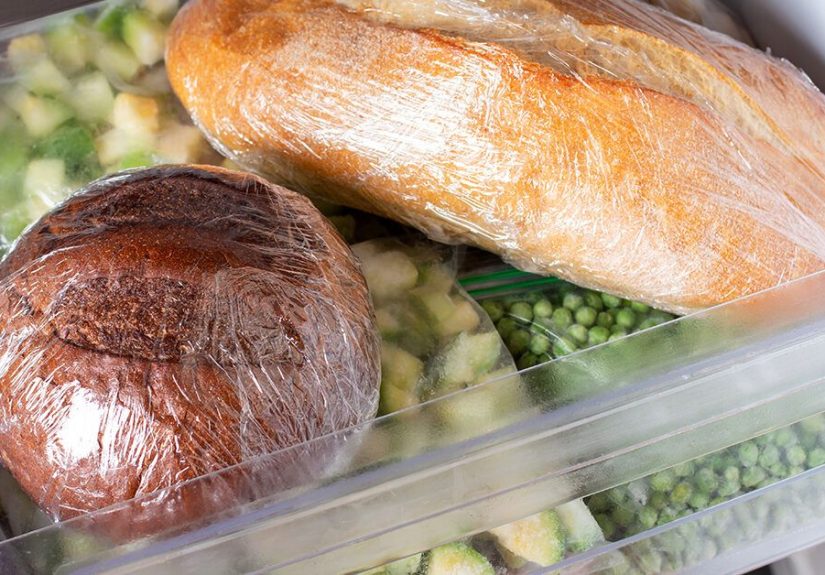
- Wrap tightly in plastic wrap (or a similar cling wrap), pressing it against the surface of the bread.
- Add a second barrier: aluminum foil, freezer paper, or a freezer-safe zip-top bag.
- Push out excess air before sealing. Air is the villain. Treat it like one.
For crusty artisan loaves and baguettes
Crusty breads can poke holes in bags and wrapping (their crust is basically a tiny bread saw). Give them extra
protection: a tight wrap plus a second bag, or double-bagging. This keeps sharp edges from causing tiny tears that
invite freezer air.
For soft sandwich bread
Sandwich bread freezes beautifullyespecially sliced. If it’s store-bought and you’ll use it soon, the original bag
may be fine for short stints. For longer storage and best flavor, add an extra freezer bag and squeeze out air.
For quick breads (banana bread, zucchini bread, etc.)
Quick breads are a little richer and often moister. Wrap them especially well to prevent ice crystals. Consider
freezing in thick slices so you can thaw only what you want.
Vacuum sealing: worth it?
If you freeze bread frequently, a vacuum sealer can be fantastic for preventing freezer burn. Just be gentle with
soft loavestoo much suction can compress the bread. A partial vacuum or “gentle” setting (if available) keeps the
crumb from getting squished into submission.
How long can you freeze bread?
Here’s the key distinction: freezing keeps food safe for a long time, but quality is what declines. For most breads,
best quality is typically within about 3 months. Past that, bread can still be edible, but flavor and texture
may fade and freezer aromas can sneak in.
Practical freezer timelines (quality-focused)
- Most breads (loaves, rolls, sliced bread): best within ~3 months
- Bagels: often best within about 1 month for peak texture
- Quick breads: commonly best within 2–3 months (rich loaves can dry out or pick up off-flavors over time)
If you’re aiming for “tastes fresh,” keep it under a few months and wrap it well. If you’re aiming for “emergency
bread that prevents a hangry grocery run,” your freezer is extremely supportive of your choices.
How to thaw bread (and make it taste freshly baked)
Thawing isn’t just “wait until it’s not frozen.” The method you choose affects textureespecially crust. Pick the
approach that matches how you plan to eat it.
Method 1: Room-temperature thaw (best for most loaves)
For a whole loaf or half loaf, set it out at room temperature while still wrapped. Keeping it wrapped helps prevent
the surface from drying out while the inside warms up. Once thawed, you can refresh it in the oven for that
bakery-style experience.
Method 2: Toaster or toaster oven (best for slices)
For frozen bread slices, you can often toast straight from frozenno thaw time needed. If your toaster has a “frozen”
setting, this is its moment to shine. You’ll get crisp edges and a warm center without turning the bread gummy.
Method 3: Oven refresh (best for crusty bread)
Want your crust back? The oven is the closest thing to a bread resurrection spell.
- For a thawed loaf: warm it in a 350°F oven until heated through (often 10–15 minutes, depending on size).
- For a frozen whole loaf: you can thaw/heat in a 325°F oven until soft and warmed through (often around 20–30 minutes).
Pro trick for crusty loaves: lightly dampen the crust (a quick rinse under cold water or a light spritz) before the
oven. That surface moisture turns into steam and helps the crust crisp up instead of drying out.
Method 4: Microwave (emergency-only, eat immediately)
Microwaves can thaw bread fast, but there’s a catch: bread can turn tough as it cools. If you must, wrap a single
slice or roll in a slightly damp paper towel and microwave briefly. Then eat it right away or finish with a quick
toast to improve texture. Think of microwaving as “first aid,” not “spa day.”
Method 5: Refrigerator thaw (slow and steady)
If you’re thawing something delicate or enriched (like brioche), the fridge can be a gentle option. Keep it wrapped
so it doesn’t dry out or absorb fridge odors. For many breads, room temperature is quicker and works greatjust
avoid leaving bread out for long periods if it contains perishable fillings.
Make thawed bread taste better: the “refresh” playbook
Sometimes thawed bread is fine… and sometimes it tastes like it’s been through a minor life event. Here’s how to
bring it back:
- For crusty bread: a light spritz of water + a hot oven for a few minutes revives crackle and aroma.
- For soft bread: toast it, grill it, or warm it brieflyheat improves flavor and texture.
- For dinner rolls: wrap in foil and warm in the oven so they heat evenly without drying out.
Bonus idea: frozen bread is perfect for garlic bread, grilled cheese, croutons, breadcrumbs, French toast, and bread
pudding. If the loaf is past its prime, lean into recipes where “crisp” or “custardy” is the goal.
Common mistakes that ruin frozen bread
- Freezing while warm: condensation leads to icy texture and faster quality loss.
- Loose wrapping: freezer air causes dry spots and “why does this taste like my freezer?” flavor.
- Storing near strong odors: bread can pick up aromas (frozen bread shouldn’t taste like last month’s salmon).
- Refreezing after thawing: repeated thaw/freeze cycles worsen texture and increase moisture loss.
- Thawing uncovered: the surface dries out before the center warms.
FAQs
Can you freeze bread in the original packaging?
For short-term freezing, it can work, especially for store-bought sliced bread. For best quality over multiple
weeks, add an extra layer (freezer bag or wrap) and press out air.
Should you refrigerate bread instead of freezing it?
Usually, no. Refrigeration can accelerate staling in many breads. If you can’t finish a loaf soon, freezing is
typically the better move for texture and flavor.
What about gluten-free bread?
Gluten-free loaves often benefit from freezing because they can stale quickly at room temperature. Slice before
freezing so you can toast pieces straight from frozen. Wrap wellgluten-free bread can dry out easily.
Can you freeze sandwiches?
Some sandwiches freeze well (think peanut butter and jelly). But sandwiches with lots of watery ingredients (tomato,
cucumber, lettuce) can thaw soggy. If you freeze sandwiches, consider freezing just the bread and building the rest
fresh.
How do you thaw a frozen bagel without it turning weird?
Many people have great results thawing bagels still wrapped at room temperature, then slicing and toasting. You can
also pre-slice before freezing so it goes straight into the toaster.
A quick cheat sheet (save this for later)
- Cool completely before freezing.
- Slice first if you want single servings.
- Wrap tightly + add a second barrier (bag/foil).
- Remove air to prevent freezer burn.
- Best quality: aim to use within ~3 months.
- Thaw wrapped at room temp; toast slices straight from frozen.
- Refresh crust with a little moisture + hot oven.
Conclusion
Freezing bread isn’t complicatedit’s just picky about two things: moisture and air. Cool it fully, wrap it like you
actually care about Future You, and thaw with the method that matches how you’ll eat it. Do that, and your freezer
stops being a graveyard of forgotten loaves and becomes a reliable backup plan for breakfast, lunch, and “I need a
snack right now.”
Real-life freezing & thawing experiences (the stuff that actually happens)
Let’s talk about the messy, very human side of frozen breadthe part no one mentions until you’re standing in front
of the freezer with a loaf that looks like it’s been shrink-wrapped by a raccoon.
One common experience: you freeze a loaf “just for a week,” then rediscover it two months later while hunting for
ice cream. When bread is wrapped loosely (or the bag has a tiny tear you can’t even see), it comes out with pale,
dry patches and a faint “freezer aura.” The fix people swear by is simple: double-wrap next time, push out the air,
and keep bread away from strong-smelling foods. Bread is basically a sponge with opinionsit will absorb aromas if
given the chance.
Another classic: freezing a crusty sourdough loaf whole, then thawing it on the counter unwrapped because “it’ll be
fine.” The outside dries out fast while the center is still cold, and the crust goes from “crackly” to “chewy in a
weird way.” The better move (and what many home bakers end up doing after one regretful loaf) is thawing it still
wrapped, then giving it a short oven refresh. A quick spritz of water on the crust before reheating can turn “meh”
back into “wow, did you bake this today?”
Sliced sandwich bread has its own drama: slices that fuse together like they’re auditioning to become a single mega
slice. People who freeze bread regularly often learn the same lessoneither separate slices with parchment/wax paper
or flash-freeze them on a tray first. It feels extra in the moment, but it saves you from chiseling out a slice at
7:12 a.m. while your coffee gets cold.
Bagels are another “experience-heavy” category. Freeze them whole and you’ll eventually meet the Bagel Boulder:
perfectly round, perfectly frozen, and impossible to slice safely. Many bagel fans end up pre-slicing before
freezing (or buying pre-sliced), so the bagel can go straight from freezer to toaster. The difference is real: less
thaw time, better texture, and fewer sketchy knife moments.
Quick breadsbanana bread especiallyoften teach people the power of portioning. Freeze the whole loaf and you’ll
thaw too much “just to get a slice,” then feel obligated to eat more because it’s already thawed. Freeze thick
slices instead, and you can grab one piece, thaw it, and keep the rest in perfect condition. If you’ve ever hosted
weekend guests, this trick is basically breakfast insurance.
And then there’s the microwave story. Plenty of people try microwaving frozen bread and think, “Hey, this is soft!”
for about 90 secondsuntil it cools and turns oddly firm. The best real-world strategy is using the microwave only
as a quick thaw step (briefly, with a slightly damp towel), then finishing with a toaster or a hot pan. That combo
brings back warmth and texture without leaving you with bread that feels like it’s plotting revenge.
The biggest takeaway from all these experiences is surprisingly comforting: frozen bread isn’t fragile, it’s just
sensitive to air and impatience. Wrap it well, choose the thaw method that matches your goal (toast, soft sandwich,
crusty dinner bread), and you’ll get consistently good resultsno bread boulders, no freezer perfume, no morning
battles with fused slices.