Table of Contents >> Show >> Hide
- The Story Behind “Mother Days”
- Why Motherhood Comics Hit So Close to Home
- The Challenges of Motherhood Shown in “Mother Days”
- The Triumphs of Motherhood Captured in the Comic
- How “Mother Days” Fits into a Bigger Trend of Parenting Comics
- Why Stories Like “Mother Days” Matter Right Now
- How to Enjoy and Share “Mother Days” in a Healthy Way
- Experiences Inspired by “Mother Days”: When Comics Mirror Real Life
Motherhood has a way of turning ordinary days into emotional plot twists: one minute you’re a snack-dispensing superhero, the next you’re crying over a tiny sock you found behind the couch. With “Mother Days”, a heartwarming comics series featured on Bored Panda, artist Robert the Otter turns those chaotic, beautiful, exhausting moments into colorful panels that hit moms (and their families) right in the feels.
On the surface, “Mother Days” is cute: pastel colors, round-cheeked otter characters, and punchlines that make you smile. But just beneath the jokes is a thoughtful look at the challenges and triumphs of motherhoodthe invisible work, the mental load, the bittersweet passage of time, and the simple, everyday acts of love that hold a family together.
In this article, we’ll explore how “Mother Days” captures the realities of parenting, why comics about motherhood resonate so strongly with readers around the world, and what these stories tell us about the mental and emotional labor mothers carry every single day.
The Story Behind “Mother Days”
“Mother Days” comes from Robert the Otter, a Singapore-based artist who describes himself as a data-entry analyst by day and comic creator by heart. He creates comics about people, relationships, psychology, and the small emotional moments that make up everyday life. He’s also a husband and dad to two children: a teenage daughter and a baby son.
In his Bored Panda post, Robert dedicates the comic specifically to mothers, with a simple line that feels like the emotional spine of the series: “Every day, a mother’s love turns hardship into happiness.” That’s exactly what “Mother Days” tries to illustrate. The panels show a mother otter navigating tantrums, teenage moods, worries about the future, and the ache of watching her children grow up faster than she can process.
Instead of focusing on grand gestures, “Mother Days” zooms in on the tiny, often overlooked momentsthe bedtime questions, the forgotten conversations, the car rides and kitchen chats that quietly define a relationship between a mom and her kids.
Why Motherhood Comics Hit So Close to Home
Turning the Mental Load into Visual Stories
One reason comics like “Mother Days” feel so relatable is that they make the mental load of motherhood visible. The “mental load” is the ongoing cognitive and emotional work of planning, organizing, and anticipating everyone’s needsdoctor’s appointments, school forms, meals, playdates, emotional check-ins, and more.
Research shows that mothers still shoulder a major share of this invisible labor. Studies summarized in mental health and family research outlets have found that moms often carry around 70% of the household’s mental load, leaving them mentally exhausted even when the physical tasks seem “done.”
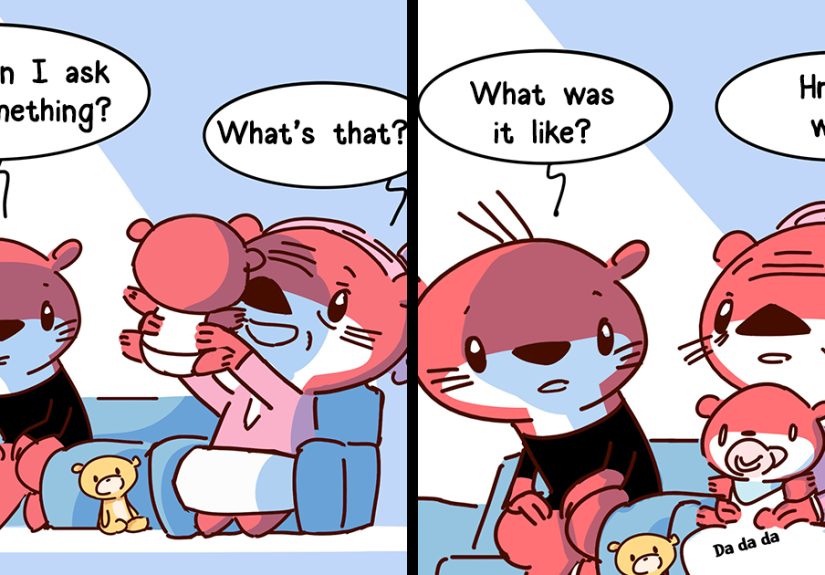
In “Mother Days,” that load is expressed through small, poignant details: a mother worrying whether she made enough meaningful memories, replaying past days in her head, or silently wondering if her child will remember the nights she stayed up comforting them. In one panel, a child asks what their mom remembers, and she admits that it all went by too quickly but that she tried to pour her heart into the moments that mattered.
Those scenes are quietly devastatingand deeply validating. They tell moms, “You’re not imagining it. You’re carrying a lot. And it matters.”
Laughing Through Sleepless Nights and Sticky Floors
Humor is another reason motherhood comics resonate. Bored Panda and similar platforms regularly feature artists who turn parenting chaos into relatable jokes: from Yehuda and Maya Devir’s comics about messy apartments and toddler tantrums, to other webcomic creators who chronicle everything from potty training to “why is there yogurt on the ceiling?” moments.
“Mother Days” belongs to that tradition, but with its own emotional twist. It doesn’t just say, “Parenting is wild, look how messy it is.” It often adds, “And one day, that chaos will be goneand you’ll miss it more than you thought.”
That mix of comedy and gentle heartbreak is exactly what makes these comics so bingeable. You laugh, you swallow a lump in your throat, and then you send the panel to your own mom with a “this is us” message.
The Challenges of Motherhood Shown in “Mother Days”
The Invisible Work Nobody Talks About
Modern mothers face pressure from all sides: to be endlessly patient, emotionally available, financially responsible, physically present, career-focused, and somehow still fun. Surveys from parenting and mental health outlets point out that this constant juggling contributes to burnout, anxiety, and a sense of never doing “enough.”
“Mother Days” paints that reality in soft colors but sharp emotional lines. You see:
- A mother trying to answer big, existential questions from her child while holding a bottle and a tear-streaked toddler.
- Teenage attitudes that cut deeper than they realizelike a panel where a teen snaps, “I didn’t ask you to be my mother,” and the mom quietly replies, “I know.”
- Moments when the mother’s body language shows fatigue, even as she keeps listening, comforting, and supporting.
None of this is framed as failure. Instead, it reflects an uncomfortable truth: moms are often doing their best in a system that expects them to be everything, all at once.
Emotional Whiplash: From “I’m Fine” to “Do You Remember Me?”
The emotional tone of “Mother Days” swings from light to heavy in a way that feels eerily similar to real life. One moment, there’s a cute joke about snacks or errands; the next, a quiet question hangs in the air: “What do you remember about me?”
That question hits home for many mothers who worry that their kids only saw them as “the one who nagged,” “the one who was always cleaning,” or “the one who was busy.” The comic gently suggests that what children often remember most are the small, consistent gestures: the parent who showed up at sports day, who sat beside them when they were scared, who listened to their teenage rants without walking away.
By bringing those worries into the open, “Mother Days” normalizes them. It reassures parents: You’re not the only one wondering if you did enough. Most moms are asking themselves the same question.
The Triumphs of Motherhood Captured in the Comic
Love in the “Bits and Pieces”
One of the standout themes in “Mother Days” is the idea that motherhood isn’t defined by one grand memory, but by “bits and pieces” stitched together over time. In one tender panel, a child admits they remember their mom in fragmentsmoments of comfort, laughter, and presence rather than one big highlight reel.
That message is quietly revolutionary in a culture obsessed with Instagram-perfect milestones and elaborate Mother’s Day celebrations. It says: the ordinary everyday love you give is already extraordinary.
“I’ll Pick You Back Up” – Resilience in Every Panel
Another powerful recurring idea is resilience. In one especially moving panel, a worried child asks, “What if I keep falling?” The mother replies, “Everyone does. But that’s why I’m here. I’ll pick you back up.”
That line sums up the triumph of motherhood: not preventing every fall, but being there, every single time, with a bandage, a hug, or a terrible joke to break the tension.
It also mirrors what many moms say about their own experiences. Even when they’re exhausted or overwhelmed, they keep showing up. Comics like “Mother Days” honor that persistence without turning it into martyrdom. Instead, they show it as an act of deep, everyday courage.
How “Mother Days” Fits into a Bigger Trend of Parenting Comics
“Mother Days” is part of a growing global ecosystem of parenting webcomics. Artists from around the world have turned their sleep deprivation, sticky kitchens, and emotional rollercoasters into comic strips that are read by millions.
Bored Panda, for instance, has highlighted:
- Yehuda and Maya Devir, whose comics about relationships and parenting show everything from postpartum body changes to toddlers taking over the bed.
- Artists like Yllya and others, who turn the daily grind of parenting into funny, slightly exaggerated visual stories.
Together, these creators are building a kind of unofficial graphic diary of modern parenthood. They spotlight shared strugglestantrums in grocery aisles, rushed dinners, hard conversations about growing upand remind readers that they’re part of a larger, messy, loving crowd.
“Mother Days” brings its own flavor to that mix. By using otter characters and a soft visual style, it creates just enough distance for readers to process big feelings, while still seeing themselves in the story.
Why Stories Like “Mother Days” Matter Right Now
Over the last decade, research has shown a worrying decline in mothers’ self-reported mental health. Large national surveys in the United States have found fewer moms describing their mental health as “excellent” and more reporting “fair” or “poor” mental health, especially among those facing economic stress or parenting alone.
At the same time, surveys on family life show that many mothers still feel responsible for managing holidays like Mother’s Day itselfplanning meals, organizing gatherings, and making sure everyone else is comfortable. Some reports even note that a sizable percentage of moms have had to book their own Mother’s Day dinners.
In that context, comics like “Mother Days” are more than entertainment. They:
- Validate emotional reality – They say out loud what many mothers feel but may not have the words to express.
- Encourage empathy – Partners, older children, and even non-parents can better understand what moms carry.
- Normalize asking for support – When the mental load is pictured so clearly, it becomes easier to say, “I need help.”
And, crucially, they remind mothers that the love they give is seen, even if it’s not always acknowledged in the moment.
How to Enjoy and Share “Mother Days” in a Healthy Way
If you’ve ever scrolled through parenting comics and thought, “Wow, that is me,” here are a few ways to engage with “Mother Days” and similar comics in a way that supports your well-being instead of adding pressure.
1. Treat Comics as Connection, Not Competition
It’s easy to slip into comparison: “That mom is more patient than I am” or “Their family looks more loving.” Remember that comics are curated snapshots. Use them as conversation starters, not scorecards. Share a panel with a friend and say, “This is us,” instead of, “Why can’t I be like this?”
2. Use Relatable Panels to Start Real-Life Talks
If you’re a parent, consider reading “Mother Days” with your older kids or partner and asking:
- “Do you ever feel like this?”
- “What do you remember most from your childhood so far?”
- “Is there anything I can do differently to support you?”
Sometimes a cartoon otter can open doors that a serious sit-down talk cannot.
3. Let the Comics Be a Reminder, Not a Burden
When you see a panel about a mom being emotionally present, don’t treat it as a new standard to perfectly match every day. Instead, let it gently remind you that small momentsa shared snack, a walk, a few minutes of eye contactare already valuable.
Experiences Inspired by “Mother Days”: When Comics Mirror Real Life
To really feel how “Mother Days” reflects everyday life, it helps to imagine a few scenes that could be lifted straight from the comic (or from any busy family home).
Scene 1: The Question That Comes Out of Nowhere
It’s late. The living room is a ruin of socks, LEGOs, and snack wrappers. You’re on the couch with your child, who’s finally winding down after a long day of school, homework, and arguments about screen time.
Out of nowhere, they ask, “What was it like when I was little?”
Your brain freezes. How do you capture a thousand tiny memoriesfirst steps, fevers, midnight car rides, sleepy hugs at 3 a.m.in a sentence or two? You think about all the moments that blurred together: the times you didn’t handle things as well as you wanted, the days you were too tired to play, the nights you sat next to their bed just listening to them breathe.
You swallow and say something simple: “It went by really fast. But I loved being there with you, even on the hard days.”
Your child nods and leans their head on your shoulder. For them, that’s enough. That’s a “Mother Days” panel in motion.
Scene 2: The Teenager’s Sharp Words
Another day, your older child comes home stressed. Maybe it was a hard exam, an argument with a friend, or just the weight of figuring out who they are. You ask a simple question“How was your day?”and get a frustrated, “Why are you always on my case? I didn’t ask you to be my mom!”
The words sting, even though a part of you knows they’re not really about you. For a moment, you stand in the doorway, not sure whether to walk away, lecture them, or sit down and wait for the storm to pass.
In “Mother Days,” that moment becomes a quiet frame: the teen’s back turned, the mother’s shoulders slightly hunched, a speech bubble that reads, “I know.” The power of that panel doesn’t come from a perfect response. It comes from the honesty of the hurtand the mother’s decision to stay present anyway.
Scene 3: The Bus Stop in the Rain
You’re standing at a bus stop in the rain, holding bags filled with groceries you probably overspent on, because you wanted to make the week feel a little special. Your child skips next to you, asking for treats, toys, and everything in between.
You find yourself promising, “We can get one or two special things. If we’re lucky, I’ll get you everything, okay?” Your feet hurt, your shoulders are tense, and your budget is tightbut you’re still thinking more about their joy than your own fatigue.
That’s the kind of moment “Mother Days” freezes on the page. It shows the reality: a tired parent, a hopeful child, a rainy backdrop, and love stretched just a little farther than comfort.
Scene 4: The Promise to Keep Picking Them Up
Later, at the playground or in life, your child fallsliterally or metaphorically. They fail a test, lose a friend, or feel left out. They come to you with red eyes and a knotted throat and whisper, “What if I keep failing?”
You can’t promise they won’t fall again. But you can say, “Everyone falls. That’s why I’m here. I’ll help you back up.” It’s a line that echoes the comic, but it’s also the unwritten contract of motherhood itself: not to eliminate pain, but to stand beside your child through it.
Scene 5: Looking Back Together
Years later, maybe over dinner or during a quiet car ride, the roles shift. You’re older now. Your child is an adult with a job, a life, and maybe kids of their own. They ask, “Do you remember much about when we were growing up?”
You laugh and admit, “Honestly? It’s a blur. But I tried to put my heart into the moments that mattered.” And then you start trading memoriesbits and pieces from both sides of the story. They remember the pancakes shaped like animals, the late-night talks, the way you always waited up until you heard the door close.
That exchange is the full-circle moment “Mother Days” gestures toward: proof that the love you poured into those exhausting years didn’t disappear. It settled into your child’s memory like ink on a page.
In the end, that’s what “Mother Days” celebrates: not perfection, but presence; not flawless parenting, but a love that keeps showing upthrough tantrums, teenage moods, rainy bus stops, and sleepy goodnights.