Table of Contents >> Show >> Hide
- Why “Just Go to School” Is Complicated in the Guatemalan Highlands
- Meeting Tomás: A Lesson Hidden in a Notebook
- What the Evidence Shows About Education in Guatemala
- What Actually Helps: Practical Ways Education Becomes Real in the Highlands
- 1) Intercultural bilingual education that respects home language
- 2) Teacher coaching focused on foundational literacy and math
- 3) School meals and health supports that keep kids in class
- 4) Keep girls in school by reducing the “hidden costs”
- 5) Flexible pathways for students who fall off the track
- 6) Community ownership: the quiet engine behind sustainability
- What Tomás’s Question Still Demands From Us
- Conclusion: The Quiet Superpower of a Pencil
- of Experiences Related to “The Little Boy Who Taught Me the Power of Education in the Guatemalan Highlands”
- SEO Tags
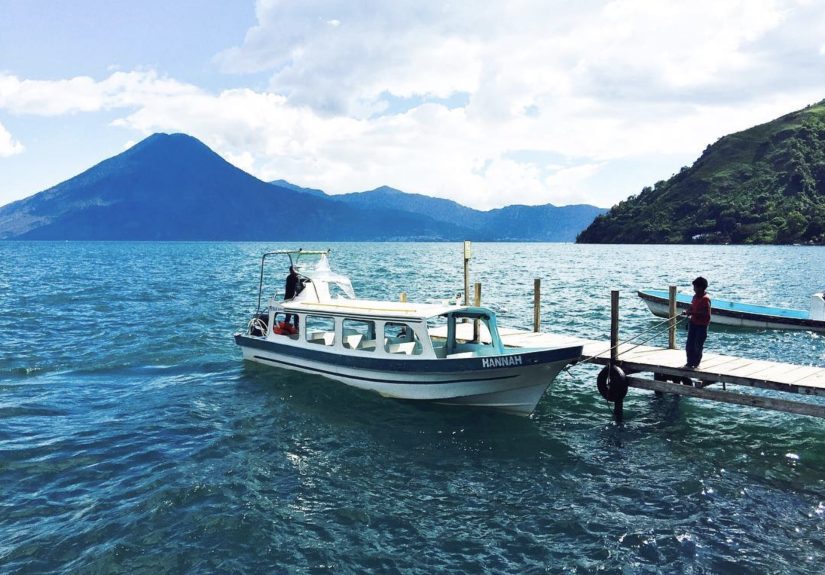
The Guatemalan highlands have a way of making everything feel epic. The volcanoes look like they were designed by
someone who refuses to use the “subtle” setting. The air is thin. The sunsets are dramatic. And the roads?
Let’s just say your car’s suspension will learn new vocabulary.
I’m going to tell you a true-to-life story from the highlandsbuilt from patterns educators, families, and researchers
describe again and againabout a boy I’ll call Tomás. He’s not one real child, and I’m not naming a specific
village. But the challenges (and the brilliance) are real. And the lesson Tomás taught me is one you don’t forget:
education isn’t just school. It’s leverage.
Why “Just Go to School” Is Complicated in the Guatemalan Highlands
Geography turns attendance into endurance
In the highland departmentsplaces like Quiché, Huehuetenango, Sololá, Totonicapán, and San Marcosschool can be
physically close on a map and still painfully far in real life. A steep footpath is not the same thing as a sidewalk.
In the rainy season, a “shortcut” can become a mud slide. A bus that doesn’t run on time (or doesn’t run at all)
turns a normal school day into a scheduling puzzle that would make a mathematician reach for comfort snacks.
When attendance depends on daylight, weather, and whether your little sibling is sick, education becomes a fragile
routine. Families aren’t being “unmotivated.” They’re doing logistics under pressure.
Language: when the classroom doesn’t speak “home”
Guatemala is multilingual in a way many outsiders underestimate. Spanish is the official language, but communities
across the highlands speak Mayan languages like K’iche’, Q’eqchi’, Kaqchikel, Mam, and morealong with other Indigenous
languages. For many children, Spanish is not the language of bedtime stories, jokes, or instructions from grandma.
Now picture being six years old and starting first grade in a language you barely understand. That’s not a “learning
style.” That’s a barrier. It’s also why intercultural bilingual education matters: not as a trendy add-on, but as basic
fairness and basic effectiveness.
Poverty and child work: the math doesn’t lie
Poverty changes the cost of everything, including education. A uniform, notebooks, bus fare, or even lunch can become
a dealbreaker. And in rural areas, children may be expected to work: helping with farming, selling at markets, caring
for younger siblings, or joining seasonal labor migration. When a family’s income depends on harvest seasons, school can
feel like a luxury itemimportant, yes, but hard to “afford” in time and energy.
This is where well-meaning advice often misses the point. Telling a family to “prioritize education” without addressing
the economics is like telling someone to “prioritize swimming” while you keep handing them bricks.
Meeting Tomás: A Lesson Hidden in a Notebook
Tomás entered the story the way many highland lessons do: quietly, practically, and with zero interest in impressing anyone.
He was small for his age, with the alert, side-eye confidence of a kid who has already learned which adults keep promises.
He carried a notebook that looked like it had lived a full life. The cover was bent. The corners were soft. Pages were
filled with careful numbers and words that wandered between languages. His handwriting had the seriousness of someone
trying to build a bridge, letter by letter.
The market problem that became a reading problem
In this composite story, Tomás helps his family sell produce at a local market. He’s good with mental mathfast, accurate,
and weirdly proud of it, like a tiny accountant with excellent cheekbones. He can add, subtract, and bargain. But he can’t
always read the Spanish labels, forms, or signs that appear when the family tries to sell beyond the local stall: receipts,
vendor lists, school notices, clinic posters, bus schedules.
One day, he points at a flyer with a big heading and asks a question that sounds simple until it lands in your chest:
“If I can’t read this… how do I know what they’re deciding for us?”
That was the moment. Not because it was dramatic (it wasn’t), but because it was clear. Tomás wasn’t asking for education
as a trophy. He wanted education as a tool: to understand, to choose, to protect his family from confusion, and to participate
in a world that runs on paperwork.
What he taught me: education is power you can share
Tomás’s question reframed everything. “Education” stopped being a slogan and became a set of practical superpowers:
- Literacy is the ability to verify, not just trust.
- Numeracy is the ability to negotiate, not just count.
- Language is the ability to belong in more than one world.
- School completion is a shield against choices forced by desperation.
In the highlands, education isn’t only about “getting a job someday.” It affects health decisions, migration decisions,
family finances, and civic voice. It changes which doors even exist.
What the Evidence Shows About Education in Guatemala
Tomás’s story fits into a bigger national picture that researchers have been documenting for years: Guatemala faces deep
inequality in educational access and learning outcomes, especially for rural and Indigenous communities.
Learning can be low even when enrollment is high
A hard truth in global education is that being in school doesn’t automatically mean learning. Measures of foundational
reading in Guatemala show large shares of children reaching late primary grades without strong reading proficiency. That’s
not a “kids these days” issue. It’s what happens when classrooms lack trained support, materials are scarce, and instruction
doesn’t match students’ language realities.
Language gaps are learning gaps
When many children start school without Spanish fluencyand many teachers aren’t fully trained or resourced for bilingual
instructionstudents can fall behind early. Once that happens, school can become a place where children sit, copy, and
memorize without truly understanding. And when school feels confusing or humiliating, dropping out stops looking irrational.
It starts looking like self-defense.
Poverty, nutrition, and schooling are tangled together
The highlands are also areas where chronic malnutrition has been a major concern. Nutrition affects attention, memory,
and energy. If a child arrives hungry, the best lesson plan in the world still has to compete with biology.
That’s why school meals, health supports, and clean water matter for learning outcomesnot as “extra services,” but as part
of what makes school possible.
What Actually Helps: Practical Ways Education Becomes Real in the Highlands
There’s no single magic fix (sorry, internet). But there are approaches that repeatedly show up in effective programs and
serious research: start early, teach in ways students can understand, support teachers, and remove the practical reasons
children miss school.
1) Intercultural bilingual education that respects home language
Bilingual education in Guatemala isn’t just about translating worksheets. Done well, it treats Indigenous languages as assets,
builds Spanish gradually, and improves comprehension instead of forcing children to guess. It also signals respect: “Your language
belongs here.” That matters more than people realize, especially in communities that have experienced discrimination.
2) Teacher coaching focused on foundational literacy and math
Teachers in rural areas often work with limited materials, multigrade classrooms, and big language differences. Training that is
practicalhow to teach reading fluency, comprehension, early math skills, and social-emotional supportscan raise learning outcomes.
Coaching and classroom-based support are especially important, because real teaching happens in the messy reality of Monday mornings,
not in perfect workshops.
3) School meals and health supports that keep kids in class
If hunger pulls attention away, feeding programs can increase attendance and learning readiness. Pair that with basic health supports
(vision checks, deworming, clean water access, and hygiene education), and you reduce the number of days children miss school.
In the highlands, where a clinic may be far away, schools become a reliable touchpoint for families.
4) Keep girls in school by reducing the “hidden costs”
Girls in rural areas can face a pileup of barriers: domestic work, early marriage pressures, safety concerns, and limited secondary
schools nearby. Supports that reduce costs (supplies, uniforms, transportation), create safe learning spaces, and provide community
encouragement can make a measurable difference. Sometimes the most powerful intervention is social: families seeing real examples
of girls continuing and thriving.
5) Flexible pathways for students who fall off the track
Migration, seasonal work, and family emergencies can interrupt schooling. When re-entry is difficult, students vanish from the system.
Flexible programsaccelerated learning, bridge courses, community tutoring, and second-chance options for adolescentshelp students
return without shame. The message becomes: “You’re not too late.”
6) Community ownership: the quiet engine behind sustainability
The most resilient education efforts aren’t the ones with the flashiest branding. They’re the ones with local buy-in: parents’ groups,
community leaders, teachers, and students shaping what school should look like. When a community sees a school as ours, it’s
more likely to protect attendance, support teachers, and keep improvements going after outside funding fades.
What Tomás’s Question Still Demands From Us
“How do I know what they’re deciding for us?” is a reading question, a civic question, and a dignity question all at once.
It also forces a bigger reality check: education is not only a personal journey. It’s a public promise.
If we want education in the Guatemalan highlands to be more than a hopeful poster, it has to be designed for how life actually works:
multilingual, rural, resource-limited, and deeply human. That means investing in teachers, supporting bilingual instruction, feeding kids,
and building pathways that don’t collapse when a family hits a hard month.
Conclusion: The Quiet Superpower of a Pencil
Tomás didn’t need a dramatic speech about “changing the world.” He needed a classroom that spoke his language, a teacher with support,
a stomach that wasn’t empty, and a path that didn’t punish him for being born far from a paved road.
And in return, he offered a reminder that’s both humbling and hopeful: education isn’t charity. It’s capacity. It’s agency. It’s the difference
between being managed and being consulted. If you’ve ever wondered whether schooling matters, picture a boy holding a battered notebook and asking
for the power to understand. Then try to argue with that.
of Experiences Related to “The Little Boy Who Taught Me the Power of Education in the Guatemalan Highlands”
When people talk about education in rural Guatemala, the conversation often drifts toward big conceptspolicy, budgets, reforms. But what sticks with you
is the daily texture of learning: the walk, the weather, the language choices, and the tiny decisions that decide whether school happens at all.
In highland communities, mornings can begin before the sun fully commits. Children head out in sweaters and sandals, sometimes carrying a notebook in a plastic
bag because clouds don’t ask permission. A child might arrive early to sweep the classroombecause the classroom is also a shared space the community takes pride in.
Then the teacher arrives with the kind of calm that comes from juggling five challenges before breakfast: attendance, language mix, missing supplies, a lesson plan
that has to work for multiple grades, and the reality that some students will disappear for a week due to family work.
You also notice how language lives in the room. A student answers in a Mayan language, then tries again in Spanish, then laughs because the words got tangled.
A good teacher doesn’t punish the tangle; they use it. They build meaning first, then vocabulary. When education respects home language, kids sit taller. They
participate more. They stop treating school like a test of whether they belong.
The most moving “school supplies” aren’t always the fancy ones. It’s the shared pencil that rotates between siblings. It’s the workbook that gets copied by hand
because there aren’t enough copies. It’s the library corner with a few picture books that become community favorites. And yessometimes it’s a donated box of books
that is treated like treasure, because stories are a kind of transport that doesn’t require bus fare.
You hear families talk about education with a practicality that breaks your heart a little. Parents don’t say, “I want my child to maximize lifetime earnings.”
They say, “I want her to read the medicine label.” “I want him to understand a contract.” “I want them to have choices.” Those are not small dreams. They are
survival dreamsand dignity dreams.
And then there’s the moment Tomás represents: the moment a child realizes reading is not only about school. It’s about the world. It’s about noticing when a form
is unfair, when a promise is vague, when a price is wrong, when a policy affects your family. That’s the power of education in the highlands: it turns confusion
into comprehensionand comprehension into agency.