Table of Contents >> Show >> Hide
- Why This Question Won’t Stay Dead (Like Scar’s Trustworthiness)
- What “Live-Action” Typically Means (And Why That Definition Struggles Here)
- What the 2019 “Lion King” Actually Is: Photorealistic CGI All the Way Down
- Shot Like Live-Action: Virtual Cinematography and the “Camera” That Isn’t a Camera
- Industry Labels: Awards Season Made the Confusion Official
- So… Is It Live-Action?
- Why People Get Weirdly Emotional About the Label
- Better Words to Use (If You Want to Sound Smart Without Sounding Insufferable)
- Quick FAQ (Because Google Loves These)
- of Real-World “Experience” Around This Debate
Let’s address the (very furry) elephant in the room: Disney’s The Lion King (2019) is often called “live-action,”
even though there are no human actors on screen, no real lions, anddepending on how deep you want to spiralarguably no
“action” that was ever “live” in front of a traditional camera.
So what gives? Is it live-action? Is it animated? Is it a high-budget National Geographic fever dream where animals sing show tunes?
The answer is both simpler and weirder than it sounds: the movie is essentially animated, but it’s built and “shot” using
live-action filmmaking language and tools. That hybrid identity is exactly why the label debate won’t die.
Why This Question Won’t Stay Dead (Like Scar’s Trustworthiness)
When people say “live-action,” they usually mean: “This isn’t the hand-drawn/cartoon version.” In Disney-remake speak,
“live-action” has become shorthand for “the new, more realistic one,” even if the realism is coming from computers and
not from an actual camera crew chasing a zebra through the savanna.
Disney’s remake era has trained audiences to sort movies into two mental folders:
Animated Classics (the originals) and Live-Action Remakes (the new ones).
The Lion King (2019) gets tossed into Folder #2 because it looks like nature footageuntil the characters open their mouths
and you remember you’re watching a meticulously rendered digital performance.
What “Live-Action” Typically Means (And Why That Definition Struggles Here)
Traditionally, “live-action” refers to footage captured from the physical world: real performers, real sets (or at least real props),
real light bouncing off real surfaces, recorded by a real camera at a real moment in time. Even heavily VFX-driven live-action
movies still start with a live-action base: a human actor on a stage, a stunt, a location plate, a practical elementsomething.
Under that classic definition, The Lion King (2019) has a problem: it doesn’t have on-screen physical performances.
The characters you see are computer-generated. The environment is computer-generated. Many shots were composed inside a digital world,
not captured out in one.
And yet, it doesn’t behave like traditional animation either. The movie is obsessed (in a technical, “how many individual hairs can we render?”
way) with photographic realism. That’s where the confusion begins.
What the 2019 “Lion King” Actually Is: Photorealistic CGI All the Way Down
Most animated films aim for stylization: expressive eyes, elastic faces, exaggerated movement, and a visual language that celebrates
the fact that it’s animated. The 2019 Lion King aims for “you could almost believe this was shot on location,” right down to
dust, breath, fur texture, and camera-like imperfections.
That approach creates an odd identity:
it is computer animation presented with live-action aesthetics.
If you’re hunting for a clean label, “photorealistic CGI” or “photoreal animation” is closer to the truth than “live-action.”
“But Didn’t They Film Real Animals?”
No. The animals aren’t real footage. This is not “nature documentary with voiceover.” It’s a digitally built world, designed to look like
one you could visit (if you had a spaceship and a bravery problem).
“Okay, So Is It Motion Capture?”
Also no, not in the way you might think. There isn’t a human actor wearing a suit and “becoming” Simba on screen through performance capture.
Instead, the film relies on voice performances and animation choices crafted to feel physically plausible for real animals.
Shot Like Live-Action: Virtual Cinematography and the “Camera” That Isn’t a Camera
Here’s the key to the whole debate: The Lion King (2019) was made using techniques that mimic live-action production.
Filmmakers worked inside a virtual environment and used virtual production toolsoften described like stepping into the movie with VR
to block scenes, choose angles, and “operate” a digital camera.
The result is animation created with live-action instincts:
lens choices, camera moves, framing rules, and even the feeling that someone is standing there capturing a momenteven though the moment
is an illusion assembled from digital pieces.
If you’ve ever watched behind-the-scenes footage and thought, “Why are they holding a camera rig in an empty room?”that’s why.
The crew is treating a CG space like a physical set. It’s not live-action footage, but it’s live-action process.
Why That Matters
- Language: The movie looks like it’s live-action because it’s composed like it.
- Expectation: Viewers expect “realism” from a live-action remake, and this delivers it visually.
- Credit: The more we call it live-action, the easier it is to overlook that it’s primarily the work of animators and VFX artists.
Industry Labels: Awards Season Made the Confusion Official
If you want to see how slippery the definition is, look at awards strategy. By many rule-based definitions, a feature that is mostly animated
can qualify as “animated.” But studios choose how to campaign films, and those choices signal how they want the movie perceived.
In practice, The Lion King (2019) was widely treated as a visual effects achievement rather than an animated feature contender.
That doesn’t magically turn it into live-action, but it does show how the movie sits between categories in a way that makes traditional boxes creak.
So… Is It Live-Action?
If we’re using the traditional definition of live-actioncaptured physical realitythen no. There are no on-screen human performances,
no physical lion performances, and no real savanna footage that forms the backbone of the film.
If we’re using the modern marketing definition“realistic-looking remake of an animated classic”then sure, people will keep calling it live-action,
because that’s the shelf Disney placed it on.
The most honest answer is this:
The Lion King (2019) is an animated film (photoreal CGI) that uses live-action filmmaking techniques.
It’s animation wearing live-action clothing. Very expensive clothing.
Why People Get Weirdly Emotional About the Label
This debate isn’t just pedantry. Labels shape how we value craft.
Calling it live-action can unintentionally minimize animation laborbecause “live-action” implies something was filmed rather than built.
Meanwhile, calling it “animated” makes some people imagine bright, stylized cartoonssomething the 2019 film intentionally avoids.
There’s also an audience-expectation issue. A live-action label primes viewers for certain things:
micro-expressions, spontaneous physical acting, and emotional nuance carried in faces. But photoreal animals can’t emote the way a hand-drawn
lion can without breaking the “realism” illusion. That tensionbetween realism and expressivenessis part of why the remake feels different,
even when it’s telling the same story.
Better Words to Use (If You Want to Sound Smart Without Sounding Insufferable)
If you’re writing, reviewing, or just trying to end a group chat argument before it reaches “blocked and reported” levels,
try one of these terms:
- Photorealistic CGI (simple and accurate)
- Photoreal animation (emphasizes the medium)
- CG-animated remake (tells you what it is and why it exists)
- Virtual production animation (high-nerd, high-precision)
The goal isn’t to win a semantic trophy. It’s to describe what’s on screen: a movie that looks live-action, is made like live-action,
but is fundamentally animated.
Quick FAQ (Because Google Loves These)
Is the 2019 Lion King animated?
Yesits characters and environments are computer-generated. The style is photorealistic, but the medium is animation.
Why does Disney call it live-action?
“Live-action” has become a marketing bucket for realistic remakes. It signals tone and visual style more than production method.
Is it the same as Avatar or The Jungle Book?
It’s closer to The Jungle Book (2016) in spirit: a CG world built to feel physically real, using filmmaking grammar
that resembles live-actioneven though much of what you see is created in post and in the digital pipeline.
of Real-World “Experience” Around This Debate
If you want to understand why the “Is it live-action?” question keeps resurfacing, pay attention to how people react the first time
they watch the 2019 filmespecially in a theater. Viewers often describe the opening moments like a flex: sweeping landscapes, animals that
look startlingly real, and camera movement that feels like a documentary crew got the world’s most patient wildlife access.
For a few minutes, you can forget you’re watching animation because your brain recognizes the visual cues of live-action cinematography:
the framing, the “lens” feel, the sense of distance and scale.
Then the singing starts, and the spell gets tested. Some people experience a funny kind of whiplash: the visuals promise “nature footage,”
but the story delivers Broadway. That mismatch is exactly where the label argument is born. In casual conversations, you’ll hear things like,
“It’s live-action… well, not really… but it looks real.” The debate isn’t coming from film theory; it’s coming from viewer intuition.
People are trying to name what their eyes are telling them.
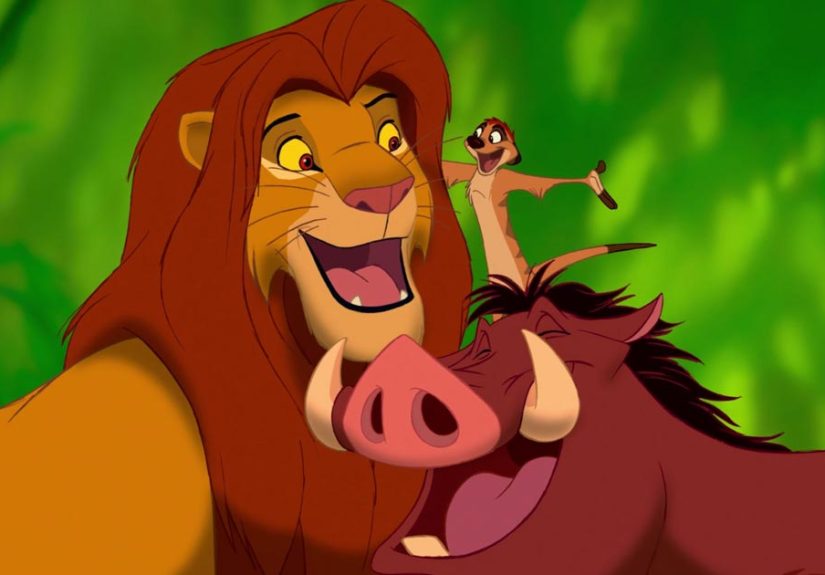
The second wave of “experience” happens after the movie, when comparisons start flying. Fans of the 1994 film often talk about how the
original characters felt more expressivebecause stylized animation can bend reality to serve emotion. In the 2019 version, realism is the rule,
so expressions and movement stay restrained. In real-life terms, that means some viewers feel moved by the nostalgia and the music,
while others feel like they watched an astonishing technical demo that kept them at arm’s length emotionally. Both reactions can be true.
The movie can be visually jaw-dropping and emotionally quieter than the hand-drawn version.
The debate also changes depending on where people watch it. On a big screen, photoreal CGI can feel immersive, like you’re peering into a world
through a window. On a TV at home, the “is this real?” illusion can weaken, and the movie’s artificiality becomes easier to noticeespecially in
dialogue-heavy scenes where faces don’t move like human faces and animal anatomy limits what “acting” can look like. That’s when the conversation
shifts from “live-action vs animation” to “why does it feel different?” and the answer circles back to the same point: it’s animation wearing
live-action grammar.
Finally, there’s the social-media experience: the label becomes shorthand for a bigger argument about Disney’s remake strategy.
Some people use “live-action” as a complaint (“Why remake animation into something less expressive?”). Others use it as praise
(“I can’t believe they made CGI look that real”). Either way, the label debate is really a proxy for what viewers value:
emotional stylization or photographic realism. The 2019 Lion King chose realism, and the audience experiencewonder, discomfort,
admiration, disappointment, or some messy mixkeeps the question alive long after the credits roll.