Table of Contents >> Show >> Hide
- The Real Science: Eye Placement Is a Trade-Off, Not a Trophy
- Predators With Side-ish Eyes Exist (Nature Didn’t Read the Meme)
- So Why Would a Dragon Have Side-Set Eyes?
- A Dragon Designer’s Scientific Checklist (Without Killing the Magic)
- Quick FAQ: Because Someone Will Ask in the Comments
- Conclusion: The Tumblr Answer Is Right (And Nature Is Complicated)
- Experiences Related to Dragon Side-Eyes (Extra )
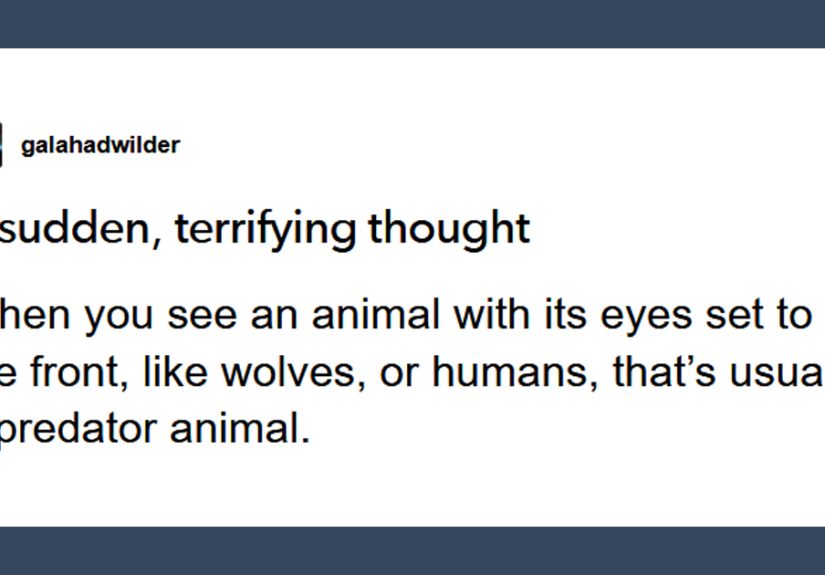
Every so often, the internet blesses us with a question that’s both deeply nerdy and weirdly scientific, like:
If dragons are predators, why do they have eyes on the sides of their heads?
It sounds like a “gotcha” until you remember two important facts: (1) nature loves exceptions, and (2) dragons are basically a flying pile of “exceptions.”
The Tumblr-style answer (you can almost hear the keyboard clacking) is: eye placement is a trade-off.
Forward-facing eyes aren’t a “predator badge.” They’re a design choice that favors certain hunting styles.
Side-placed eyes aren’t a “prey label.” They’re a design choice that favors awareness, stability, and survival in chaotic environments.
And if you’re a dragonan aerial apex predator that also has to land, launch, dodge cliffs, watch rivals, and not faceplant into a castleawareness is not optional.
The Real Science: Eye Placement Is a Trade-Off, Not a Trophy
What forward-facing eyes are good for
Forward-facing eyes increase the overlap between what each eye sees. That overlap (binocular vision) can improve depth perception,
which helps with precise timingpouncing, grabbing, striking, or threading your claws through the world’s worst jungle gym.
Big cats, many primates, and a lot of classic “chase-and-grab” predators benefit from this arrangement.
But binocular overlap has a cost: you usually give up some panoramic coverage. In other words, you can judge distance better in front of you,
but you’re not casually monitoring everything behind you unless you turn your head (or have an assistant who yells “BEHIND YOU!”).
What side-placed eyes are good for
Side-placed eyes widen the field of view. That can mean earlier detection of threats, better navigation, and fewer surprises.
People often associate this with prey animalsbecause yes, being eaten is a great motivator for seeing danger early.
But wide fields of view are also handy for animals that live in open areas, fly fast, hunt in three dimensions, or face threats from multiple directions.
Also: “side-placed eyes” doesn’t automatically mean “no depth perception.” Many animals with laterally placed eyes still have some overlap in front.
It may be smaller than ours, but it’s enoughespecially when combined with other depth cues like motion, size, and perspective.
Predators With Side-ish Eyes Exist (Nature Didn’t Read the Meme)
The “predators have eyes in front, prey have eyes on the sides” rule is a helpful starting point, not a law carved into stone tablets by an owl.
Real ecosystems are messy. Some predators need panoramic awareness. Some prey need precision. And some animals basically min-max their stats.
Example 1: Sharkspredators that benefit from wide visual fields
Many sharks have eyes positioned more laterally than a lion’s. Yet they’re still successful predators because water is a 360-degree environment:
prey can appear above, below, behind, and “somewhere in the general ocean.” For some sharks, head shape and eye placement can expand the field of view
while still maintaining meaningful binocular overlap in frontuseful for targeting.
Hammerhead sharks are a famous example because their wide head shape increases visual coverage.
Research on shark visual fields shows that even with that dramatic “T” silhouette, they can still achieve binocular overlap.
Translation: wide awareness and aiming ability can coexist if anatomy cooperates.
Example 2: Raptorspredators with specialized, sometimes sideways “best vision”
Birds of prey are often described as having forward-facing eyes for binocular visionand that’s broadly true.
But raptor vision is more nuanced than a motivational poster that says “EYES FRONT, MEAT LATER.”
Some raptors rely heavily on specialized regions of the retina (foveae) and eye/field configurations that support long-distance tracking,
high-speed flight, and precise interception. There’s research describing how certain raptors have exceptionally acute vision that can be oriented
somewhat sideways, creating aerodynamic and behavioral trade-offsbecause turning your head at high speed can increase drag and affect the chase.
The point is: predator vision is engineered around the job, not around a simple “forward = predator” label.
Example 3: “Predator vs. prey” is a spectrum, not a two-team sport
Many animals hunt sometimes and flee other times. Some are both predator and prey depending on age, size, and location.
Eye placement often reflects the whole lifestyle package: habitat, movement speed, feeding strategy, social behavior, and threats from above or behind.
So Why Would a Dragon Have Side-Set Eyes?
Now let’s apply the biology to the fantasy. Dragons aren’t just predators. They’re flying predators.
That changes the problem from “How do I catch lunch?” to “How do I catch lunch while moving through 3D space at speed
without turning myself into a smoking lawn dart?”
1) Aerial life rewards panoramic awareness
In the air, danger and opportunity come from everywhere. Birds, cliffs, storms, other dragons, arrows, ballista bolts, and that one wizard who
thinks “wind wall” is a personality. A wider field of view helps a dragon:
- spot prey on the ground while still monitoring the horizon
- avoid collisions during dives, turns, and low-altitude passes
- track multiple moving targets (prey, rivals, threats)
- land safelybecause gravity is undefeated
2) Apex predators still need to watch their backs
“Apex predator” doesn’t mean “invincible.” It means “usually not hunted for food.”
Dragons still face threats: rival dragons, territorial fights, injuries, parasites, fires, humans with engineering degrees, and cliffs with no empathy.
Wide awareness reduces surprise attacksespecially from other dragons, who are the most believable predator of… dragons.
3) Dragons can get depth perception without fully forward-facing eyes
Depth perception isn’t a one-trick pony that only comes from binocular stereopsis.
Animals (and humans) use multiple cues:
- Motion parallax: things closer move faster across your view as you move
- Relative size: familiar objects appear smaller when farther away
- Occlusion: if one thing blocks another, it’s closer
- Texture gradients: patterns get denser with distance
- Shadows and lighting: consistent light can “shape” the scene
A dragon that’s constantly moving (flying, gliding, circling) would be swimming in motion-based depth cues.
So even if their eyes are somewhat lateral, they can still judge distance effectivelyespecially at the scales dragons operate on.
4) Big heads and mobile necks can cheat the system
Dragons are usually depicted with large skulls, strong necks, and expressive head movement.
That matters because head movement can create dynamic overlap and improve targeting.
Even animals with more lateral eyes can gain binocular overlap in front depending on head shape and how they orient their gaze.
Dragonsbeing fantasy’s favorite “oversized lizard-cat-bird thing”have room to evolve clever compromises.
A Dragon Designer’s Scientific Checklist (Without Killing the Magic)
If you want the Tumblr explanation to feel “scientific” without turning your story into a textbook, focus on trade-offs and ecology.
Ask what your dragon actually does most of the time.
If your dragon is an aerial ambush hunter
- slightly more forward eye placement for precise strike timing
- powerful neck mobility to scan without banking the whole body
- pupil shape that supports day/night hunting (depending on your world’s lighting)
If your dragon is a long-range patrol predator
- more lateral placement for panoramic surveillance
- excellent motion detection for tracking moving prey far below
- high visual acuity zones for “zoomed-in” spotting at distance
If your dragon fights other dragons often
- wider field of view to monitor threats during turns and climbs
- strong depth cues from motion (spirals, circles, feints)
- fast head and eye tracking for midair combat
Quick FAQ: Because Someone Will Ask in the Comments
“But predators need depth perception!”
Yesoften. But depth perception comes from multiple cues, not only binocular overlap.
And some predators prioritize awareness and tracking over “jump-precision,” especially when they hunt with speed, stealth, or teamwork (or in water or air).
“So are side-eyed dragons less scary?”
Only if you believe scary equals “looks like a housecat.”
A side-eyed dragon can be terrifying precisely because it can watch you while pretending not to.
Congratulations: you are the mouse, and the dragon is the security camera.
“What about pupil shapeswould dragons have slits?”
Pupil shape in real animals often correlates with ecological niche and hunting style.
Vertical slit pupils are commonly linked with ambush predators in certain contexts, while horizontal pupils are often seen in grazing prey species.
But dragons are fantasy megafauna with unusual constraints (flight, fire, giant heads), so you can plausibly justify round, slit, or something custom.
The key is consistency: match the eye to the lifestyle.
Conclusion: The Tumblr Answer Is Right (And Nature Is Complicated)
The scientific explanation is less “Gotcha! Dragons are prey!” and more “Biology is a compromise machine.”
Eye placement reflects what an animal needs to survive while doing everything else it doesmoving, feeding, avoiding danger, navigating terrain, and dealing with rivals.
A dragon with side-set eyes can still be a predator if its world rewards wide awareness, aerial navigation, and motion-based depth cues.
In fact, for a flying apex predator that might also be hunted by… other dragons, a panoramic view isn’t a flaw. It’s a feature.
Experiences Related to Dragon Side-Eyes (Extra )
If you’ve ever fallen into a fantasy rabbit hole (or, more realistically, a wiki spiral at 2 a.m.), you’ve probably had a moment where a creature design
suddenly “clicks.” Maybe you were sketching a dragon, tweaking the eyes because something felt off, and then you looked at a hawk or a fish and thought,
“Wait… predators don’t all look like lions.” That’s the fun part of the dragons-with-side-eyes debate: it nudges you to notice real animals more carefully.
A lot of people run into this idea first through games and movies. In an RPG, you might try to sneak behind a dragon because that’s what you do to
anything large and cranky. But then the dragon turns its head just slightlybarely a motionand it still seems to know exactly where you are.
Side-set eyes make that moment feel plausible: the creature doesn’t need to face you head-on to keep you in its awareness. It can track movement while
acting relaxed, the same way a bird on a telephone wire looks like it’s chilling… while also monitoring the entire neighborhood for snacks and threats.
Zoo visits can trigger the same “Ohhh” realization. Watching big cats is the obvious lesson: forward-facing eyes, intense focus, stalking posture.
But then you wander over to animals that don’t fit the simple meme. Birds of prey, for example, don’t always behave like a furry missile with eyeballs.
They scan, they tilt, they adjust. It’s not just “stare and pounce.” Their whole head-and-eye routine looks like a sophisticated tracking system,
which makes it easier to imagine a dragon banking in the sky, keeping prey in view with tiny corrections rather than cartoonish, owl-like staring.
Artists and animators also talk about “readability”whether a creature’s face communicates intention. Forward-facing eyes read as confrontational and
focused; side-facing eyes read as alert and watchful. When you give a dragon side-set eyes, it can feel less like a housecat with scales and more like
a ruler of open skiesan animal built to survey territory, spot movement miles away, and make decisions before anyone else even realizes a decision was needed.
That shifts the vibe from “predator that chases” to “predator that controls the board.”
And honestly, the most relatable experience might be the “human version” of this trade-off: driving. When you’re focusing on the car ahead,
you lose awareness of what’s happening in your blind spots. So you use mirrors, head checks, and constant scanning. A dragon in flight has a similar problem,
except the consequences of a blind spot are not “minor fender bender,” they’re “mountain.” Thinking about dragons this way makes the side-eye design feel
less like a mistake and more like an adaptation: a creature that can keep a broad visual map of the world while still snapping into precision when the moment comes.
So the next time you see a dragon with eyes that aren’t perfectly front-facing, it doesn’t have to break immersion. It can actually deepen it.
Because the best fantasy designs don’t ignore biologythey remix it. And nothing says “evolutionary remix” like a predator that can watch the horizon,
track its prey, and still look smug doing it.