Table of Contents >> Show >> Hide
- Getting to Know Desert Willow
- Where Desert Willow Thrives
- How to Plant Desert Willow
- Watering, Mulching, and Fertilizing Desert Willow
- How to Prune Desert Willow
- Propagating Desert Willow
- Pests, Diseases, and Common Problems
- Growing Desert Willow in Containers and Small Spaces
- Desert Willow in the Landscape
- Real-World Experiences: Living with a Desert Willow
- The Bottom Line
If you garden in a hot, dry climate and feel personally offended by plants that demand constant watering,
desert willow might be your new best friend. Despite its name, this beauty isn’t a true willow at all, but
a sun-loving, drought-tolerant small tree (or large shrub) that turns blazing summers into a hummingbird
party with masses of trumpet-shaped flowers.
Known botanically as Chilopsis linearis, desert willow is native to the Southwestern United
States and northern Mexico. It thrives in heat, shrugs off poor soil, and rewards even low-maintenance
gardeners with months of bloom from late spring through fall.
Whether you’re planning a full-blown xeriscape, replacing a thirsty lawn tree, or just want something
gorgeous that won’t guilt-trip you for missing a watering day, this guide will walk you through how to
plant, grow, prune, and troubleshoot desert willowplus some real-world experiences from gardeners who’ve
lived with it for years.
Getting to Know Desert Willow
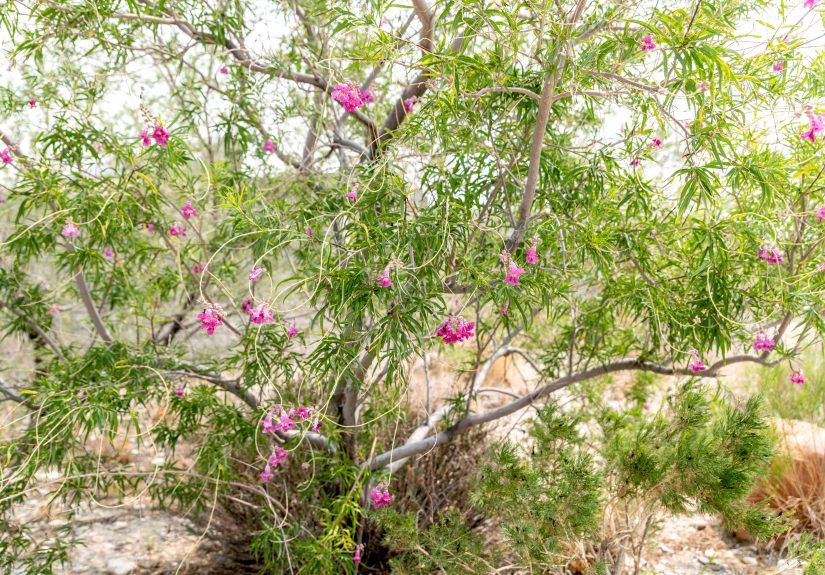
Desert willow is typically grown as a small, multi-trunked tree reaching about 15–30 feet tall
and 10–25 feet wide, depending on variety and growing conditions.
It’s deciduous, meaning it drops its leaves in winter, but during the growing season it’s dressed in long,
narrow leaves that give it a light, airy looksimilar to willow foliage, which is where the name comes from.
The real show, though, is the flowers. From late spring through early fall, desert willow produces fragrant
clusters of trumpet-shaped blossoms in shades of pink, purple, lavender, or white, often with yellow or
burgundy markings in the throat. These blooms are a magnet for hummingbirds, bees, and other pollinators,
making the tree both an ornamental and a wildlife favorite.
Desert willow is generally hardy in USDA zones 7b–11, tolerating heat, drought, and a wide
range of soil pH as long as the soil drains well. In colder regions of zone 7, it may die back in severe
winters and regrow from the base like a shrub.
Where Desert Willow Thrives
Climate and Hardiness
Desert willow is an arid-lands specialist. In the wild, it naturally grows along ephemeral washes and
desert streambedsplaces that may be bone dry for long stretches and then briefly flooded. That background
makes it ideal for low-rainfall areas and gardens that get less than about 30 inches of annual moisture.
In wetter climates, desert willow can still be grown, but it won’t always be a superstar. Constantly wet,
heavy soils can stress the tree, reduce flowering, and increase the risk of root diseases. Gardeners in
humid or rainy regions should think “mound, berm, or slope”anywhere water drains quickly.
Sunlight Requirements
This is not a “part shade with morning sun” kind of plant. Desert willow wants
full sunat least 6–8 hours of direct light per day. In too much shade it tends to get thin,
leggy, and produce fewer flowers.
Soil and Drainage
If you’ve ever been told your soil is “too poor” for most plants, desert willow is here to prove everyone
wrong. It actually prefers:
- Well-drained sandy, gravelly, or rocky soils
- Low to moderate organic content
- Both acidic and alkaline pH ranges
What it doesn’t like is heavy, wet, compacted clay that stays soggy after rain. Overwatering or
poor drainage is one of the fastest ways to harm this plant, often leading to root rot and weak, lanky
growth.
Landscape Uses
Because desert willow grows relatively quickly, stays modest in size, and blooms for months, it works well as:
- A small patio or courtyard tree
- A highlight in a xeriscape or gravel garden
- A flowering screen or informal hedge when planted in groups
- A focal point near a window, where you can watch hummingbirds work the blooms
Just keep in mind it can be a bit “messy”dropping flowers, leaves, and seed podsso don’t plant it right
over a pristine pool deck if you’re allergic to sweeping.
How to Plant Desert Willow
Choosing a Variety
You’ll see both straight species Chilopsis linearis and named cultivars at nurseries. Cultivars are
selected for traits like flower color, heavier blooming, or a more upright habit. Examples include:
- ‘Bubba’ – Upright, dark purple flowers, heavy bloomer, great for hot, dry sites.
- ‘Dark Storm’ – Rich burgundy blooms.
- ‘Pink Star’ – Bright pink flowers.
If you don’t want seed pods dropping everywhere, ask about fruitless cultivars, which focus
their energy on flowers instead of seeds.
When to Plant
The best planting time is:
- Fall in mild-winter climates, so roots can establish in cool weather
- Spring after the danger of hard frost has passed in colder regions
Avoid planting during the peak of summer heat unless you’re prepared to baby the tree with extra water
while it settles in.
Step-by-Step Planting Guide
-
Pick the site. Choose a full-sun spot with excellent drainage. Avoid low spots where water
collects. -
Dig a wide hole. Make it about 2–3 times the width of the root ball but no deeper than the
root ball’s height. You want the root flare (where the trunk widens) at or slightly above the soil line. -
Loosen the roots. If the plant is pot-bound, gently tease apart circling roots to encourage
outward growth. -
Backfill with native soil. Desert willow doesn’t need rich amended soil. If your soil is
very heavy clay, you can mix in some coarse sand or gravel to improve drainage around the planting
areabut don’t create a “bathtub” of soft soil that holds water. -
Water deeply. Soak the root ball thoroughly after planting to settle the soil and eliminate
air pockets. -
Mulch lightly. Apply a 2–3 inch layer of mulch out to the drip line, keeping it a few
inches away from the trunk to prevent rot.
Watering, Mulching, and Fertilizing Desert Willow
Watering: Establishment vs. Long-Term Care
For the first year or two, desert willow does need consistent moisture while roots expand:
- Water deeply once or twice a week during hot, dry weather right after planting.
- Gradually reduce to every 10–14 days as the tree establishes.
Once established, desert willow is highly drought tolerant. In many desert or semi-desert
regions, deep watering every 3–4 weeks during the growing season is enoughand often encourages better
flowering than frequent, shallow watering.
Overwatering is a common mistake. Constantly wet soil can cause root rot, nutrient imbalances, and lush but
weak growth. If in doubt, let the soil dry between waterings.
Mulching
Mulch isn’t mandatory, but it helps:
- Preserve soil moisture
- Suppress weeds
- Regulate soil temperature
Use a light, airy organic mulch like shredded bark or wood chips and keep it pulled back from the trunk.
In extremely dry climates, a mulch “donut” around the tree base is especially helpful for young plants.
Fertilizing (Spoiler: Usually Don’t)
One of the perks of desert willow is that it generally does not need fertilizer. It’s evolved
to thrive in nutrient-poor soils, and adding too much nitrogen can actually:
- Encourage fast, weak growth
- Reduce flowering
- Increase susceptibility to wind damage
If growth is unusually poor or leaves look pale and yellow after you’ve ruled out water and drainage issues,
you can apply a light dose of balanced, slow-release fertilizer in early springbut err on the side of less,
not more.
How to Prune Desert Willow
Desert willow naturally wants to be a multi-trunked, fountain-shaped small tree. You can keep that loose,
informal look or train it into a more defined single- or few-trunk specimen. Early pruning is key.
Timing Your Pruning
Desert willow flowers on new wood, meaning growth produced in the current season. That’s good
news for pruning: removing older wood can actually stimulate more blooms.
-
Do structural pruning in late winter to early spring before new growth appears, or lightly
after flowering flushes if shaping is needed. -
Remove winter tip dieback once leaves emerge so you can clearly see what’s alive. Tip dieback is common
and not usually a health issue.
Shaping Young Trees
In the first few years:
- Select 1–3 strong main trunks and remove competing stems.
- Remove crossing or rubbing branches.
- Gradually raise the canopy by removing lower branches if you want a tree-like form.
Remember, this is a naturally informal tree; it looks best with a bit of graceful, open branching rather
than a tightly clipped shape.
Managing Seed Pods and Mess
After flowering, desert willow produces long, narrow seed pods that can persist on the tree into winter.
Some gardeners love the textural look; others find them messy. If you’re in the “less clutter” camp, you
can:
- Choose a fruitless cultivar when possible.
- Prune off some seed pods in late season before they mature, if practical.
Propagating Desert Willow
Growing Desert Willow from Seed
Desert willow seeds are relatively easy to germinate, but they don’t stay viable for longoften losing
vigor by the following spring.
For best results:
- Harvest ripe pods in late summer or early fall when they turn brown and start to split.
- Remove seeds and plant them as soon as possible.
- Soak the seeds for a few hours in water (or a very mild vinegar solution) to speed up germination.
-
Sow them no deeper than about 1/4 inch in a well-draining potting mix. Keep the medium lightly moist but
not soggy. -
Expect germination in 1–3 weeks under warm conditions. Once seedlings have a couple sets of true leaves,
pot them up individually.
Seed-grown plants can vary in flower color and habit, so if you want a precise repeat of a favorite tree,
cuttings are a better bet.
Propagating Desert Willow from Cuttings
Desert willow roots well from both softwood and hardwood cuttings:
-
Take softwood cuttings in mid-summer, or dormant hardwood cuttings in late
winter. -
Cut 6–12 inch lengths from healthy branches, remove most leaves, and dip the cut end in rooting hormone
if desired. -
Insert cuttings into a light, well-draining mix (such as perlite mixed with potting soil) and keep evenly
moistnot waterlogged. - Many cuttings will root within 2–4 weeks under warm, humid conditions.
Because cuttings are clones, they’ll match the parent plant’s flower color and growth habitgreat if you’re
obsessed with that one perfect purple-flowering specimen.
Pests, Diseases, and Common Problems
Here’s the good news: desert willow is generally low-maintenance and trouble-free. Most
gardeners never see serious pest or disease issues.
Insects
-
Aphids – These can cluster on new growth and flower stalks, causing sticky honeydew. A firm
blast of water, insecticidal soap, or neem oil usually handles them. -
Spider mites – In very hot, dry conditions, these may cause stippled or bronzed leaves.
Again, targeted sprays or increasing humidity around the tree (where feasible) can help.
Diseases and Environmental Issues
-
Verticillium wilt – Occasionally noted on desert willow; symptoms include wilting or branch
dieback. Good drainage and overall plant health are your best defenses. -
Root rot – Usually a sign of overwatering or chronically wet soils. If you see yellowing,
wilting, or decline despite watering, check drainage and cut back irrigation. -
Mineral imbalances – Too much or too little fertilizer, or poor water management, can
cause leaf discoloration. Adjusting your watering and avoiding heavy fertilization usually helps.
Tip dieback in winter is normal; just prune out the dead tips in spring once you can clearly see new
growth.
Growing Desert Willow in Containers and Small Spaces
If you don’t have room for a full-sized tree in the ground, you can grow a compact desert willow in a large
container. Choose:
- A pot at least 18–24 inches wide with drainage holes
- A gritty, well-draining mix (cactus or tree potting mix with added perlite works well)
- A sunny, heat-reflective spot like a patio or balcony
Container-grown trees will need more frequent watering than in-ground specimensusually when the top few
inches of soil are drybut you still want to avoid constant sogginess. Regular light pruning keeps the
canopy balanced and the size manageable.
Desert Willow in the Landscape
Design-wise, desert willow pairs beautifully with other drought-tolerant plants like agaves, yuccas,
salvias, ornamental grasses, and low-water perennials. Its light canopy allows dappled sun to reach under
its branches, so you can underplant with sun-loving, heat-tolerant companions.
Because it’s drought tolerant and attractive to pollinators, desert willow is excellent for:
- Xeriscapes and water-wise front yards
- Wildlife gardens and pollinator corridors
- Street-side or park strip plantings (where space allows)
In many neighborhoods, one blooming desert willow is enough to convince the whole street to plant them.
Real-World Experiences: Living with a Desert Willow
On paper, desert willow looks like the perfect “set-and-forget” tree. In real gardens, it’s very close to
thatbut a few quirks are worth knowing from lived experience.
Gardeners in hot, dry regions often describe desert willow as the plant that finally made their yard feel
like an oasis. Once established, it can sail through long stretches of triple-digit temperatures with just
the occasional deep watering, all while staying covered in blooms. In some Western gardens, people report
their trees flowering from late spring right into early fall, with hummingbirds visiting daily.
In slightly wetter or cooler climates, the experience is a little different. The tree may grow more slowly
or act more like a die-back shrub, especially after harsh winters. One long-time gardener in the Ozarks,
for example, observed a desert willow in heavy clay soil that survived for decades but never quite reached
“showstopper” statusyet it kept coming back, year after year, despite less-than-ideal conditions.
Another recurring comment from homeowners: desert willow can be messy. The flowers carpet the ground during
peak bloom, which some people love for the cottage-garden look and others consider one more thing to blow
off the patio. The same goes for seed pods. If you’re super tidy, you may want to:
- Plant it a bit away from driveways, pools, or high-traffic seating areas.
- Opt for fruitless or low-seed cultivars where available.
Pruning style also influences the “personality” of your desert willow. Gardeners who keep it as a multi-
trunked specimen often describe it as having a relaxed, almost desert-oasis vibelike a smaller, friendlier
version of a mesquite or palo verde. Those who train it into a more formal, single-trunk tree appreciate
the shade and structure it brings to small patios or courtyards. Because it blooms on new growth, even
fairly hard pruning tends to be forgiven with a flush of fresh shoots and flowers.
Watering habits show up quickly in real-world results. Gardeners who try to treat desert willow like a
lawn treefrequent shallow watering, wet feet, and heavy fertilizingoften complain that it gets lanky,
prone to breakage, or downright unhappy. In contrast, people who switch to deep but infrequent watering and
skip most fertilizers usually see sturdier trunks, better flowering, and fewer disease issues. It’s one of
those trees that genuinely thrives when you stop fussing over it so much.
Finally, many gardeners mention that desert willow ended up being their “gateway” native tree. Once they saw
how well it handled heat and droughtand how much wildlife it attracted compared with traditional thirsty
ornamentalsthey started phasing in more native or climate-appropriate plants. In that sense, planting a
desert willow isn’t just about one tree; it can be the first step toward a more resilient, low-water,
pollinator-friendly landscape.
The Bottom Line
If you live in a region with hot summers, plenty of sun, and reasonably well-drained soil, desert willow is
a seriously strong contender for “favorite small tree.” It offers months of flower color, supports
pollinators, handles tough conditions, and asks very little in return once established.
Give it sun, drainage, and a little patience in the early years, and it will pay you back with a long
season of blooms, happy hummingbirds, and a landscape that looks intentionally “desert chic” rather than
“crispy and tired.” For gardeners who are ready to use less water and still enjoy a showy, charismatic
focal point, learning how to grow and care for desert willow might be one of the smartest gardening moves
you make.