Table of Contents >> Show >> Hide
- What makes a house an Underground Railroad site?
- 1) Levi Coffin House (Fountain City, Indiana)
- 2) The Johnson House (Germantown, Philadelphia, Pennsylvania)
- 3) Wilson Bruce Evans Home (Oberlin, Ohio)
- 4) Mayhew Cabin (Nebraska City, Nebraska)
- 5) Jordan House (West Des Moines, Iowa)
- 6) Jackson Homestead (Newton, Massachusetts)
- 7) John Brown Museum / Adair Cabin (Osawatomie, Kansas)
- 8) Dr. Nathan M. Thomas House (Schoolcraft, Michigan)
- 9) Seth M. Gates House (Warsaw, New York)
- 10) Harriet Beecher Stowe House (Cincinnati, Ohio) The “Honorary” Home
- How to “read” these homes like a historian (without being annoying about it)
- Planning a respectful Underground Railroad road trip
- Experience Section: What It Feels Like to Visit These Underground Railroad Homes Today (About )
- Conclusion
If walls could talk, some would whisper. These houses? They’d clear their throats, lock the door, and speak in codebecause that’s exactly how the Underground Railroad worked:
as a network of people, places, and courage operating in plain sight, often disguised as everyday life.
Despite the name, it wasn’t literally underground and it definitely wasn’t a railroad. It was a loosely connected system of “stations” (safe places), “conductors” (guides), and allies
who helped freedom seekers escape enslavementusually in small steps, always at enormous risk.
Today, some of the most powerful reminders of that story are historic homesordinary-looking buildings that once held extraordinary secrets. Below are ten such places (plus one “honorary”
home that didn’t function as a station but helped ignite the national conscience). Think of this as a road trip through American history, where the real luxury feature is moral backbone.
What makes a house an Underground Railroad site?
Good questionbecause folklore loves a dramatic “secret tunnel” almost as much as the internet loves a dramatic “before and after.” Historians generally rely on documentation:
letters, diaries, court records, property records, newspaper accounts, community histories, and corroborated oral histories. Some sites are also recognized through preservation programs,
including the National Park Service’s Network to Freedom, which documents verified connections to Underground Railroad history.
1) Levi Coffin House (Fountain City, Indiana)
If the Underground Railroad had a “major hub,” the Levi Coffin House makes a strong case for being it. Levi and Catharine Coffin were Quaker abolitionists who sheltered freedom seekers
in their Indiana homeso many, in fact, that the place became known as the “Union Depot” of the Underground Railroad.
Why it matters
- Big impact, steady work: The Coffins assisted large numbers of freedom seekers over multiple years.
- Physical space meets moral space: A home built for family life became a strategic refuge.
When you visit sites like this, the details land differently: a hallway isn’t just a hallway; it’s a decision point. A spare room isn’t décor; it’s a lifeline.
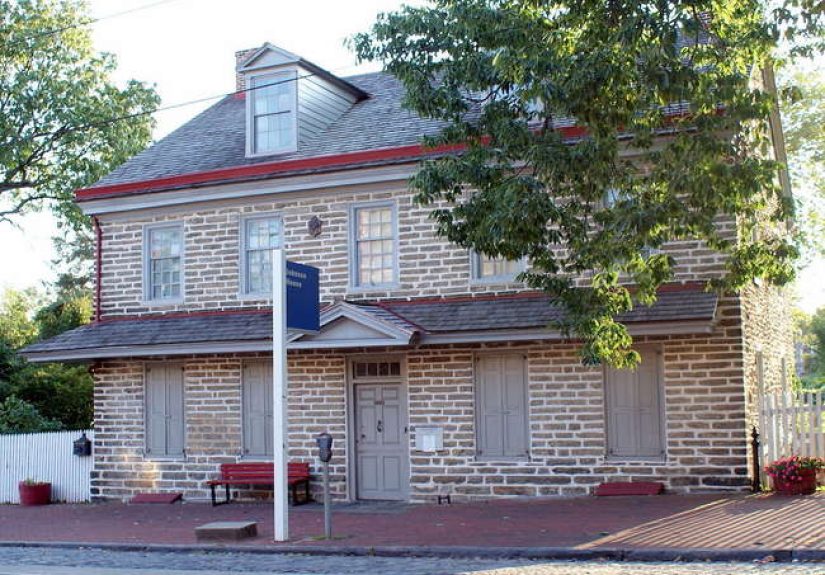
2) The Johnson House (Germantown, Philadelphia, Pennsylvania)
Built in the 1700s and tied to generations of Quaker anti-slavery activism, the Johnson House stands out as a documented Underground Railroad stop that remains accessible to the public.
It’s also a reminder that the Underground Railroad wasn’t “somewhere else”it ran through major cities, neighborhoods, and ordinary streets.
What to look for
- The home’s continuity: Long-term community memory and preserved structure help tell the story.
- Interpretation that names the network: Many sites emphasize the interracial cooperation and coordinated effort involved.
The Johnson House story is less about one cinematic escape and more about repeated, deliberate choicesmade by people who knew exactly what was at stake.
3) Wilson Bruce Evans Home (Oberlin, Ohio)
Oberlin isn’t just a dot on a mapit’s a headline in abolitionist history. The Wilson Bruce Evans Home is especially significant because it was built and occupied by Wilson Bruce Evans,
a freeborn African American abolitionist and Underground Railroad operative.
Why it matters
- Black leadership in abolitionist action: Evans’ life pushes back against lazy narratives that erase African American agency.
- Oberlin’s activism: The community is known for direct resistance to slave catchers and pro-slavery enforcement.
In other words: this isn’t just a house with a story. It’s a house attached to a community that repeatedly said, “Nope. Not on our watch.”
4) Mayhew Cabin (Nebraska City, Nebraska)
Mayhew Cabin is often discussed as Nebraska’s Underground Railroad stop, and it’s a fascinating example of how public history can carry both verified information and powerful folklore.
Many visitors come for the famous “cave” storyyet modern scholarship has challenged parts of that legend, showing how easily dramatic details can outgrow the evidence.
Why it matters
- Teaches history and how history gets told: The site can spark great conversations about documentation, memory, and myth.
- Highlights the Plains in Underground Railroad narratives: People often picture only the East and Midwest routes.
Consider this your friendly reminder: the truth is already compelling. We don’t need to add a Hollywood trapdoor to respect the bravery involved.
5) Jordan House (West Des Moines, Iowa)
Built in the mid-1800s by abolitionist James C. Jordan, this home is remembered as an Underground Railroad station in Iowa. It also connects to wider abolitionist efforts in the region,
including stories of prominent anti-slavery figures traveling through the area.
What makes it memorable
- Regional leadership: Jordan is widely associated with organizing efforts in his county.
- A “safe stop” in a long journey: Many escapes relied on a chain of smaller, quieter helps.
The Jordan House is a great example of how the Underground Railroad wasn’t one routeit was many routes, stitched together by people who refused to mind their own business.
6) Jackson Homestead (Newton, Massachusetts)
The Jackson Homestead is associated with Underground Railroad activity in Massachusetts and now serves as a museum interpreting local historyincluding anti-slavery efforts.
It also connects to post–Civil War work that supported formerly enslaved people and broader Black education initiatives.
Why it matters
- Continuity after the war: Abolitionist commitment didn’t end when the shooting stopped.
- Local history with national meaning: A New England home becomes a window into the country’s moral conflict.
If you’re the type who likes history that comes with receipts, this site’s interpretive framing makes it a strong stop.
7) John Brown Museum / Adair Cabin (Osawatomie, Kansas)
In “Bleeding Kansas,” politics wasn’t an argument at the dinner tableit was the dinner table getting flipped. The Adair Cabin, associated with Reverend Samuel Adair and his family,
is linked to abolitionist John Brown’s time in Kansas and is interpreted today through the John Brown Museum site.
What you’ll learn
- Kansas as a battleground of ideas: The struggle over slavery wasn’t abstract here; it was immediate.
- Abolitionist networks on the frontier: Homes and communities served as organizing points as well as refuges.
Even if you arrive thinking you know John Brown’s story, you’ll likely leave with a more textured sense of the people around himand the stakes in that territory.
8) Dr. Nathan M. Thomas House (Schoolcraft, Michigan)
The Dr. Nathan M. Thomas Housesometimes called the “Underground Railway House”is recognized for its role as an Underground Railroad stop in Michigan.
Thomas, a physician with Quaker roots, is associated with sustained assistance to freedom seekers moving north.
Why it matters
- Michigan’s role in routes to Canada: Geography mattered; Great Lakes corridors created real possibilities.
- Community systems: A successful “station” depended on trust, timing, and neighbors who kept their mouths shut.
This is one of those places that makes you appreciate how much bravery can fit inside an otherwise normal-looking home.
9) Seth M. Gates House (Warsaw, New York)
Upstate New York appears again and again in Underground Railroad history, and the Seth M. Gates House is tied to that wider story. Seth Gates was a politician and abolitionist,
and local accounts connect his home to assistance for freedom seekerssometimes described as concealment in spaces like attics or cellars.
What makes it stand out
- Politics meets practice: Anti-slavery beliefs weren’t just speeches; they showed up in risky action.
- Preservation as education: Local historical organizations keep these stories visible and discussable.
Also: this is a great example of why local museums matter. Big national stories are made of small, specific places.
10) Harriet Beecher Stowe House (Cincinnati, Ohio) The “Honorary” Home
Full disclosure (because history deserves honesty): Harriet Beecher Stowe’s Cincinnati home is not typically described as an Underground Railroad “station.”
But it belongs on this list because it helped shape the national conversation about slavery and escape. Stowe lived in Cincinnati in the 1830s, a border-city environment where the realities
of slavery and freedom were impossible to ignore. Her later novel, Uncle Tom’s Cabin, became a cultural earthquake that fueled abolitionist sentiment.
Why it still belongs in this conversation
- Ideas move people: The Underground Railroad relied on action, but action needs moral pressure.
- Interpreting layered history: The site’s restoration and exhibits show how places can carry multiple “chapters” at once.
Think of it as the house that didn’t hide peoplebut helped expose a system.
How to “read” these homes like a historian (without being annoying about it)
You don’t need a graduate seminar to visit responsibly and learn deeply. Here’s a simple way to approach Underground Railroad homes:
- Ask what’s documented: What evidence supports the site’s roleletters, records, family histories, verified community accounts?
- Notice the geography: Rivers, roads, and borders shaped routes. Some homes sit near critical crossings or travel corridors.
- Listen for networks: The best tours emphasize people: Black leaders, free Black communities, allied religious groups, and local organizers.
- Watch for myth-making: “Secret tunnels everywhere” is rarely true. Real stories tend to be messierand more human.
Planning a respectful Underground Railroad road trip
These sites are museums, historic properties, or community landmarksoften run by nonprofits and volunteers. Hours may be limited, tours might be by appointment,
and some places are preserved primarily for education rather than tourism. Call ahead when possible, follow photography rules, and consider donating if you can.
If you want a broader framework, the National Park Service’s Network to Freedom provides a way to understand how many verified sites exist across the country.
Experience Section: What It Feels Like to Visit These Underground Railroad Homes Today (About )
Visiting an Underground Railroad home is different from touring a mansion with velvet ropes and a gift shop full of “Marie Antoinette but make it soap.”
These places are usually quieteremotionally heavier, toobecause the story isn’t primarily about furniture. It’s about choices.
Start with the soundscape. Many historic homes are creaky (old houses love to announce themselves), but here the creaks can hit harder. You’ll stand in a narrow stairwell
or a low-ceilinged room and realize: people once waited here in silence, listening for footsteps that weren’t friendly. Even without graphic detail, the vulnerability is easy to imagine.
The courage, toobecause fear doesn’t cancel bravery; it proves it.
Then there’s the “scale surprise.” On paper, the Underground Railroad can feel like a big, sweeping historical concept. In person, it shrinks to human size:
a small room, a doorway, a back path, a neighbor’s field. Guides often explain how practical the work wasfood, timing, disguises, directions, and the constant need for secrecy.
That practicality is its own kind of awe. Heroism here wasn’t always dramatic. It was consistent.
You’ll also notice how modern interpretation has improved. Many sites work hard to center freedom seekers and Black agency rather than turning the story into a “nice people helped” tale.
The most meaningful tours name individuals when they can, explain what’s known versus what’s inferred, and place the home inside a larger networkfree Black communities, abolitionist groups,
and the legal threats that made assistance dangerous.
Expect to leave with questionsand that’s a good thing. Visitors often ask: How did neighbors react? Who kept secrets? Who betrayed them? How did a community decide what risks were acceptable?
The uncomfortable truth is that not everyone was brave, and not every town was safe. These homes are reminders of both: the possibility of solidarity and the reality of opposition.
If you’re visiting with family or younger students, it helps to frame the trip around values and evidence. Talk about what “documentation” means. Discuss why myths pop up and why facts still matter.
And if you want to do something tangible afterward, support preservation. Many of these places survive on admission fees, donations, memberships, and volunteers. Keeping the lights on is part of keeping
the history honest.
The strange, hopeful twist is this: after you’ve walked through a few of these homes, “house museum” stops feeling like a niche hobby. It starts feeling like civic maintenance
the work of remembering what people did when the law was wrong, and what it took to help someone reach tomorrow.
Conclusion
The Underground Railroad was never one route, one method, or one hero. It was a patchwork of decisions made under pressureby freedom seekers, free Black communities,
abolitionists, faith groups, and everyday people who chose risk over comfort.
These historic homes are powerful because they’re not abstract. They’re real addresses where real people made real choices. And if that doesn’t make you look at your own front door a little
differentlywell, the house might not be the only thing with thick walls.