Table of Contents >> Show >> Hide
- Step 0: Check the “Can I Work in Canada?” Box (Before You Apply Like a Maniac)
- Step 1: Choose Your Target (Role + Location + Industry)
- Step 2: Build a Canada-Friendly Resume (Yes, It’s a Real Thing)
- Step 3: Write a Cover Letter That Doesn’t Put People to Sleep
- Step 4: Set Up Your “Canadian Job Search Stack”
- Step 5: Find Jobs in the Right Places (Not Just Wherever the Internet Yells Loudest)
- Step 6: Apply Step-by-Step (A Simple System That Works)
- Step 7: Network Without Being Weird About It
- Step 8: Interview Prep the Canadian Way (Clear, Practical, Story-Based)
- Step 9: Follow Up (PolitelyNot Like a Lost Package Tracker)
- Step 10: Evaluate Offers Like an Adult (Even If You Want to Happy-Dance)
- Step 11: Protect Yourself From Job Scams (Because Scammers Love Busy Job Seekers)
- Step 12: Once You’re Hired, Handle the Canadian Paperwork Smoothly
- Quick Checklist: Your “Apply for Jobs in Canada” Game Plan
- Real-World Experiences and Lessons Applicants Commonly Share (Extra 500+ Words)
- 1) “I applied to 80 jobs and heard nothing.”
- 2) “They want Canadian experiencehow do I get it without a Canadian job?”
- 3) “Networking felt awkwarduntil I stopped asking for jobs.”
- 4) “Interviews improved when I practiced stories, not answers.”
- 5) “The moment I got an offer, paperwork became the next boss battle.”
- Conclusion
Applying for jobs in Canada isn’t rocket sciencebut it is a little like assembling IKEA furniture:
totally doable, easier with the right tools, and you’ll regret skipping the instructions halfway through.
This guide breaks the process into simple steps, with practical examples, common pitfalls, and the “Canada-specific”
details that actually matter (hello, work authorization and Canadian-style resumes).
Whether you’re already in Canada, moving soon, or applying from abroad, the goal is the same:
show employers you’re a fit, make it easy for hiring systems to read your application, and reduce friction
(translation: fewer reasons to ignore you).
Step 0: Check the “Can I Work in Canada?” Box (Before You Apply Like a Maniac)
Before you send out 73 applications in one caffeine-fueled evening, confirm your work situation.
Employers commonly ask whether you’re legally allowed to work in Canada, and some roles require specific permits.
If you’re a Canadian citizen or permanent resident
- You can work for any employer (with normal job-specific requirements).
- You’ll typically need a Social Insurance Number (SIN) when you start employment.
If you’re an international applicant
-
You may need a work permit, and in many cases the employer may need to obtain a Labour Market Impact Assessment (LMIA)
(unless the job/role is exempt under certain programs). -
This doesn’t mean you can’t apply from abroadit means you should be strategic and transparent.
Many job postings clearly state whether they offer visa sponsorship or consider international candidates.
Practical tip: If a posting asks “Are you legally entitled to work in Canada?” and you’re not yet authorized,
don’t try to “creatively interpret” the question. Instead, use a short, calm note in your cover letter like:
“I am eligible to work in Canada under [your status/program]” or “I will require employer support for a work permit.”
(No drama. No essays.)
Step 1: Choose Your Target (Role + Location + Industry)
Canada’s job market is not one giant uniform blob. A “Marketing Specialist” in Toronto might look very different from
the same title in Calgary or Halifax. Start by defining:
- Role family: e.g., customer success, accounting, IT support, project management, trades
- Location: province/city (and whether you’re open to hybrid/remote)
- Industry: healthcare, finance, construction, tech, logistics, public sector, etc.
- Must-haves: wage range, shift schedule, language requirements (English/French), work authorization
Example: Instead of “I want an office job in Canada,” try:
“Entry-level administrative coordinator roles in Vancouver or Burnaby, healthcare or education, weekdays, $45–55k.”
You just turned a vague wish into a searchable strategy.
Step 2: Build a Canada-Friendly Resume (Yes, It’s a Real Thing)
Canadian resumes are typically straightforward, accomplishment-focused, and optimized for applicant tracking systems (ATS).
Think clean formatting, clear headings, and bullet points that prove resultsnot a memoir of everything you’ve ever done.
Canadian resume basics that help you not get filtered out
- Use reverse-chronological format unless you have a strong reason not to.
- Keep it to 1 page if you’re early-career; 2 pages is common for experienced candidates.
- Skip photos (it’s generally considered unprofessional in Canada/US-style hiring).
- Do not include age, marital status, religion, immigration status details, or SIN.
- Use a simple font and clean spacing (ATS likes readable, not “modern-art” layouts).
Write bullets like a person who wants interviews
Strong bullets usually follow this pattern: Action + Scope + Result.
Weak bullets list duties. Strong bullets show impact.
- Weak: “Responsible for customer service.”
- Strong: “Resolved 35–50 customer requests daily, improving satisfaction scores from 4.2 to 4.6/5 in one quarter.”
ATS-friendly keyword targeting (without sounding like a robot)
Many Canadian employers use ATS tools that scan for relevant skills, titles, certifications, and keywords.
Your job is to mirror the posting’s language naturally.
- Pull 8–12 keywords from the posting (tools, core skills, certifications, role responsibilities).
- Use them in your Skills section and in relevant bullets.
- Avoid keyword stuffing. If it reads like a “buzzword smoothie,” you went too far.
Step 3: Write a Cover Letter That Doesn’t Put People to Sleep
Not every employer requires a cover letter, but when it’s requested (or when you’re changing industries, relocating,
or applying internationally), it can help.
A simple 3-part cover letter structure
- Hook: role + why you’re interested + 1 relevant win
- Fit proof: 2–3 bullets or short examples that match the posting
- Close: enthusiasm + availability + thank you
Example hook:
“I’m applying for the Operations Coordinator role at MapleWorks because I enjoy untangling messy processes.
In my last role, I streamlined a scheduling workflow that reduced missed appointments by 18%.”
Keep it friendly, specific, and short. Your cover letter is a trailer, not the entire movie.
Step 4: Set Up Your “Canadian Job Search Stack”
Your job search will go faster if you’re not reinventing the wheel daily. Build a simple toolkit:
- Master resume (everything you’ve done, messy is fine)
- Target resume (clean, tailored version you submit)
- Cover letter template (with customizable sections)
- LinkedIn profile aligned with your resume
- Tracking sheet (company, role, date applied, follow-up, status)
Step 5: Find Jobs in the Right Places (Not Just Wherever the Internet Yells Loudest)
Use a mix of sources. Relying on one platform is like fishing with one tiny hook and then blaming the ocean.
Where to look
- Major job boards: broad listings across industries
- LinkedIn: roles + networking + recruiter visibility
- Company career pages: fewer scams, more direct
- Government and official listings: including Canada’s Job Bank
- Recruiting firms: helpful in admin, finance, tech, skilled roles
- Professional associations: niche roles and industry credibility
Search like a pro
- Use 2–3 title variations (e.g., “Administrative Assistant,” “Office Coordinator,” “Admin Coordinator”).
- Filter by “entry-level,” “hybrid,” “remote,” and location radius.
- Save searches and alerts so you apply early (early applicants often get seen first).
Step 6: Apply Step-by-Step (A Simple System That Works)
Here’s a repeatable application workflow. It’s not glamorous, but neither is unemployment.
- Read the posting twice (requirements vs. nice-to-have).
- Tailor your resume headline (title + specialty) and 3–5 bullets to match priorities.
- Adjust keywords to reflect tools/skills mentioned.
- Write a short cover letter if requestedor if you’re relocating/changing industries.
- Answer screening questions carefully (these can auto-filter you).
- Submit as PDF unless the employer requests another format.
- Log the application and set a follow-up reminder.
Example: tailoring in 10 minutes
If the posting emphasizes “customer support + CRM + documentation,” your top bullets should reflect that:
mention the CRM you used, volumes handled, and documentation outcomes (knowledge base, SOPs, reduced repeat tickets, etc.).
Step 7: Network Without Being Weird About It
Networking doesn’t mean walking into a coffee shop and yelling, “WHO HERE HAS A JOB FOR ME?”
It means building professional relationships that lead to referrals, insights, and opportunities.
Easy networking moves that don’t feel painful
- Informational interviews: 15 minutes to learn about a role/company
- Warm introductions: ask friends or alumni for one connection
- LinkedIn outreach: short note, one clear question, no pressure
- Target companies list: follow them, engage thoughtfully, watch for new postings
A simple message:
“Hi MayaI’m exploring customer success roles in Toronto and noticed you work at NorthPeak.
If you’re open to it, I’d love to ask 2–3 quick questions about your team and what makes candidates stand out.”
Step 8: Interview Prep the Canadian Way (Clear, Practical, Story-Based)
Many Canadian interviews include behavioral questions: “Tell me about a time when…”
The easiest way to answer without rambling is the STAR method:
Situation, Task, Action, Result.
STAR example (short and strong)
Question: “Tell me about a time you handled a difficult customer.”
- Situation: “A client was upset about a delayed order.”
- Task: “I needed to de-escalate and solve it fast.”
- Action: “I verified the shipment, offered a realistic timeline, and gave a partial credit.”
- Result: “The client stayed, and we reduced repeat complaints by updating tracking emails.”
Common Canadian interview formats
- Phone screening
- Video interview
- Panel interview
- Technical or case interview (role-dependent)
Step 9: Follow Up (PolitelyNot Like a Lost Package Tracker)
Following up can increase your chances, especially if you do it professionally and not every 6 hours.
After applying
If you have a recruiter contact, a brief follow-up after about a week is reasonable:
“Hijust checking in on the timeline for the next steps. I remain very interested in the role.”
After interviewing
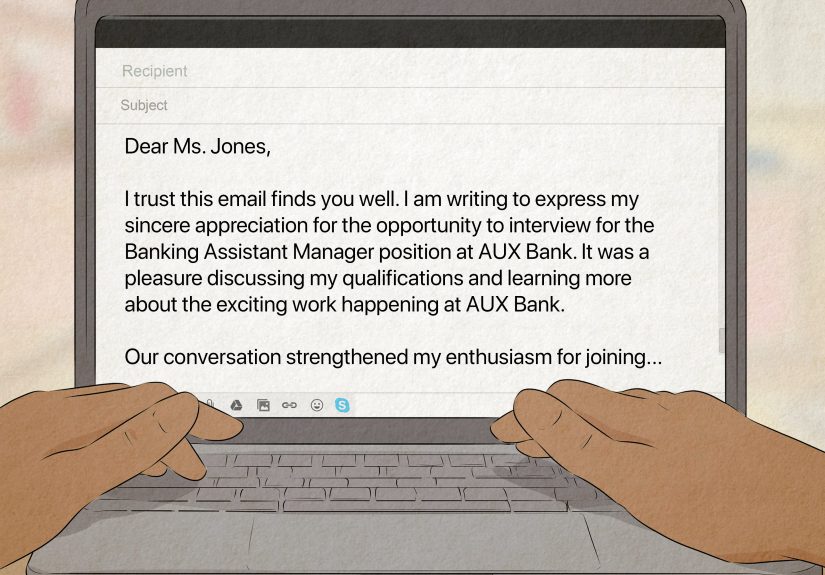
Send a thank-you note within 24 hours. Mention something specific discussed, reinforce fit, and keep it short.
Step 10: Evaluate Offers Like an Adult (Even If You Want to Happy-Dance)
If you get an offercongrats. Now slow down just enough to review:
- Salary (base + bonus/commission)
- Benefits (health, dental, retirement plans)
- Vacation and holidays
- Work arrangement (remote/hybrid, hours, overtime expectations)
- Role scope (actual responsibilities vs. job posting)
Negotiation is normal in many industries. The key is being prepared, calm, and specific:
use market research, highlight value, and consider the full compensation package.
Step 11: Protect Yourself From Job Scams (Because Scammers Love Busy Job Seekers)
If a “company” asks you to pay upfront fees, buy equipment with a check they send you, or share sensitive personal info
before you’ve even spoken to a real humanhit pause. Real employers don’t hire you via mysterious text messages at 2:00 a.m.
Red flags
- They ask you to pay money to get the job
- They push you to move fast and “skip interviews”
- They request banking details early or ask for sensitive IDs immediately
- They only communicate via chat apps and avoid video/phone calls
- The email domain looks slightly off (one letter changed)
When in doubt: verify the company website, search for official contact info, and report suspicious activity to the appropriate consumer protection agency.
Step 12: Once You’re Hired, Handle the Canadian Paperwork Smoothly
Most employees will need a Social Insurance Number (SIN) for payroll and taxes. Many employers request it after you’re hired
(not during the initial application). If you’re new to Canada, apply as soon as you can after arrival and authorization.
If you’re working under a permit or immigration pathway, keep your documents organized and track expiry dates.
Nothing kills new-job joy faster than paperwork panic.
Quick Checklist: Your “Apply for Jobs in Canada” Game Plan
- Confirm work eligibility (or understand your permit pathway)
- Create a Canadian-format resume (no photo, no personal details, impact bullets)
- Write a short, specific cover letter when useful
- Use job boards + LinkedIn + company sites + official listings
- Tailor each application (keywords + top achievements)
- Network with purpose (informational chats, warm intros)
- Prepare STAR stories for interviews
- Follow up politely and track everything
- Watch for scams, verify employers
- After hire: handle SIN and onboarding docs correctly
Real-World Experiences and Lessons Applicants Commonly Share (Extra 500+ Words)
Let’s talk about what it actually feels like to apply for a job in Canadabecause guides are great,
but the emotional rollercoaster is real. Below are common experiences job seekers report and the lessons that tend to
separate “stuck in application limbo” from “getting interviews consistently.”
1) “I applied to 80 jobs and heard nothing.”
This is probably the most common storyand it’s usually not because the candidate is unqualified.
The usual cause is a combination of (a) an ATS-unfriendly resume, (b) weak keyword alignment, and (c) applying too broadly.
Many people eventually see results when they switch from “spray and pray” to “target and tailor.”
One effective shift: reduce volume and increase precision. Instead of 20 generic applications per week,
aim for 8–12 highly tailored ones. Job seekers often report that interviews start appearing once their resume
reflects the posting’s language and highlights measurable outcomes. A small tweaklike turning “Handled reports”
into “Produced weekly inventory reports that reduced stockouts by 12%”can move you from invisible to interesting.
2) “They want Canadian experiencehow do I get it without a Canadian job?”
Yes, this frustrating paradox comes up often. Many applicants say the breakthrough came from reframing the conversation:
instead of apologizing for not having “Canadian experience,” they emphasize transferable skills, tools, and outcomes.
Employers usually care less about the country label and more about whether you can do the work in their environment.
Practical strategies people use:
- Volunteer projects with local organizations (even short-term) to gain local references and context
- Contract/temporary roles through agenciesoften faster to land and can lead to permanent offers
- Micro-credentials or short courses that are recognized locally (especially in tech, admin, and healthcare support)
3) “Networking felt awkwarduntil I stopped asking for jobs.”
Many applicants report that networking started working when they switched the goal from “Please hire me”
to “Help me understand the role/company.” Informational conversations are easier to say yes toand they build trust.
A surprising number of job offers begin with a casual chat that turns into: “We’re hiring next monthwant me to refer you?”
The lesson: ask smart questions. “What does success look like in the first 90 days?” beats “Are you hiring?”
almost every time.
4) “Interviews improved when I practiced stories, not answers.”
Applicants often say their biggest interview improvement came from preparing 6–10 flexible STAR stories,
not memorizing perfect sentences. Stories are reusable: one project story can answer questions about teamwork,
conflict, leadership, time management, and problem-solvingdepending on how you frame it.
A simple approach that many find helpful:
- Write 8 short stories (each 6–8 lines) using STAR
- Practice speaking them out loud (yes, it feels sillydo it anyway)
- Trim the “Situation” and expand the “Action” and “Result” (that’s what employers care about)
5) “The moment I got an offer, paperwork became the next boss battle.”
After hiring, candidates often discover the importance of having documents ready: SIN timing, work authorization,
and clean onboarding details. People who plan ahead (scanned documents, organized dates, clear status) typically have
smoother starts and fewer delays.
The big takeaway from these experiences is simple: success tends to come from a repeatable system,
not random effort. Your best “Canada job search advantage” is consistencytailor smart, track everything,
practice your stories, and build real connections. Do that, and you’ll stop feeling like you’re throwing resumes
into a black hole and start seeing momentum.
Conclusion
Applying for jobs in Canada is easiest when you treat it like a process, not a panic.
Confirm your work eligibility, build a Canadian-style resume, tailor applications with ATS-friendly keywords,
apply through strong channels, and back it all up with networking and STAR-based interview prep.
Be patient, be strategic, and don’t let the occasional rejection email convince you to become a hermit who raises houseplants for a living.
(Unless your dream job is “Senior Plant Whisperer,” in which casecarry on.)