Table of Contents >> Show >> Hide
- What’s the Facebook pageand why can’t we look away?
- The 7 most common “how is this real?” listing categories
- Why cringe listings go viral in the first place
- What buyers can actually learn from these chaotic listings
- How sellers avoid becoming “New Pics” on someone’s feed
- How to enjoy these pages without turning into a villain
- Extra: of “scrolling experience” lessons from cringe listings
There are two kinds of people in the world: the ones who browse real estate listings because they’re ready to buy,
and the ones who browse real estate listings because they need a laugh and a reason to feel better about their own
questionable paint choices.
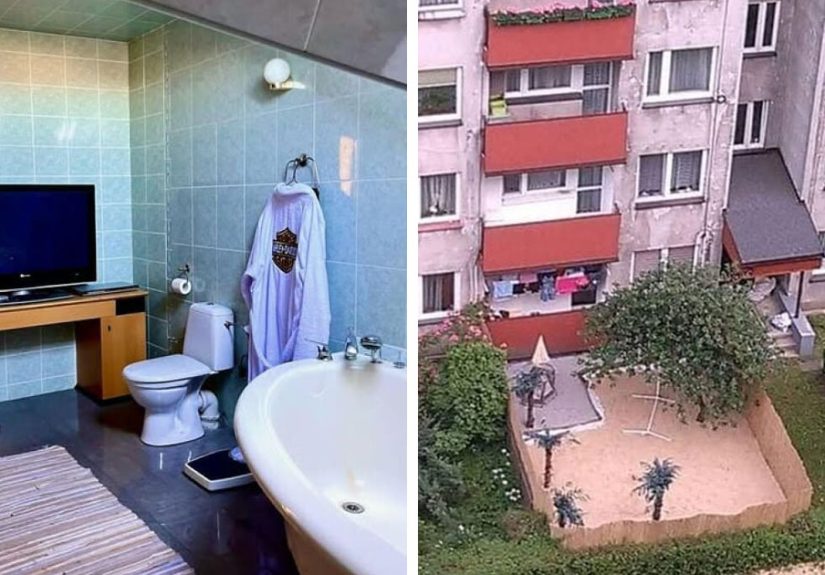
If you’ve ever clicked a listing and thought, “Who approved that bathroom?”congratulations. You’re already
fluent in the language of cringe real estate. And you’re exactly the kind of person who will understand why a
Facebook page dedicated to the most memorable (and mildly unhinged) listings is so dangerously bingeable.
This Bored Panda-style roundup isn’t here to bully anyone’s taste (okay, maybe a tiny bit, as a treat). It’s here
to explain why these listings go viral, what patterns show up again and again, and what both buyers and sellers can
learn from homes that look like they were designed by a committee of raccoons with a Pinterest account.
What’s the Facebook pageand why can’t we look away?
The concept is simple: a real estate professional (or at least someone who’s clearly seen too much) curates the most
head-scratching homes that made it onto the market anyway. Think: questionable engineering, chaotic décor, “creative”
layouts, and listing photos that feel like they were taken during an earthquake.
And the appeal is immediate. Real estate listings are supposed to be aspirationalbright, roomy, inviting. When a
listing breaks that unspoken promise, it becomes comedy. Better yet, it becomes shareable comedy. One person
sends it to a friend with “YOU HAVE TO SEE THIS,” and suddenly the entire group chat is debating whether a hot tub in
the living room is visionary or a cry for help.
The 7 most common “how is this real?” listing categories
The funny part is that the cringe is rarely random. It tends to fall into familiar buckets. Once you know the buckets,
you start spotting them everywherelike a birdwatcher, but for carpeted bathrooms.
1) The “DIY… but make it dangerous” build
Some homes look like the previous owner learned carpentry from a haunted YouTube tutorial. We’re talking steep,
narrow stairs with no handrail, odd loft platforms, or a “bonus room” that feels more like an insurance claim waiting
to happen.
Why it happens: people modify homes for their own needs, not resale. Then life changesjob relocation, divorce,
inheritance, downsizingand the “temporary” solution gets listed as a feature.
2) The “theme park” interior
Every so often a listing reveals a room that’s fully committed to a vibe: medieval tavern, underwater grotto, jungle
safari, or “goth nightclub in 2007.” It’s impressive craftsmanship… and also the reason buyers whisper,
“So, how fast can I repaint?”
The cringe isn’t that the theme existsit’s that the theme is inescapable. When the walls, ceiling, cabinets, and
sometimes even the toilet have joined the theme, buyers don’t see a home anymore. They see a project timeline.
3) The “appliance in the wrong universe” layout
Some listings feature placements that make you stop and reread the laws of physics: laundry in a bathroom arranged
like a Tetris accident, a sink that appears to have been installed as an afterthought, or a kitchen that seems to be
hosting furniture from three unrelated homes.
This category is a reminder that older properties often evolved over decades. Additions were made in phases, sometimes
without a master plan. The result can be oddly charmingor deeply confusing.
4) The “photos taken by a cryptid” marketing package
Blurry shots. Strange angles. Half the images are the seller’s thumb. One photo is inexplicably a close-up of a light
switch. Another is a mirror selfie where the photographer looks like they’ve seen the secrets of the universe and
regret it.
It’s funny, but it’s also a real-world sales problem: listing photos are often the first filter buyers use online. When
photos are confusing or low-quality, many buyers simply move on.
5) The “collection museum” situation
Some listings aren’t staged so much as… documented. Dozens of figurines. Wall-to-wall memorabilia. A room that appears
to be dedicated to one single object category (dolls, clowns, swords, novelty signs, you name it).
This is where “depersonalize” stops being a polite suggestion and becomes an act of mercy for the future listing agent.
Buyers want to imagine themselves in a space. It’s hard to do that when 400 porcelain faces are also in the space.
6) The “truth in advertising” fixer-upper
A listing can be cringe because it’s trying too hard… or because it’s not trying at all. Sometimes the photos show
obvious damage, heavy wear, or clutter that makes it hard to see the actual structure.
But there’s a practical angle: not every seller has the time or money to stage, renovate, or even clear out a property.
Some homes are listed “as-is,” priced accordingly, and aimed at investors or buyers who want a project.
7) The “copywriting gymnastics” description
Real estate descriptions have their own dialect“cozy,” “charming,” “unique,” “full of potential.” And sometimes those
words are doing Olympic-level work.
A surprising number of buyers care about listing descriptions, even though photos usually matter most. That’s why bad
writing, awkward phrasing, or obvious errors can undermine trust. If the description feels careless, buyers wonder what
else was handled carelessly.
Why cringe listings go viral in the first place
Part of it is simple entertainment: it’s fun to see something unexpected. But there’s also a psychological hook.
Scrolling weird houses is low-stakes problem-solving. Your brain tries to “fix” the layout, repaint the walls, move the
washer, replace the carpet, remove the creepy mannequin in the corner… and suddenly you’ve been scrolling for 45 minutes.
There’s also a cultural moment here. Online house-hunting has become normal even for people who aren’t buying.
Many buyers begin their search online, and social platforms have turned listings into content. Accounts and shows built
around unusual properties (like “Zillow Gone Wild”) exist because the audience is huge and the format is endlessly new:
the market keeps producing fresh weirdness.
What buyers can actually learn from these chaotic listings
Laughing is allowed. But if you’re shopping for a home, cringe listings can sharpen your instincts.
Look past the weird to the fundamentals
Loud décor can distract you from the stuff that really matters: roof age, foundation, plumbing, electrical, water
intrusion, HVAC, drainage, and neighborhood comps. A purple leopard-print bedroom is fixable. A structural issue is a
budget conversation.
Assume the photos are both “true” and “not the whole truth”
Photos can hide problems, but they can also exaggerate them. Wide-angle lenses distort room size. Dark photos can make
a decent space look bleak. And sometimes clutter is so overwhelming you can’t tell whether the room is 12 feet wide or
3 feet wide.
If the listing is intriguing despite the chaos, request additional details, disclosures, and (if possible) a showing.
Many good deals look awkward online because the marketing is weak.
Use cringe as negotiation intelligence (politely)
A listing with terrible presentation may attract fewer offers. That doesn’t mean you get to be rudethis is someone’s
homebut it can mean you have a bit more leverage. If you’re serious, focus your offer strategy on objective facts:
inspection results, repair estimates, and local market conditions.
How sellers avoid becoming “New Pics” on someone’s feed
If you’re selling, the goal isn’t to create a soulless beige box. It’s to make the home easy to understand and easy to
imagine living in. That’s why staging and photo prep matter.
Staging isn’t just throw pillowsit’s clarity
Staging works when it helps buyers visualize scale and function: where a dining table fits, how the living room flows,
how the bedroom holds a real bed (not a mattress drifting in the middle like a lonely raft).
Many agents say staging makes it easier for buyers to picture the home as theirs. And even modest stagingdecluttering,
cleaning, neutralizing the loudest personal touchescan dramatically improve the first impression.
Take photos like you’re selling a product (because you are)
- Light it: open blinds, turn on lamps, replace dim bulbs.
- Declutter hard: counters, floors, bathroom surfaces, and pet items.
- Remove the “why is that there?” stuff: random cords, laundry piles, trash cans in the foreground.
- Choose angles that explain the room: fewer artsy shots, more “here’s the space.”
- Skip mirror selfies: the internet will remember forever.
Write descriptions that sell the home, not the buyer
Keep the language focused on features: layout, upgrades, systems, location benefits, and standout details.
Avoid phrasing that could be interpreted as excluding certain types of peoplefair housing rules exist for a reason,
and the safest approach is to describe the property, not who should live there.
How to enjoy these pages without turning into a villain
It’s easy to dunk on a listing. But remember: some of these homes are being sold because of grief, financial stress,
health issues, or major life changes. The funniest approach is to focus on the design choices and the marketingnever
the people.
- Laugh at the layout, not the life behind it.
- Share with friends, but avoid doxxing or harassing.
- Use the cringe as a learning tool if you’re buying or selling.
Extra: of “scrolling experience” lessons from cringe listings
If you’ve ever fallen into one of these Facebook-page rabbit holes, you know the feeling: you start with one weird
listingjust onethen suddenly it’s 1:17 a.m., and you’re emotionally invested in whether the house with the indoor
spiral slide also has normal plumbing.
What’s fascinating is how quickly your brain adapts. In the first five minutes, you’re shocked by everything. In the
next five minutes, you’re developing standards. You start saying things like, “Okay, yes, the bathtub is in the
kitchen, but at least the floors look clean.” That is not a sentence you expected to form in your lifetimeand yet
there you are, calmly evaluating kitchen-bathroom ecosystems like it’s a respected design movement.
After about ten minutes, patterns become obvious. The most common “cringe” isn’t usually luxury weirdness; it’s basic
photo and presentation chaos. Dim lighting. Clutter. Personal items everywhere. A room that might be perfectly fine but
is photographed at an angle that makes it look like a narrow hallway to nowhere. The lesson: the internet doesn’t
reward accuracyit rewards what’s instantly readable. When a space is hard to interpret, people assume the worst.
Then comes the emotional roller coaster: you laugh, you gasp, you zoom in, and you start narrating to yourself like a
documentary host. “Here we observe a rare specimen: the living-room hot tub. Note how it dominates the habitat.”
You’re not just consuming content anymoreyou’re participating in it.
Somewhere around listing number twenty, empathy sneaks in. You begin to notice the difference between “bold taste” and
“someone had no resources to prep this home.” A perfectly normal house can look awful when it’s crowded, underlit, and
photographed mid-move. And a truly bizarre house can look oddly lovable when you sense a real story behind itsomeone
built something unique because it made them happy, not because it would win resale awards.
Finally, you get the biggest takeaway of all: the internet’s idea of “perfect” is incredibly narrow. That’s why these
listings feel so refreshingeven when they’re objectively chaotic. They remind you that homes are lived in, not staged
for applause. Some people want minimalist neutrals; others want a pirate-themed bar in the basement. And in a strange
way, the cringe pages become a celebration of human variety… with occasional bonus content like a toilet placed too
close to a suspiciously upholstered chair.
If you’re a buyer, these scrolling sessions train your eye: you’ll get better at spotting what’s cosmetic versus what’s
costly. If you’re a seller, they’re a gentle warning: do the basicsclean, declutter, brighten, photograph wellunless
you want your hallway mirror selfie to become someone else’s “new pics.”