Table of Contents >> Show >> Hide
- What SKIMS Actually Released (And Why Everyone Noticed)
- Why Some People Loved It: The Case for “It’s Just Fashion (And Marketing)”
- Why Some People Hated It: The Case for “Please, Be Serious”
- The Real Story: SKIMS Knows Exactly How This Works
- Why “Looks Like Diaper” Went Viral
- What This Says About Fashion Right Now
- Consumer Takeaways: How to Think About Viral Intimates (Without Getting Played by the Hype)
- Conclusion: The Campaign WorkedEven If You Think It Didn’t
- Experiences: What It Feels Like When a Campaign Divides Everyone (And Why You’ve Probably Been Here Before)
The internet has a special talent: it can turn a single product photo into a full-blown cultural debate before your iced coffee finishes melting.
And when Kim Kardashian and SKIMS dropped a see-through campaign that leaned hard into “cheeky,” the comment section did exactly what it does bestsplit
into teams, pick sides, and type in all caps like it’s an Olympic sport.
On one side: fans calling it bold, trendy, and very on-brand for SKIMS’ “minimal but make it viral” marketing playbook.
On the other: critics asking practical questions (Is this comfy? Is it wearable?) and delivering the kind of blunt review only the internet can produce:
“Looks like diaper.”
This isn’t just a story about sheer fabric. It’s about how modern campaigns are built to travel through memes, outrage, praise, and group chatsand how
celebrity brands like SKIMS have learned to treat controversy less like a problem and more like… free shipping for attention.
What SKIMS Actually Released (And Why Everyone Noticed)
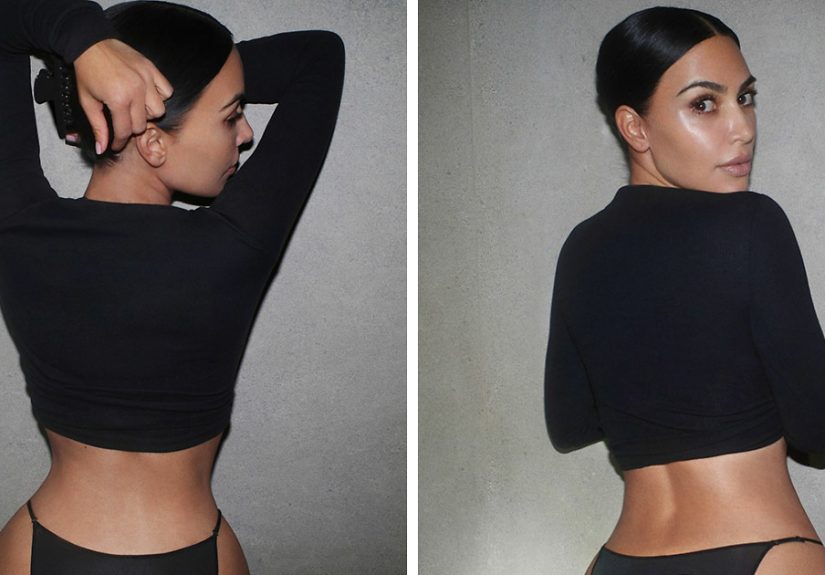
The campaign centered on SKIMS’ Milky Sheer intimates, including a string bikini sold as a three-pack. The details were designed to be noticed:
a sheer look, minimal coverage, and short phrases like “Curious,” “Feelings,” and “Temptation” incorporated into the design.
In other words, it wasn’t aiming for “quiet luxury.” It was aiming for “you’ll zoom in.”
The photos were styled in a clean, pared-back waysimple backdrop, straightforward pose, and a focus on the product. That simplicity is part of the strategy.
When the image is uncomplicated, the audience supplies the entertainment: reactions, jokes, debates, hot takes, and the inevitable “I would never, but also
why am I still looking at it?”
Within hours, the campaign had been reposted and re-discussed across celebrity news, fashion outlets, and social media. The result was predictable:
a wave of people who loved the “confident and playful” vibeand a wave of people who felt the design crossed the line from “sexy branding” into
“what am I even looking at?”
Why Some People Loved It: The Case for “It’s Just Fashion (And Marketing)”
Supporters didn’t just like the productthey liked the idea of it. SKIMS has trained its audience to expect drops that feel like a wink:
part style, part conversation starter. For fans, the campaign delivered exactly that.
1) It fits SKIMS’ brand identity
SKIMS isn’t built like a traditional lingerie company that sells fantasy. It sells familiaritywith a twist. The brand’s aesthetic is usually clean,
neutral, and body-focused, with marketing that feels modern and meme-aware. The see-through campaign reads like SKIMS saying,
“Yes, we know you’re going to talk about this. Please do.”
2) It taps into the “naked dressing” erawithout runway confusion
Sheer elements have been everywhere in fashion lately. Many fans see the campaign as a mainstream version of that trendless “high fashion performance art,”
more “this is a vibe some adults choose for themselves.” If you’ve watched sheer tops go from red carpet scandal to mall-window normal,
this campaign feels like an extension of that shift.
3) It’s playfuland the internet loves a joke it can wear
The phrases on the product are basically a built-in punchline. They turn a basic item into a “caption you don’t have to write.”
Fans who liked it treated it as cheeky brandingsomething that doesn’t need to be taken as a serious statement about society.
Sometimes it’s just a product drop with a wink, and the wink is doing cardio.
Why Some People Hated It: The Case for “Please, Be Serious”
Critics weren’t shy. The phrase “Looks like diaper” spread because it’s simple, vivid, and devastatinglike a one-star review that doesn’t waste adjectives.
But under the jokes, the criticism falls into a few clear buckets.
1) The “Is this flattering?” debate
Not everyone wants lingerie to feel like a fashion experiment. Plenty of people want intimates to do three things: fit well, feel comfortable, and look good
under clothes. A see-through campaign can trigger skepticism because it looks more like a statement piece than an everyday staple.
And when the imagery is bold, the audience tends to assume the product is challengingwhether or not that’s true.
2) The “Is this even wearable?” question
A big chunk of backlash wasn’t moral panicit was practicality. People asked the kind of questions that never show up in glossy campaign photos:
What’s the fabric feel like? Does it roll? Does it stretch? Can you wear it comfortably for more than a selfie?
When a campaign goes viral, it attracts people who were never the target customer, and they judge it like a household object.
(The internet will absolutely review lingerie with the same energy it reviews blenders.)
3) Celebrity branding fatigue
Some backlash is less about the product and more about the messenger. Kim Kardashian is a marketing force, and SKIMS is a machine.
For critics who feel exhausted by celebrity-led commerce, a provocative campaign can read like “attention first, utility second.”
That’s when the jokes get sharper, because humor is the internet’s favorite way to say, “I’m not buying what you’re sellingliterally.”
The Real Story: SKIMS Knows Exactly How This Works
If this felt engineered for maximum debate, that’s because modern product marketing often is. In the last couple of years, SKIMS has repeatedly released
items that spark conversation well beyond the usual fashion audiencesometimes because they’re innovative, sometimes because they’re unusual,
and sometimes because they’re just odd enough to become a meme.
The pattern is familiar: a drop appears, social media reacts, major outlets cover the reaction, and the product becomes a headline.
Even when people disagree, they’re still participating in the campaignsharing, commenting, stitching, quoting, and keeping the brand in the feed.
In the attention economy, disagreement can be fuel.
That doesn’t mean the product is “fake” or the controversy is “planned.” It means SKIMS has mastered a truth about the internet:
people don’t need to love something to spread it. They just need to have a feeling about it.
Preferably a loud one.
Why “Looks Like Diaper” Went Viral
The internet loves short insults because they travel well. “Looks like diaper” is sticky for three reasons:
it’s visual, it’s quick, and it frames the product in a way you can’t unsee once you’ve heard it.
That’s why blunt critiques often outperform long explanationsthey’re more shareable than nuance.
There’s also something else at play: the gap between how brands speak and how regular people speak.
Brands use words like “sensual,” “minimal,” and “elevated.” The internet uses words like “diaper,” “string,” and “why.”
When those languages collide, the comment section becomes a translation war.
What This Says About Fashion Right Now
Fashion culture in 2025 is a mash-up of runway trends, nostalgia cycles, and social media humor.
Sheer looks have been normalized in certain spaces, while other audiences still find them extreme.
So a campaign like this doesn’t land in one cultural roomit lands in every room at once.
That’s why the reaction feels chaotic. People aren’t reacting to the same context.
A fashion-forward viewer sees “trend.” A comfort-first shopper sees “confusing.”
A meme account sees “content.” And a brand strategist sees “engagement.”
It’s not just “love it or hate it”it’s “who is this for?”
Every viral fashion moment triggers the same underlying question: who is the intended audience?
Sometimes the answer is “adults who like bold lingerie.” Sometimes the answer is “people who like the brand’s vibe.”
And sometimesespecially in the social media erathe answer is “the algorithm.”
Consumer Takeaways: How to Think About Viral Intimates (Without Getting Played by the Hype)
If you’re reading this as a shopper, the best move is to separate the campaign from the product reality.
Viral images are designed to create mood, not answer questions. Before you form a final opinionpositive or negativethink like a practical adult:
- Function: Is this meant as everyday underwear, a special-occasion piece, or a styling layer?
- Comfort: Does the fabric type align with what you actually like to wear?
- Confidence: Would you like it off-camera too, or only in the “post and delete” fantasy?
- Hype filter: If no one else was talking about it, would you still care?
The internet is great at making products feel urgent. It’s less great at making products feel honest. Your job is to slow down the story enough
to decide whether the item fits your lifeor just fits the feed.
Conclusion: The Campaign WorkedEven If You Think It Didn’t
Whether you thought the see-through SKIMS campaign was daring, funny, confusing, or “diaper-adjacent,” it achieved the one thing modern campaigns crave:
it made people react. SKIMS got attention from fashion fans, celebrity watchers, casual scrollers, and dedicated criticsall at once.
That’s rare. And in internet marketing, rare is basically currency.
The biggest lesson isn’t about sheer fabric. It’s about how celebrity brands thrive in a world where visibility matters more than agreement.
The internet can’t resist a debate it can screenshotand SKIMS knows it.
Experiences: What It Feels Like When a Campaign Divides Everyone (And Why You’ve Probably Been Here Before)
Even if you’ve never bought a single thing from SKIMS, you’ve probably lived through a “viral product moment” in your own way. It might have been a sneaker
drop, a new phone color, a controversial haircut, or an outfit trend that appeared out of nowhere and suddenly acted like it owned the internet.
The experience is oddly consistent: first you see it once, then twice, and then it’s everywheregroup chats, timelines, reaction videos,
and that one friend who posts “unpopular opinion” like it’s a job title.
The first feeling is usually curiosity. Not because you’re ready to purchase, but because your brain wants to understand the hype.
Why are people arguing about this? What am I missing? You zoom in. You read comments. You scroll back up. You zoom in again.
And suddenly you’re doing unpaid investigative work for a product you didn’t ask to see in the first place.
Then comes the split-screen effect: your feed becomes two parallel realities. In one, people love the item and speak in glowing, confident language
“iconic,” “so hot,” “bold,” “finally something different.” In the other, people roast it with the efficiency of a stand-up comic who charges by the syllable.
A phrase like “looks like diaper” doesn’t just criticizeit creates a mental image that rewires how you see the whole campaign.
This is the part where you learn an important internet truth: humor can be more persuasive than logic.
If you’ve ever posted something and gotten mixed feedbackan outfit, a new hairstyle, even a room makeoveryou know how quickly opinions can pile up.
One person says it’s amazing, another says it’s weird, and a third says something oddly specific that you can’t unhear.
Suddenly, you’re not just deciding whether you like the thingyou’re deciding how you feel about everyone else’s reaction to the thing.
That’s what makes viral debates so sticky: they’re social experiences, not just product reviews.
For brands, the experience looks different but follows the same arc. Imagine launching a campaign, watching it trend, and realizing the internet has turned
your product into a symbol. Not just “underwear,” but “everything people think about celebrity marketing,” “everything people feel about modern fashion,”
and “everything people fear about being judged online.” In a weird way, the backlash becomes proof of reach. If nobody argues, nobody noticed.
If everybody argues, you basically bought a billboard that talks back.
For the rest of us, the healthiest part of this experience is recognizing the pattern and stepping out of it when needed.
You can enjoy the drama without letting it decide your taste. You can laugh at the jokes without turning them into a life philosophy.
And you can admit the simplest truthsometimes a campaign goes viral because it’s genius, sometimes because it’s messy,
and sometimes because the internet is bored and looking for a new group project.
The SKIMS debate is just one more reminder: online opinion is loud, fast, and rarely unanimous. Your best tool is distance.
Scroll, laugh, analyze, move on. The algorithm wants you to pick a side. You’re allowed to pick peace.