Table of Contents >> Show >> Hide
- Who Is Kirsten Hecktermann, and Why Are Her Spoons a Big Deal?
- What Makes These Wood Spoons Feel “Different” in the Hand?
- A Quick Field Guide to Kirsten Hecktermann Spoon Styles
- Why Wooden Spoons Still Rule the Kitchen (Yes, Even in 2026)
- Care and Keeping: How to Make a Hand-Carved Spoon Last
- How to Evaluate a Handcrafted Wooden Spoon Before You Buy
- The Bigger Story: Craft, Community, and Sourcing
- FAQ: The Questions People Whisper to Their Utensil Drawer
- Conclusion: The Quiet Luxury of a Spoon You Actually Use
- Kitchen Experiences: of Real-Life Spoon Joy
There are wooden spoons you “own,” and wooden spoons you adopt.
The first kind lives in a crowded utensil jar, gets used once a month, and quietly judges your dishwashing habits.
The second kind becomes the unofficial mayor of your kitchenalways in rotation, always in your hand, somehow always the right tool.
Kirsten Hecktermann’s wood spoons land firmly in that second category: small-batch, hand-carved pieces that feel less like “kitchen equipment”
and more like “daily ritual, but make it practical.”
If you’ve ever wondered why a spoon can feel specialwhy one wooden utensil is “fine” and another makes you pause mid-stirthis is your deep dive.
We’ll talk about where these spoons come from, why the shapes matter, what “managed hardwood” actually implies in real-life use,
how to care for them without turning maintenance into a part-time job, and how to tell a truly well-made wooden spoon from a pretty impostor.
Who Is Kirsten Hecktermann, and Why Are Her Spoons a Big Deal?
Kirsten Hecktermann is known in the design world for an aesthetic that’s equal parts texture and restraintquietly luxurious without trying too hard.
That sensibility carries into her tabletop work: spoons designed with an artist’s eye, then made with the kind of handwork that can’t be faked by a factory.
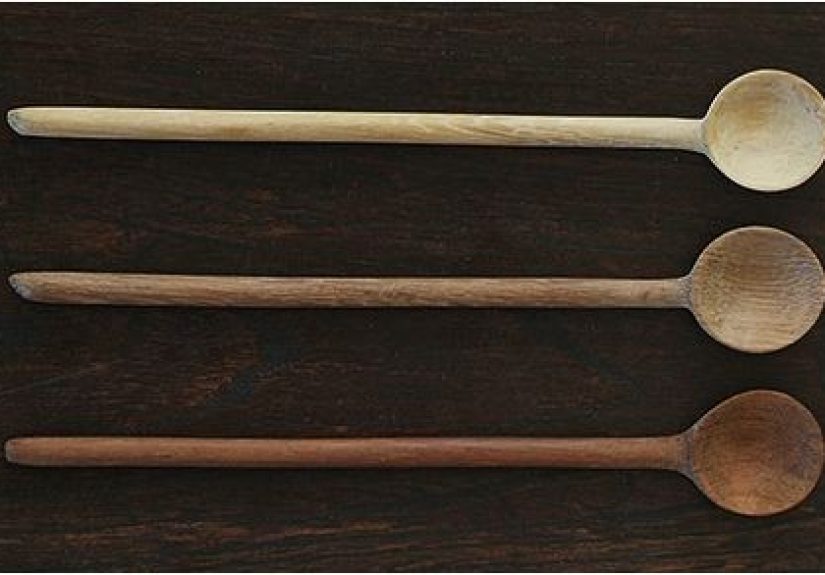
A core part of the story is place. The spoons are designed by Kirsten and carved in Kenya by skilled makers connected to her family’s workshop on the Kenyan coast.
In other words: these aren’t “Kenya-inspired.” They’re Kenya-madeborn from a real supply chain, real hands, and a real workshop culture.
The materials matter too. The line is associated with locally managed East African hardwoods, and at least some of the collection has been described as carved from mvule,
including reclaimed off-cuts from the furniture industry. That combinationhardwood plus thoughtful sourcinghelps explain why the spoons can look delicate,
yet hold up to the hot, wet, chaotic reality of cooking.
What Makes These Wood Spoons Feel “Different” in the Hand?
1) The shapes are meant to be used, not just admired
Plenty of wooden spoons are basically sticks with bowls. They stir. They exist. They take up drawer space.
Hecktermann’s designs lean into organic geometry: slightly unexpected curves, gentle asymmetry, edges that look sculpted rather than stamped.
The result is a utensil that invites grip changespinch the neck for precision, hold the handle end for leverage, cradle the bowl like a tiny serving spoon.
2) Hardwood density does the heavy lifting
Dense hardwoods generally resist quick fuzzing, premature splitting, and that sad moment when your spoon starts shedding splinters like a stressed-out cactus.
Managed hardwoods and reclaimed off-cuts also signal an intention: make something durable from a resource that’s being handled with at least some care,
rather than disposable wood made for disposable living.
3) Hand-carving leaves “micro-decisions” you can feel
Machine-made spoons are consistent; hand-carved spoons are intentional.
The tiny decisionshow thin the edge gets, where the bowl deepens, how the handle subtly thickens near the endare what your fingers notice,
even if your brain can’t explain it. That’s the difference between “a spoon” and “the spoon you reach for first.”
A Quick Field Guide to Kirsten Hecktermann Spoon Styles
Collections like this usually include several silhouettes because the kitchen isn’t one taskit’s a thousand tiny tasks disguised as dinner.
Here are the common “roles” these spoons tend to cover:
Jam, pickle, and condiment spoons
Smaller spoons shine when you’re dealing with jars, chutneys, spices, honey, or anything you don’t want to fling across the counter like a culinary confetti cannon.
They’re also ideal for tasting (a noble job) and for stirring small-batch dressings in a cup without making a mess worthy of a crime show reenactment.
Paddle spoons
A flatter profile helps you scrape the bottom of a pan, coax fond into sauce, and stir thick mixtures like polenta or risotto without feeling like you’re rowing a canoe.
If your cooking involves “keep stirring or it’ll stick,” you’ll appreciate a spoon that behaves like a spatula’s more elegant cousin.
Serving and salad spoons
The longer-handled, broader-bowled shapes are made for tossing greens, scooping grains, and serving roasted vegetables without the clang-and-scratch of metal.
Wood is gentle on bowls, platters, and your earsan underrated perk.
Strainers and specialty pieces
Some sets feature carved strainers or slotted forms. These are for lifting, draining, and portioningthink olives, pickled onions,
or anything briny that you want to keep out of your serving bowl (or at least control).
Why Wooden Spoons Still Rule the Kitchen (Yes, Even in 2026)
Wooden spoons have survived every gadget era because they solve problems in a low-drama way:
- They’re gentle on cookware. Wood doesn’t scratch nonstick surfaces the way metal can, so it’s a smart pairing for modern pans.
- They’re comfortable. Wood doesn’t conduct heat like metal, so handles tend to stay more manageable during long stirs.
- They’re non-reactive. Wood won’t tangle with acidic foods the way some reactive metals can, and it’s easy on delicate sauces.
- They’re a microplastic-free alternative. Many cooks are actively swapping out aging plastic tools for wood or other materials.
The tradeoff is maintenancebut “maintenance” doesn’t have to mean “a weekly spa routine for spoons.” It can be simple, quick, and honestly a little satisfying.
Care and Keeping: How to Make a Hand-Carved Spoon Last
Daily cleaning: treat them like a good sweater
Hand-wash with warm water and mild soap. Don’t soak them for long stretches, and don’t run them through the dishwasher.
Heat + water + detergent is the holy trinity of drying out wood until it cracks, warps, or looks tired.
After washing, dry them thoroughlyeither towel-dry right away or give them airflow so moisture doesn’t linger in the grain.
Skip the “boiling hack”
Boiling wooden spoons to “deep clean” can strip oils and encourage warping or cracking. If your spoon needs a deeper clean, go gentler:
use a baking soda paste (baking soda + a little water) and rub it in with a sponge or soft brush, then rinse and dry.
Odors and stains: go citrus, go vinegar, go calm
For lingering smells (hello, garlic), a wipe-down with diluted vinegar and water can help.
For stains or stubborn spots, lemon plus baking soda is a classic, low-key approach. The goal isn’t to return the spoon to “brand-new beige”;
it’s to keep it clean, smooth, and happy.
Oiling: the 2-minute habit that pays rent
When the wood looks dry, chalky, or rough, it’s time to oil. Food-grade mineral oil is popular because it’s stable and doesn’t go rancid easily.
Apply a thin coat, let it soak in, then wipe off excess.
A simple routinemonthly or whenever the spoon looks thirstygoes a long way.
If you like a slightly more protective finish, many woodworkers use a blend of mineral oil and beeswax (“wood butter”).
It adds a bit more water resistance and gives that subtle satin feel that makes you want to stir things you don’t even plan to eat.
When to retire a spoon
If a wooden spoon is cracked, split, or deeply rough in a way you can’t sand smooth, it’s time to let it go.
Tiny crevices are harder to clean thoroughly, and no one needs a “bacterial Airbnb” living in their utensil drawer.
How to Evaluate a Handcrafted Wooden Spoon Before You Buy
Check the finish with your fingertips
A good spoon feels smooth but not slick. You shouldn’t feel raised fibers, sharp edges, or sanding scratches that look like the spoon fought a belt sander and lost.
The rim of the bowl should be thin enough for stirring and scraping, but not fragile.
Look at grain direction
Grain that runs cleanly along the handle tends to support strength.
Dramatic swirls can be beautiful, but you want the spoon to be more “daily workhorse” than “fragile runway model.”
Balance matters
Hold it where you naturally grip a spoon. Does it feel top-heavy? Does the bowl want to dive?
Hand-carved pieces often have excellent balance because the maker adjusts thickness intuitively as they shape.
The Bigger Story: Craft, Community, and Sourcing
The charm of Kirsten Hecktermann’s wood spoons isn’t just that they’re pretty (though they are).
It’s that they sit at a crossroads: design sensibility meeting real production, with a clear connection to Kenyan artisanship.
The details we do havecarving in Kenya, the use of managed hardwoods, and the mention of reclaimed off-cutspoint to a mindset that values
durability, craft labor, and materials with a traceable story.
The broader brand world connected to Hecktermann also includes bone spoons associated with coastal community craft and support for turtle conservation initiatives.
Even if you’re shopping purely for function, it’s hard not to appreciate when a beautiful object is tied to real communities and real places.
FAQ: The Questions People Whisper to Their Utensil Drawer
Are wooden spoons sanitary?
They can be, with normal care: wash promptly, dry thoroughly, and oil occasionally. Replace spoons that crack or split.
“Sanitary” isn’t about fearit’s about common sense and keeping surfaces smooth and cleanable.
Can I use them with meat dishes?
Yes, if you clean them properly afterward. Hot water, soap, and thorough drying are your basics.
If a spoon starts holding odors or shows deep wear, treat it as a sign to refresh your care routineor replace it.
Do I need a special oil?
Food-grade mineral oil is the go-to for many cooks because it’s stable. Beeswax blends (“wood butter”) are also common.
The “best” oil is the one you’ll actually use consistently, in thin coats, without leaving the spoon greasy.
Conclusion: The Quiet Luxury of a Spoon You Actually Use
Kirsten Hecktermann’s wood spoons are a reminder that good design doesn’t have to shout.
A well-shaped bowl, a balanced handle, dense hardwood, and a human hand behind the carving can turn a basic utensil into something you keep for years.
They’re practical, yesbut they also carry a sense of place and process, which is increasingly rare in a world of “add to cart” sameness.
If you want a kitchen that feels more intentional without becoming precious, start small: one spoon.
Use it daily. Wash it like you care. Oil it when it looks dry. Then watch how quickly “just a utensil” becomes “a tiny favorite.”
Kitchen Experiences: of Real-Life Spoon Joy
The first time you use a truly good wooden spoon, you notice it in the most boring momentstirring something ordinary.
Not a holiday roast. Not a twenty-ingredient sauce. Just Tuesday oatmeal. You give it one slow swirl and realize the spoon isn’t fighting you.
The bowl glides along the pot like it knows where the corners are. The handle sits in your palm the way a well-made pen sits in your fingers:
secure, calm, and oddly reassuring, as if it’s saying, “Relax. I’ve done this before.”
Then come the tiny rituals. You catch yourself rinsing it right away instead of abandoning it in the sink “for later”
(a lie we tell ourselves daily). You towel-dry it without resentment. You prop it near a window so it can air out.
And when it starts to look a little paledry in that “winter hands” sort of wayyou rub in a thin coat of oil and the grain wakes up.
The wood darkens slightly, the surface feels smoother, and you get that weird satisfaction usually reserved for organizing spice jars.
There’s also the way a hand-carved spoon changes your cooking habits, mostly because it makes you want to cook more.
You stir tomato sauce longer, not because it needs it, but because the motion feels good.
You scrape the bottom of a pan with a flatter spoon edge and realize you’re deglazing more thoughtfully.
You make vinaigrette in a mugoil, vinegar, mustardand the spoon’s small bowl actually blends the emulsion instead of sloshing it around.
Even tasting becomes a moment: the spoon lifts a sample cleanly, and you don’t end up wearing the soup.
And yes, you start assigning personalities. The small spoon becomes the “jar whisperer,” perfect for jam, tahini, or chili crisp.
The longer one becomes the “stir captain,” handling rice, beans, and anything that needs patience.
If you own a set, you develop favorites and pretend you don’t. (“I love all my spoons equally,” you say, reaching for the same one again.)
The best part is the patinathe evidence of real meals. A slight darkening where your thumb rests.
A faint stain from turmeric that refuses to leave (and honestly, why should it?). These aren’t flaws;
they’re the kitchen equivalent of creases in a leather wallet: proof that the object is doing its job.
If the spoons are connected to a workshop culture and coastal craftsmanship, that patina feels like a continuation of the story,
not the end of it. You’re not preserving a museum piece. You’re participating in a long, useful life.
Eventually, you give one as a gift and realize it’s a sneaky-good present: practical, beautiful, and intimate without being weird.
It says, “I hope you cook things you love.” Which is a nicer message than most greeting cards, and far less likely to get stuck in a drawer.