Table of Contents >> Show >> Hide
- Why This Topic Matters Right Now
- What Is CAR T-Cell Therapy in Plain English?
- Step-by-Step: How CAR T Therapy Actually Works
- FDA-Approved CAR T Options for Multiple Myeloma in the U.S.
- How Effective Is CAR T in Multiple Myeloma?
- Side Effects: What Patients Should Know Before Infusion Day
- Who Is a Good Candidate for CAR T-Cell Therapy?
- CAR T vs Other Myeloma Immunotherapies: Quick Comparison
- Practical Preparation Checklist for Patients and Caregivers
- Where the Field Is Going Next
- Extended Experiences Section (500+ Words): What Patients and Families Often Experience in Real Life
- Conclusion
If cancer treatment had a movie trailer voiceover, CAR T-cell therapy would be introduced as:
“From the makers of chemo, transplant, and targeted drugs… comes your own immune system, remixed.”
And honestly, that is not far from the truth.
CAR T-cell therapy for multiple myeloma is one of the most advanced forms of personalized immunotherapy in use today.
Instead of giving a one-size-fits-all drug, doctors collect your own T cells (a type of white blood cell), reprogram
them in a lab to recognize myeloma cells, and send them back into your body for one highly engineered mission:
find the cancer and attack it.
In this guide, we’ll break down exactly how CAR T works, who it is for, what treatment looks like day-to-day,
what the risks are, and why this therapy is changing expectations for people with relapsed or refractory multiple myeloma.
The tone is friendly, but the science is real.
Why This Topic Matters Right Now
Multiple myeloma is still a major cancer burden in the U.S., with tens of thousands of new diagnoses each year.
Survival has improved over time thanks to newer therapies, but many patients eventually relapse and need additional
lines of treatment. That is exactly where CAR T-cell therapy has become so important: it offers a way to treat
harder-to-control disease using the immune system’s own targeting power.
Put simply: myeloma treatment is no longer just about “what chemo is left.” It is increasingly about smart sequencing
of immune-based options, including CAR T and bispecific antibodies, based on prior therapies, pace of relapse,
and patient-specific goals.
What Is CAR T-Cell Therapy in Plain English?
CAR T stands for chimeric antigen receptor T-cell therapy. Here’s the core idea:
- Your T cells are collected from your blood.
- In a specialized lab, a new receptor (the CAR) is added to those T cells.
- That receptor acts like a GPS lock-on system for a cancer marker.
- The upgraded cells are multiplied into the millions.
- They are infused back into you to hunt and kill myeloma cells.
For multiple myeloma, current U.S. CAR T products target BCMA (B-cell maturation antigen), a protein
found on myeloma cells. Think of BCMA as the “name tag” CAR T cells are trained to read.
Step-by-Step: How CAR T Therapy Actually Works
1) Referral and Eligibility Workup
CAR T is performed at specialized centers, not a quick outpatient stop between errands. The team reviews prior treatments,
disease status, lab values, organ function, infection risk, and performance status. This stage is where logistics and biology
meet: the best candidates are those who both need advanced therapy and can safely tolerate it.
2) Leukapheresis (Cell Collection Day)
Blood is drawn through a machine that separates out white blood cells (including T cells) and returns the rest.
This is called leukapheresis. It is often described as “blood donation with extra steps.”
3) Lab Engineering and Manufacturing
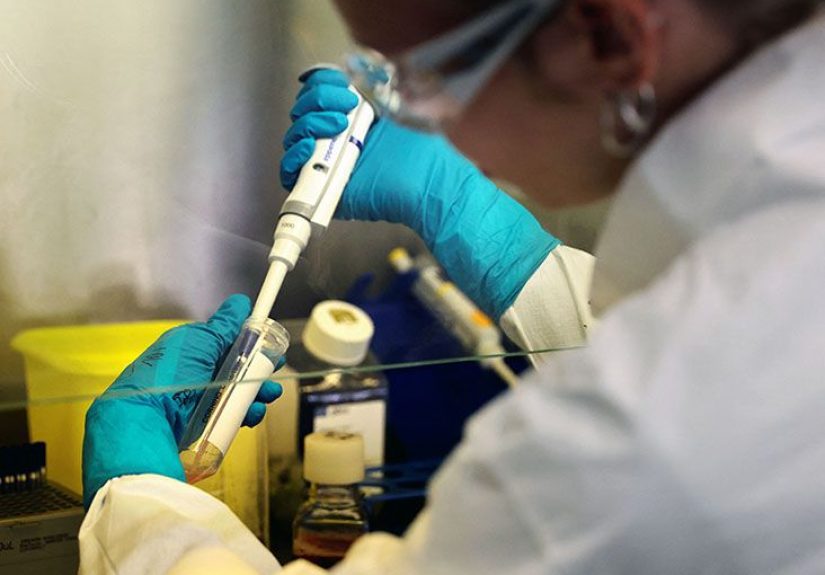
The collected T cells are sent to a manufacturing facility. There, technicians insert the CAR gene, grow the cells,
test quality, and prepare the final personalized product. This process usually takes weeks, not days.
4) Bridging Therapy (If Needed)
Myeloma doesn’t always wait politely. If disease control is needed while CAR T cells are being made, doctors may use
short-term “bridging therapy” to keep the cancer in check until infusion day.
5) Lymphodepleting Chemotherapy
A few days before infusion, patients receive a brief course of chemotherapy (commonly fludarabine and cyclophosphamide).
This is not the main anti-myeloma event; it creates space so infused CAR T cells can expand and work effectively.
6) CAR T Infusion
The engineered cells are infused once, usually over under an hour. No dramatic superhero soundtrack plays in the clinic,
but in immunology terms, this is a big moment.
7) Close Monitoring Period
Because immune activation can be intense, patients are monitored closely (often daily early on). The care team watches
for fever, blood pressure changes, neurologic symptoms, low blood counts, and infection signs. Most centers require
staying near the treatment facility for at least a short period after infusion.
FDA-Approved CAR T Options for Multiple Myeloma in the U.S.
As of now, two BCMA-directed autologous CAR T products are central in U.S. myeloma care:
idecabtagene vicleucel (Abecma) and ciltacabtagene autoleucel (Carvykti).
-
Abecma: indicated for adults with relapsed/refractory multiple myeloma after
two or more prior lines that included an immunomodulatory drug, a proteasome inhibitor, and an anti-CD38 antibody. -
Carvykti: indicated for adults with relapsed/refractory multiple myeloma who have had
at least one prior line (including PI and IMiD) and are refractory to lenalidomide.
Translation: both are for previously treated myeloma, but label criteria differ. That is why treatment selection is highly
individualized and usually discussed in a multidisciplinary setting.
How Effective Is CAR T in Multiple Myeloma?
Effectiveness depends on product, disease biology, and prior therapy history. In trials, CAR T has shown strong response rates
and meaningful improvements in progression-free survival compared with standard regimens in appropriate settings.
Key trial-style takeaways clinicians often discuss
-
Abecma (KarMMa-3 label data): median progression-free survival around
13.3 months versus 4.4 months with standard regimens in the referenced trial population. -
Carvykti (CARTITUDE-4 label data): significant progression-free survival benefit with
hazard ratio around 0.41; complete response rates and overall response rates were also higher than comparator therapy. - Deep responses can happen: some patients achieve stringent complete responses and prolonged remissions.
Important reality check: CAR T is powerful, but not a guaranteed permanent cure for everyone. Relapse can still occur,
including through antigen escape or evolving disease biology. Still, for many patients, CAR T can offer a major clinical reset.
Side Effects: What Patients Should Know Before Infusion Day
CAR T toxicities are well known and manageable at experienced centers, but they are not trivial. The big ones:
1) Cytokine Release Syndrome (CRS)
CRS is an inflammatory reaction caused by immune activation. Typical symptoms include fever, low blood pressure,
and fast heart rate. Severity ranges from mild to life-threatening. The good news: teams now use standardized
monitoring and treatment pathways, including tocilizumab and steroids when indicated.
2) Neurotoxicity (ICANS and Other Neurologic Events)
Neurologic effects can include confusion, word-finding difficulty, tremor, sleep disturbance, and, less commonly,
more severe complications. Some products have additional neurologic warnings (such as movement disorders or cranial nerve effects).
Prompt reporting of new symptoms is crucial.
3) Cytopenias and Infection Risk
Low blood counts can persist or recur after infusion, increasing risk for infection and fatigue. Supportive care may include
transfusions, growth factors, prophylactic medications, and immunoglobulin replacement in selected patients.
4) Longer-Term Monitoring
Vaccination planning, immune recovery, and surveillance for rare late events are part of survivorship after CAR T.
Patients are generally advised to follow center-specific restrictions (such as driving precautions for a period after infusion)
and maintain close follow-up.
Who Is a Good Candidate for CAR T-Cell Therapy?
There is no one-line checklist that fits all patients, but teams usually look at:
- Relapsed or refractory disease status and prior lines of therapy.
- Whether disease pace allows time for manufacturing.
- Organ function, infection status, and overall fitness.
- Access to a certified treatment center and reliable caregiver support.
- Patient goals: remission depth, timing, quality of life, and tolerance for risk.
In fast-moving disease, timing matters. In some cases, bispecific antibodies may be discussed alongside CAR T because
they can be started faster while CAR T requires cell manufacturing lead time.
CAR T vs Other Myeloma Immunotherapies: Quick Comparison
CAR T-Cell Therapy
- One-time infusion after manufacturing period.
- Can produce deep responses.
- Requires intensive early monitoring and specialized center logistics.
Bispecific Antibodies
- Off-the-shelf (no personalized manufacturing delay).
- Given repeatedly, often with step-up dosing.
- Also carry CRS/infection risks, but operational flow differs.
This is not a “better vs worse” argument. It is sequencing strategy. The right choice depends on disease tempo,
prior therapies, comorbidities, and patient priorities.
Practical Preparation Checklist for Patients and Caregivers
- Build your logistics team: caregiver, transport plan, temporary housing if needed near the center.
- Ask timeline questions early: collection date, expected manufacturing window, possible bridging plan.
- Create a symptom playbook: fever, confusion, speech changes, severe fatiguewho to call and when.
- Prepare for blood count dips: infection precautions, follow-up labs, and emergency instructions.
- Clarify restrictions: driving, work return, vaccines, and activity milestones.
- Track goals: what “success” means for youdeeper remission, fewer symptoms, more time, better function.
Where the Field Is Going Next
Researchers are actively improving CAR T through earlier-line use, dual-target designs, better persistence,
and strategies to reduce relapse and toxicity. The future likely includes smarter sequencing with bispecifics,
next-generation cellular products, and increasingly personalized treatment pathways.
Translation from oncology language to normal language: CAR T is already impressive, and it is still in its upgrade era.
Extended Experiences Section (500+ Words): What Patients and Families Often Experience in Real Life
The science of CAR T-cell therapy is precise. The human experience is anything but linear.
If you talk to enough myeloma patients and caregivers, you hear recurring themes that don’t always show up in trial tables.
The first is emotional whiplash: hope, fear, logistics stress, and cautious optimism often all appear in the same week.
One patient described leukapheresis day as “anticlimactic but symbolic”nothing dramatic happened physically,
yet it felt like crossing a threshold into a new phase of treatment.
During manufacturing, many patients say waiting is harder than expected. Even when clinicians explain that this interval
is normal, people can feel uneasy because the disease is still there while the custom therapy is being made.
Bridging therapy can be reassuring for some and exhausting for others, especially if prior regimens already caused fatigue
or neuropathy. Families often become project managers: calendar syncing, insurance calls, transportation planning,
and medication tracking all happen at once.
Infusion day is frequently described as surprisingly calm. People expect a cinematic moment, but the actual infusion can be
brief. The emotional impact usually lands later, during monitoring. A mild fever can trigger immediate concern because
everyone has been taught to watch for CRS. Caregivers often say the biggest challenge is uncertainty:
“Is this normal post-treatment fatigue, or the start of something urgent?”
Centers that provide clear symptom algorithms and 24/7 contact pathways reduce that fear significantly.
In early recovery, fatigue is one of the most common complaints. Patients may look better before they feel better.
Blood count recovery can be uneven, and infection precautions can make social life feel restricted.
Some people describe a strange paradox: they finally have a treatment that feels advanced and hopeful,
yet daily life becomes temporarily smallerfewer visitors, more masks, more lab checks, more naps.
That adjustment can affect mood. It helps when clinicians normalize this as part of recovery rather than a personal setback.
Cognitive symptoms, when present, can be scary. Even mild word-finding issues or attention changes can feel alarming
to families who have been warned about neurotoxicity. The best outcomes usually happen when concerns are reported early,
not minimized. Patients who do well long-term often share the same practical habit: they do not “tough it out” with new symptoms.
They call.
By the time the first post-treatment response discussions happen, emotional tone often shifts again.
If markers improve, people feel relief mixed with guarded realism. Many patients describe this stage as
“learning to hope in installments.” They celebrate milestonesbetter labs, fewer symptoms, more energybut keep expectations grounded.
For those with less-than-ideal responses, disappointment is real, yet not the end of the roadmap.
Oncology teams increasingly discuss next-step sequencing, including other immunotherapies or clinical trials,
which can restore a sense of direction.
A final recurring theme is identity. Some patients say CAR T changed how they view treatmentfrom something done to them
to something built from them. That psychological shift matters. Even when recovery is hard,
the idea that their own cells were engineered to fight can feel deeply empowering.
Caregivers often echo this in simpler terms: “For the first time in a while, we felt like we were moving forward, not just holding ground.”
These experiences are not universal, and they are not a substitute for medical guidance. But they do reflect a real pattern:
CAR T for multiple myeloma is both high-tech and deeply human. Success is measured not only in response rates,
but also in how patients navigate uncertainty, preserve quality of life, and reclaim daily routines after intensive care.
Conclusion
CAR T-cell therapy for multiple myeloma works by transforming a patient’s own T cells into targeted cancer fighters,
usually against BCMA-expressing myeloma cells. It involves a multi-step journeycollection, engineering, bridging when needed,
lymphodepletion, infusion, and vigilant monitoring. Clinical data show meaningful benefits in appropriate patients,
including deeper responses and longer progression-free intervals versus standard regimens in key settings.
The treatment is powerful but complex. The best outcomes come from strong center experience, careful patient selection,
proactive side-effect management, and realistic planning by patients and caregivers. In short: CAR T is not just a therapy;
it is a coordinated treatment ecosystemand when the pieces align, it can be a major turning point in myeloma care.