Table of Contents >> Show >> Hide
- What Actually Happened (And Why It Blew Up Online)
- Why Police Use “Decoy” Tactics in the First Place
- The Big Legal Question: Is This Entrapment, Or Just Opportunity?
- Catcalling vs. Criminal Conduct: The Line People Fight Over
- Why This Debate Is So Intense in the U.S.
- So… Is It Smart Policing or a Bad Idea in Spandex?
- A Better Playbook: How to Reduce Street Harassment Without Turning Sidewalks Into a Sting Show
- What This Story Reveals: The “Freedom to Move” Problem
- Experiences That Mirror the Debate (Real-World Perspectives)
- Conclusion
Somewhere between “public safety” and “wait, is this a social experiment with handcuffs?” sits the kind of story that lights up group chats, talk radio, and
comment sections like a Fourth of July sparkler. Reports about officers dressing as joggerssometimes in typical running gearto identify street harassment
and make arrests have triggered a fierce debate: Is it smart, proactive policing that protects people in public spaces, or is it a slippery tactic that
risks criminalizing speech and drifting into entrapment?
Even if the most viral headlines are tied to a specific overseas pilot program, the arguments they raise are very American: What counts as harassment versus
“rude but legal” speech? How do undercover operations fit with civil liberties? And what’s the fairest way to keep public places usable for everyoneespecially
women who simply want to run without being treated like a moving suggestion box?
What Actually Happened (And Why It Blew Up Online)
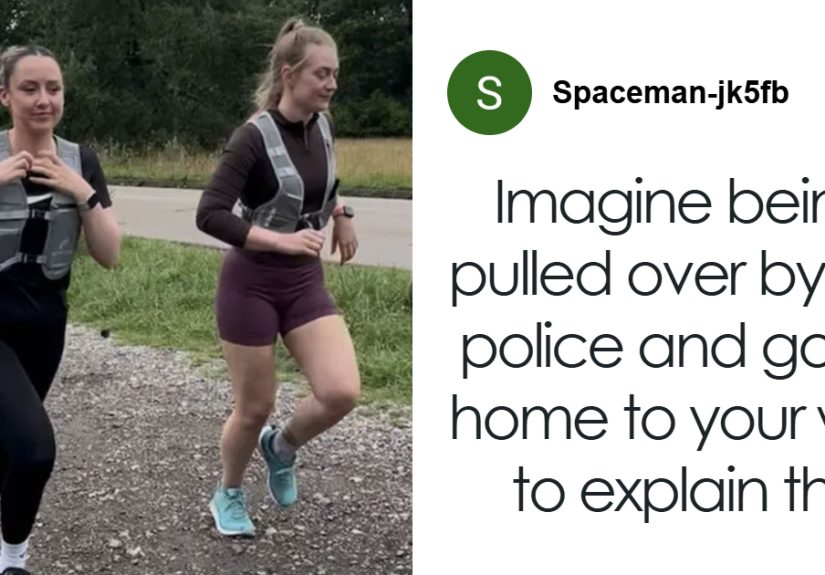
The controversy took off after widely circulated coverage described a pilot operation where female officers, positioned in identified “hotspot” areas, posed as
runners to observe and respond to street harassment. In the reporting, the point wasn’t that officers were arresting people for every obnoxious comment. The
operation reportedly led to arrests for a mix of offensesincluding more serious conductwhile also involving warnings and intervention for behavior that falls
into that frustrating gray zone: not always criminal, but still intimidating and harmful.
The headline version, of course, collapses nuance into a single sentence: “Cops dressed like joggers to get catcalled and arrest men.” That framing basically
dares the internet to pick a side. And people didfast.
Why Police Use “Decoy” Tactics in the First Place
Undercover and decoy operations are not new. Law enforcement has long used plainclothes tactics to catch crimes that are hard to address through standard patrol:
theft, robbery, assaults near transit stations, and certain organized offenses. The logic is straightforward: when harmful behavior clusters in a location, a
targeted operation can help stop repeat offenders and deter escalation.
Classic decoy models often rely on two ingredients: (1) a realistic scenario in which an offense might occur, and (2) surveillance and rapid backup so the
response is immediate, evidence is preserved, and victims aren’t left on their own. When run well, decoy operations can reduce street crime and capture repeat
offenders who have learned how to “act normal” when a uniform is nearby.
But “when run well” is doing a lot of work. Because the moment decoy operations feel like a trap, public trust starts sprinting in the opposite direction.
The Big Legal Question: Is This Entrapment, Or Just Opportunity?
In the United States, “entrapment” is a legal defensenot a vibe. The general idea is that the government can’t implant the criminal plan in someone’s head and
then punish them for following it. That said, courts have consistently allowed undercover work and sting operations when officers merely provide an opportunity
to commit a crime, rather than pressuring someone into it.
How U.S. entrapment law typically works
The Supreme Court’s entrapment framework has emphasized “predisposition” in multiple landmark cases. In simplified terms: if a person was already willing to do
the illegal thing, an undercover officer’s presence usually doesn’t erase responsibility. But if government conduct is so persuasive or coercive that it creates
the offense, the defense becomes stronger.
Federal guidance also draws a line between permissible undercover tactics and “outrageous” government conduct so extreme it offends due process. Courts rarely
find that line crossed, but the possibility shapes best practices: avoid coercion, document interactions carefully, and ensure the target’s conductnot the
government’s scriptis what drives the offense.
Where the jogger-decoy concept gets tricky
The most heated dispute isn’t whether undercover policing is allowedit is. The dispute is whether the “bait” is functionally encouraging behavior that would
not otherwise happen, and whether enforcement is aimed at actual criminal conduct or at broadly punishing obnoxious speech.
If an officer is simply jogging and someone commits a crime (e.g., unwanted physical contact, stalking behavior, grabbing a phone, threatening conduct), the
decoy looks a lot like standard public-safety enforcement. But if enforcement centers on ambiguous speech that’s rude yet constitutionally protected, the tactic
starts to look like speech-policingand that’s where courts, advocates, and ordinary people get nervous.
Catcalling vs. Criminal Conduct: The Line People Fight Over
“Catcalling” is a catch-all term that covers everything from annoying comments to aggressive, targeted harassment. Socially, it’s often experienced as a power
moveless “flirting” and more “reminder: I can interrupt your day whenever I want.” Legally, though, the U.S. system is messy: there is no single federal law
that bans street harassment as a category, and the First Amendment limits how governments can punish speech in public places.
That means many incidents that feel threatening or demeaning aren’t easily chargeable unless they cross into behavior already covered by existing laws, such as:
- Stalking or repeated following (patterned conduct that creates fear or safety concerns)
- Threats (true threats are not protected speech)
- Disorderly conduct (varies widely and must be enforced carefully to avoid constitutional issues)
- Harassment statutes (often require intent, repetition, or specific conduct)
- Assault or unwanted physical contact (clear criminal boundaries)
- Theft or opportunistic crimes that occur alongside harassment in certain hotspots
This is why some operations described in coverage reportedly resulted in arrests for a range of offensesnot solely “someone said something gross.”
In many jurisdictions, the criminal hook is the conduct that escalates beyond speech: following, cornering, touching, grabbing, threatening, or persistently
targeting someone who is trying to leave.
Why This Debate Is So Intense in the U.S.
In American culture, people can agree street harassment is harmful and still disagree about what government is allowed to do about it. The argument tends to
split into two big campswith plenty of nuance in the middle.
The public safety argument: “This is what prevention looks like”
Advocates for tougher intervention point to a blunt reality: harassment changes behavior. Surveys and reporting have repeatedly shown that women alter routes,
avoid running alone, change clothing choices, carry safety devices, or abandon activities entirely because public space doesn’t feel public to them. A major
running publication reported that a large share of women runners have experienced harassment while running, a statistic that resonates because it matches what
so many people describe as “normal.” Normal, in this case, is the problem.
Supporters also argue that early intervention matters. Not every catcall escalates, but patterns of entitlement and boundary-testing can. If police can identify
repeat offenders in hotspotsand if those offenders are also involved in more serious behavioran operation that starts with “street harassment patrol” may
prevent bigger harms down the line.
The civil liberties critique: “Carefulspeech and selective enforcement are landmines”
Civil liberties groups have warned for years that legislating catcalling carries real risks. Broad rules against “annoying” or “offensive” speech can be vague,
unevenly enforced, and prone to targeting marginalized groups. Even well-intentioned crackdowns can morph into “contempt of cop” in practice, especially when
laws are imprecise and officers must decide, in the moment, what crosses the line.
There is also a credibility problem: communities that already feel over-policed may see decoy operations as theatrical or manipulative rather than protective.
And in the U.S., history gives people reasons to worryespecially when undercover tactics have been used in ways critics argue were discriminatory or
constitutionally suspect.
So… Is It Smart Policing or a Bad Idea in Spandex?
The honest answer is: it depends on what is being enforced, how it’s being documented, and whether the operation is designed to reduce harm rather than to
rack up headlines.
If the real target is conduct that’s already illegalstalking, unwanted touching, threats, theftand the “running clothes” are simply practical camouflage for
a high-risk environment where women are routinely targeted, that can be framed as a modern version of a street-crime decoy operation. The officer isn’t
“tempting” anyone; she’s occupying a public space in a way that resembles the people most impacted.
But if the tactic is used to punish ambiguous speech, or if officers are encouraged to push interactions, flirt back, or escalate a scenario to “test” someone,
the operation slides toward the kind of government inducement that courts and communities distrust. And even if it’s technically legal, it may still be
politicallyand ethicallyflammable.
A Better Playbook: How to Reduce Street Harassment Without Turning Sidewalks Into a Sting Show
The most constructive takeaway from the debate isn’t “never do it” or “do it everywhere.” It’s: if public agencies want to respond to street harassment,
they should build a strategy that is narrow, transparent, and focused on measurable harm.
1) Prioritize clear, chargeable conduct
Focus enforcement on behavior that creates fear, blocks movement, involves physical contact, or demonstrates stalking patterns. Write policies that avoid vague
“annoying speech” categories. The clearer the boundary, the less likely enforcement becomes arbitrary.
2) Use training that reflects real victim experience
Street harassment is often underreported because people assume nothing will happen, don’t want to be dismissed, or aren’t sure a report will be taken
seriously. Training officers to recognize patternsespecially repeat targeting in the same locationscan help shift responses from “that’s not a crime”
to “let’s document and address what is happening.”
3) Pair enforcement with prevention
Environmental design matters: lighting, sightlines, emergency call options, and well-maintained paths reduce risk. Community campaigns can also reduce
harassment norms, especially when messages emphasize boundaries (“don’t comment on strangers’ bodies”) and respect (“public space is shared space”).
In other words: don’t rely solely on arrests to do the work of culture.
4) Build accountability into undercover operations
Undercover work should have written guidelines, supervisory review, clear objectives, and post-operation reporting. What was the operation trying to stop?
How many incidents were observed? How many led to warnings vs. arrests? Were any groups disproportionately targeted? Transparency won’t end disagreement, but it
can reduce suspicion that the point was publicity rather than safety.
What This Story Reveals: The “Freedom to Move” Problem
The deeper issue isn’t whether running clothes should be part of a policing tactic. The deeper issue is that many women don’t experience public space as a
neutral zone. They experience it as conditional: “You can be here, as long as you’re prepared to be commented on.” That is a freedom problemfreedom to run,
to walk, to commute, to exist without performing emotional labor for strangers.
At the same time, Americans are rightly wary of giving government broad power to punish speech. Two things can be true: catcalling can be harmful, and laws
against it can be abused. That tension is why the debate is heatedand why any enforcement approach has to be both precise and humane.
Experiences That Mirror the Debate (Real-World Perspectives)
To understand why people react so strongly, it helps to step out of the headline and into the everyday moments that shape opinion. Below are experiences and
patterns frequently described by runners, bystanders, and public-facing workersshared here in a composite, non-identifying way to reflect what people report
in surveys, interviews, and community conversations.
The runner who changes her routeagain
A woman heads out for an evening run because it’s the only time her schedule allows. She chooses a well-traveled route, keeps one earbud out, and tells a
friend where she’ll be. Near a familiar corner, someone calls out about her body. It’s not a threat, not explicit, and not something she’s confident is
“reportable.” But it lands the same way it always does: as an interruption that turns a workout into a safety calculation. She speeds up, reroutes, and later
wonders why she’s the one doing mental math while the harasser gets to treat it like a joke.
The guy who thinks he’s being friendlyuntil he sees the reaction
Another common thread: a man calls out a comment he considers a compliment. In his mind, it’s harmlessmaybe even charming. But the runner’s body language
changes instantly: shoulders tense, pace quickens, eyes scan for exits. The disconnect is the whole story. He interprets the moment as casual banter; she
experiences it as an unpredictable interaction with a stranger who has decided he deserves her attention. When people argue online that “it’s just words,”
they often miss what the words communicate: “I can intrude on your space whenever I want.”
The bystander who freezes, then regrets it
A bystander witnesses a runner get heckled and does what many people do in uncomfortable moments: nothing. Later, they replay the scene and realize how
isolating it must feel to be targeted while everyone else keeps walking. Bystander intervention doesn’t have to be confrontational. It can be as simple as
checking in (“You okay?”), creating a brief buffer by walking alongside the person, or documenting details if the situation escalates. But hesitation is
normalespecially when people worry the harasser will turn hostile. That fear itself is a clue that the behavior isn’t harmless.
The officer’s dilemma: “We’re asked to prevent harm, but we’re judged for how”
From the law-enforcement perspective, harassment complaints can be hard to address with traditional patrol. Victims may not report immediately, descriptions
can be limited, and repeat offenders learn when and where they can act without consequences. Officers tasked with prevention face a no-win narrative: if they
do nothing, critics say police ignore quality-of-life safety; if they do something proactive, critics say police are staging stings or policing speech. That’s
why operational design matters. The more an approach is anchored to clear illegal conductfollowing, threats, physical contact, theftthe easier it is to
justify as protection rather than provocation.
The community worker who worries about “who gets targeted”
Advocates who work with marginalized communities often raise a different concern: not whether harassment is real (it is), but whether enforcement will be fair.
They’ve seen “public order” laws applied unevenlywhere some people get warnings and others get arrested, depending on neighborhood, race, poverty, or perceived
status. Their fear is that broad anti-harassment crackdowns could become another pipeline into the criminal system for people already under heavy surveillance.
This perspective doesn’t excuse harassment; it demands better guardrails so the response doesn’t create new injustices.
Put together, these experiences show why the debate isn’t going away. People want public spaces that feel safe and respectful. They also want rules that are
clear, rights-protecting, and fairly applied. If we can agree on anything, it’s this: the only thing that should be running in a public park is… the runners.
Not the harassment. Not the fear. Not the argument that “she shouldn’t have been there.”
Conclusion
The “jogger decoy” story is a culture-war Rorschach test because it sits at the crossroads of real harm and real constitutional limits. Street harassment is
widespread and behavior-changing; people deserve to move through public spaces without being targeted. At the same time, policing strategies that drift into
vague speech enforcement risk overreach and selective enforcement.
The most credible path forward is not a single tactic, but a balanced approach: narrow enforcement focused on clearly illegal conduct, prevention that changes
environments and norms, and transparency that earns trust. In other words: protect public space without turning it into a trapand treat dignity as a public
safety issue, not a punchline.