Table of Contents >> Show >> Hide
- What Happened (And Why It Blew Up So Fast)
- Why “Cheap” Is the Internet’s Favorite Shortcut
- The Pop Performance Playbook: Theater, Persona, and “Big” Choices
- Age-Shaming: The Subtext Doing the Loudest Talking
- The 2024 Reset and the 2025 Comeback Context
- The “Cheap vs. Confident” Debate Is Really About Control
- How Social Media Turns Performance Into “Proof”
- So, Was It “Cheap”?
- Experiences People Have Around Viral “Raunchy Show” Moments
If the internet had a thermostat, it would be permanently stuck on “overreact”. One minute you’re watching a
pop concert clip between meetings; the next, you’re knee-deep in comment sections where strangers are auditioning for
the role of “Morality Police Captain.” Welcome to the latest round of cultural dodgeball: Jennifer Lopez, a stage, a
spicy dance break, and a chorus of people yelling “cheap!” like it’s a universal remote button that fixes everything.
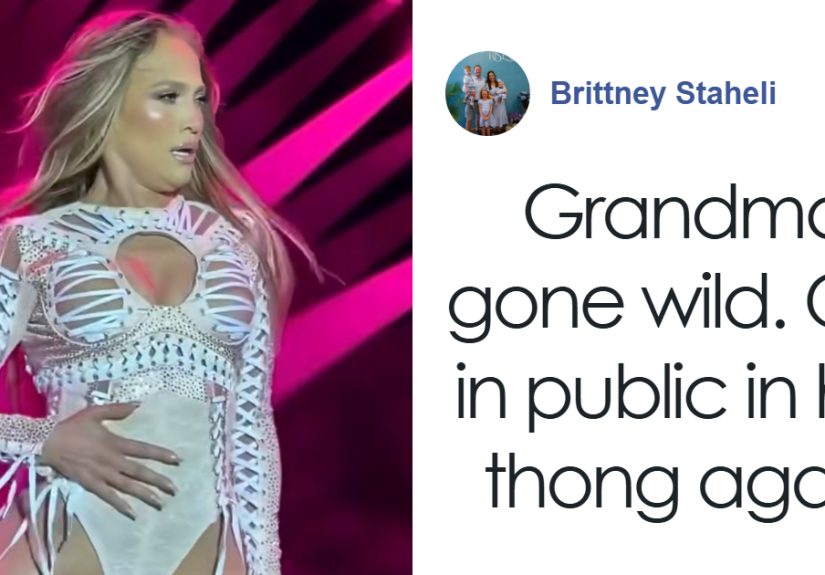
The headline-ready version is simple: J.Lo performed a suggestive routine during a show, the clip went viral, and a
portion of the internet decided that what they were really mad about was… choreography. The reality is messier (and
more interesting): it’s about the collision of pop performance traditions, age-based double standards, algorithmic
outrage, and the human urge to turn a 20-second video into a whole personality.
What Happened (And Why It Blew Up So Fast)
The backlash in question traces to Lopez’s summer touring runpart of her “Up All Night: Live in 2025”
erawhere videos circulated online showing a provocative segment with dancers. It happened in the context of a big,
festival-style performance (the kind with bright lights, big choreography, and the unspoken rule that subtlety took
the night off). Within hours, the clip was everywhere: reposts, reaction videos, “hot take” threads, and the classic
comment-section sandwich of “icon!” and “think of the children!”
From there, the language escalated. Some critics labeled the routine “cheap,” framing it as attention-seeking. Others
pushed back, arguing that Lopez has built a career on athletic choreography and adult, glamorous stagecraftand that a
brief, suggestive moment is not exactly shocking in pop, where sexuality has been part of the performance vocabulary
since forever (and yes, “forever” includes the era of feather boas and fainting couches).
The bigger story isn’t whether a dance break is “too much.” The bigger story is how quickly we turn a clip into a
verdictespecially when the performer is a famous woman doing something bold on purpose.
Why “Cheap” Is the Internet’s Favorite Shortcut
“Cheap” is a convenient word because it sounds like a critique of taste, but it often functions like a critique of
permission. As in: “I didn’t give you permission to do that.” Or: “I don’t like how that made me feel.” Or the
sneakiest one: “You’re not the age I’ve decided you’re allowed to be sexy.”
In pop culture discourse, “cheap” rarely means “low-budget.” It usually means “I’m uncomfortable, and I’m dressing my
discomfort in manners.” It’s a label that suggests a hierarchy: classy is the kind of sexy that doesn’t challenge
anyone, while cheap is the kind that makes people confront the fact that pop performances are often theatrical,
exaggerated, and designed to provoke a reaction.
And make no mistake: provocation is part of the job description. Pop concerts are not courtroom depositions. They are
high-volume, high-movement, emotion-forward events where symbolism gets amplified. A performer might be acting out
lyrics, dramatizing a story, or leaning into persona. That doesn’t mean every viewer has to enjoy itbut it does mean
context matters.
The Pop Performance Playbook: Theater, Persona, and “Big” Choices
Lopez is famous for a specific style of performance: precise choreography, high energy, and a stage persona that
blends dance culture, glamour, and confidence. When someone like J.Lo “turns it up,” it isn’t random. It’s part of a
larger language of pop showmanshipone that borrows from dance, music video aesthetics, and theatrical storytelling.
That’s why the “cheap” argument often falls apart under inspection. If your expectation is a singer standing still at
a microphone, you might interpret any sensual choreography as gratuitous. But if your expectation is a
dance-forward pop spectacular, a provocative moment reads as a known ingredientlike bass in a club track. It’s not
there by accident.
Also, let’s be honest: the modern pop ecosystem rewards memorable moments. Tours and festivals are competing with
endless entertainment options. Viral clips help ticket sales, streaming bumps, and cultural relevance. You can dislike
that reality, but it’s the water the industry swims inand performers know it.
Age-Shaming: The Subtext Doing the Loudest Talking
A lot of the discourse around Lopez’s performance didn’t just critique the routineit critiqued the idea of Lopez
doing it at her age. That’s not really about choreography. That’s about cultural discomfort with women who refuse
to “retire” into invisibility after a certain birthday.
Here’s the double standard in plain terms: male performers can be romantic, flirtatious, and physically expressive
well into later decades and get framed as “legends.” Female performers often get asked to shrink, soften, and
“act their age,” as if confidence has an expiration date printed in tiny font on the back of a concert ticket.
Lopez’s brand has always included physicality and sex appealbut also athleticism and discipline. If you’ve ever
watched her dance work, you know it’s built on rehearsal, stamina, and control. Dismissing that as “cheap” can be a
way of ignoring the labor behind the spectacleespecially when the spectacle includes a woman owning the room.
The 2024 Reset and the 2025 Comeback Context
The timing matters. Lopez’s recent touring narrative includes a very public pause and restart. In 2024, she canceled
her planned summer tour, telling fans she needed time with her children, family, and close friends. That decision was
widely covered, and it shaped the way people read her next big move: the comeback.
By 2025, the story line shifted: Lopez returned to the stage with renewed momentum, kicked off international dates,
and made high-profile appearancesincluding hosting and performing at major televised events. In other words, she
didn’t tiptoe back into the spotlight. She sprinted.
When a star returns after a public reset, audiences often project a narrative onto them: “Shouldn’t she be quieter?”
“Shouldn’t she be more serious?” “Shouldn’t she be… different?” But performers don’t come back to be less themselves.
They come back to remind you why you watched in the first place.
The “Cheap vs. Confident” Debate Is Really About Control
If someone says, “That performance was cheap,” what they might be saying is, “I prefer a world where celebrities
behave the way I imagine they should.” It’s a control reflex. We do it with women’s clothing, women’s ambition,
women’s confidenceand yes, women’s dancing.
The pushback, meanwhile, comes from people who see the critique as selective. Why is a suggestive moment onstage
treated like a scandal when the broader entertainment industry sells sensuality daily? Why does a woman’s sexuality
become “too much” precisely when she’s the one steering it?
You don’t have to personally enjoy a provocative routine to notice the pattern: “cheap” is often the insult people
reach for when a woman refuses to package herself in a way that makes everyone comfortable.
How Social Media Turns Performance Into “Proof”
Viral culture doesn’t reward nuance. It rewards clarity, conflict, and speed. A short clip rarely includes context:
the song, the narrative arc of the show, the tone of the venue, or the audience vibe in the moment. Instead, viewers
fill in the blanks with whatever storyline they already carryabout celebrity, morality, parenting, fame, or “how
people should act.”
That’s how you end up with two totally different reactions to the same video:
- Team Pearl-Clutch: “This is desperate and embarrassing.”
- Team Let-Her-Cook: “This is a pop concert, not a PTA meeting.”
Both sides are reacting to more than choreography. They’re reacting to identity, values, and the way fame magnifies
everything. The video becomes a Rorschach test in sequins.
So, Was It “Cheap”?
“Cheap” is easy. “Complicated” is accurate.
If you felt the routine crossed your comfort line, that’s a valid personal reaction. But turning that reaction into a
moral ranking of the performerespecially with age-based undertonessays more about cultural expectations than about
the quality of the show.
Lopez’s career has always mixed glamour, dance, and boldness. The controversy isn’t that she did something brand-new.
It’s that she did something familiar in a moment when the internet is extra hungry for judgment. Pop stars don’t just
perform songs anymore; they perform inside a nonstop commentary machine.
And if there’s one thing that machine loves, it’s a confident woman giving people something to talk about.
Experiences People Have Around Viral “Raunchy Show” Moments
One of the strangest modern experiences is watching a concert become a debate in real timeespecially if you were
there, or if you saw the full performance before the internet carved it into snack-sized outrage. People often
describe a gap between “the room” and “the feed.” In the room, a provocative moment can read as playful, theatrical,
or simply part of the show’s energy. On the feed, the same moment can look shocking because it’s stripped of music,
pacing, lighting cues, and the audience’s overall vibe.
Fans who attend big pop shows also talk about how expectations shape the experience. Some people show up for vocals,
some for dance, some for spectacle, and some for the communal party of it all. If you’re expecting a classic
sing-along, an especially sensual dance break may feel jarring. If you’re expecting a high-voltage pop production, it
may feel like exactly what you paid for. The same ticket can buy two different emotional outcomes depending on what
you imagined walking in.
Another common experience: the group-chat aftermath. People swap clips, laugh at the most dramatic comments, and then
someone inevitably says, “Waitwas it actually that bad?” That’s when the conversation turns from the performance to
the culture around it. Some folks feel protective of artists who get judged harshly, especially women. Others feel
protective of “public standards,” even when the event is clearly marketed as an adult pop show. The argument becomes
less about dance and more about what kind of society people want to live in (which is… a lot to ask of a 20-second
video).
People also share a very practical realization: if you’re bringing kids or you want a more family-friendly vibe,
research helps. Checking setlists, reading recent reviews, and understanding the vibe of a tour can prevent a
mismatch between expectations and reality. That doesn’t mean artists must sanitize their shows; it means audiences
can curate their own experiences. Pop concerts aren’t one-size-fits-all, and they never have been.
Finally, there’s the “zoomed-in internet” effect. Viewers often forget how choreography reads from different angles.
A routine that feels playful and stylized from the audience can look more intense when filmed close-up, cropped, and
replayed without the musical build. The experienced concertgoer move is to hold the hot take until you see the wider
contextbecause the internet loves to sell a conclusion, but the full show usually tells a more complete story.