Table of Contents >> Show >> Hide
- What Makes a Fire Last Longer (The Not-So-Secret Science)
- Step 1: Use the Right Wood (This Is Where Burn Time Is Won or Lost)
- Step 2: Season and Store Wood Like You Actually Want It to Burn
- Step 3: Prep the Fireplace or Stove for a Longer, Cleaner Burn
- Step 4: Build a Fire That’s Designed to Last
- Step 5: Control Airflow Without Creating a Smoke Machine
- Step 6: Use Smart “Burn-Longer” Tools (Optional, But Helpful)
- Troubleshooting: Why Your Fire Keeps Dying Early
- Safety and Clean-Air Habits That Also Help Fires Last Longer
- Real-World Experiences: What Actually Changes When You Start “Long-Burn” Habits (500+ Words)
- Conclusion
- SEO Tags
You know the dream: you light a cozy fire, grab a blanket, and settle in… and thenpoofit’s gone before the opening credits finish.
The good news is that “longer-lasting fire” isn’t luck. It’s a simple formula: the right wood, the right setup, and the right airflow.
Do those three things well, and you’ll get steady flames, a thicker coal bed, and fewer “why is it smoking like a dragon?” moments.
This guide covers fireplaces, wood stoves, and backyard fire pits, with practical, real-world tips you can actually use.
Safety note (because fire is fun, but also… fire): follow your appliance manual, local burn rules, and never use gasoline or other accelerants.
If you’re a teen, only build and tend fires with responsible adult supervision.
What Makes a Fire Last Longer (The Not-So-Secret Science)
Every fire needs three things: fuel, oxygen, and heat. You’ve probably heard that.
What matters for burn time is how those three show up over time.
- Dry fuel burns hotter and more efficiently, which builds longer-lasting coals.
- Dense fuel (like hardwood) releases energy more slowly, so it keeps going instead of flashing out.
- Controlled oxygen slows the burn ratewithout smoldering (smoldering is the shortcut to smoke, soot, and creosote).
If you want a fire to burn longer, you’re really trying to build and maintain a strong coal bed.
Coals are the battery pack of a fire: they store heat and keep the next logs igniting smoothly.
Step 1: Use the Right Wood (This Is Where Burn Time Is Won or Lost)
Dry beats “kinda dry” every single time
Wet or green wood wastes heat boiling off water before it can burn well. That means lower temperature, weaker coals, more smoke,
and a fire that fizzles early. A reliable rule: firewood burns best when its moisture content is under about 20%.
A cheap moisture meter takes the guesswork outsplit a log and test the fresh interior face.
Hardwood for longevity, softwood for starting
For longer burn times, choose dense hardwoodsthink oak, hickory, maple, ash, beechbecause they generally burn longer and make better coals.
Softwoods (pine, fir, cedar) light easily, so they’re great for kindling, but they tend to burn faster and can create more smoke if the wood isn’t properly seasoned.
The best strategy is often a mix: start with fast-igniting material, then “graduate” to hardwood for the long haul.
Size and shape matter more than people think
Want your fire to last longer? Don’t feed it tiny snacks. Feed it a balanced meal.
- Small splits ignite quickly and raise firebox temperature fast (great for startup).
- Medium splits maintain a stable flame without racing.
- Large splits or full logs burn slower and extend coal life (best once the fire is established).
A good “long-burn load” is usually built from larger pieces placed once you already have a hot coal bed.
If you start with big logs on a weak flame, you’ll get frustration and smoke instead of warmth.
Only burn clean, untreated wood (your chimney and lungs will thank you)
Painted wood, pressure-treated lumber, plywood, trash, plastics, glossy paper, and driftwood can release harmful chemicals and may damage your system.
Stick to clean, dry firewood or approved manufactured logs used as directed.
Step 2: Season and Store Wood Like You Actually Want It to Burn
Seasoning isn’t “leave the round logs in a pile and hope for the best.” Wood dries faster when it’s cut, split, stacked, and ventilated.
Many guidelines recommend seasoning for at least several months (often longer for hardwoods), and storing wood off the ground with airflow.
Cover the top to shed rain, but don’t wrap the whole stack like a leftover sandwichtrapped moisture is the enemy.
- Split first: smaller pieces dry faster.
- Stack off the ground: pallets or rails prevent ground moisture from wicking up.
- Prioritize airflow: loose stacks dry better than tight “firewood brick walls.”
- Top cover only: keep rain/snow off while letting sides breathe.
Quick reality check: “Looks dry” isn’t a measurement. If you want a longer fire, test the wood.
Dry wood often sounds more hollow when knocked together, but a moisture meter is the simplest way to know.
Step 3: Prep the Fireplace or Stove for a Longer, Cleaner Burn
Open the pathway: draft is everything
Fires don’t just “burn.” They breathe. Your system needs adequate draft to pull air in and move smoke out.
Before you light up, make sure the damper is open (fireplace), the air controls are functioning (stove/insert),
and the firebox isn’t blocked by excess ash in the wrong places.
Chimney maintenance isn’t optional if you want long burn times
A dirty chimney reduces draft and increases the risk of chimney fires.
Industry safety guidance commonly recommends that chimneys, fireplaces, and vents be inspected at least annually
and cleaned as needed. Creosote buildup is especially important: smoldering fires and wet wood increase it, and it can ignite.
Practical tip: if your fires are hard to keep going, smoke more than usual, or smell “sooty,” don’t just add more wood.
Check your draft and maintenance. A clean, correctly functioning system helps you get a longer burn with less fuss.
Start with the right base
- Fireplace: use a grate so air can get under the logs; it helps combustion and keeps wood from smothering itself.
- Wood stove/insert: follow the manual on ash level. Many stoves benefit from leaving a small ash bed because it insulates coals,
but too much ash can restrict airflow. - Fire pit: a shallow bed of ash/coals helps retain heat, but keep the fire contained and never leave it unattended.
Step 4: Build a Fire That’s Designed to Last
Use the top-down method (it’s not just trendyit works)
The top-down (or “upside-down”) fire is built with larger logs on the bottom and progressively smaller wood on top,
with kindling and starter material at the very top. As it burns downward, it tends to produce steadier heat and can reduce the constant need to re-feed.
It’s also a neat trick for cleaner startup because the flames burn through smoke as they move down.
Simple top-down stack:
- Place two large logs parallel on the bottom (leave a little gap between them).
- Add a layer of medium splits across those logs (like a tidy hashtag).
- Add smaller splits, then kindling on top.
- Place your fire starter at the top and light it.
Get it hot first, then slow it down
This is the biggest “long burn” mistake people make: they try to slow the fire too early.
If the fire never gets hot, it won’t build strong coalsand weak coals mean short burn time.
Start with enough air for lively flames and let the initial load burn until you’ve built a solid coal bed.
Build and manage a coal bed like it’s your job
When the first logs break down into glowing coals, you’re entering the “make it last” phase.
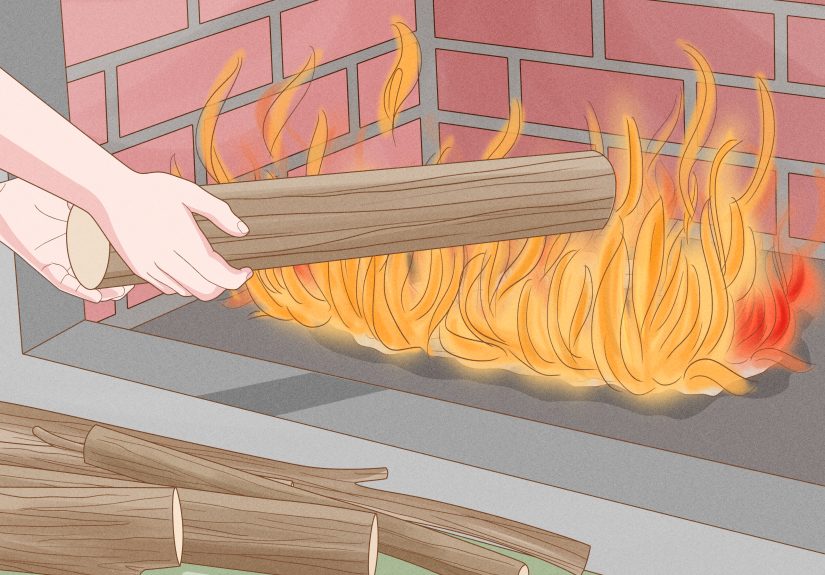
- Rake coals into a mound before reloading. Concentrated heat helps the next logs ignite evenly.
- Add larger hardwood pieces once you have strong coals. This extends burn time dramatically.
- Place logs strategically: don’t smother the coals; leave small air gaps so oxygen can reach them.
Step 5: Control Airflow Without Creating a Smoke Machine
Wood stove / insert: adjust in stages, not all at once
Many stoves are designed to burn efficiently when you run them hot enough for secondary combustion (check your manual).
After you reload and the new wood is actively burning (not just sizzling), you can reduce the air gradually.
The goal is a steady flame and sustained coalsnot lazy smoldering.
- After reload: air more open until the logs are burning well.
- Once charred and stable: reduce air in small steps over several minutes.
- Watch the flame: you want active combustion, not a smoky, sluggish burn.
Fireplace: accept that open fireplaces are “pretty, not efficient”
Open fireplaces can burn through wood quickly because they pull lots of room air up the chimney.
You can still extend burn time by using dense wood, building a stronger coal bed, and keeping the fire appropriately sized.
Glass doors (used correctly), fireplace grates, and fireplace inserts can improve performance.
Fire pits: smaller is often better
Backyard fires and campfires last longer when they’re not overbuilt.
A smaller, hotter fire can create a better coal bed and be easier to maintain than a huge bonfire that collapses into chaos.
Add wood in reasonable amounts instead of tossing on a whole stack like you’re paying per match.
Step 6: Use Smart “Burn-Longer” Tools (Optional, But Helpful)
- Moisture meter: the fastest way to upgrade your burn time.
- Proper grate (fireplace): improves airflow under logs.
- Fireplace screen: helps control sparks while letting air flow.
- Stove thermometer (if recommended): helps you learn the “sweet spot” for efficient heat.
- Seasoned/kiln-dried wood: especially useful when you need results now, not next year.
Troubleshooting: Why Your Fire Keeps Dying Early
Problem: Logs hiss, bubble, or look “sweaty”
That’s moisture burning off. Use drier wood, split smaller for startup, and keep airflow adequate until the firebox is hot.
If your wood is consistently wet, fix storage and test moisture content.
Problem: Fire looks fine, then suddenly collapses into smoke
Usually it’s one of these: airflow got reduced too far, the load was packed too tightly, or the coal bed was too weak.
Re-open air controls/damper, gently separate logs for airflow, and rebuild with smaller wood to restore heat.
Problem: Smoke spills into the room
Smoke rollout often points to draft issues: a cold flue, blockage, negative air pressure in the home (kitchen/bath fans can contribute),
or a closed damper. Don’t brute-force it. Confirm the flue pathway is open and the system is maintained.
Problem: You’re feeding it constantly
You’re probably relying on small wood as the main fuel. Shift to a two-phase approach:
start hot with smaller wood, then reload with larger hardwood once you have strong coals.
Safety and Clean-Air Habits That Also Help Fires Last Longer
- Don’t let fires smolder: smoldering wastes fuel, makes more smoke, and increases creosote risk.
- Keep combustibles away: maintain clear space around the hearth/stove and use a screen for sparks.
- Use smoke/CO alarms: especially important with any indoor combustion appliance.
- Follow burn restrictions: some areas restrict wood burning during poor air quality days.
- Never leave a fire unattended: for fireplaces, stoves, fire pitsany of it.
Real-World Experiences: What Actually Changes When You Start “Long-Burn” Habits (500+ Words)
People usually expect one magic trickone secret log placement that turns a fire into an all-night wonder.
In reality, the biggest changes come from a handful of small habits that stack together (kind of like the firewood itself).
The first thing many people notice is how much drier wood changes the entire vibe.
With wet wood, you can do everything “right” and still end up babysitting the fire: it lights slowly, smokes more, and burns down into sad, flaky ash
without ever building that thick, glowing coal bed. When you switch to properly seasoned wood, the fire tends to catch faster, burn brighter,
and make coals that stay alive long enough to matter. Suddenly, you’re not starting from scratch every time you add a logyour fire has momentum.
Another common experience: the moment someone tries a top-down fire, they realize they’ve been doing the “pyramid of chaos” method for years.
With the top-down stack, the fire often feels calmer. Instead of constant poking and rearranging, it burns progressively.
And because the heat is concentrated near the top at first, it helps warm the flue and stabilize draft soonerso you get less “smoke drama”
and more “cozy movie-night energy.”
For wood stove users, the learning curve is usually about air control timing.
Many people try to “turn it down” early because they’re thinking about burn time like a phone battery: lower brightness, longer life.
But fires don’t work like that. If you choke the air too soon, you get a cooler, dirtier burn that can actually shorten useful heat time
(because you never build strong coals). Once people practice the two-step rhythmrun it hot until the load is established, then reduce air gradually
they often find the stove becomes more predictable. You stop guessing and start recognizing visual cues: active flames, stable secondaries (in some stoves),
and coals that look dense and “alive.”
Fireplace users often have a different “aha”: open fireplaces eat wood. That’s not you failingit’s physics.
So the real win is shifting expectations and tactics. Instead of trying to force an open fireplace into being an overnight heater,
people get better results by keeping the fire smaller but hotter, using denser wood, and loading larger pieces once coals exist.
Some also notice that simple upgradeslike a better grate, glass doors used safely, or an insertchange how long a load lasts and how warm the room feels.
Fire pit and camping fires teach the most humbling lesson: bigger isn’t always better.
A giant fire can burn spectacularlyand then collapse into a messy pile that needs constant attention.
Smaller, intentionally fed fires often last longer because you’re building a stable coal base and adding fuel in a controlled way.
People also learn to think in “shifts”: start with kindling, then medium wood, then larger pieces once heat is established.
It’s the same pattern indoors and outdoorsjust with more marshmallows and fewer throw pillows.
Finally, the most underrated experience is the quiet confidence that comes from consistency.
Once someone starts testing wood moisture, storing it properly, cleaning the system regularly, and building fires with a plan,
the fire becomes less of a mystery and more of a tool. You stop “making fire happen” and start managing heat.
And when you wake up to a stove that still has glowing coalsor you come back outside to a fire pit with a usable bed of embersyou realize:
the long-burning fire wasn’t a trick. It was good habits, repeated.
Conclusion
If you want to keep a fire burning longer, focus on the big three: dry, dense wood, a hot start that builds coals,
and controlled airflow without smoldering. Add good storage, regular maintenance, and a smarter fire-building method like top-down stacking,
and you’ll spend more time enjoying the warmthand less time crouched in front of the hearth negotiating with a stubborn log like it owes you money.