Table of Contents >> Show >> Hide
- So… what are the Death Eaters, exactly?
- The Death Eaters’ core problem: they’re built for intimidation, not excellence
- A timeline of Death Eater Ls: big talk, bigger faceplants
- Voldemort’s leadership style: fear-based management makes everyone worse
- They’re “lame,” but they’re not harmless: why the Death Eaters still matter
- Why fans love roasting them (and why the Dark Mark is complicated)
- If you’re writing villains: how to make henchmen threatening without making them boring
- of experiences: watching the Death Eaters be lame in real life (aka fandom life)
- Conclusion: the Death Eaters aren’t coolthey’re a warning (with a mask)
The Death Eaters want you to think they’re terrifying: masked, tattooed, armed with Dark magic, and backed by the kind of boss who
treats “team-building” as an opportunity to set someone on fire.
And sureon paper, Voldemort’s inner circle should be a nightmare. In practice? They’re a roaming pack of insecure bullies with
matching outfits and a chronic allergy to competence. They spend seven books (and eight movies) proving a simple truth:
being evil doesn’t automatically make you impressive.
This is a loving (and slightly roasting) breakdown of why the Death Eaters are such iconic villainsand why, the more closely you
look, the more they resemble the wizarding world’s most overfunded group chat of losers.
So… what are the Death Eaters, exactly?
In the Harry Potter universe, the Death Eaters are Voldemort’s devoted followersradical extremists who use violence,
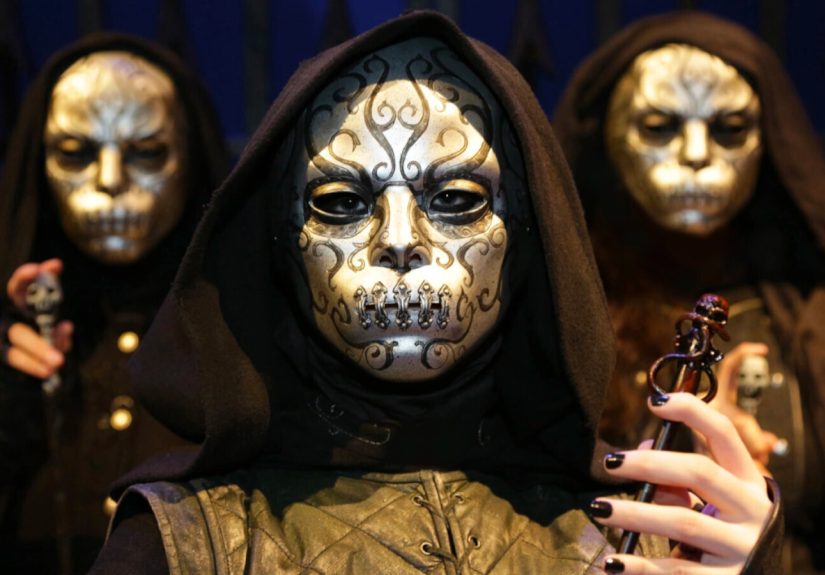
intimidation, and Dark magic to push a blood-purity ideology and grab power. They hide behind masks, operate through fear, and
brand themselves with the Dark Mark (yes, a literal magical loyalty tattoo that can summon them like a cursed group notification).
Some join because they believe in pure-blood supremacy. Others join because they want status, protection, or a front-row seat to
chaos. Either way, the Death Eaters aren’t just “bad guys”they’re a system: an organized movement that turns prejudice into
policy and cruelty into culture.
The Death Eaters’ core problem: they’re built for intimidation, not excellence
The Death Eaters are excellent at looking scary. They’re… less excellent at winning. And the reason isn’t a lack of power. It’s that
their whole setup rewards the worst traits you can put in a high-stakes organization:
- Obedience over skill (the boss wants worship, not feedback)
- Sadism over strategy (terror is their hobby; planning is their chore)
- Status games over teamwork (everyone’s competing to be least punished)
When your management philosophy is “crucio first, questions never,” you don’t get a sharp unit. You get a bunch of powerful people
who are terrified of being the next cautionary tale.
They outsource all charisma to Voldemort
Voldemort is the brand. The Death Eaters are the interns wearing the hoodie. Strip away his presence and what remains is a group of
adults who need masks to feel brave. Their identity isn’t “we’re capable.” It’s “we’re associated with someone capable.”
The moment Voldemort disappears, the Death Eaters don’t heroically continue the causethey scatter, deny, lawyer up, and pretend
the Dark Mark on their arm is just a weird birthmark shaped like a skull. Not exactly “ride or die.” More like “ride until the cops
show up.”
Their ideology is hypocritical in the funniest possible way
“Blood purity” is their big speech. Except the movement is fueled by:
- people obsessed with lineage while relying on intimidation and propaganda (very “trust fund tough guy”)
- a leader who manipulates prejudice mainly as a tool for control
- followers who praise “strength” while constantly begging for mercy
The Death Eaters talk about superiority the way a failing student talks about “not even trying.” If you have to announce how
superior you are, you’re already losing.
A timeline of Death Eater Ls: big talk, bigger faceplants
One reason the Death Eaters feel “lame” is that we repeatedly see them lose control of situations they helped create. They’re
dangerousbut also sloppy. Here are some of the most telling patterns.
1) The Quidditch World Cup panic: maximum chaos, zero follow-through
When the Dark Mark appears over the Quidditch World Cup, it’s meant to be a flexfear in the sky, a message to the world. But it
also reveals a classic Death Eater trait: they love intimidation more than outcomes. They’re great at staging terror and awful at
turning it into a stable advantage.
It’s the villain equivalent of flipping a table in a meeting and calling it “leadership.”
2) The Department of Mysteries fiasco: a whole squad loses to a study group
In Order of the Phoenix, Voldemort’s crew tries to grab the prophecyyet a bunch of teenagers, undertrained and outnumbered,
manage to disrupt the entire operation. The Death Eaters show up with experience, reputations, and serious magical firepower… and
still end up in a chaotic mess where their goals slip away.
You can blame overconfidence, bad intel, or the classic weakness of villains everywhere: pausing to monologue when they should be
securing the objective.
3) “Let’s terrorize Hogwarts” ends with “Wait, why do the kids have a plan?”
Once the Death Eaters (and allies) tighten their grip on the wizarding world, their approach often looks like this:
- install fear-based authority
- punish dissent publicly
- assume intimidation equals loyalty
- get shocked when people resist anyway
They’re the kind of villains who think cruelty is a substitute for legitimacy. It’s not. It’s just crueltyfollowed by consequences.
4) Their favorite move is bullying… which is not a strategy
Death Eaters are at their “best” when they can gang up on someone isolated. They love hostage situations, ambushes, and power
imbalances. But in fights where the other side is organized, supported, or willing to sacrifice? The Death Eaters start looking
less like elite operatives and more like a street gang with fancy wands.
Voldemort’s leadership style: fear-based management makes everyone worse
If you’ve ever worked somewhere that punished mistakes instead of fixing systems, you already understand the Death Eater problem.
Voldemort runs his organization like a nightmare performance review:
- People hide information to avoid blame.
- People sabotage each other to look better.
- People prioritize short-term survival over long-term success.
That’s why the Death Eaters are constantly jockeying for favor. Their internal politics are brutal. And brutal internal politics are
a great way to ensure your “elite unit” can’t function as a unit.
Favoritism creates chaos (and Voldemort loves favoritism)
Voldemort rewards devotion, not results. The most fanatical follower often gets the most attention, which encourages performative
cruelty. When showing off becomes more valuable than being effective, you get lots of dramatic eviland lots of preventable failure.
The Death Eaters’ loyalty is brittle
The Death Eaters love Voldemort when he’s winning. When he’s losing, their “conviction” suddenly develops a healthy interest in
plausible deniability. That’s not loyalty. That’s opportunism with a mask budget.
They’re “lame,” but they’re not harmless: why the Death Eaters still matter
Here’s the uncomfortable part: the Death Eaters can be pathetic and still be devastating. In fact, that’s part of the point.
The series shows how extremist movements don’t require genius foot soldiersjust enough fear, propaganda, and social permission
for cruelty.
The Death Eaters represent what happens when prejudice is normalized and power is pursued without conscience. Their ideology
dehumanizes people, reduces identity to “blood status,” and uses violence to enforce hierarchy. That is not fantasy-only.
That’s a real-world patternjust with fewer owls.
“Evil is banal” with better special effects
The Death Eaters aren’t scary because they’re cool. They’re scary because they’re ordinary enough to be believable: people who
choose comfort over courage, status over ethics, and belonging over decency.
Why fans love roasting them (and why the Dark Mark is complicated)
Fans dunk on Death Eaters because it’s satisfying to puncture their self-image. They present themselves as inevitable, dominant,
chosen. The story keeps reminding us: they’re not inevitable. They’re loud. And there’s a difference.
That’s also why Death Eater aesthetics can feel weirdly popularmasks, symbols, “dark” vibes. In fandom spaces, some people treat
it like a costume shorthand for “villain.” But it’s worth remembering that, in-universe, the Dark Mark is basically the
organization’s hate-symbol-and-membership-card rolled into one.
Enjoy the fictional drama. Maybe don’t treat extremist branding like it’s a neutral fashion logo. (Yes, that includes your
“it’s just ink” arguments. Ink can be “just ink” and still mean something.)
If you’re writing villains: how to make henchmen threatening without making them boring
The Death Eaters are a useful case study because they’re both effective and flawed. If you want henchmen who feel real (and scary),
steal what works and fix what doesn’t:
Give them competence in one specific lane
The Death Eaters excel at intimidation, surveillance, and social leverage. That’s why they’re convincing. What makes them “lame”
is that they rarely adapt when intimidation fails. A more frightening group would be flexible: persuasion, infiltration, logistics,
contingency plansthe boring stuff that wins wars.
Make them human, not just evil
Some Death Eaters are zealots. Some are cowards. Some are status-obsessed. That variety makes them feel real. If you’re building
a villain organization, give members distinct motivations. Evil is rarely a single flavor.
Show the internal cost of cruelty
Fear-based groups rot from the inside. The Death Eaters demonstrate that perfectly: infighting, mistrust, and fragile loyalty.
That internal decay is dramatic and believableand it’s why their defeats feel earned.
of experiences: watching the Death Eaters be lame in real life (aka fandom life)
If you’ve spent any time rewatching the movies, rereading the books, or arguing online about who was “actually” the worst Death Eater,
you’ve probably had the same emotional journey the rest of us have:
fear → fascination → comedy.
The first time you meet them, they’re nightmare fuel. Masks. Dark spells. That sense that the adults are finally outmatched.
But then you grow up, revisit the story, and start noticing the weird little details that make them feel less like an unstoppable
army and more like a workplace disaster in matching cloaks.
One common fan experience is the “wait… is this your plan?” moment. You’re watching a scene where the Death Eaters have every
advantagenumbers, surprise, reputationand someone still chooses the most theatrical option. Not the most effective option.
The theatrical option. And it hits you: they don’t just love power. They love the feeling of power. Which means they’re
vulnerable to anyone who refuses to play along.
Another universal experience: theme-park and cosplay whiplash. You can go from reading about authoritarian cruelty to seeing
“Death Eaters” as entertainment villainsactors in robes, spooky lighting, dramatic wand flourishes. It can be fun (because it’s
fiction and pageantry), but it also makes the satire sharper. The story’s point is that these people crave spectacle. So of course
the spectacle is what sticks in our brains.
Book club conversations tend to land in the same place: the Death Eaters are terrifying when the system supports them, and laughably
fragile when it doesn’t. People love talking about how quickly their confidence collapses when they can’t rely on a monopoly of fear.
You’ll hear fans compare them to real-world bullies: loud in groups, quiet when confronted, obsessed with status, and weirdly
dependent on everyone else believing their mythology.
And then there’s the online discourse experiencewhere someone inevitably says, “But they’re such cool villains,” and someone else
replies, “Cool? They lose to teenagers with homework.” Both statements can be true in different ways. They’re cool in design,
scary in impact, and lame in execution. That combination is why people keep talking about them decades later. Pure competence is
boring. Pure incompetence is a joke. The Death Eaters live in the messy middle: capable enough to cause damage, flawed enough to
be exposed, and arrogant enough to make their own downfall feel delicious.
Ultimately, the “Death Eaters are lame” take isn’t just a dunkit’s part of the series’ comfort. The story insists that cruelty
doesn’t deserve awe. That hate doesn’t deserve respect. That the people who claim to be “born superior” are often just ordinary
cowards wearing a costume.
Conclusion: the Death Eaters aren’t coolthey’re a warning (with a mask)
The Death Eaters remain one of pop culture’s most recognizable villain groups because they’re not just monsters. They’re a movement:
a mix of ideology, fear, and opportunism held together by a leader who rewards devotion and punishes doubt.
And yes, they’re lame as hellbecause they’re built on insecurity, hypocrisy, and bullying. But that’s also the point. The series
doesn’t ask you to admire them. It asks you to understand how groups like that grow, how they operate, and how they collapse when
people stop giving them the power of fear.