Table of Contents >> Show >> Hide
- What Is a Catio (and Why Cats Act Like It’s a Five-Star Resort)
- Planning Your Catio: Start With the Cat, Not Pinterest
- Safety First: What Makes a Catio Truly Secure
- Materials 101: Building a Catio That Lasts (and Doesn’t Become a Wobbly Rumor)
- Design for Cat Happiness: Enrichment Features Cats Actually Use
- Introducing Your Cat to the Catio (Without Making It Weird)
- Maintenance and Hygiene: Keep It Clean, Keep It Safe
- Cost, Kits, and DIY: What to Expect
- Common Mistakes (So You Don’t Learn the Hard Way)
- Conclusion: A Catio Is a Win-Win (and Your Cat Knows It)
- Extra: Real-Life Catio Experiences (The Stuff You Only Learn After Building One)
Your cat is basically a tiny tiger with the emotional range of a Victorian poet: they crave fresh air, sunshine, and the ability
to stare at birds like it’s their full-time job. But letting cats roam outdoors can come with real riskscars, predators, parasites,
fights, toxins, and that one neighbor who swears your cat “looked at them funny.”
Enter the catio (cat + patio): a secure outdoor enclosure that gives your cat the outdoor experience they want,
without turning you into a 24/7 worry machine. Whether you’re working with a tiny apartment window or a full backyard, a well-built
catio can be one of the best “quality of life” upgrades you’ll ever give your feline roommate.
What Is a Catio (and Why Cats Act Like It’s a Five-Star Resort)
A catio is a fully enclosed outdoor space designed specifically for cats. Think of it as a screened porch, but with more climbing
shelves and fewer humans asking, “Are you really going to eat that bug?”
Top benefits of a catio
- Safety for your cat: Outdoor sights and smells, with dramatically fewer hazards.
- Safety for wildlife: Birds and small animals stay off the menu.
- Better behavior indoors: Many cats become less bored, less destructive, and less “I WILL YELL AT 3 A.M.”
- More exercise and enrichment: Climbing, perching, and watching the world move.
- Peace of mind for you: Your cat gets “outside time,” and you get your sanity back.
Planning Your Catio: Start With the Cat, Not Pinterest
Before you buy lumber or fall in love with an Instagram catio that’s basically a luxury treehouse, take ten minutes to think like
your cat. (This mainly involves: “Where can I climb? Where can I hide? What can I judge?”)
Step 1: Choose the right location
- Easy access: A window, patio door, or a cat door makes the catio more likely to be used daily.
- Sun + shade balance: Cats love sunbeams, but overheating is real. Aim for partial shade or add shade panels.
- Low-stress placement: Avoid noisy driveways, barking-dog zones, and busy foot traffic if your cat is timid.
- Weather protection: Wind and rain exposure affects designespecially roof choices and drainage.
Step 2: Pick a size that matches real life
Bigger is great, but “usable and safe” beats “big and never finished.” Even a compact window box catio can be meaningful enrichment
if it has a perch and airflow. If you can go larger, prioritize vertical spacecats generally prefer climbing and surveying to pacing.
Step 3: Decide your style (and your level of DIY bravery)
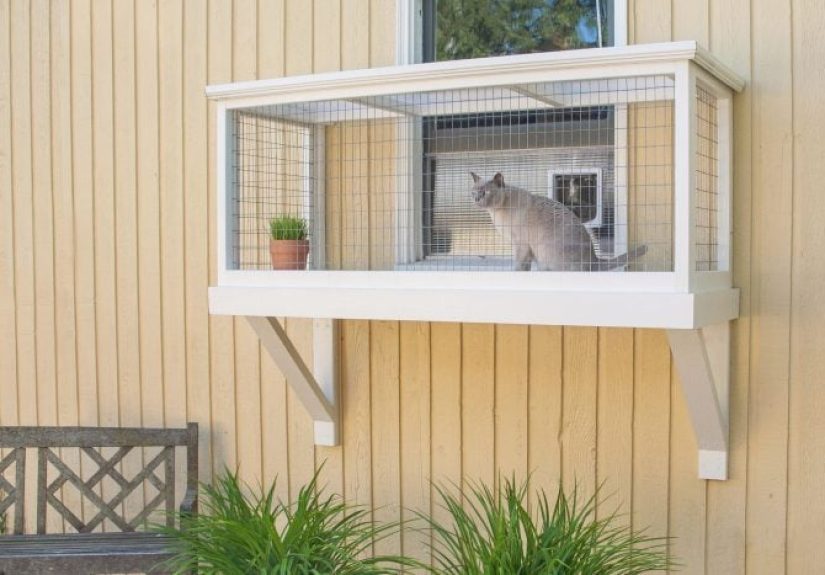
- Window box catio: Great for apartments; smaller footprint; big payoff for curious cats.
- Balcony catio: Uses existing railings; needs extra escape-proofing and wind protection.
- Patio/porch enclosure: Often the simplest: you’re basically “screening in” a section.
- Backyard freestanding catio: Can be large and elaborate; needs a secure connection/tunnel to the house.
- Tunnel systems: “Cat highways” connecting window access to a larger enclosure.
Safety First: What Makes a Catio Truly Secure
The goal is simple: your cat stays in, hazards stay out, and nobody ends up starring in a neighborhood Facebook post titled
“WHOSE CAT IS THIS?” A safe catio is built around a few non-negotiables.
1) Escape-proof construction
- Use sturdy wire mesh: “Chicken wire” can be too flimsy for determined cats and unwanted visitors. Many builders prefer stronger
options like welded wire or hardware cloth for durability. - Reinforce corners and seams: Cats push, climb, and test boundaries like tiny engineers.
- Secure doors and latches: Use latches that can’t be popped open by clever paws (or raccoons with career ambitions).
- Mind the gaps: If your cat can fit their head through it, they may attempt the rest of their bodyscience is ongoing.
2) Predator and pest resistance
Even if your area doesn’t have big predators, smaller ones (and stray animals) can still stress cats out. Secure wire spacing, strong framing,
and a roof or roof covering help keep your cat from feeling like they’re in a wildlife documentary.
3) Heat, cold, and weather protection
- Shade is essential: Include shade cloth, opaque roof panels, or a covered section for hot days.
- Ventilation matters: Good airflow prevents heat buildup, especially in enclosed balcony designs.
- Dry footing: Add a roof or sloped cover and plan for drainage so the catio doesn’t become a damp mess.
- Seasonal comfort: In colder climates, limit winter use or provide a sheltered, draft-protected area and bring cats in during extremes.
4) Toxic plants and materials: the “please don’t chew that” list
Cats nibble. Sometimes out of curiosity. Sometimes because they woke up and chose chaos. Avoid toxic plants in or near the catio and be cautious
with treated woods, paints, stains, and sealants. If you’re unsure, choose pet-safer materials and allow anything painted/sealed to cure fully
before your cat uses the space.
Materials 101: Building a Catio That Lasts (and Doesn’t Become a Wobbly Rumor)
Common catio building materials
- Frame: Weather-resistant lumber or metal framing, depending on your skill and climate.
- Enclosure: Welded wire mesh or hardware cloth; screen can work for some setups but may be less durable.
- Roof: Polycarbonate panels, corrugated roofing, or a solid roof section plus mesh for airflow.
- Fasteners: Exterior-grade screws, staples rated for fencing/mesh, corner brackets, and sturdy hinges.
- Flooring: Pavers, sealed decking, outdoor mats, or a dig-proof base if placed on soil.
Floor and base considerations
If your catio sits on grass or soil, consider a dig-resistant perimeter (buried wire, pavers, or a framed base). If it sits on a deck or patio,
you’ll still want easy-to-clean surfaces. Catios are outdoor spaces, but they shouldn’t become “that smell” you avoid at family BBQs.
Design for Cat Happiness: Enrichment Features Cats Actually Use
A catio doesn’t need a chandelier or a mini-fridge. It needs cat stuff: vertical levels, cozy resting spots, and stimulation that doesn’t
require your participation every five minutes.
Must-have enrichment elements
- Vertical shelves and perches: At different heights for climbing and “supervising.”
- Scratch-friendly surfaces: Outdoor-safe scratchers or posts so claws stay where they belong.
- Hiding spots: A covered cubby, small outdoor cat house, or privacy panel reduces stress.
- Comfort zones: Hammocks, outdoor cushions (easy to wash), or raised loungers.
- Safe greenery: Cat grass or cat-safe plants in protected planters (so they don’t become litter boxes).
- Interactive “views”: Position near a tree, bird feeder (at a safe distance), or general yard activity for enrichment.
Example layouts (steal these ideas)
- The “Window Nook”: A window box with one wide perch, a second shelf, and a shade panel for sunny afternoons.
- The “Balcony Upgrade”: A corner enclosure with two tiers, a hidey-box, and clear panels on the wind side.
- The “Backyard Lounge”: A 6′ x 8′ enclosure with a tunnel from a window, climbing wall, and a covered nap zone.
Introducing Your Cat to the Catio (Without Making It Weird)
Some cats sprint in like they’ve been waiting their whole life for this moment. Others approach like the catio is a suspicious new religion.
Either way, go slow and make it positive.
Simple acclimation plan
- Start calm: Choose a quiet time (no leaf blowers, no parties, no chaos).
- Let them lead: Leave the access door open and allow exploration at their pace.
- Use high-value motivation: Treats, favorite toys, or a small meal inside the catio.
- Short sessions first: 5–10 minutes can be plenty for a cautious cat.
- Build a routine: Same time daily helps cats treat it like “their” territory.
Maintenance and Hygiene: Keep It Clean, Keep It Safe
Catios are outdoors, which means dirt, pollen, bugs, and whatever the wind is doing this week. A little routine maintenance keeps the space safe
and pleasantfor both cats and humans.
Weekly quick-check list
- Inspect mesh and staples for loosening or corrosion.
- Check latches, hinges, and door alignment.
- Remove leftover food (to avoid ants and rodents).
- Wash bedding and wipe perches if needed.
- Scan for new hazards (fallen branches, sharp edges, standing water).
Litter box: yes or no?
If your cat spends longer stretches in the catio, a litter box can help prevent stress and accidents. Use a covered box if rain or debris is an issue,
and keep it cleanoutdoor humidity can make odors stronger. If your cat uses the catio for shorter supervised sessions, you may not need one.
Cost, Kits, and DIY: What to Expect
Catio budgets range widely. A small DIY window catio might cost roughly what you’d spend on a fancy scratching post. A large, roofed backyard catio
with tunnels and platforms can reach into “this is basically a home addition” territory.
DIY vs. kit catios
- DIY: More customizable; often cheaper; requires tools and planning.
- Kits/prefab: Faster to assemble; consistent parts; may be pricier and less customizable.
Renters and condo-dwellers: you’re not left out
Look for non-permanent options: freestanding enclosures on balconies, window inserts, or modular panels that can be removed when you move.
Focus on stability and secure attachment so wind can’t shift the structure.
Common Mistakes (So You Don’t Learn the Hard Way)
- Building without shade: Sun is great; overheating is not.
- Using flimsy mesh: If it bends easily, it won’t age well outdoors.
- Skipping a roof: A roof helps with rain, predators, and “surprise climbing exits.”
- No vertical variety: Flat catios can be underwhelming; cats love levels.
- Forgetting access control: You want a way to close off the catio when needed (cleaning, storms, nighttime).
Conclusion: A Catio Is a Win-Win (and Your Cat Knows It)
A catio is one of the rare home projects that benefits everyone: your cat gets safe outdoor enrichment, wildlife stays safer, and you get the comfort of
knowing your cat isn’t out there negotiating with traffic. Start small if you need to, build around your cat’s personality, and focus on safety, comfort,
and enrichmentnot perfection.
If you do it right, your catio won’t just be an enclosure. It’ll be your cat’s favorite “room,” where they can sunbathe, sniff the breeze, and silently
judge squirrels for free.
Extra: Real-Life Catio Experiences (The Stuff You Only Learn After Building One)
Building (or buying) a catio looks straightforward on paper: “Make box. Add mesh. Insert cat. Celebrate.” In reality, cats have opinions, weather has
opinions, and your first draft will reveal tiny problems you never consideredlike how a single afternoon sunbeam can turn the “nap shelf” into a warm
skillet, or how your cat can suddenly become a lock-picking enthusiast when motivated by a moth.
One of the biggest surprises many people have is that cats don’t always use the catio the way humans expect. You might build a gorgeous lower-level lounge
with a plush bed, only to discover your cat treats it like a decorative suggestion and spends 95% of their time on the highest perch, staring into the
middle distance like a tiny lighthouse keeper. That’s not a failurethat’s cat logic. The fix is usually simple: add more vertical routes, widen the top
shelf so they can sprawl comfortably, and give them at least one “private” corner where they can hide if something spooks them.
Another lesson: shade is not optional. Even cats who love sunbathing can overdo it, especially in enclosed balcony catios where airflow
may be limited. A practical approach is a mix of solid coverage (roof panel or shade sail) plus breathable enclosure sides. If you’re testing a new setup,
put your hand on the shelf surfaces at the hottest part of the day. If it feels too hot for your hand, it’s too hot for your cat’s belly-flop nap.
Adding a shaded “cool zone” can instantly change how long your cat stays out there.
Cats also teach you about “micro-hazards.” A rough staple edge, a slightly sharp wire snip, a gap that looks harmlessthese are the little things that
become important once a cat starts rubbing their cheeks on everything like it’s their personal scent billboard. A good habit is a monthly “cat-level
inspection”: crouch down and look at seams, corners, and latch areas at the height your cat moves through. You’ll spot issues faster than you would from
standing up like a confident human who definitely doesn’t lick themselves to relax.
And then there’s the enrichment reality check: the best “toys” in a catio are often the environment itself. Leaves moving, distant birds, passing
neighbors, wind-driven scentsthose are the headliners. The smartest upgrades are usually simple: a better viewing angle, a stable perch that doesn’t wobble,
a scratch post placed exactly where your cat likes to stretch, or a hide box that makes them feel secure. If you add accessories, choose durable, washable
items and rotate them occasionally so the space feels fresh without becoming cluttered.
Finally, remember that a catio is a relationship builder. Spending a few quiet minutes out there with your cattalking softly, offering a treat, or just
sitting while they watch the worldcan make the catio feel like shared territory rather than a weird new box you built “for their own good.” Over time,
many cats start signaling for catio time the way dogs ask for walks: waiting by the door, meowing at the window, or doing that dramatic “I’m bored and
it’s your fault” flop. When that happens, congratulations: you’ve successfully installed the feline version of a porch swing, and your cat is living their
best safe-outdoor life.