Table of Contents >> Show >> Hide
- Meet Mexican Petunia (Ruellia simplex)
- Important Reality Check: Is Mexican Petunia Invasive?
- Ideal Growing Conditions
- How to Plant Mexican Petunia
- Everyday Care: Water, Feeding, and Pruning
- How to Propagate Mexican Petunia
- Overwintering and Cold-Climate Strategies
- Common Problems and How to Fix Them
- Design Ideas: Where Mexican Petunia Shines
- Experience-Based Tips for Growing Mexican Petunia
- Wrap-Up
If you love big color and low drama in the garden, Mexican petunia might already be on your radar. These upright clumps of strappy foliage topped with daily waves of purple, pink, or white blooms look like they’re putting on a garden party every afternoon. The twist? This plant can be both a superstar and a bit of a rebel, depending on where you live and how you manage it.
This guide walks you through how to grow and care for Mexican petunia (botanical name Ruellia simplex, often sold as Ruellia brittoniana), how to keep it from taking over, and smart ways to enjoy those gorgeous trumpet-shaped flowers without regret.
Meet Mexican Petunia (Ruellia simplex)
Mexican petunia is a perennial flower native to Mexico and parts of South America. In warm climates, it acts like an evergreen; in cooler areas, it behaves like a root-hardy perennial that dies back and returns when the weather warms up again.
- Type: Herbaceous perennial
- Height: Tall forms grow about 3–4 feet; dwarf “Katie” types stay closer to 10–12 inches.
- Spread: Clumping habit with spreading rhizomes underground.
- Hardiness: Typically hardy in USDA zones 8–11, with protection in zone 7.
- Bloom time: Late spring through fall, often with daily flushes of flowers.
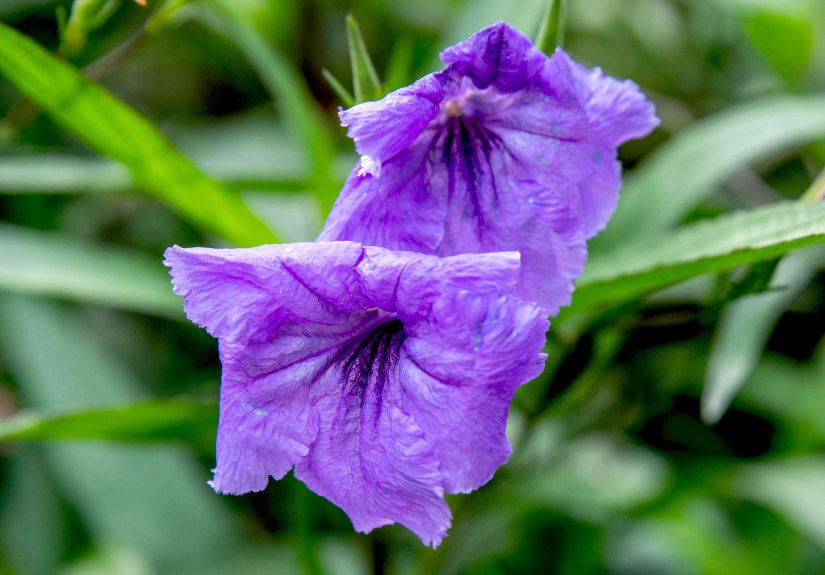
The flowers are funnel-shaped trumpets, usually violet-purple, but pink and white cultivars are also common. Each individual bloom only lasts a day, but the plant makes so many that it still appears to be in constant bloom. Pollinators, especially butterflies, are enthusiastic fans.
You’ll see Mexican petunia used in borders, mass plantings, around mailboxes, and along fences. Dwarf varieties like ‘Katie’ are perfect for edging, while taller forms make an excellent backdrop or informal hedge.
Important Reality Check: Is Mexican Petunia Invasive?
Before you fall completely in love, you need the fine print. In several warm states, especially Florida and parts of the Gulf Coast, the wild-type Mexican petunia is listed as invasive. It spreads by both seed and aggressive rhizomes, forming dense stands that can crowd out native plants.
Seed capsules can fling seeds several feet from the parent plant, and tough underground stems help the clump keep marching outward. If you live in a region where it’s labeled invasive, your local extension service may recommend avoiding the wild type entirely or sticking to sterile or low-fertility cultivars and dwarf selections.
Smarter choices include:
- Dwarf cultivars such as ‘Katie’ (often in purple, pink, or white), which form small, clumping mounds and tend to be better behaved.
- Improved sterile or low-seed forms where available, which reduce the risk of unwanted spread by seed.
- Container culture, especially if you garden near natural areas, wetlands, or neighbors who might not appreciate surprise Ruellia seedlings.
Bottom line: Mexican petunia can be an amazing ornamental if you pick the right variety and grow it responsibly. Check your local extension or state invasive plant lists before planting.
Ideal Growing Conditions
Light Requirements
Mexican petunia is happiest in full sun. You get the best flower display when the plant receives at least six hours of direct sunlight daily. It will tolerate partial shade, and in very hot climates, a bit of afternoon shade can help prevent leaf scorch, but too much shade will reduce bloom production and can make tall forms floppier.
Soil Preferences
This plant isn’t picky about soil type, which is part of its charm and part of its invasive potential. It tolerates everything from sandy to loamy to clay soils, as long as there is at least some drainage.
That said, a few soil conditions do help it do its best:
- Moist, fertile soil: Mexican petunia prefers medium to wet soil that’s rich in organic matter.
- Good drainage: It can handle periodic sogginess but doesn’t love staying waterlogged 24/7 in heavy, airless clay.
- pH flexibility: It tolerates a wide range of soil pH from slightly acidic to slightly alkaline.
If you’re planting in lean or sandy soil, mixing in compost or well-rotted manure at planting time will give your Ruellia a strong start without turning it into a fertilizer junkie.
Water Needs
Freshly planted Mexican petunia likes consistently moist soil while roots establish. Once it’s settled in, it’s surprisingly tolerant of both wet and dry spells.
- New plants: Water deeply 1–2 times per week during the first growing season, depending on rainfall and heat.
- Established plants: Usually fine with natural rainfall, with extra watering during long droughts or extreme heat.
- Boggy spots: It can grow along pond edges and in periodically wet beds, making it useful where other perennials struggle.
This combination of drought tolerance and water tolerance is great for you but another reason to monitor spread carefully.
Temperature and Hardiness
Mexican petunia thrives in warm climates. In USDA zones 8–11, it often behaves like an evergreen or semi-evergreen perennial. In borderline zones 7 and cooler, the tops are killed by frost, and the plant survives only if the roots are protected.
If you live in a colder region, you have options:
- Grow it in containers and overwinter indoors in a bright window or under grow lights.
- Treat it as a tender perennial, taking cuttings in late summer and rooting them indoors to plant back out next spring.
- Mulch heavily over the root zone in fall in mildly cold climates to help roots survive winter.
How to Plant Mexican Petunia
When to Plant
The best time to plant Mexican petunia is in spring after your last expected frost. The soil should be warm enough that you’re comfortable kneeling on it without thinking, “Wow, that’s still chilly.” In frost-free climates, fall planting is also possible, as the plant can establish roots in mild winter weather.
Planting Mexican Petunia in the Ground
- Choose the site. Pick a sunny or lightly shaded spot with soil that doesn’t stay soggy all the time.
- Improve the soil. Loosen the top 8–12 inches of soil and mix in compost, especially if your soil is very sandy or clay-heavy.
- Dig the hole. Make it as deep as the nursery pot and about twice as wide.
- Plant at the same depth. Set the root ball so the top is level with the surrounding soil. Backfill and firm gently.
- Water thoroughly. Soak the area to settle the soil around the roots.
- Space plants properly. For tall forms, space about 12–18 inches apart. Dwarf types used as edging can be planted 8–12 inches apart for a solid border.
If you’re starting from seed, sow them about 1/4 inch deep in prepared soil or trays. They typically germinate in warm conditions within a couple of weeks.
Planting in Containers
Container growing is an excellent way to enjoy Mexican petunia, especially where it’s invasive or where winters are cold.
- Use a pot with drainage holes and a high-quality potting mix.
- Select a container that’s at least 12–16 inches in diameter for tall varieties; dwarf forms can thrive in smaller pots.
- Place the pot where it receives at least 6 hours of sun daily.
- Water whenever the top inch of soil feels dry; pots dry out faster than garden beds.
Bonus: containers make it much easier to move the plant indoors for winter or relocate it if it starts bullying its neighbors.
Everyday Care: Water, Feeding, and Pruning
Watering Routine
Once established, Mexican petunia doesn’t need constant coddling. A simple routine works well:
- In the ground: Deeply water during extended dry periods, especially in its first year. After that, it often handles normal rainfall on its own.
- In containers: Check moisture more frequently; containers can dry out quickly in summer. Do not let the potting mix stay bone dry for long stretches.
If you notice wilting midday, check the soil before panicking. Sometimes the plant droops slightly in extreme heat and perks up again in the evening.
Fertilizing Mexican Petunia
This plant is not a heavy feeder. Too much nitrogen will give you lush foliage and fewer flowerslike a perennial that spent too much time at the salad bar and forgot about the dessert.
- Apply a balanced, slow-release fertilizer once in spring as new growth starts.
- In rich soil, you may be able to skip fertilizer entirely and rely on annual compost top-dressing.
- Avoid frequent high-nitrogen lawn fertilizers drifting into the bed.
Pruning and Deadheading
Pruning is simple and low-maintenance:
- During the season: Snip back any stems that have finished flowering to encourage fresh growth and more blooms.
- Seed control: Removing spent flower stalks before seed pods mature helps reduce self-seeding, especially in regions concerned about invasiveness.
- Winter clean-up: In colder zones, cut plants back to the ground after frost kills the foliage. In warm zones, you can shear them lightly in late winter to refresh the clump.
Don’t be afraid to trim Mexican petunia hard if it gets leggy; it responds well and usually pushes out clean new growth.
How to Propagate Mexican Petunia
One reason Mexican petunia spreads so readily is that it’s incredibly easy to propagate. Use that power for good:
Division
Every few years, you can divide clumps in early spring:
- Dig up the clump and shake or wash off excess soil.
- Use a sharp spade or knife to separate the mass into smaller sections, each with roots and several stems.
- Replant divisions immediately at the same depth and water well.
Stem Cuttings
Softwood cuttings root easily:
- Take 4–6 inch stem tips from non-flowering shoots.
- Strip the lower leaves and dip the cut end in rooting hormone (optional but helpful).
- Insert into a moist, sterile potting mix and keep in bright, indirect light.
- Keep the medium evenly moist until new growth appears, usually in a few weeks.
Seeds (With Caution)
Mexican petunia produces seed pods that can dry and burst, flinging seeds several feet. If you’re in a non-invasive area and want more plants, you can collect and sow these seeds. If you’re in a region where it’s invasive, it’s much safer to remove seed pods before they mature.
Overwintering and Cold-Climate Strategies
If your winters regularly dip below freezing, you have to plan ahead to keep Mexican petunia around.
Option 1: Bring Containers Indoors
- Before the first hard frost, move pots indoors to a bright window or under grow lights.
- Trim plants back by one-third if they’re tall and leggy.
- Water sparinglyjust enough to keep the soil lightly moist, not soggy.
Option 2: Take Cuttings
In late summer, take cuttings and root them indoors. Grow them as small houseplants through winter, then plant outside after frost. This method protects your favorite cultivars without having to shelter big outdoor clumps.
Option 3: Store Root Clumps in a Cool Space
Some gardeners in cold regions dig up root balls after cutting stems back and store them in barely moist soil in a cool basement or garage. In spring, the clumps are replanted outdoors once the soil has warmed.
Common Problems and How to Fix Them
Few or No Blooms
If your Mexican petunia looks healthy but blooms sparsely, check these factors:
- Light: Plants in too much shade bloom less. Move them to a sunnier spot.
- Fertilizer: Too much nitrogen encourages foliage over flowers. Cut back and use a balanced, slow-release product only once a year.
- Age of stems: Older, woody stems may bloom less; cut them back to encourage fresh growth.
Over-Aggressive Spread
If your patch is trying to colonize your entire yard:
- Install a root barrier around beds to confine rhizomes.
- Regularly dig and remove wandering stems and roots outside the desired area.
- Deadhead or remove seed pods to limit new seedlings.
- Consider downsizing to dwarf or sterile cultivars or switching to containers if spread is unmanageable.
Pests and Diseases
Mexican petunia is generally trouble-free. It’s rarely bothered by deer and usually shrugs off minor pests. Occasionally, aphids or spider mites may show up, especially on stressed plants in containers. A firm spray of water or an application of insecticidal soap usually controls them.
Root rot can occur in pots or beds that stay waterlogged. If stems are collapsing and the soil smells sour, improve drainage, repot in fresh mix, and avoid overwatering.
Design Ideas: Where Mexican Petunia Shines
Used thoughtfully, Mexican petunia can do a lot of heavy lifting in the landscape.
- Sunny borders: Tall varieties create a colorful backdrop behind shorter perennials and annuals.
- Mass plantings: A sweep of purple Mexican petunia along a fence or driveway delivers huge visual impact with little maintenance.
- Edging and groundcover: Dwarf “Katie” types form tidy mounds that line walkways or fill in front-of-border gaps.
- Rain gardens and damp spots: Its tolerance for periodic wetness makes it a candidate for low areas, provided local regulations allow it.
- Containers on patios or decks: Enjoy the blooms up close and move containers as needed for sun or winter protection.
Experience-Based Tips for Growing Mexican Petunia
Because Mexican petunia is popular in warm regions, there’s a lot of real-world gardener experience to learn fromboth enthusiastic praise and “I wish I’d known that first” comments. Here are practical, experience-based insights to help you get the good without the headaches.
1. Expect Daily Petal Confetti
Each bloom lasts only about a day, then drops. In a dense planting, this means you’ll see a daily sprinkling of spent flowers on the ground or the mulch. Many gardeners actually like thisit looks like nature decorated the bed. If you prefer a tidier look, a quick pass with a rake or blower once or twice a week keeps things neat.
2. Test-Drive It in a Pot First
Gardeners in warm, humid areas often report that once Mexican petunia is happy, it’s very happy. A smart strategy is to grow it in a container for a season or two. This lets you decide whether you love its growth habit and color enough to commit garden space. If you find it too vigorous, you can simply keep it as a container specimen rather than putting it directly in your beds.
Container growing also reveals how the plant behaves in your specific microclimate: how often it needs water, how quickly it rebounds after pruning, and how long the bloom season really lasts for you.
3. Use Dwarf Varieties in Smaller Yards
Home gardeners with small urban or suburban yards often prefer dwarf forms like ‘Katie’. These stay compact, form clumps instead of tall thickets, and still produce generous blooms. You get the color and butterfly appeal without worrying that a 4-foot-tall hedge will suddenly appear in front of your living room window.
A common pattern is using tall Mexican petunia at the back of a bed in larger yards and dwarf forms near patios, pathways, and front entry plantings where scale matters more.
4. Don’t Baby It Too Much
New gardeners sometimes over-care Mexican petunia: constant fertilizer, frequent watering, elaborate staking. The plant rarely needs that level of attention. In many real gardens, it’s thriving with nothing more than spring mulch, occasional deep watering during drought, and a light spring fertilizer (if that).
If your plant looks lush but floppy, cut back on water and nitrogen, trim it hard once, and let it regrow more compactly. Mexican petunia responds well to a “reset” pruning in late spring or early summer.
5. Mulch Smart for Easier Control
Because the plant spreads by rhizomes, gardeners who keep it controlled often rely on smart mulching strategies. A 2–3 inch layer of organic mulch around, but not right up against, the stems makes it easier to spot new shoots that pop up outside the desired area. Those wayward shoots are simple to pull when the soil is soft and mulched.
Mulch also helps moderate soil moisture and temperature, especially in climates with hot summers and occasional cold snaps. In borderline-hardiness areas, that extra insulation over the roots can make the difference between a plant that returns next year and one that doesn’t.
6. Plan Ahead for Winter If You Love a Specific Variety
Gardeners in zones 6–7 who fall in love with a particular color or dwarf form often treat Mexican petunia a bit like dahlias or cannas: they plan ahead to save it. Common real-world strategies include digging clumps and potting them for winter indoors, or taking cuttings in late summer and rooting them under lights. This way, even if a brutal winter wipes out the outdoor clump, your favorite cultivar lives on in a pot ready to return outside in spring.
7. Consider the Neighborhood Ecosystem
Experienced gardeners pay attention not just to what happens inside their fence, but also outside it. Because Mexican petunia can be invasive in some regions, many choose dwarf or sterile forms when gardening near natural areas, streams, or greenbelts. Others stick strictly to container culture on patios and hardscaped areas where runaway rhizomes and seedlings are much easier to prevent.
Talking with neighbors and checking local extension recommendations before planting helps avoid unpleasant surprisesand shows good garden citizenship.
Wrap-Up
Mexican petunia is one of those plants that makes a strong first impression: bold color, long bloom season, easy-going care. When grown thoughtfullychoosing appropriate varieties, managing spread, and giving it the right spotit can be a fantastic addition to sunny borders, containers, and tough hot areas where other plants fade.
Respect its vigor, pick cultivars wisely, and this trumpet-flowered perennial can give you months of color with very little fuss. If you’re looking for a heat-loving, butterfly-attracting plant that thrives on the sunny side of the garden, Mexican petunia might be exactly the garden drama you actually want.