Table of Contents >> Show >> Hide
- Meet &Bespoke: Two Designers, One Hampshire Base
- Edition One: A Debut Collection Designed to Age Like a Classic
- Materials That Do the Heavy Lifting (So the Design Can Look Effortless)
- Key Pieces Worth Obsessing Over (In a Healthy, Normal Way)
- Why &Bespoke Feels Perfectly Timed for 2026 Interiors
- How to Style &Bespoke in an American Home
- Bespoke vs. Custom: What You’re Actually Buying
- Before You Buy: Smart Questions That Save Regret Later
- Care & Maintenance: Keep It Beautiful Without Becoming a Full-Time Butler
- Sustainability: The Most Stylish Feature Is Longevity
- Conclusion
- The Experience: on What It’s Like to Live With (and Around) &Bespoke Energy
Some furniture is designed for a “long weekend” relationship: you meet, you assemble it with a tiny hex key, you drift apart after one move and a minor wobble.
The new(ish) kind of furniture we’re talking about here is built for the long haulthe “meet the parents,” “survive toddlers,” “still looks good in 2046” kind of commitment.
That’s the lane &Bespoke has been driving in, from its Hampshire base in southern England, with a debut lineup that’s quietly confident, obsessively made, andthis is the best partactually fun to live with.
In this deep dive, we’ll look at what makes &Bespoke’s collection tick, why the pieces feel both traditional and fresh, how the materials do a little balancing act between warm and industrial,
and how to style (and care for) handcrafted English furniture in an American home without turning your living room into a museum with anxiety.
Meet &Bespoke: Two Designers, One Hampshire Base
&Bespoke was founded by furniture designers Steven Owens and Roger Bannisterlifelong friends who leaned into a simple idea:
beautiful furniture happens faster (and better) when design and craftsmanship stop pretending they’re on separate teams.
Their approach is collaborative by default, working with skilled makers to produce pieces with careful proportions, honest materials, and finishes that invite you to touch them.
(If you’ve ever patted a tabletop like it’s a well-behaved dog, you know exactly what we mean.)
The studio’s roots in Hampshire matter. This is countryside-with-craft lineage: a region that sits close to historic market towns, coastal influences, and a long tradition of making things well.
&Bespoke also notes a showroom presence in the areahelpful if you’re the sort of person who needs to sit, lean, and dramatically sigh before committing to a chair.
Edition One: A Debut Collection Designed to Age Like a Classic
The brand’s debut rangeoften referred to as Edition Oneis a tightly edited set of pieces designed for real rooms, not just design-fair spotlights.
The collection launched with 14 pieces, spanning the essentials: dining seating, a bench, coffee and dining tables, a modular shelving unit,
and a more lounge-forward lineup that includes a curvaceous sofa.
What makes the collection feel “new” isn’t a gimmick. It’s the restraint. The profiles are calm, the details are intentional, and the material contrasts are where the personality lives:
natural timbers paired with rawer accentslike bronze and leatherso the pieces read warm, but not sweet.
Why it lands right now
American design media has been pointing toward a few big mood shiftsmore curves, a return to richer woods, and a hunger for craftsmanship and character over cookie-cutter sameness.
&Bespoke’s debut fits that direction almost suspiciously well: curved forms where comfort matters, darker finishes where depth matters, and materials that feel collected rather than manufactured.
Materials That Do the Heavy Lifting (So the Design Can Look Effortless)
A lot of brands talk about “premium materials.” &Bespoke backs it up with a lineup that’s both classic and a little gutsy:
solid oak, bridle leather, Danish cord, cast bronze, and even marble.
These are materials with a track recordused for centuries because they wear well, repair gracefully, and look better after a few years of being alive.
Oak: the backbone
Solid oak shows up across the range, giving pieces a sense of visual stability and literal durability.
It also plays well with both light, airy palettes and moodier interiorsespecially when you lean into oil finishes or darker, ebonized tones.
Bronze: the “quiet flex”
Bronze in furniture is like a great watch: you don’t need it, but once you’ve lived with it, everything else feels a little… flimsy.
In this collection, bronze appears in cast elementsbases and legsthat add weight, permanence, and a subtle glow that changes with the light.
Leather and Danish cord: comfort with credibility
Bridle leather brings structure and richness; Danish cord adds texture and a more relaxed, crafted vibe.
Both materials also help chairs feel breathable and “human,” which is a polite way of saying: you can sit for a long time and still feel like a functioning adult afterward.
Key Pieces Worth Obsessing Over (In a Healthy, Normal Way)
The Swancott Chair: a modern nod to the Windsor
The Swancott Chair is a contemporary take on the traditional Windsor chair, rendered in solid oak.
This is where &Bespoke’s design sensibility really shows: respectful of history, not trapped by it.
If you love the idea of heritage seating but don’t want your dining room to look like it’s waiting for a reenactment, this is your chair.
The Bure Dining Chairs: tailored, not stiff
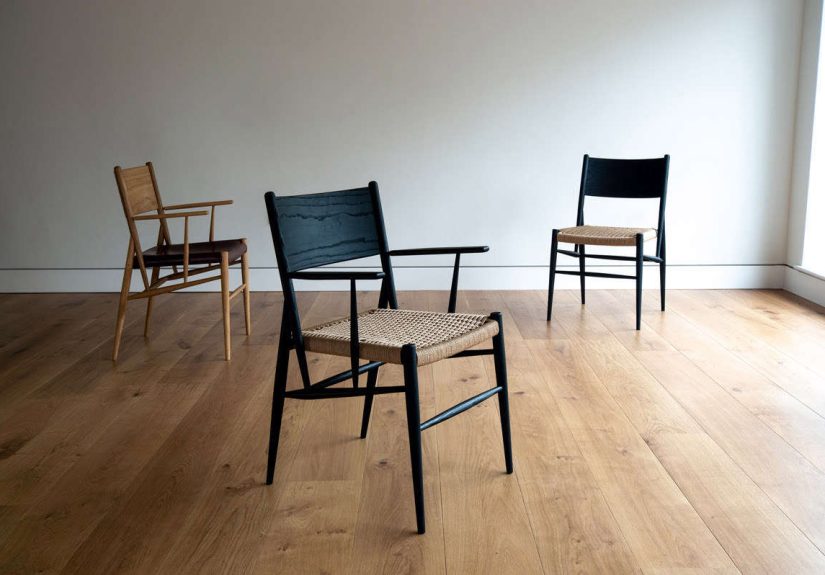
The Bure Dining Chairs come in solid oak with either bridle leather or Danish cord seating.
The silhouette is elegant without being preciousmeaning it works with a minimalist table, a farmhouse slab, or even a more sculptural dining setup.
(In other words: it plays well with others.)
The Bure Low Chair & Footstool: lounge-worthy oak
The Bure Low Chair and Footstool lean into that current American preference for comfort-first seatinglow, relaxed, and designed to make you stay awhile.
Solid oak frames paired with leather or cord keep the profile light but grounded.
This is the chair you buy “for reading,” and then mysteriously spend most of your time in, scrolling, snacking, and living your truth.
The Putts Side Table: bronze base, marble-or-wood top
The Putts Side Table pairs a solid cast bronze base with a marble or wood top.
It’s a small piece that does big visual workespecially in rooms that need a little contrast:
soft upholstery nearby, a textured rug underfoot, and then this crisp, sturdy table holding a lamp like it’s guarding a priceless artifact.
The Bure Settle: simple lines, serious presence
The Bure Settle offers solid oak in either an oiled or ebonized finish, giving you two very different moods:
warm-and-natural or dark-and-architectural.
A settle is one of those underused forms in American homespart bench, part sofa, part “I have my life together” signal.
Use it in an entry, at a dining table, or as an anchor in a hallway that feels like wasted real estate.
The Thorpe Dining Table: bronze sand-cast legs
The Thorpe Dining Table is the collection’s statement-maker, with bronze sand-cast legs and solid timber tops.
It’s the kind of piece that quietly tells your guests, “Yes, we eat here, but we also discuss movies like we’re on a panel.”
Big tables are emotional furniture: they host birthdays, holidays, deadlines, and the occasional “we’ll just use the table as a temporary storage zone” era.
This one is built for all of it.
Why &Bespoke Feels Perfectly Timed for 2026 Interiors
Across U.S. design coverage lately, a few themes keep showing up: curved silhouettes for softness, darker woods for depth,
and material contrast to avoid that mass-produced, one-note look.
&Bespoke hits all three without screaming for attention.
- Curves where they matter: Comfort-focused seating and rounded forms feel invitingespecially as people design homes that work harder than ever.
- Dark wood’s comeback: Ebonized finishes and richer tones bring warmth and sophistication, and they photograph beautifully (yes, that counts).
- Material duality: Wood with bronze, leather, and marble creates that layered, “collected over time” effect that designers love.
How to Style &Bespoke in an American Home
The secret to styling a high-craft collection is not treating it like it’s fragile.
Let it do its job: grounding a room, improving the daily experience, and making everything around it look more intentional.
In a modern dining room
Pair the Bure or Swancott seating with a table that matches the “honesty” of the materials:
solid wood, stone, or a metal base with real heft. Add a textured runner, a low bowl, and lighting that’s warm rather than surgical.
The chairs provide the refinement; you provide the personality.
In a relaxed living room
Use the Bure Low Chair as a counterpoint to a plush sofaespecially if your sofa is all softness and no structure.
A bronze-based side table nearby (hello, Putts) adds sparkle without going full “luxury showroom.”
Bonus tip: mix texturesbouclé, linen, woolso the oak grain reads even richer.
In an entry or hallway
A settle is basically a design cheat code: it adds seating, structure, and the feeling that you planned your life.
Put it under art (not too highyour guests are not giraffes), add a tray for keys, and call it a day.
In a home office that needs to feel less like a punishment
If you’re spending real hours in a space, the furniture should earn its keep.
A well-made chair and a properly sized table can change how you workand how you feel about work.
Even one piece of handcrafted furniture can pull the rest of the room up to its level.
Bespoke vs. Custom: What You’re Actually Buying
In the U.S., “custom” can mean anything from “choose your fabric” to “we’ll build it to your exact dimensions.”
Bespoke is typically the deeper version: made from scratch, tailored to a brief, and often involving more hands-on design decisions.
&Bespoke sits in the sweet spotcollection pieces with a strong design identity, paired with a collaborative mindset that supports tailored outcomes.
Translation: you’re not just buying an object. You’re buying a process, a material standard, and a future where your furniture doesn’t give up on you.
Before You Buy: Smart Questions That Save Regret Later
- Dimensions: What sizes are standard, and what can be adjusted for your space?
- Finish options: Oiled vs. ebonizedhow will it age, and what maintenance does it need?
- Material choices: Leather vs. Danish cordwho lives in your house (kids, pets, clumsy adults)?
- Wood sourcing: Ask about responsible forestry and durability expectations.
- Lead time and delivery: Handmade takes time; international shipping takes planning.
- Care plan: What’s recommended, what’s forbidden, and what voids a finish warranty?
Care & Maintenance: Keep It Beautiful Without Becoming a Full-Time Butler
High-quality furniture doesn’t require daily ritualsjust consistent, low-drama care.
Most U.S. cleaning and woodworking guidance converges on the basics: dust gently, avoid harsh chemicals, and protect surfaces from heat and standing moisture.
For solid wood
- Dust regularly with a soft cloth; grit is basically sandpaper in disguise.
- Use a slightly damp cloth when needed, then dry right away.
- Wax sparingly if appropriate for the finish (thin coats, buffed well). Avoid stacking wax and silicone polishes like a chaotic chemistry experiment.
- Patch test anything new in a hidden spot firstalways.
For leather and cord seating
- Leather: keep it out of harsh direct sun, wipe spills quickly, and use a conditioner occasionally if recommended.
- Danish cord: vacuum gently with a brush attachment and keep sharp objects away (yes, that includes enthusiastic belt buckles).
Sustainability: The Most Stylish Feature Is Longevity
Sustainability in furniture isn’t only about labelsit’s about how long a piece stays in use.
Solid wood and repairable construction can dramatically extend a product’s life.
In American coverage of the higher-end furniture market, the trend is clear: more interest in responsible sourcing (like reclaimed or certified wood),
lower-tox finishes, and pieces designed to be repaired rather than replaced.
&Bespoke’s emphasis on natural timbers, enduring materials, and skilled making aligns with that mindset.
The most eco-friendly table is often the one you don’t replace.
Conclusion
&Bespoke’s Hampshire-made collection is a reminder that “new” doesn’t have to mean loud.
The pieces feel fresh because they’re grounded in what lasts: solid oak, thoughtful proportions, and craftsmanship that shows up in the details you notice after monthsnot just minutes.
If you’re furnishing a home in the U.S. and want fewer disposable purchases and more forever-objects, this collection is the kind of starting point you won’t outgrow.
The Experience: on What It’s Like to Live With (and Around) &Bespoke Energy
Here’s the part nobody tells you about stepping up to handcrafted furniture: the experience doesn’t start when the piece arrives. It starts earlierwhen you realize you’re paying attention
to things you used to ignore. Chair rake. Seat height. The way your hand naturally finds the edge of a table. You start talking about “finish” like you’re on a cooking show:
“Mmm, this one has a beautiful oiled texture with a hint of ‘I definitely have my life together.’”
Imagine you’re choosing between a Danish cord seat and bridle leather. On paper, it’s a material decision. In real life, it’s a lifestyle vote.
Danish cord says, “I like texture, I like craft, and I am not afraid of a little visual detail.” Bridle leather says, “I want my chair to age with swagger.”
Either way, you’re picking something that will change over timeslowly, in a way that feels humanrather than staying frozen in that weird showroom perfection.
Then there’s the waiting. Mass-produced furniture trains us to expect instant gratification and instant replacement.
With craftsmanship, you get anticipation instead. You measure twice, you clear space, you picture the piece in the room.
You might even do the forbidden thing: tidy up, because you want the furniture to arrive to a home that looks like it belongs there.
(Don’t worryyour house can return to normal chaos later. The furniture will still look great. That’s part of the deal.)
Delivery day is when your standards quietly recalibrate. A solid wood piece has presence before it even becomes “decor.”
It changes the way light falls across the room. A bronze detail catches the afternoon sun and suddenly your living room looks like it has better credit.
You set a mug down more carefullynot because you’re scared, but because the surface feels worth respecting.
And the best part: the piece starts shaping routines. A settle in the entry becomes the spot where shoes actually get removed (a miracle),
where a bag gets dropped, where someone sits to tie laces instead of hopping like a confused flamingo.
A low chair becomes the reading chairthen the “I’m just going to sit here for a second” chairthen the chair everyone tries to claim.
You’ll hear yourself say, “Hey, don’t sit there with salsa,” which is how you know you’ve crossed into the realm of furniture attachment.
Eventually, the collection stops feeling like a “new purchase” and starts feeling like part of the house’s identity.
That’s the real experience: you don’t just own it. You live with it, it gathers stories, and it quietly makes everything around it step up its game.
No motivational speech requiredjust really good design, made well, from a corner of Hampshire that clearly takes craft seriously.