Table of Contents >> Show >> Hide
- What Is Cherenkov Radiation, Really?
- How Can a Fusion Reaction Produce a Visible Cherenkov Glow?
- What Scientists Observed: Cherenkov Radiation During a Fusion Run
- Why This Matters (Even If It Doesn’t Mean “Fusion Power Plant Next Tuesday”)
- What the Blue Glow Does Not Tell You (Let’s Keep It Honest)
- Where Cherenkov Fits Into Fusion Research More Broadly
- What’s Next: From Cool Glow to Better Tools
- Conclusion
- Experiences: What It’s Like Around the “Blue Glow” Moment (and the Work Behind It)
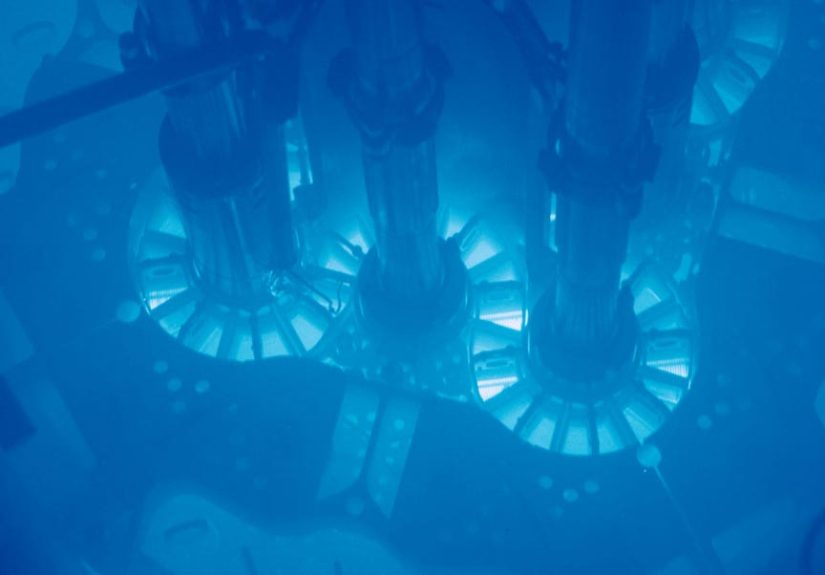
If you’ve ever seen photos of a nuclear reactor pool, you know the look: an eerie blue glow that makes everything feel like a sci-fi movie
(minus the dramatic soundtrack and plus a lot of safety training). That glow is called Cherenkov radiation, and it’s one of physics’
most photogenic party trickslight made when charged particles move so fast through a material that they outrun light’s slower speed in that
medium.
For decades, fusion has been detected with instruments: neutron counters, gamma diagnostics, spectrometers, and the kind of graphs that make normal
people’s eyes glaze over. But recently, scientists and engineers reported something refreshingly visual: Cherenkov radiation observed during a
fusion reactiona visible blue glow linked to a deuterium-tritium (D-T) fusion system. Is it a sign we’ve built a Star Trek reactor? Not
quite. Is it a real, physics-grounded milestone that tells an interesting story about particle interactions, neutron production, and the practical
uses of fusion today? Absolutely.
What Is Cherenkov Radiation, Really?
The “faster than light” headline that doesn’t break Einstein
Cherenkov radiation shows up when a charged particleoften an electrontravels through a transparent material (like water, glass, or a
special detector gas) faster than light can travel through that same material. That last part matters: light’s speed in a medium is lower than its
speed in vacuum. So the particle isn’t beating the universe’s speed limit; it’s beating the local “construction-zone speed limit.”
The effect is often compared to a sonic boom. When a jet exceeds the speed of sound in air, it creates a shockwave. When a particle exceeds the speed
of light in a medium, it creates an electromagnetic “shockwave” that we see as a cone of light. In labs, scientists can even use the angle of
that cone to learn about the particle’s speed.
Why is it blue?
Cherenkov light leans heavily toward shorter wavelengths, which makes it appear blue or violet to human eyes. It’s not because blue is the “scary
color of radiation” (please do not let your brain file that next to “green means toxic”). It’s because of how the emission intensity depends on
wavelengthshorter wavelengths get a bigger share of the spotlight.
Cherenkov radiation is also useful, not just pretty. It’s used in particle physics detectors, nuclear facilities, and high-energy experiments to help
measure particle energies and timing. In other words: sometimes the glow is a clue, not just a vibe.
How Can a Fusion Reaction Produce a Visible Cherenkov Glow?
Fusion makes neutrons, and neutrons start a chain of “side quests”
The fusion reaction most commonly discussed for near-term fusion systems is deuterium-tritium fusion. When deuterium and tritium fuse,
they form helium and produce an energetic neutron. Neutrons are electrically neutral, so they don’t directly create Cherenkov light. But neutrons are
excellent at causing other interactions that do produce fast charged particles.
Here’s the simplified chain of events that can lead to visible Cherenkov light near a fusion setup:
- D-T fusion produces lots of high-energy neutrons.
- Those neutrons interact with surrounding materials (water, structural components, shielding).
- Some interactions create gamma rays or knock charged particles loose.
- Gamma rays can scatter electrons to very high speeds (for example, through Compton scattering).
- Those fast electrons travel through water (or another transparent medium) faster than light travels in that medium.
- Result: a visible Cherenkov glow.
If you’re thinking, “So the glow is basically the aftermath of particles doing physics pinball,” congratulationsyou have understood the vibe and the
mechanism.
What Scientists Observed: Cherenkov Radiation During a Fusion Run
In a reported demonstration from a U.S. fusion technology company, the system’s target chamber was submerged underwater. That detail is
the key that makes the story visually satisfying: water is a great medium for producing and seeing Cherenkov light (and also a practical choice for
shielding and thermal management in certain setups).
During deuterium-tritium fusion operations, the team captured clearly visible Cherenkov radiationa blue glow produced in the water
associated with the fusion-driven particle environment. A collaborating expert from the University of Wisconsin–Madison described the brightness as
evidence of a high fusion rate, on the order of tens of trillions of fusion reactions per second, noting that at much lower rates you
might detect Cherenkov signals with instruments but not see a visible glow.
So… is the glow “proof of fusion”?
It’s better to say it’s visible evidence consistent with fusion producing a strong neutron field. In modern fusion research, nobody
relies on vibes alonediagnostics still matter. But seeing a Cherenkov glow tied to fusion operations is significant because it connects an otherwise
invisible nuclear process to a direct, human-visible phenomenon in a way that’s hard to fake and easy to explain.
It also helps communicate an important point: fusion systems can produce neutron outputs that are relevant for real-world applications long before they
produce net electric power. That’s not a consolation prize. Neutrons are usefulsometimes extremely usefulif you’re doing radiation effects testing,
neutron imaging, materials studies, or certain isotope production pathways.
Why This Matters (Even If It Doesn’t Mean “Fusion Power Plant Next Tuesday”)
1) It highlights practical fusion milestones that aren’t about electricity (yet)
There’s a public tendency to grade all fusion news on one question: “Did we get limitless clean energy?” That’s like judging the first airplanes solely
by whether they offered in-flight Wi-Fi. Many fusion efforts today focus on useful neutron production for industrial and scientific
purposes. A visible Cherenkov glow in water is a signal that the neutron environment is intense enough to produce secondary fast electronsand that’s
aligned with a system designed to be a strong neutron source.
2) It’s a communication win for a complicated field
Fusion can be hard to “see.” The public hears about plasma temperatures hotter than the Sun and ignition thresholds and confinement times, and it starts
to sound like a distant promise. A visible Cherenkov glow is a rare moment where advanced nuclear physics creates something your eyes can understand
instantly. That’s valuable for education, investment narratives, and recruiting the next generation of engineers who want to do work that feels real.
3) It reinforces the physics pipeline behind modern diagnostics
Even before the “visible glow” moment, Cherenkov radiation has been part of fusion research for yearsjust usually inside specialized instruments.
In inertial confinement fusion (ICF) facilities, for example, Cherenkov-based diagnostics are used to capture ultra-fast timing information from fusion
gamma rays. Those instruments convert high-energy radiation into fast electrons and then into Cherenkov photons that can be measured with extremely fast
detectors. The glow you can see is a dramatic cousin of the glow scientists measure.
What the Blue Glow Does Not Tell You (Let’s Keep It Honest)
It doesn’t automatically mean net energy gain
A fusion reaction can be real, intense, and useful without producing more usable energy than it consumes. The Cherenkov glow is not a scoreboard for
“energy in vs. energy out.” It’s evidence of fast charged particles moving through a medium, which typically correlates with a strong radiation field,
often driven by neutrons and gammas from nuclear reactions.
It doesn’t mean it’s safe to hang out near the glow
The light itself is not the main hazard; it’s the radiation environment that creates it. Cherenkov glow is a sign that high-energy processes are
happening, and those require serious shielding, monitoring, interlocks, and trained operations. In other words: pretty doesn’t mean pettable.
It doesn’t replace proper measurement
Scientists still rely on neutron yields, gamma timing, activation analysis, and other diagnostics to quantify fusion performance. A visible glow is
compelling, but fusion science is an instrument sport. The glow is a headline; the data is the biography.
Where Cherenkov Fits Into Fusion Research More Broadly
Cherenkov-based fusion diagnostics: the “invisible” version of the glow
In high-end fusion facilities, Cherenkov radiation is often generated inside detectors on purpose. One class of instruments uses a clever trick:
high-energy gamma rays from fusion events are converted into relativistic electrons (often through Compton scattering in a low-Z material), then those
electrons pass through a gas or solid where the speed of light is reduced. If the electrons outrun light in that medium, Cherenkov photons are produced,
collected with optics, and read out by fast photomultiplier tubes. This allows extremely precise timing of fusion reaction historydown to tens of
picoseconds in some systems.
That matters because fusion isn’t just “did it fuse?” It’s “when did it fuse, how long did it burn, did alpha heating change the burn width,
and what does that imply about confinement and symmetry?” Cherenkov-based diagnostics can help answer those questions with speed and precision.
What’s Next: From Cool Glow to Better Tools
The visible observation of Cherenkov radiation during fusion operations opens up a few interesting possibilities:
-
Better visualization and monitoring: If a system is submerged or coupled to transparent shielding media, optical monitoring could
provide a supplemental, real-time sanity check alongside traditional instruments. -
Improved detector design: The same physics that makes a visible glow can be engineered into more sensitive Cherenkov diagnostics for
measuring gamma timing, reaction history, or radiation backgrounds. -
More public-facing fusion literacy: A tangible visual phenomenon can help people understand what fusion produces (neutrons and
radiation fields) and why that matters for materials, medicine, and industrynot just future power plants.
The big takeaway is simple: fusion is becoming observable in more ways than one. Sometimes that means better charts. Sometimes it means
a blue glow that reminds you the universe is still willing to show off.
Conclusion
Cherenkov radiation is one of physics’ most iconic light shows, created when fast charged particles outrun light’s slower speed in a medium like water.
Observing that glow during a fusion run is meaningful because it ties fusion-driven neutron and gamma environments to a direct, visible signatureand
underscores that fusion systems can achieve radiation outputs useful for industrial and scientific applications. It’s not a magic “fusion solved” stamp,
but it is a memorable milestone: a moment where cutting-edge nuclear science becomes something you can actually see.
Experiences: What It’s Like Around the “Blue Glow” Moment (and the Work Behind It)
People love the blue glow, but the real “experience” of Cherenkov radiation in a fusion setting is less like a movie reveal and more like a perfectly
choreographed checklist that someone spent months arguing about in meetings. If you could step into the control room on a day when a team is trying to
capture Cherenkov light tied to fusion operations, you’d notice the first emotion isn’t wonderit’s focus. There’s the slow build of
pre-shot preparation: confirming interlocks, verifying shielding configurations, validating camera settings (because nobody wants to discover afterward
that the lens cap was on), and aligning data timestamps across instruments that all think “now” is a slightly different number.
The glow itself, when it happens in water, can feel almost anticlimactic in the best waylike a quiet confirmation that the physics chain you modeled on
whiteboards and simulated on computers is showing up in the real world. Researchers often describe that moment as satisfying because it’s both visceral
and explainable. You’re not staring at an abstract spike on a plot; you’re seeing the downstream consequence of high-energy particles doing exactly what
they should do in a medium where light slows down. The “wow” factor is real, but it’s a disciplined wowmore “nice, the timing lines up” than “we have
captured lightning.”
Then comes the second wave of experience: verification. Teams don’t just celebrate a glowthey try to break it. Was it real Cherenkov light, or a
reflection? Did the camera saturate? Did any nearby equipment produce a misleading blue artifact? People will replay footage frame by frame, compare the
glow intensity against operational parameters, and look for correlations with neutron yield indicators, gamma signatures, and background radiation logs.
In many labs, the most intense excitement happens hours later, not in the moment: when independent measurements agree and the story becomes coherent
across systems that don’t share the same failure modes.
There’s also the human side that doesn’t show up in press releases: the pride of the technician who routed the cabling so cleanly that noise didn’t
ruin the signal; the engineer who insisted on one more shielding calculation; the operations lead who kept the team calm when a subsystem threw an error
ten minutes before a run. In fusion work, “visible proof” is rarely the product of one heroic insight. It’s the end of a long chain of small,
competent decisionsboring in isolation, powerful in combination.
And if you talk to people who’ve spent time around Cherenkov phenomenawhether in reactors, test facilities, or detector labsyou’ll hear a similar
theme: the glow changes how you explain the science to others. It becomes a teaching tool. You can point to it and say, “Light is slower in water,” and
suddenly refractive index isn’t a vocabulary wordit’s a reason the room looks like an underwater aurora. For fusion, that matters. The field is full of
invisible triumphs: better confinement, cleaner implosions, smarter diagnostics, incremental yield improvements. A visible Cherenkov moment gives teams a
rare bridge between the invisible world of nuclear reactions and the very visible world of human understandingand that’s an experience scientists don’t
forget, even if they go right back to spreadsheets five minutes later.