Table of Contents >> Show >> Hide
- The Science of “OH THANK GOD, LIGHTS”
- Why “Empty” Isn’t a Number (And Your Car Is Only Sort of Psychic)
- Turn the Panic Into a Plan: What to Do When You’re Running on Fumes
- Late-Night Pit Stop Safety: Keep It Awesome, Not Sketchy
- If You Actually Run Out of Gas
- Why This Moment Belongs on the “Awesome Things” List
- Extra : Experiences Related to #865 (Because Everyone Has a Story)
- Conclusion
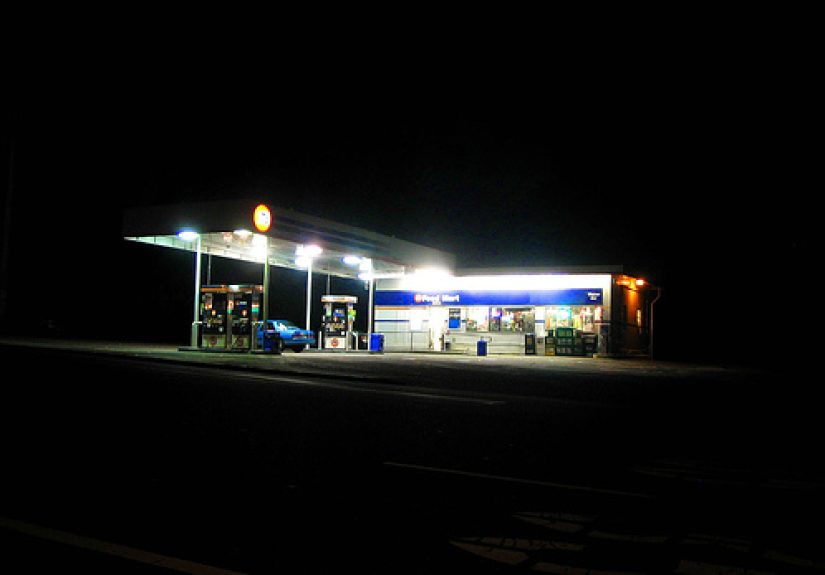
There are plenty of modern miracleswireless earbuds, pizza that shows up at your door like a delicious summoning spell, cars that beep when you look at them wrongbut nothing hits quite like this: you’re driving late at night, the roads are empty, your fuel gauge is auditioning for a tragedy, and your brain is doing that fun little thing where it invents worst-case scenarios at 70 mph. Then, way out there, like a tiny lighthouse for people who make “I’ll get gas later” their personality, you see it: glowing signage. A gas station. On the horizon.
In that moment, you don’t just feel reliefyou feel the kind of gratitude usually reserved for finding your phone in the couch cushions after you already “checked everywhere.” It’s a small, specific joy. And yes, it absolutely deserves a spot on any list of awesome things, because it’s the perfect cocktail of suspense, survival math, and a happy ending sponsored by regular unleaded.
The Science of “OH THANK GOD, LIGHTS”
Let’s be honest: the “empty tank” experience is 10% mechanical reality and 90% emotional theater. Your body doesn’t know the difference between “minor inconvenience” and “we have entered the wilderness and will soon barter our shoes for gasoline.” So your nervous system reacts accordinglytight shoulders, laser focus, and that internal monologue that suddenly becomes a motivational speaker: You can make it. You’re basically an astronaut. Keep going.
Why it feels so good
That first glimpse of a gas station flips your brain from threat mode to solution mode. The uncertainty collapses into a plan: pull in, pay, pump, exhale. It’s the emotional equivalent of hearing “We found your luggage” after you’ve already imagined living forever in the airport gift shop.
And because it’s late at nightwhen visibility is lower, fatigue is higher, and help feels farther awaythe contrast is even sharper. Night driving is statistically riskier than daytime driving, so your sense of vulnerability is already turned up. When the station appears, it’s not just fuel you’re findingit’s certainty.
Why “Empty” Isn’t a Number (And Your Car Is Only Sort of Psychic)
First, the good news: “E” is rarely “instantly dead.” Many vehicles have a buffer, and low-fuel warnings typically kick in before you’re truly out of options. As a rule of thumb, some guidance suggests many drivers can often go roughly 30–50 miles after the low-fuel light comes onsometimes more depending on vehicle and conditions.
The low-fuel light: a warning, not a dare
Your remaining range depends on your vehicle, its condition, weather, road grade, and how you drive. Smooth cruising is very different from stop-and-go, uphill climbs, or “I’m late” acceleration. Treat the warning light like a serious nudge, not a challenge coin.
Distance-to-empty (DTE): the weather forecast of driving
The “miles to empty” number is an estimate. It’s not lying; it’s just doing its best with imperfect information. If your last few miles were gentle highway cruising, the number may look generous. If they were city chaos with hard braking and frequent stops, it’ll look grim. Either way, DTE should be read like a forecast: helpful for planning, dangerous as prophecy.
Translation: if you’re low on fuel late at night, don’t negotiate with the dashboard. Make a plan while you still have choices.
Turn the Panic Into a Plan: What to Do When You’re Running on Fumes
The goal isn’t to become a fuel-maximizing wizard. The goal is to get safely to a pump without turning your evening into a roadside episode of “How Did We End Up Here?”
Step 1: Stop guessingstart locating
Use your navigation app to search “gas station” and pick one that’s on-route, open, and not located behind a maze of closed ramps and construction cones. If you’re in a rural area or on a long interstate stretch, plan earlier than you think you need to. The “next exit” may not mean “next station.”
Step 2: Drive like you’re carrying a bowl of soup
Smooth inputs help. Aggressive drivingspeeding, rapid acceleration, and hard brakingwastes fuel. Depending on conditions, it can noticeably reduce your fuel economy. The simple version: ease into speed, maintain a steady pace, and avoid unnecessary surges.
Step 3: Steady beats speedy
A consistent speed is generally friendlier to fuel consumption than constant acceleration and deceleration. If you’re on a flat highway with light traffic, cruise control may help you stay steady. The moment you start weaving, racing to red lights, or doing dramatic passes, you’re spending fuel you don’t have.
Step 4: Don’t “stretch it” into a breakdown
If you feel sputtering, loss of power, or the engine starts to fade, your job is to get to a safe spotnot to heroically limp another mile. Put on hazard lights, move to the shoulder or a safe area as soon as possible, and park. If you run out of gas in a remote area, staying with your vehicle can be safer than walking into the dark to “just find a station.”
Late-Night Pit Stop Safety: Keep It Awesome, Not Sketchy
The gas station is a beacon, surebut it’s also a place where you’re standing still, distracted, and using a payment terminal in public. A tiny bit of awareness keeps the relief from turning into regret.
Choosing a station after dark
- Pick bright and busy. Look for good lighting, other customers, and an open store.
- Keep your situational awareness. Finish the pump, then finish your phone scrolling.
- Secure your car. Lock up and keep valuables out of sight. Late-night fueling is not the time for a dashboard jewelry display.
Protect your payment at the pump
Gas pumps can be targets for card skimming. Before you pay, do a quick “two-second audit”: check for tampering, look for security seals on the pump panel (some are designed to show “void” if opened), and give the card reader a gentle wiggleloose or odd-looking hardware is a red flag.
Want a safer default? Pay inside if you can. If you’re paying outside and your card and the terminal support it, tap-to-pay is generally more secure than swiping or inserting. And if you must use a debit card at the pump, consider running it as credit to avoid entering a PIN in a public setting.
If You Actually Run Out of Gas
Even careful people run out sometimes. Detours happen. Stations close early. The “quick trip” becomes an accidental road epic. If you’re out of fuel, the priorities are visibility, protection, and help.
Make yourself visible and safe
- Turn on hazard lights and pull over as safely as possible.
- Stay aware of traffic; if you can remain inside the vehicle, that’s often safer than standing near moving cars.
- Keep your seat belt on unless you must exit for safety.
Get help the smart way
Call roadside assistance if you have it. If you’re not in a safe placeor you’re in a remote area and unsureconsider contacting emergency services. If you do arrange for help, stay alert and follow instructions when assistance arrives.
Know the “Move Over” reality
One more reason to get off the road quickly: every state has “Move Over” laws for emergency vehicles, and some places extend protections to other stopped vehicles with flashing or hazard lights. In plain terms, roadside situations are dangerousnot just for responders and tow operators, but for stranded drivers, too.
Why This Moment Belongs on the “Awesome Things” List
The beauty of the gas-station-on-the-horizon moment is that it turns a mundane place into a rescue scene. The fluorescent lights feel warmer. The little digital numbers on the pump feel friendlier. Even the windshield squeegee looks like it’s offering emotional support.
It’s also a reminder that “awesome” doesn’t have to be grand. Sometimes it’s just the universe handing you a simple win: a safe place, a working pump, and the ability to keep going without calling your group chat to announce, “If anyone needs me, I’ll be living on the shoulder of I-70.”
Extra : Experiences Related to #865 (Because Everyone Has a Story)
If you ask a room full of drivers about the closest they’ve come to running out of gas, you’ll get a collection of stories that all begin the same way: “So I thought I could make it…” and end with someone promisingagainto never cut it that close. It’s practically a rite of passage. Not because it’s wise, but because humans are optimistic creatures who believe, deep down, that the next exit will definitely have a station, and it will definitely be open, and the card reader will definitely work, and the universe will definitely reward our poor planning with a happy ending. (Sometimes it does. Sometimes it teaches.)
There’s the classic late-night interstate scenario: the dashboard glows “LOW FUEL,” your passengers fall asleep, and the highway turns into a ribbon of darkness with occasional reflective signs that feel like they’re judging you. You turn down the musicnot because it saves gas, but because it helps you listen for… what, exactly? The sound of gasoline returning? The whisper of a gas station manifesting itself? Then, after ten minutes that feel like a whole season of television, you spot a cluster of lights far ahead. At first it’s just a shimmer. Then you catch the shape of it: a canopy, a tall sign, a convenience store that looks like a palace. You pull in and suddenly you’re smiling like someone just handed you a warm cookie.
Then there’s the city version: you’re in familiar territory, which somehow makes it worse. You know there are stations everywhere, so you keep putting it off. You hit one red light, then another, then traffic gets weird, and your “easy five-minute drive” becomes a half-hour tour of every road you didn’t mean to take. When you finally roll into a station, it doesn’t feel like you found gasit feels like you outsmarted fate.
Some people remember the tiny details: the relief of the turn signal clicking as you glide into the entrance, the way the pump handle sounds when it first engages, the first digit flipping on the gallon counter like proof that your night is no longer a suspense film. Others remember the lesson: don’t wait until late at night, don’t assume “miles to empty” is a contract, and don’t treat your low-fuel light like it’s just trying to be dramatic. The best part is that the story almost always ends the same waystanding there under the canopy, breathing normally again, thinking, “Okay. That was dumb. But wow, this feels amazing.”
Conclusion
A gas station on the horizon shouldn’t feel like a miraclebut late at night, on an empty tank, it absolutely does. Enjoy the moment, take the win, and let it nudge you toward a slightly less dramatic relationship with your fuel gauge. Because the only thing better than the relief of barely making it… is never having to barely make it in the first place.