Table of Contents >> Show >> Hide
- Why Pork Chops Dry Out (and Why Frying Can Actually Help)
- Start at the Store: The Chop You Buy Determines the Chop You Bite
- Prep for Juiciness: Salt, Time, and a Little Patience
- Build a “Juicy Zone” Skillet Setup
- Three Foolproof Frying Methods (Pick Your Favorite)
- The Most Important Part: Doneness Without Guessing
- Resting, Slicing, and Serving (Don’t Skip the Finish Line)
- Troubleshooting: The 8 Most Common Pork Chop Tragedies (and Fixes)
- of Real-World “Juicy Pork Chop” Experiences
- Conclusion
Pork chops have a reputation. Not a bad reputationmore like that friend who’s amazing 30% of the time and mysteriously turns into a dry, chewy disaster the other 70%. If you’ve ever served pork chops that could double as DIY floor tiles, you’re not alone. The good news: juicy, tender, pan-fried pork chops are not luck. They’re a method.
This guide breaks down the real reasons chops dry out (it’s not because you “didn’t love them enough”) and gives you three reliable frying approacheswhether you like a simple flour crust, a crunchy breadcrumb coat, or thick chops that stay tender all the way to the bone. You’ll also get timing cues, temperature targets, and fixes for the most common “why did this happen to me?” moments.
Why Pork Chops Dry Out (and Why Frying Can Actually Help)
Pork chops come from the loin, which is naturally lean. Lean meat + high heat + “I’ll just cook it a little longer to be safe” = moisture leaving the chat. When pork overcooks, muscle fibers tighten and squeeze out juices. The result is a chop that looks fine… until you take a bite and immediately regret every decision you’ve made since 2009.
Pan-frying can produce juicy pork chops because it cooks fast and builds a flavorful crustespecially when you manage heat, season correctly, and stop cooking at the right temperature. The secret isn’t a magical spice. It’s choosing a good chop, prepping it smartly, and using a thermometer like a grown-up.
Start at the Store: The Chop You Buy Determines the Chop You Bite
Pick thickness with intention
If “always juicy” is the goal, thickness matters more than almost anything else. Super-thin chops (¼–½ inch) cook so quickly that the window between “done” and “dry” is about the length of a sneeze. Thicker chops (about 1 to 1½ inches) give you more breathing roomand more juiciness insurance.
Bone-in vs. boneless: both can be juicy
Bone-in chops tend to cook a bit more evenly and can feel juicier, partly because the thicker cut and shape slow down overcooking. Boneless chops cook faster and are easier to bread evenlybut they punish distraction. Choose whichever fits your vibe; just adjust your method to the thickness.
Look for marbling (tiny streaks of fat)
A small fat cap and visible marbling help with flavor and moisture. Extra-lean chops can be delicious, but they need more help (brining, careful heat, and a strict “no overcooking” policy).
Prep for Juiciness: Salt, Time, and a Little Patience
Option A: Quick dry-brine (the easiest upgrade)
Dry-brining is simply salting the pork chops ahead of time and letting the salt work. It seasons deeper than last-second salting and helps the meat hold onto more moisture during cooking, while also improving browning.
- Pat chops dry.
- Salt generously on all sides (kosher salt is easiest to control).
- Rest at least 45 minutes (or refrigerate uncovered for a few hours up to overnight).
- Before cooking, pat dry again to keep the crust crisp and the pan happy.
Option B: Wet brine (useful for very lean chops)
If your chops look like they’ve never even met a fat molecule, a simple brine can help: water + salt (often with a touch of sugar and aromatics). Brining boosts seasoning and can improve moisture retention. After brining, dry the surface wellwet meat steams, and steamed pork chops are… not the dream.
Don’t skip the dry surface
Whether you dry-brine, wet brine, or just season right before cooking: dry the outside. Moisture on the surface delays browning and can make breading slip. Paper towels are your best low-tech tool here.
Build a “Juicy Zone” Skillet Setup
Pan choice: cast iron is forgiving, stainless is crisp
Cast iron holds heat well and gives steady browningexcellent for beginners and breaded chops. Stainless steel can create an incredible crust but punishes cold meat and low oil (translation: sticking). Nonstick works in a pinch for lightly floured chops, but it won’t brown as deeply.
Oil and heat: aim for confident sizzle, not a grease fire
For shallow frying, use a neutral high-heat oil (canola, vegetable, peanut). You want enough oil to coat the bottom of the pan (and for breaded chops, often a little morearound ¼ inch is a comfortable zone).
A helpful target for shallow frying is around 350°F. If you don’t have a thermometer, use behavior: drop a pinch of flour into the oilif it sizzles instantly and gently, you’re close. If it sits there looking bored, the oil’s too cool. If it explodes like it’s auditioning for an action movie, turn the heat down.
Room-temp myth, reality check
You don’t need to warm pork chops on the counter forever. But taking them out of the fridge for 15–20 minutes can reduce the chill, which helps them cook more evenlyespecially thick chops.
Three Foolproof Frying Methods (Pick Your Favorite)
Method 1: The classic flour-dredged skillet fry (crisp edges, juicy center)
This is the weeknight hero: fast, flavorful, and forgivingespecially if you keep the chops at a sensible thickness.
Best for: ¾–1 inch chops (bone-in or boneless)
What you need
- Pork chops
- Kosher salt + pepper
- Flour (add 1–2 teaspoons cornstarch per ½ cup flour for extra crispness if you like)
- Optional seasonings: paprika, garlic powder, cayenne, dried thyme
- Neutral oil for frying
- Instant-read thermometer
Steps
- Season: Salt and pepper the chops. (If you dry-brined earlier, go easy on extra salt.)
- Dredge: Coat lightly in seasoned flour. Shake off excessthick flour can taste pasty.
- Heat the pan: Medium-high, add oil until shimmering.
- Fry: Add chops. Don’t move them for the first 2–3 minuteslet the crust set.
- Flip once: Cook the other side until browned and the internal temperature is in your target range (see temperature section below).
- Rest: Place on a wire rack (best for crispness) or a plate. Rest 3–5 minutes.
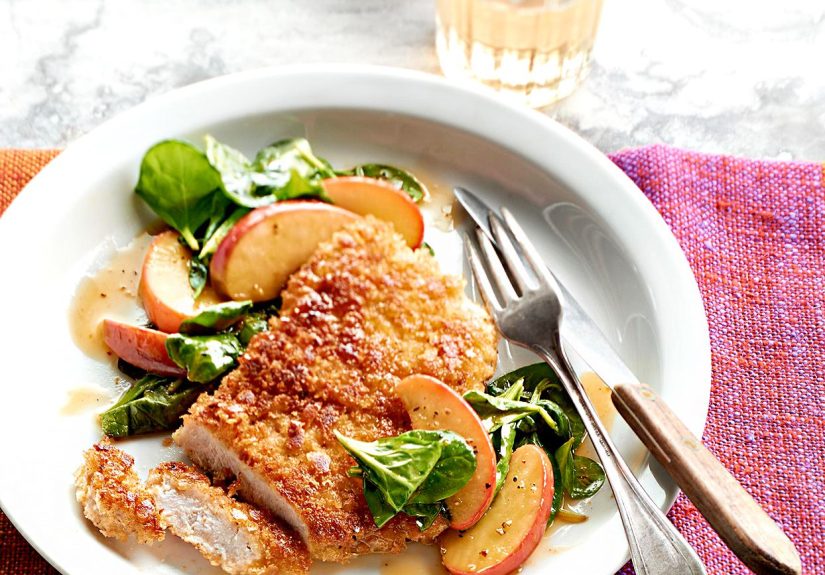
Method 2: Breaded and crunchy (the “crispy cutlet” vibe)
If you want a shatter-y crust, go breaded. The key is pressing the coating on firmly and frying at a steady temperature so the crust browns without burning.
Best for: ½-inch chops or pounded cutlets
Set up a simple breading station
- Flour: Seasoned with salt, pepper, paprika, garlic powder.
- Egg: Beaten egg (a splash of water or milk helps loosen).
- Crumbs: Panko or fine breadcrumbs (add grated Parmesan and dried herbs if you want big flavor).
Steps
- Pat chops dry and season lightly.
- Coat in flour, dip in egg, then press into crumbs until well covered.
- Heat oil (again, ~350°F is a strong target).
- Fry until deep golden, flipping carefully.
- Rest on a wire rack so the bottom stays crisp.
Pro tip: Breaded chops can brown fast. If the crust is perfect but the inside needs a little more time, finish them in a 350°F oven for a few minutes rather than scorching the coating on the stove.
Method 3: Skillet-to-oven for thick chops (the “no dry centers” strategy)
Thick chops can be tricky because the outside browns before the center cooks. The solution is a two-stage approach: brown first, then finish gently.
Best for: 1¼–1½ inch chops
Steps
- Dry-brine if possible (even 45 minutes helps), then pat dry.
- Season and lightly flour (or leave unfloured for a pure sear).
- Sear in oil over medium-high heat until nicely browned on both sides.
- Transfer the skillet to a 325–350°F oven to finish until the internal temperature hits your target.
- Rest 5 minutes before serving.
The Most Important Part: Doneness Without Guessing
Use a thermometer (yes, really)
Color is not a reliable doneness indicator for pork. Some chops stay a little pink even when safe; some look “done” and are still under temperature. A thermometer turns anxiety into accuracy.
Temperature targets that keep chops juicy
- Pull at 140–145°F depending on thickness and carryover cooking.
- Rest at least 3 minutes. The temperature can climb a few degrees while resting, and juices redistribute.
- Safe minimum for whole chops: 145°F with a 3-minute rest.
If you’re nervous about overcooking, pull thick chops closer to 140–142°F and let the rest bring them up. For thin chops, pull closer to 145°F because carryover is smaller.
A quick timing guide (because everyone asks)
Timing depends on thickness, bone, pan material, and oil temperature, but this table gives you a practical starting point. Always confirm with a thermometer.
| Chop Thickness | Best Method | Typical Stove Time | Notes |
|---|---|---|---|
| ¼–½ inch | Breaded cutlet | 2–3 min per side | Very small window; watch closely |
| ¾–1 inch | Flour-dredged fry | 3–5 min per side | Great balance of crust + juiciness |
| 1¼–1½ inch | Skillet-to-oven | Sear 2–4 min per side + oven finish | Prevents burnt crust with raw center |
Resting, Slicing, and Serving (Don’t Skip the Finish Line)
Rest like you mean it
Resting isn’t a fancy chef ritual; it’s damage control in the best way. When hot meat rests, juices redistribute and the texture relaxes. If you cut immediately, you’re basically pouring flavor onto the plate and calling it “sauce.”
Make a fast pan sauce (optional, but strongly encouraged)
If your chops weren’t breaded, you’ve probably got tasty browned bits in the pan. That’s free flavor.
- Pour off excess oil, leaving about 1 tablespoon in the pan.
- Add minced garlic or shallot (30 seconds).
- Deglaze with a splash of chicken broth, apple cider, or white wine.
- Scrape up the browned bits, simmer 1–2 minutes.
- Finish with a small pat of butter and a squeeze of lemon.
Troubleshooting: The 8 Most Common Pork Chop Tragedies (and Fixes)
1) “They’re dry.”
Cause: overcooking, thin chops, or too-high heat too long. Fix: buy thicker chops, dry-brine, and pull at the correct temperature.
2) “The crust is burnt but the inside isn’t done.”
Cause: heat too high or chops too thick for straight stovetop frying. Fix: lower heat and/or finish in the oven.
3) “The breading fell off.”
Cause: wet surface, rushing the coating, or flipping too soon. Fix: pat dry, press the coating firmly, and let the first side cook until it releases easily.
4) “The crust is soggy.”
Cause: oil too cool, overcrowding, or draining on paper towels (which can steam the bottom). Fix: fry in batches, keep oil hot, drain on a wire rack.
5) “They stuck to the pan.”
Cause: pan not hot enough, not enough fat, or moving too soon. Fix: preheat properly, add oil, and don’t fuss with the chop until it naturally releases.
6) “The seasoning tastes flat.”
Cause: seasoning only the outside right before cooking. Fix: dry-brine ahead of time so seasoning penetrates.
7) “They’re greasy.”
Cause: low oil temp or coating that absorbed oil. Fix: keep oil around shallow-fry temp, don’t overcrowd, and drain on a rack.
8) “I’m not sure they’re safe.”
Fix: thermometer. For whole pork chops, hit 145°F and rest at least 3 minutes. For ground pork, cook higher. Also: keep raw pork separate, wash hands, and don’t reuse raw marinades unless boiled properly.
of Real-World “Juicy Pork Chop” Experiences
Here’s what usually happens in real kitchensthe kind where someone is also helping with homework, answering a text, and trying not to set off the smoke alarm. The first “aha” moment for most home cooks comes from buying thicker chops. It’s almost unfair how much easier life gets when your pork chop isn’t paper-thin. With a 1-inch chop, you can actually build a crust without instantly overcooking the center. You stop playing whack-a-mole with heat and start cooking with confidence.
The next common experience is discovering dry-brining. People expect a dramatic, mysterious process, but it’s literally: salt + time. The payoff feels bigger than the effort. You notice deeper seasoning (not just salty on the outside), better browning, and a juicier biteeven when you cook on a busy weeknight. Many cooks describe it as the first time their pork chops tasted “restaurant-y,” which is a very scientific term meaning “I want to brag about this.”
Then there’s the oil-temperature lesson. A lot of first attempts at breaded chops go wrong because the oil isn’t hot enough. The coating soaks up oil before it crisps, and you end up with a crust that’s oddly pale and a texture that screams “sad sandwich.” Once cooks start waiting for a confident sizzleand frying in batches instead of stacking chops in like sardineseverything changes. The crust turns golden, the kitchen smells like you know what you’re doing, and suddenly the word “crispy” applies.
Another very real moment: learning that pork can be slightly pink and still safe when cooked to temperature. People who grew up with the “cook pork until it’s gray” era often hover over the skillet, adding “just one more minute” three or four times. The thermometer breaks that habit. When you watch the numbers climb and pull the chop at the right moment, you realize the resting period finishes the job. You also realize you’ve been overcooking pork for years, which is both empowering and mildly insulting.
Thick chops bring their own story arc. Many cooks try to fry a 1½-inch chop the same way they fry a thin onehigh heat the whole time. That’s when the outside turns gorgeous while the center stays stubbornly underdone. The skillet-to-oven finish is the “why didn’t I do this earlier?” fix. You get the color you want on the stovetop, then let the oven gently bring the middle to temperature without punishing the crust. The end result is the kind of juicy slice that makes you pause mid-chew and nod like a food critic, even if you’re standing barefoot in your kitchen.
Finally, there’s the serving upgrade: draining on a rack, not paper towels. It’s small, but it’s huge. A rack prevents steam from softening the bottom crust, which means your last bite is as crisp as your first. Add a quick pan sauce (even a simple splash of broth and a pat of butter), and suddenly pork chops go from “Tuesday dinner” to “I could charge admission.”
Conclusion
Juicy fried pork chops aren’t about complicated tricksthey’re about the right chop, the right prep, and stopping at the right temperature. Choose thicker cuts when you can, dry-brine for deeper flavor and better moisture, keep your oil hot enough for crispness, and let a thermometer do the honest work. Once you nail those basics, you’ll get golden crust, tender centers, and zero need to chew like you’re training for a jaw-strength competition.