Table of Contents >> Show >> Hide
- Why Reusing Old Plastic Bottles Is Worth It
- Before You Start: A Few Smart Safety Rules
- Creative Ways To Reuse Old Plastic Bottles at Home
- 1. Turn bottles into herb planters
- 2. Make self-watering planters
- 3. Create seed starters and mini greenhouses
- 4. Use them as watering tools
- 5. Make a bird feeder
- 6. Build desk and craft organizers
- 7. Turn sturdy bottles into scoops
- 8. Create a funnel
- 9. Make a phone charging holder
- 10. Design outdoor lanterns and party decor
- 11. Make kids’ crafts and toy storage
- 12. Build a vertical garden wall
- How To Make Plastic Bottle Projects Look Better
- When Reuse Is Smart and When Recycling Is Better
- Experiences and Lessons From Reusing Old Plastic Bottles
- Conclusion
Plastic bottles have a way of multiplying like socks in a dryer. You buy one sports drink, two bottles of detergent, a family-size shampoo, and suddenly your recycling corner looks like it is auditioning for a role in a post-apocalyptic craft show. The good news is that old bottles do not have to head straight for the bin. With a little imagination, they can become planters, organizers, scoops, bird feeders, and even party decor that looks far more expensive than its humble origins suggest.
If you want practical, budget-friendly, and genuinely creative ways to reuse old plastic bottles, you are in the right place. This guide shares smart upcycling ideas, safety tips, and real-life examples to help you turn everyday waste into useful things around your home. Whether you love DIY projects, want to reduce household waste, or just enjoy proving that a shampoo bottle can have a glorious second act, these ideas will help you get started.
Why Reusing Old Plastic Bottles Is Worth It
Before we jump into the fun part, let’s give old plastic bottles the tiny standing ovation they deserve. Reusing bottles helps reduce waste, stretches your budget, and keeps you from buying small organizers and garden accessories you can easily make yourself. It also encourages a more creative mindset at home. Instead of asking, “Should I throw this away?” you start asking, “Can this become something useful?”
That shift is powerful. A two-liter soda bottle can turn into a self-watering planter. A laundry bottle can become a sturdy scoop. A shampoo bottle can become a phone charging pocket. Suddenly, trash starts looking suspiciously like raw material.
Before You Start: A Few Smart Safety Rules
Not every plastic bottle is a candidate for every project. That is the boring-but-important part. The fun-but-important part is that once you know a few simple rules, you can reuse bottles with a lot more confidence.
Clean bottles thoroughly
Wash bottles with warm water and dish soap, and let them dry fully before using them for crafts, storage, or garden projects. Moisture trapped inside a bottle can lead to odors, mold, or mystery slime. No one wants a DIY project that evolves into a biology experiment.
Avoid reusing bottles that held hazardous chemicals
If a container held pesticides, solvents, motor oil, or strong household chemicals, do not reuse it for home crafts, food-related storage, or kids’ projects. Those bottles should be handled according to disposal guidance, not turned into cute herb planters.
Do not mix heat with flimsy plastic
Old plastic bottles are not ideal for high heat. Skip projects that involve open flames, boiling liquids, or hot food contact unless the project is specifically designed with safe materials. Decorative bottle lanterns can work with battery-powered lights far better than real candles. Your eyebrows will appreciate the restraint.
Watch for sharp edges
When cutting plastic, sand or tape rough edges if needed, especially for projects used by children. A polished DIY project should not double as a surprise paper cutter.
Creative Ways To Reuse Old Plastic Bottles at Home
1. Turn bottles into herb planters
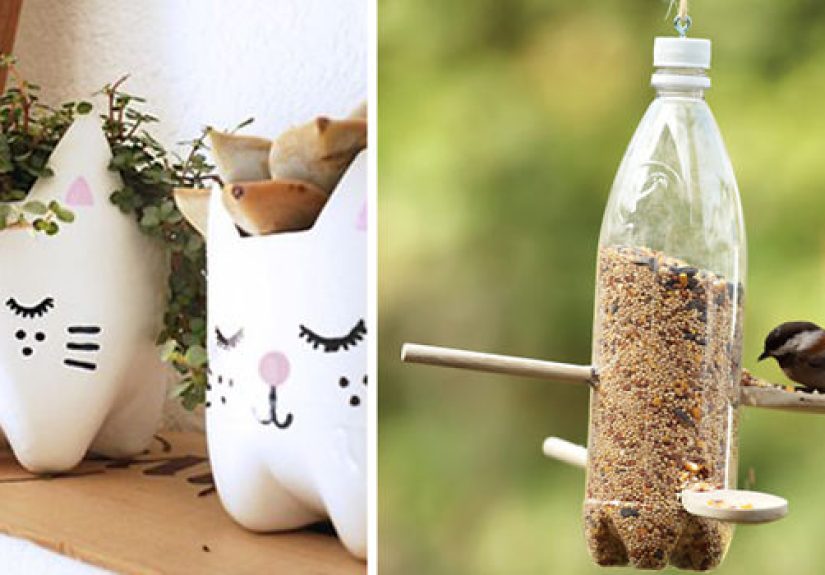
One of the easiest and most popular plastic bottle upcycling ideas is transforming bottles into planters. Cut a large bottle horizontally for a simple open planter, or cut a window into the side and leave the cap on for a hanging version. Add drainage holes, a little potting mix, and herbs like basil, mint, or parsley.
This works especially well for balconies, windowsills, and small patios. If you are short on space, hang several bottles vertically on a fence or wall to create a compact herb garden. It is practical, inexpensive, and gives your outdoor space a “look at me, I garden now” vibe.
2. Make self-watering planters
A plastic bottle can also become a self-watering planter with almost no effort. Cut the bottle in half, invert the top section into the bottom, thread a cotton wick through the cap, and fill the lower half with water. The soil above pulls up moisture gradually.
This is a great option for beginner gardeners, people who travel often, or anyone whose plants tend to experience emotional neglect. Seedlings, small flowers, and herbs usually do well in this setup.
3. Create seed starters and mini greenhouses
If you garden from seed, plastic bottles are surprisingly handy. Small bottles can be cut into starter pots, while larger clear bottles can act as mini greenhouses or cloches for young plants. The clear plastic helps trap warmth and moisture, which can support early growth in cooler weather.
This idea is useful in spring when you want to protect tender seedlings outdoors. It is also one of the best examples of how reusing old plastic bottles can save money while solving a real gardening problem.
4. Use them as watering tools
A bottle with small holes punched in the cap becomes a simple watering can for seedlings and indoor plants. You can also poke tiny holes in the bottom half of a bottle and bury it near plant roots for slow drip irrigation. Fill it with water, and it releases moisture gradually into the soil.
This method is especially helpful during hot weather or for raised beds that dry out quickly. It is not fancy, but it works, and frankly, some of the best DIY solutions look like they were invented five minutes before dinner.
5. Make a bird feeder
A bird feeder is one of the classic plastic bottle crafts for a reason. It is easy, affordable, and fun for families. Cut feeding holes on opposite sides of the bottle, slide wooden spoons or dowels through as perches, and fill the bottle with birdseed. Hang it from a tree branch and wait for your backyard guests to RSVP.
This project works well for kids when supervised and can be a simple way to teach reuse, wildlife care, and patience. Because yes, birds do seem to know the exact moment you walk away.
6. Build desk and craft organizers
Plastic bottles are excellent for organizing small items. Cut the tops off several bottles and use them to hold pens, markers, paintbrushes, clips, screws, beads, or makeup brushes. Larger bottles can hold rulers, scissors, and rolled papers.
You can keep the look simple or decorate them with paint, fabric, labels, or washi tape. Suddenly, your desk looks less “creative chaos” and more “I absolutely know where my scissors are.” Whether that is true is between you and your scissors.
7. Turn sturdy bottles into scoops
Laundry detergent bottles, large juice bottles, and similar sturdy containers are ideal for making scoops. Cut the bottle diagonally, leaving the handle intact, and you have a strong scoop for pet food, potting soil, rock salt, or garden mulch.
This is one of the most useful ways to reuse old plastic bottles because it requires almost no decorating and delivers immediate value. It is not glamorous, but neither is buying a scoop when one is already hiding in your recycling pile.
8. Create a funnel
Sometimes the smallest reuse ideas are the most satisfying. Cut off the top of a bottle and you have an instant funnel for dry goods, sand, birdseed, or potting mix. Keep one in the garage, one in the kitchen for non-food tasks, and one in the garden shed.
This is the kind of household hack that makes you feel wildly resourceful for a full afternoon.
9. Make a phone charging holder
A shampoo or lotion bottle can be transformed into a hanging phone charging holder. Cut the bottle so the bottom forms a pocket and the back extends upward with a hole for the charger plug. Decorate it if you like, then hang it from the outlet while your phone charges.
This is one of the smartest upcycling ideas for people who are tired of seeing their phone dangle dangerously from a charging cable like it is performing its own stunt work.
10. Design outdoor lanterns and party decor
Plastic bottles can be cut, painted, and strung into colorful decorations for outdoor gatherings. They work well as faux lanterns, flower-like ornaments, or hanging mobiles when paired with battery-operated fairy lights. Clear bottles can also be tinted with glass paint or markers for a stained-glass effect.
These decorations are especially fun for birthdays, backyard barbecues, or school events because they are lightweight, inexpensive, and easy to customize.
11. Make kids’ crafts and toy storage
Old plastic bottles can become toy rockets, fish, monsters, pencil cases, or mini storage jars for crayons and blocks. This is where creativity can really take off, especially if children get to paint and decorate the bottles themselves.
The best part is that these projects combine crafting with a simple lesson about waste reduction. Kids tend to love the magic of turning “trash” into something they actually want to keep. Adults tend to love any project that buys them twenty quiet minutes.
12. Build a vertical garden wall
If you have many matching bottles, consider making a vertical garden wall. Cut openings in the sides, add drainage holes, thread rope or wire through the ends, and hang the bottles in rows. Fill them with lightweight soil and grow herbs, lettuces, or trailing flowers.
This project has serious visual payoff. It is functional, eye-catching, and ideal for small yards and urban homes. It also proves that plastic bottle reuse ideas can move beyond quick hacks and become genuinely attractive home features.
How To Make Plastic Bottle Projects Look Better
Let’s be honest: not every DIY project looks charming on the first try. Sometimes it looks like exactly what it is, which is a bottle with a new job. The trick is in the finishing details.
- Use matching bottles for a cleaner, more intentional look.
- Remove labels completely and scrub away adhesive residue.
- Choose a simple color palette if you are painting several pieces.
- Add natural materials like jute, wood beads, or fabric wraps to soften the plastic appearance.
- Label organizers neatly so they feel purposeful rather than improvised.
A little polish goes a long way. The goal is not to fool anyone into thinking your planter used to be a designer vase. The goal is to make it look cared for, useful, and nice enough that you do not want to hide it behind the broom.
When Reuse Is Smart and When Recycling Is Better
Reusing old plastic bottles is a great idea, but not every bottle deserves an encore. If a bottle is cracked, brittle, cloudy from wear, or impossible to clean, recycling it may be the better choice. The same goes for containers that once held hazardous products or anything with lingering residue or odor.
A good rule of thumb is simple: reuse bottles when they are clean, sturdy, and suited to the new task. Recycle them when they are damaged, dirty, or past their useful life. Sustainable living is not about hoarding every container in your house until your cabinets start filing complaints. It is about making thoughtful choices.
Experiences and Lessons From Reusing Old Plastic Bottles
People who start reusing old plastic bottles often expect a one-time craft project. What they usually get is a whole new way of looking at everyday materials. At first, the experience feels small. You rinse out a bottle, cut it into a scoop, and feel mildly proud of yourself. Then a week later, that scoop is still working perfectly in the garden shed, and you realize the project was not just clever, it was genuinely useful.
One of the most common experiences with plastic bottle reuse is discovering that the simplest ideas are often the best. A person may spend an hour decorating a hanging planter, only to find that the plain detergent-bottle scoop gets used every single day. Another may create a cute bird feeder with the kids and end up enjoying the birdwatching more than the craft itself. The bottle becomes less important than the habit it starts. Reuse stops being a novelty and becomes part of daily life.
There is also a learning curve. Many people discover quickly that not all plastic bottles behave the same way. Thin water bottles can collapse or crack if cut roughly, while thicker shampoo or detergent bottles are sturdier and easier to repurpose. A project that looked perfect online may wobble in real life, leak soil on the windowsill, or tilt sideways in the garden. That is not failure. That is DIY education with a side of humility.
Families often say these projects work best when they are treated as low-pressure experiments. Children do not care if the bird feeder is perfectly symmetrical. They care that it hangs in a tree and might attract a bird before lunch. Adults, meanwhile, often enjoy the projects more once they stop trying to make every bottle look Instagram-ready. A painted planter with a slightly crooked face can still hold basil beautifully.
Another common experience is that reusing bottles can spark bigger organizing and decluttering wins. Someone starts by making a pen holder from a soda bottle, then notices the junk drawer needs help, then creates containers for batteries, twist ties, and screws. Suddenly one small upcycling project turns into a weekend reset for an entire room. It is the rare kind of productivity that feels both practical and oddly entertaining.
Perhaps the most meaningful lesson is that reusing plastic bottles changes your relationship with consumption. You become more aware of what comes into your home, what can be reused, and what really needs to be purchased. You stop seeing every solution as something that requires a trip to the store. Sometimes the answer is already in your recycling bin, quietly waiting for a better purpose.
That is what makes this topic so appealing. Reusing old plastic bottles is not just about crafts. It is about creativity, resourcefulness, and finding small ways to waste less while making your home more functional. Some projects will be beautiful, some will be hilariously lopsided, and some will become everyday favorites you wonder how you ever lived without. Honestly, that is a pretty good second life for a bottle.
Conclusion
There are countless creative ways to reuse old plastic bottles, and the best ones are the ideas you will actually use. A bottle can become a planter, feeder, organizer, scoop, funnel, or decorative accent with just a few cuts and a little imagination. These projects help reduce waste, save money, and add a personal touch to your home and garden without requiring fancy tools or a giant crafting budget.
If you are ready to try plastic bottle upcycling, start small. Pick one bottle, choose one useful project, and see how it fits into your routine. Once you experience how practical these DIY ideas can be, you may never look at an empty bottle the same way again. Which is great news for your budget, your creativity, and that increasingly crowded recycling corner.