Table of Contents >> Show >> Hide
- The rumor, the testimony, and the “mystery country” vibe
- Why the A-10 still has fans (even in an era of stealth everything)
- What “extra” really means: retirement, storage, and the desert parking lot
- Buying a used American warplane: the checklist nobody puts on a bumper sticker
- The sustainment cliff: why the Air Force keeps emphasizing “good luck with that”
- Why Ukraine wasn’t first in line (and why survivability drives the conversation)
- The most plausible buyer profiles (without pretending we know the name)
- A clue that feels less “mystery” and more “paper trail”
- The bigger context: retirement timelines keep shifting
- So… would selling A-10s be smart?
- Conclusion: the Warthog’s last mission may be teaching everyone about tradeoffs
- Experiences: what the A-10 story feels like up close (even if you never fly one)
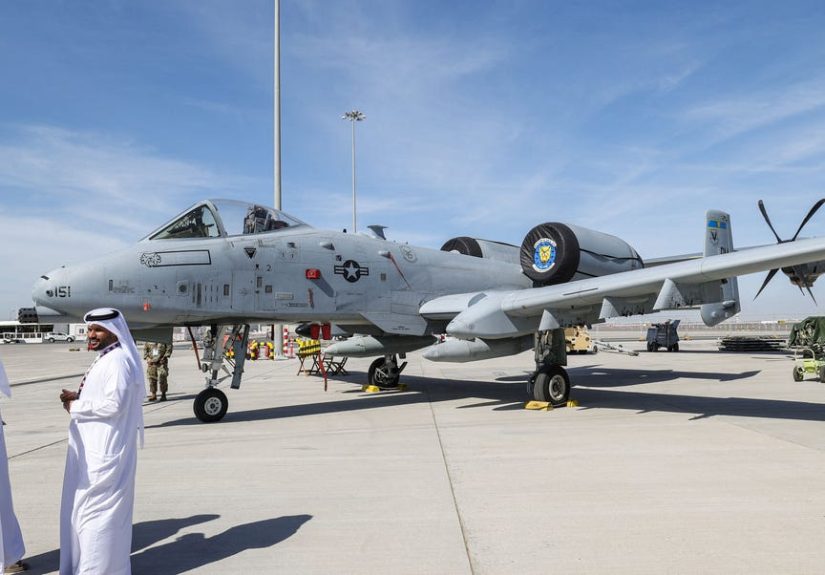
The A-10 Warthog is the rare military aircraft that has achieved two things at once:
it’s a combat-proven tool with a very specific job, and it’s basically a folk hero with wings.
Which is why the latest chatter feels so on-brand: while the United States is steadily moving the A-10 toward retirement,
at least one foreign country has reportedly asked, in essence, “So… are you really done with those?”
No name. No flag. No official “Hello, we would like to purchase your brrrt machine” press release.
Just the kind of tantalizing hint that sends defense-watchers into full detective mode:
a mystery country might be trying to acquire America’s “extra” A-10s.
Let’s unpack what “extra” really means, how a deal like that could even happen, and why the hardest part
wouldn’t be getting the jetsit would be keeping them alive once America stops supporting them.
Spoiler: buying the airplane is the easy part. Sustaining the airplane is the boss fight.
The rumor, the testimony, and the “mystery country” vibe
The core of the story is simple: a senior Air Force leader publicly indicated that at least one country had expressed interest
in acquiring A-10s as they leave U.S. service. The identity wasn’t disclosed, and that’s important.
What’s public is the ideainterest existsand the warning that sustaining the aircraft will become significantly harder once it’s out of the U.S. inventory.
That warning matters because the A-10 isn’t a shiny export product with a global supply chain.
It’s an aging specialist platform with a cult following, a unique mission set, and a logistical footprint that’s easier to manage when you’re the original owner
with decades of institutional knowledge and warehouses of parts.
So when people ask “Who is the mystery country?” the honest answer is: publicly, we don’t know.
What we can do is map the incentives and constraints that would narrow the fieldand explain why some guesses make more sense than others.
Why the A-10 still has fans (even in an era of stealth everything)
The A-10’s reputation isn’t just memes and nostalgia. It’s built on a few practical traits that are hard to replicate in one airframe:
- Close air support DNA: The A-10 was designed to support troops on the ground with weapons, visibility, and time-on-station.
- Loiter and persistence: It can hang arounduseful when the situation is fluid and timing matters.
- Survivability features: Built to absorb punishment compared to faster, higher-flying fighters that rely on speed and advanced countermeasures.
- A broad weapons menu: Modern A-10 variants can employ precision-guided munitions, not just the iconic gun.
In plain English: it’s a “show up, stick around, and be helpful” aircraft. In conflicts where air defenses are limited or already suppressed,
that can still be a very valuable set of behaviors.
And yes, the cannon is part of the legend. But the bigger story is that the A-10 became a symbol of a specific promise:
if you’re on the ground and things go sideways, there’s an airplane designed with you in mind.
What “extra” really means: retirement, storage, and the desert parking lot
“Extra A-10s” doesn’t mean crates of brand-new Warthogs sitting in shrink wrap. It means aircraft that are being phased out,
sent to storage, and in some cases used as donors for parts before they’re ever considered for reactivation.
When jets retire, they often go to long-term storage in the desert. That storage system is not a museum; it’s a management tool.
Some aircraft are kept in a condition that could allow a return to flight with enough money and work. Others are effectively retired for good,
used to support the rest of the fleet, or held for potential conversion, testing, or disposal.
For any would-be buyer, that difference is everything. The dream scenario is acquiring later-model jets with recent upgrades and strong maintenance records.
The nightmare scenario is getting airframes that are “complete” in the same way a pizza box is “complete” after the pizza is gone.
Buying a used American warplane: the checklist nobody puts on a bumper sticker
If a country wanted retired A-10s, the path is not “Venmo and a handshake.”
Transfers of U.S. defense articles typically run through formal security cooperation channels.
Think government-to-government processes, legal authorities, approvals, and conditions.
Step 1: The political green light
Major defense transfers generally require U.S. government approval, and they can be influenced by Congress, broader foreign policy priorities,
and regional security considerations. Even if the aircraft are “surplus,” the decision isn’t just financialit’s strategic.
Step 2: The aircraft condition reality check
Any prospective transfer has to answer basic questions:
Are these airframes flyable? How many hours remain? What upgrades do they have? What’s the corrosion situation?
(If you’ve ever owned an old car, you already understand the vibe.)
Step 3: Training and sustainmentaka “you’re buying a lifestyle”
Even if the jets are delivered, a country still needs:
pilots trained on type, maintainers trained on type, spare engines, spare tires, spare everything,
ground equipment, software support, manuals, test gear, and a supply chain that does not depend on wishful thinking.
This is where the A-10 gets tricky: as the U.S. shrinks its fleet, the support ecosystem shrinks too.
That means higher costs, longer waits for parts, and fewer experts who still remember the weird little maintenance ritual that prevents
“that one panel” from rattling like a tambourine at high speed.
The sustainment cliff: why the Air Force keeps emphasizing “good luck with that”
The most telling public note about the mystery-country interest wasn’t “someone wants the plane.”
It was the warning that the aircraft becomes far harder to support once it is no longer in U.S. service.
The A-10 is an older design, and its production line ended long ago. The longer it stays in service, the more it relies on:
life-extension programs, clever repair work, and parts management that sometimes looks like a high-stakes version of scavenger hunting.
If you’re a potential buyer, you’re staring at a classic tradeoff:
you can get a proven capability for less than the cost of a new fighter fleet,
but you inherit a maintenance and supply problem that gets harder every year.
Why Ukraine wasn’t first in line (and why survivability drives the conversation)
There’s been frequent public debate about whether A-10s could help in high-intensity conflicts.
The basic issue is survivability: the A-10 thrives in environments where it can loiter and work methodically.
In airspace saturated with modern surface-to-air threats, slow and low can be a dangerous lifestyle choice.
That doesn’t mean the aircraft is useless; it means the mission design has to fit the threat.
In a dense air-defense environment, success tends to rely on a layered approach:
suppression of enemy air defenses, electronic warfare, intelligence, escort fighters, and careful timing.
If a country doesn’t have the full package, an A-10 could quickly become a very expensive lesson in physics.
The most plausible buyer profiles (without pretending we know the name)
Since no public source has confirmed the identity of the interested country in the original testimony,
treat any shortlist as educated speculation. Still, there are patterns that make some categories of buyers more believable:
1) A partner that fights in relatively permissive airspace
Countries that routinely operate against insurgent groups, border threats, or drone/rocket harassmentwhere air defenses are limited
can benefit from an aircraft built for persistent overwatch and precision strike.
For this profile, the A-10’s strengths are relevant, and its weaknesses are less punishing.
2) A country already plugged into U.S. logistics and training pipelines
If you already run American aircraft, you’re more likely to have compatible systems, shared training relationships,
and a procurement culture that can navigate U.S. transfer requirements.
It doesn’t eliminate the sustainment cliff, but it makes the climb less vertical.
3) A buyer that wants capability quickly, not a decade from now
New platforms take timeprocurement, training, basing, integration, doctrine, and budgets that have to survive multiple political cycles.
A retired platform can look attractive if the need is urgent, budgets are tight, and the mission set is narrow.
A clue that feels less “mystery” and more “paper trail”
Separate from the original “one country expressed interest” remark, public reporting has highlighted that lawmakers have directed the Pentagon
to examine the feasibility and advisability of transferring retired A-10s to a specific allied air force.
That’s not the same thing as a confirmed dealbut it is the kind of official breadcrumb that moves the conversation from rumor to bureaucracy.
When lawmakers ask for a feasibility report, they’re effectively saying:
“We see enough potential here to demand a serious answer.” The evaluation typically includes whether the recipient can maintain the aircraft,
what it would cost, and whether it aligns with broader security goals.
In other words: the mystery-country story exists in a wider ecosystem of “what should happen to A-10s as they retire?”
Some of that ecosystem is emotional (the airplane has fans). Some of it is strategic (partners need capabilities).
And some of it is practical (where do the aircraft go, and what’s the best use of limited defense dollars?).
The bigger context: retirement timelines keep shifting
The A-10’s retirement has been debated for years, and timelines have moved based on budget proposals, modernization priorities,
and congressional restrictions. In recent budget cycles, the Air Force has proposed retiring the remaining fleet faster than previously planned.
Meanwhile, lawmakers have sometimes pushed back, requiring minimum inventory levels or restricting retirements.
That matters for any foreign interest because “surplus” depends on timing.
If retirements accelerate, more aircraft could become available soonerbut with less time to plan an orderly transition and support strategy.
If retirements slow down, the U.S. retains the support base longerbut fewer aircraft may be released quickly.
So… would selling A-10s be smart?
The best answer is “it depends,” which is the most honest and least satisfying phrase in defense analysis.
But here are the real decision points:
- Mission match: If the buyer needs persistent, lower-altitude support in permissive environments, the A-10 can still be a strong fit.
- Sustainment plan: Without a realistic pipeline for parts, maintenance, and training, the fleet could degrade quickly.
- Opportunity cost: Money spent resurrecting old jets is money not spent on newer aircraft, drones, air defenses, or ISR systems.
- Political risk: Any transfer is a foreign policy decision, not merely a procurement choice.
And there’s a final, uncomfortable truth: the A-10’s legendary reputation is tied to a particular kind of fight.
The more a conflict looks like that fight, the more the A-10 feels like a bargain.
The more a conflict looks like a modern, integrated air-defense problem, the more it feels like a risk.
Conclusion: the Warthog’s last mission may be teaching everyone about tradeoffs
The “mystery country” story is catnip because it’s part gossip, part geopolitics, and part aviation romance.
But underneath the intrigue is a very practical question: what happens to a beloved, specialized aircraft when the original operator moves on?
The A-10 is not just a plane; it’s a bundle of training, parts, doctrine, and experience.
If a foreign country wants to “snatch up” America’s retiring Warthogs, it’s really trying to acquire a capability
and that capability lives in the support system as much as it lives in the metal.
In the end, the mystery isn’t only “who wants the A-10?” The deeper mystery is:
who is willing to pay for the unglamorous, unsexy work of sustaining an aging fleetyear after yearonce the original owner closes the parts catalog?
Experiences: what the A-10 story feels like up close (even if you never fly one)
If you’ve ever watched an A-10 at an airshow, you know the moment. The aircraft comes in low and unapologetic,
like it’s late for a meeting and the meeting is “protecting people on the ground.” The crowd recognizes it instantly.
There’s usually a mix of delight and reverence, the way people react to a classic truck that’s still doing real work.
Even without the cannon (which is not exactly an “airshow feature,” for several excellent reasons),
the A-10’s presence has a physicality that modern jets sometimes hide behind sleek lines and quiet confidence.
The experience of the A-10 debate, though, is less romantic and more like watching a family argue over what to do with a beloved old house.
One side points to the memories and the reliability: “It still does the job.” The other side points to the wiring, the leaks,
and the neighborhood changing around it: “It will cost more every year, and it wasn’t built for what’s coming next.”
Both sides are usually right about different parts of the same reality. That’s why the argument never fully diesit just changes outfits.
Then there’s the emotional whiplash of “retirement.” For fans, retirement sounds like the aircraft disappears overnight.
In practice, retirement often looks like a slow migration: squadrons divest, jets head to storage, parts are reclaimed,
and the fleet gradually becomes two things at oncestill operational in some places, already “legacy” in others.
It’s a strange experience to realize that a plane can be simultaneously celebrated, debated, and quietly packed away like seasonal decorations.
The “mystery buyer” angle adds another layer: it turns a domestic modernization story into an international one.
For observers, it’s like seeing a neighbor put a “free curb alert” sign on a heavy-duty tool and then watching three people pull up
and argue over who gets it. One potential buyer sees a practical solution to a pressing need. Another sees a maintenance nightmare.
A third sees political symbolismwhat it would mean to operate an aircraft associated with a certain style of American airpower.
And if you imagine being inside the air force that wants the jets, the experience becomes even more complicated.
Acquiring a retired platform can feel like a shortcut… until you start listing everything you’ll need to make it real:
pilot conversion training, simulator access, maintenance courses, spare engines, spare tires, software updates, secure communications,
weapons integration, and the patient bureaucracy of approvals. It’s exciting for about five minutes, and then the spreadsheet arrives.
The spreadsheet is undefeated.
Ultimately, the most relatable “experience” in this whole story is the tension between affection and arithmetic.
The A-10 inspires affection because it’s straightforward and iconic. But aircraft operations are arithmetic:
parts, personnel, hours, budgets, readiness rates, and threat assessments. The reason the mystery-country rumor is so captivating
is that it sits right on that fault line. It’s the dream of getting something legendarycolliding with the reality that legends still need maintenance.