Table of Contents >> Show >> Hide
- What makes the Tove Adman concrete candlestick special?
- Meet the designer: who is Tove Adman?
- Design details to notice (so you know what you’re actually buying)
- How to style a Tove Adman concrete candlestick in real homes
- Pick the right candle: size, drip behavior, and color
- Care and cleaning: keep the concrete beautiful
- Candle safety: keep the vibe, lose the risk
- Buying tips: new vs. vintage, and what “handmade” should look like
- Why concrete candlesticks feel timeless (not trendy)
- Real-world experiences: living with a Tove Adman concrete candlestick (extra)
- Conclusion
Some home accessories whisper. The Tove Adman concrete candlestick does not whisper. It calmly
clears its throat, sets a very small candle on your table, and somehow makes the whole room look more expensive.
It’s the design equivalent of wearing sneakers with a tuxedounexpected, a little rebellious, and oddly perfect.
If you’ve ever looked at a Scandinavian interior and thought, “Wow, that’s peaceful… but also, where’s the
personality?” this is the kind of object that answers the question. Concrete brings the grit. The silhouette brings
the drama. The candle brings the glow. And together they create what many fans call an “industrial baroque” vibe:
ornate-meets-raw, romantic-meets-rugged, fancy-meets-I-could-survive-a-move-in-day.
What makes the Tove Adman concrete candlestick special?
In a world where candleholders often fall into one of two campseither “minimal metal stick” or “Pinterest pumpkin
spice chaos”Tove Adman’s concrete candlestick lands in a third category: sculptural everyday.
It looks like an heirloom… if your heirlooms were cast in concrete and had excellent posture.
The material twist: concrete as decor, not construction
Concrete is usually associated with sidewalks, parking garages, and that one apartment building that looks like a
stylish bunker. But as a home material, it’s a texture powerhouse: matte, mineral, and visually grounding. It pairs
beautifully with natural wood, linen, stoneware, and neutral palettesbasically the greatest hits of Scandinavian
design.
The shape: classic candlestick… with a wink
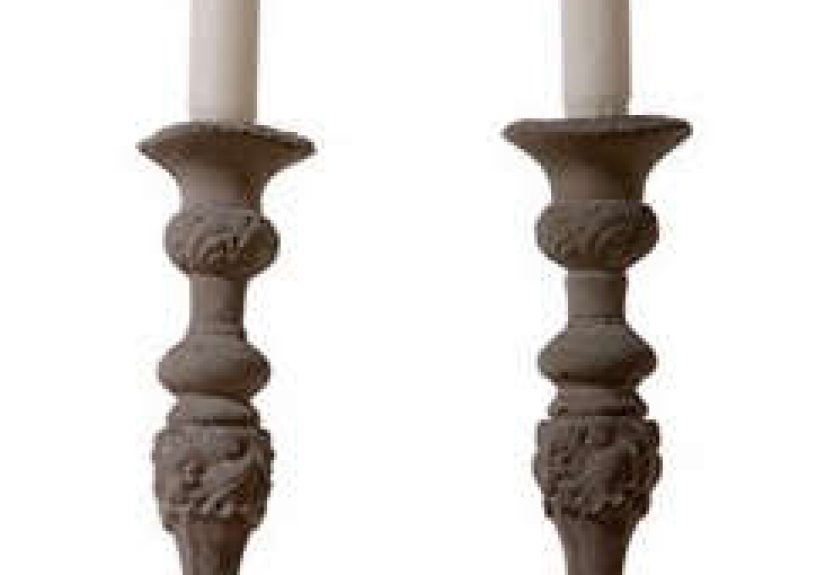
The charm here is the contrast. The form nods to traditional candlesticks (think baroque curves and old-world
silhouette), while the surface stays unapologetically modern. The result feels both classic and currentlike your
dining room learned to speak French but kept its Midwest sensibility.
Meet the designer: who is Tove Adman?
Tove Adman is a Swedish designer known for working in concrete and giving functional objects a bold, humorous
expression. She began her career as a sculptor in the 1990s and became associated with concrete candleholders early
on, then later launched her own brand and continued producing work from her studio on the island of Gotland,
Sweden. The through-line is consistent: playful seriousnessobjects that are useful, but never boring.
That sculptor’s background matters. When a designer thinks in volume and proportion, a candleholder stops being
“just a holder” and starts acting like a tiny piece of architecture. Even unlit, it earns its spot on the table.
Design details to notice (so you know what you’re actually buying)
Whether you’re shopping new, hunting for a vintage piece, or scrolling at 1 a.m. telling yourself it’s “research,”
here are the signature cues that make a concrete candle holder feel like a Tove Adman-style
statement instead of a random gray object with a hole in it.
1) A sculptural profile with “old-world” energy
The candlestick silhouette is intentionally dramaticcurves and contours that reference traditional candlesticks.
That’s where the “baroque” vibe comes in. But because it’s concrete, it never veers into frilly. It’s more like:
ornate, but with boots on.
2) A raw, matte finish that shows the casting
Concrete has natural variation: tiny air pockets, slight tonal shifts, and surface texture. In handmade pieces,
these aren’t defects; they’re proof you’re not holding something stamped out by a machine that’s had a long day and
zero feelings.
3) Visual weight (and literal stability)
A good candlestick should pass the “accidental elbow” test. Concrete helps: it tends to be heavier than ceramic or
thin metal holders, which can make it feel more planted. Still, always place it on a flat, heat-safe surfacestyle
is great, but gravity never takes a day off.
How to style a Tove Adman concrete candlestick in real homes
The easiest way to get this piece right is to lean into contrast. Concrete loves softness nearby: linen napkins,
warm wood, fresh greenery, creamy ceramics. It also loves shine nearby: brass cutlery, glassware, glossy black
accents. That push-pull is the whole point.
On a dining table: “minimalist centerpiece” without trying too hard
Try one candlestick as a solo statement, or a pair for symmetry. Add a low bowl of citrus, a small cluster of
bud vases, or a simple linen runner. The goal is a clean, calm table with one strong texture momentyour
modern candlestick doing the heavy lifting (which, conveniently, it’s built for).
On a mantel or shelf: height and texture do the work
Candlesticks are basically a shortcut for “styled.” Put the concrete candlestick next to stacked books, a framed
print, and a small plant. Vary height and shape: tall candle, medium artwork, low object. Suddenly your shelf has
intention. And you can pretend it happened naturally.
In a bathroom: spa vibes with one important rule
Concrete + candlelight can feel very “boutique hotel.” Just keep open flame away from towels, tissues, aerosols,
and anything you’d describe as “fluffy.” If your bathroom is drafty, consider a flameless candle and keep the
candlestick as a sculptural accent.
As a “vignette anchor” on a tray
Designers love trays because trays make chaos look curated. Place your concrete candlestick on a tray with a small
dish (for matches), a little vase, and maybe a tiny sculpture. It reads like a momentbecause it is a moment. A
moment you staged. Proudly.
Pick the right candle: size, drip behavior, and color
Check the candle fit
Taper candles come in slightly different diameters. If a candle is too loose, it can wobble; too tight, and you’ll
feel like you’re forcing a square peg into a round lifestyle. If needed, a small bit of candle adhesive or museum
wax can stabilize the base (use sparingly).
Go easy on drippy tapers
If you want the cleanest look, choose dripless or slow-drip tapers. If you love the romance of wax drips, go for
itbut treat drips as a deliberate styling choice, not an accident you’ll regret at midnight with a butter knife.
Color pairing that always works
- White candle + gray concrete: crisp, Scandinavian, quietly fancy.
- Black candle + concrete: graphic, modern, a little moody.
- Honey/cream candle + concrete: warm and soft, great with wood tones.
- Muted colors (sage, clay, dusty rose): artsy without looking like a birthday party.
Care and cleaning: keep the concrete beautiful
Concrete is durable, but it’s also porous. That means it can absorb oils, pigments, or wax residue if you’re not
careful. The good news: you don’t need a complicated routine. You just need a few smart habits.
Wax removal (without turning it into a weekend project)
If wax drips onto the concrete, let it cool and harden first. Gently lift it with a plastic scraper or the edge of
an old gift card (avoid metal tools that can scratch). For thin residue, a little warmth can help: use a hair dryer
on low from a safe distance, then wipe with a soft cloth. Go slowthis is home care, not an Olympic sport.
Spot cleaning
For dust, use a dry microfiber cloth. For marks, use a slightly damp cloth and mild soap, then dry promptly. Avoid
harsh chemicals and soaking the piececoncrete prefers “gentle skincare,” not “industrial degreaser.”
Should you seal a concrete candlestick?
Some concrete decor comes pre-sealed; some doesn’t. Sealing can help reduce staining and make cleaning easier, but
the wrong product can change the look (extra shine) or feel tacky. If you’re considering sealing, choose a sealer
designed for concrete that dries clear and test in an inconspicuous spot first. If you love the raw matte finish,
you may prefer to keep it as-is and simply be mindful with wax and oils.
Candle safety: keep the vibe, lose the risk
The goal is cozy ambiance, not a surprise call to the fire department. A concrete candlestick can be sturdy, but
candle safety is still non-negotiableespecially on dining tables, near curtains, or in homes with pets and kids.
- Never leave a burning candle unattended. Blow it out when you leave the room or go to bed.
- Keep candles away from anything flammable (curtains, books, décor, bedding).
- Avoid drafts (vents, open windows) to reduce flicker, soot, and uneven burning.
- Trim the wick to reduce smoke and help the candle burn cleanly.
- Limit burn time so the candle doesn’t overheat or smoke excessively.
- Use a stable, heat-safe surface under the holder if you’re protecting furniture.
Think of it this way: the safest candle is the one you can enjoy again tomorrow.
Buying tips: new vs. vintage, and what “handmade” should look like
Handmade variation is part of the charm
With cast concrete, tiny differences in texture and tone are normal. Expect subtle variation; that’s often a sign
you’re getting something more special than a factory-perfect replica.
Look for clear product information
Reputable sellers typically list material, dimensions, and care notes. If you’re shopping secondhand, ask for
photos in natural light so you can see the surface texture clearly.
Price and value
The value here isn’t just “it holds a candle.” It’s a design object that can anchor a tabletop, shelf, or vignette
year-round. If you’re the type who rotates seasonal décor, this is the rare piece that works in every season:
winter cozy, spring fresh, summer minimal, fall moody.
Why concrete candlesticks feel timeless (not trendy)
Concrete decor has a modern edge, but it also taps into something older: the appeal of honest materials and
craftsmanship. Scandinavian design often emphasizes function, natural textures, and quality constructionso a
Scandinavian concrete candleholder makes sense in that context. It’s quiet, tactile, and built to
last. And in a world of disposable décor, “built to last” is the new luxury.
The Tove Adman concrete candlestick, in particular, succeeds because it’s balanced. It’s bold without being loud.
It’s decorative without being fussy. It’s sturdy without being clunky. It’s the kind of object you buy once, then
keep finding new places forlike a good chair, or a good friend who always shows up on time.
Real-world experiences: living with a Tove Adman concrete candlestick (extra)
The best way to understand this piece is to imagine how it behaves in everyday lifethe little moments that make
it feel less like “decor” and more like something you genuinely keep. Below are a few common, very relatable
experiences people tend to have with a Tove Adman concrete candlestick (and other similar
handmade concrete candle holders).
1) The unboxing moment: “Oh, this has presence.”
You pick it up and immediately notice the weight. Not “gym equipment,” but “this isn’t tipping over because a cat
sneezed.” The surface feels cool and mineralmatte rather than glossyso it reads modern even if the silhouette is
classic. Most people do the same thing right away: they set it down, step back, and watch it quietly improve the
room by existing.
2) The first styling win: it makes everything around it look intentional
Put it on a dining table with nothing else and it still looks like a decision. Add a linen napkin, a ceramic plate,
and a simple glass, and suddenly your weeknight pasta looks like it was served at a “concept restaurant” that
charges extra for sparkling water. The concrete acts like a visual anchor, which means you don’t need a dozen
accessories fighting for attention.
3) The “wax incident,” followed by relief
Sooner or later, wax happens. A taper leans. A draft flickers. A drip forms. The good news: once the wax cools,
it’s usually more annoying than catastrophic. People often find that careful scraping with something plastic gets
most of it off, and gentle warmth helps with residue. After that, the candlestick goes right back to looking
quietly expensivelike nothing ever happened. (Which is how you want all household mishaps to resolve.)
4) The seasonal shift: it’s a year-round piece, not a holiday-only prop
In winter, it pairs with pine branches and deep candles for a cozy, moody look. In spring, it looks fresh next to
tulips and pale tapers. In summer, it’s perfect with a minimal tablescapewhite candles, citrus, maybe a woven
runner. In fall, it loves warm tones and textured linens. Owners tend to appreciate that it adapts; you’re not
storing it away nine months of the year like a novelty gnome.
5) The “gift test”: it’s personal without being risky
If you’ve ever tried to buy home décor as a gift, you know the fear: “What if they hate it but now it’s living in
their house forever?” A sculptural concrete candlestick is surprisingly safe because it’s functional and neutral,
yet still special. It feels thoughtful, not generic. People can style it minimalist, rustic, modern, or eclectic.
And if the recipient is the kind of person who says “I don’t really decorate,” this is the kind of object that
sneaks décor into their life in the most polite way possible.
In short: living with this candlestick is less about constant maintenance and more about repeated small wins. You
light it for dinner. You move it to a shelf. You pair it with something new. It keeps doing what good design does:
it makes daily life look a little more composedwithout asking you to become a different person to enjoy it.
Conclusion
The Tove Adman concrete candlestick is a masterclass in contrast: romantic form, raw material,
sculptural presence, and everyday function. If you want a candle holder that feels like a design object (not a
temporary trend), concrete is a smart pickand Tove Adman’s take is especially memorable. Style it simply, burn
candles safely, and let that quiet gray texture do what it does best: make your space feel grounded, modern, and
effortlessly curated.