Table of Contents >> Show >> Hide
- 1. Stonewall Jackson Was Shot by His Own Men at Chancellorsville
- 2. Operation Husky: Allied Gunners Tore Into Their Own Paratroopers
- 3. Operation Cottage: The Allies Invaded an Empty Island and Still Took Casualties
- 4. Operation Cobra: American Bombers Hit American Troops in Normandy
- 5. USS William D. Porter Accidentally Fired a Live Torpedo at USS Iowa
- 6. The Soviets Shot Down a U-2 and Then Hit Their Own Fighter Too
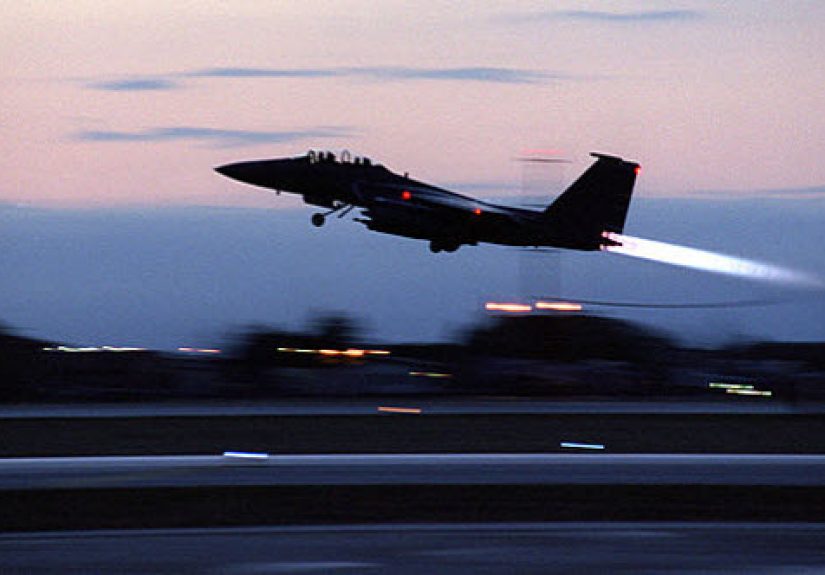
- 7. In 1994, U.S. F-15s Shot Down Two U.S. Army Black Hawks Over Iraq
- 8. Tarnak Farm: A U.S. F-16 Bombed Canadian Troops in Afghanistan
- 9. A Patriot Missile Shot Down a British Tornado During the Iraq War
- 10. A Patriot Missile Also Shot Down a U.S. Navy F/A-18
- Why These Friendly Fire Incidents Still Matter
- The Human Experience Behind Friendly Fire
- Conclusion
War is already chaos in uniform. Friendly fire is what happens when that chaos turns inward. Sometimes it comes from fog so thick nobody can see ten feet ahead. Sometimes it comes from radar screens, bad radio calls, shaky identification, or a weapon system that confidently decides your own side looks suspiciously hostile today. However it happens, the result is the same: soldiers, sailors, and pilots are hurt or killed by the people who were supposed to be on their side.
Military history is full of these grim, strange, and sometimes almost unbelievable episodes. Some were caused by 19th-century nerves in the dark. Others happened in the high-tech age, where computers, missiles, and advanced aircraft still somehow managed to recreate the oldest battlefield problem of all: not knowing exactly who is where. These bizarre friendly fire incidents in military history reveal an uncomfortable truth that armies keep relearning the hard way. Better weapons do not erase the fog of war. They just make it faster, louder, and occasionally more expensive.
Below are 10 of the strangest and most memorable blue-on-blue disasters ever recorded, followed by a closer look at what these incidents felt like for the people trapped inside them.
1. Stonewall Jackson Was Shot by His Own Men at Chancellorsville
Few friendly fire incidents changed a war’s emotional temperature like the wounding of Confederate General Thomas “Stonewall” Jackson in May 1863. Fresh off one of the boldest flanking attacks of the Civil War, Jackson rode ahead at night near Chancellorsville to scout Union positions. On the way back, men from the 18th North Carolina mistook Jackson’s party for Union cavalry and opened fire.
Jackson was hit three times. Surgeons amputated his left arm, and for a moment it looked like he might survive. Then pneumonia set in, and he died days later. What makes this case so bizarre is the timing. Robert E. Lee had just won one of his most dazzling victories, yet that triumph came with a catastrophic self-inflicted wound. In military history, it is hard to top the irony of winning the battle and accidentally losing the commander who helped make the win possible.
2. Operation Husky: Allied Gunners Tore Into Their Own Paratroopers
The Allied invasion of Sicily in July 1943 was supposed to showcase modern coordination between air, sea, and land forces. Instead, it offered one of World War II’s ugliest lessons in battlefield confusion. After German air attacks had rattled Allied naval crews, American C-47 transports carrying reinforcement paratroopers flew over the invasion fleet. Tense antiaircraft gunners saw silhouettes overhead and reacted first, identified later, and the “identified later” part came much too late.
Dozens of transport aircraft were shot up or shot down by Allied fire. The result was devastating: shattered formations, dead paratroopers, and a painful reminder that nerves can be as deadly as the enemy. The incident was bizarre because everybody involved was trying to support the same operation. In theory, this was joint warfare at its finest. In practice, it became a brutal case study in how quickly a coalition can start swatting its own planes out of the sky when communication breaks down.
3. Operation Cottage: The Allies Invaded an Empty Island and Still Took Casualties
In August 1943, American and Canadian troops landed on Kiska in the Aleutians expecting a brutal fight against Japanese defenders. Intelligence believed thousands of enemy troops remained on the island. The Allies bombarded the place heavily, then stormed ashore in strength. There was just one tiny problem, and by tiny, I mean strategically enormous: the Japanese had already left.
Even with no enemy garrison there, the invasion still produced friendly fire casualties, accidents, illness, and confusion in miserable weather and rough terrain. A mine strike on the destroyer Amner Read added more losses. In the end, hundreds became casualties during an assault on an uninhabited island. If that sounds like a military nightmare written by a dark satirist, that is because it basically was. Operation Cottage remains one of history’s most absurd examples of the fog of war making professionals fight ghosts and still lose men.
4. Operation Cobra: American Bombers Hit American Troops in Normandy
Operation Cobra, the July 1944 breakout from Normandy, was meant to smash open the German line with massive airpower and let U.S. forces surge forward. The problem was geometry, visibility, and timing. Bombers approached in a way that increased the risk of dropping short, and some did exactly that. The first day brought trouble. The next day brought disaster.
American bombs fell on American positions, killing 111 U.S. soldiers, including Lieutenant General Lesley J. McNair, one of the highest-ranking American officers killed in the European theater. What makes Cobra especially haunting is that it came during a major operation designed to end the bloody stalemate of the hedgerows. The breakthrough eventually worked, but it opened with American troops being pulverized by American airpower. It is the classic friendly fire paradox: the very force meant to save lives by speeding victory instead took them first.
5. USS William D. Porter Accidentally Fired a Live Torpedo at USS Iowa
If military history ever needed a “you have got to be kidding me” entry, this one qualifies. In 1943, the destroyer USS William D. Porter was escorting the battleship USS Iowa, which happened to be carrying President Franklin D. Roosevelt. During what was supposed to be a drill, the destroyer accidentally launched a live torpedo at Iowa.
Attempts to warn the battleship were messy and delayed. Eventually, the warning got through, and Iowa maneuvered to avoid the torpedo. Nobody was killed, but the episode instantly gave William D. Porter a legend it definitely did not want. Friendly fire incidents are usually tragic, but this one was bizarre in a uniquely naval way: a warship nearly torpedoed a presidential transport because a training evolution forgot the basic rule that drills should ideally not include actual torpedo attacks on the Commander in Chief.
6. The Soviets Shot Down a U-2 and Then Hit Their Own Fighter Too
The 1960 U-2 incident is usually remembered as the moment Soviet air defenses shot down Francis Gary Powers and detonated a major Cold War crisis. Less often remembered is the extra layer of chaos. Soviet forces launched multiple attempts to destroy the U-2, and in the confusion a missile battery appears to have locked onto and destroyed one of its own fighters.
That detail turns a famous espionage incident into a classic friendly fire story. Under pressure, with radar tracks shifting and commanders desperate to kill the intruder, the defense network became a danger to itself. It is a chilling example of how centralized air defense can spiral when everyone is moving at once and nobody fully trusts the picture on the screen. Even in a tightly controlled Soviet system, panic and misidentification still found room to do their ugly work.
7. In 1994, U.S. F-15s Shot Down Two U.S. Army Black Hawks Over Iraq
One of the most studied modern fratricide cases happened over northern Iraq on April 14, 1994, during Operation Provide Comfort. Two U.S. Air Force F-15s misidentified two U.S. Army Black Hawk helicopters as hostile Iraqi aircraft and shot them down. The helicopters were carrying a multinational group of military officers, officials, and crew. Twenty-six people were killed.
This case was especially shocking because it did not happen in a primitive battlefield environment. It happened inside a command-and-control system loaded with aircraft, identification procedures, and supporting assets. Investigations later focused on failures across multiple levels, including visual identification, situational awareness, and air battle management. In other words, the technology was there, the procedures were there, and the tragedy still happened anyway. That is what makes it so unsettling. It proved that modern systems can fail in layers, not just in single dramatic moments.
8. Tarnak Farm: A U.S. F-16 Bombed Canadian Troops in Afghanistan
In April 2002, Canadian soldiers were conducting a live-fire training exercise near Kandahar at Tarnak Farm. An American F-16 pilot saw what he believed was hostile fire, dropped a 500-pound laser-guided bomb, and killed four Canadian soldiers while wounding eight more. Coalition investigators later concluded that the pilots failed to exercise appropriate flight discipline.
The incident hit hard because it involved allies operating together in a war that depended heavily on trust and interoperability. Canadian troops were not under attack by the Taliban. They were training. Then, in a matter of seconds, they became casualties of the coalition airpower meant to protect friendly ground forces. The episode is a brutal illustration of how close air support, one of the most valuable tools in modern war, can become one of the most dangerous when speed outruns certainty.
9. A Patriot Missile Shot Down a British Tornado During the Iraq War
In 2003, Patriot missile batteries were deployed to defend coalition forces against Iraqi missile threats. That mission sounded straightforward enough. Then one Patriot system misidentified a British Royal Air Force Tornado as hostile and destroyed it, killing both crew members.
There is something particularly unnerving about friendly fire by air defense systems. Humans imagine missiles as precise, disciplined, and unemotional. Then the system turns around and decides a friendly aircraft looks enemy-shaped enough to erase. The Tornado shootdown became part of a wider conversation about how Patriot systems were struggling with target discrimination and false identifications. In plain English: the machine was too confident, and confidence is a dangerous quality when your software is guessing wrong at high speed.
10. A Patriot Missile Also Shot Down a U.S. Navy F/A-18
As if one coalition shootdown were not enough, another Patriot-related fratricide during the 2003 Iraq War killed U.S. Navy pilot Nathan White when his F/A-18C was destroyed. That meant the same broader air defense problem had now claimed both allied and American aircrew.
This incident is especially grim because it wrecked the comforting myth that friendly fire is usually a one-off fluke. Sometimes it is not. Sometimes it is a system-level weakness announcing itself again with another funeral. The combination of the RAF Tornado loss and the Navy Hornet loss made the point brutally clear: the battlefield was saturated with sensors, identification tools, and advanced weapons, yet the oldest problem in war still slipped right through the digital net.
Why These Friendly Fire Incidents Still Matter
What ties these bizarre friendly fire incidents in military history together is not just bad luck. It is a pattern. Troops under stress fire early. Air defenses overreact. Pilots see flashes and assume the worst. Commanders trust flawed reports because waiting feels more dangerous than acting. The weapons change from muskets to torpedoes to smart missiles, but the deeper problem barely changes at all: war creates terrible conditions for accurate recognition.
These incidents also matter because militaries often learn real lessons from them. Operation Husky pushed better air recognition measures. Modern fratricide investigations reshaped identification procedures, training, and command systems. Yet history keeps offering the same rude reminder. Technology reduces some types of battlefield confusion, but it also creates new ones. A soldier in fog may mistake a rider for the enemy. A radar operator may mistake a friendly aircraft for a threat. Different century, same catastrophe.
The Human Experience Behind Friendly Fire
Statistics tell you how many died. They do not tell you what friendly fire feels like in the moment. That experience is usually a cocktail of certainty, confusion, disbelief, and guilt. It begins with someone thinking they are doing the right thing. A gun crew fires because aircraft are overhead and nerves are shredded from recent attacks. A pilot releases a bomb because tracer fire seems hostile. A missile operator trusts the screen in front of him because the alternative is hesitating while something dangerous gets closer. In almost every case, the people who trigger friendly fire do not think they are making a mistake until it is too late.
For survivors on the ground, the first sensation is often raw confusion. Men hear incoming fire or explosions and assume the enemy has found them. Then the angle looks wrong. The platform sounds familiar. The radio traffic turns frantic. Somebody says the unthinkable out loud: “That’s ours.” In training accounts, memoirs, and official reviews, one detail appears again and again: how fast confidence collapses. A unit can go from feeling supported by friendly air, artillery, or naval fire to feeling hunted by it in seconds.
The emotional aftermath is its own kind of battlefield. Troops who survive friendly fire often describe a different kind of anger than the anger they feel toward the enemy. Enemy fire is expected. Friendly fire feels unreal. It scrambles the moral map of combat. The people next to you were supposed to be your safety net, your extraction plan, your overhead cover, your supporting battery, your convoy behind you on the road. When that protection becomes the source of danger, the shock can be profound.
Then there is the burden carried by the people who pulled the trigger or launched the weapon. Even when they followed procedure, even when the conditions were awful, even when investigators spread the blame across systems and chains of command, individuals often carry the memory forever. Friendly fire creates a type of remorse that military culture struggles to process cleanly. Heroism has medals. Enemy action has language, rituals, and narratives. Accidentally killing your own side has paperwork, interviews, and a silence that can last decades.
Commanders experience friendly fire differently but no less painfully. For them, it is the collapse of control. A blue-on-blue incident says the map was wrong, the picture was incomplete, the coordination failed, or the unit was asked to operate too fast for the information available. It can destroy confidence inside a formation. Units that have just suffered friendly fire may hesitate the next time close support is offered. Pilots may second-guess genuine threats. Ground forces may delay calls for fire because they are suddenly worried about the people helping them more than the people shooting at them.
That is why friendly fire incidents echo long after the shooting stops. They reshape doctrine, training, aircraft markings, identification systems, rules of engagement, and radio procedures. But they also leave something less visible behind: memory. The memory of fog. The memory of a radio call that came too late. The memory of seeing a familiar silhouette where the enemy should have been. Military history remembers these cases because they are strange, yes, but also because they expose war at its most brutally human. Beneath the machinery, the uniforms, the tactics, and the acronyms, friendly fire is still a story about frightened people making irreversible decisions in imperfect conditions.
Conclusion
The most bizarre friendly fire incidents in military history are not memorable just because they are strange. They are memorable because they show how thin the line can be between control and catastrophe. From Stonewall Jackson’s fatal ride in the dark to Patriot missiles turning on coalition aircraft, the recurring lesson is painfully simple: battlefield awareness is never as complete as commanders hope, and split-second assumptions can become lifelong tragedies.
If there is any comfort in studying these cases, it is that armies do learn from them, even if the learning is often purchased at a terrible price. Better identification systems, improved coordination, tougher rules for releasing fire, and sharper joint training all grew out of incidents like these. Still, the fog of war remains undefeated. It just changes costumes. That is why these stories still matter, and why the history of friendly fire is really the history of war’s most humiliating truth: sometimes the deadliest threat is not the enemy in front of you, but confusion inside your own side.