Table of Contents >> Show >> Hide
- The Big Picture: Ocean + Wind = A Moisture Subscription
- Why Winter Feels Like the PNW’s “Rainy Season”
- The Secret Sauce: Mountains That Squeeze the Clouds
- Why It Sometimes Feels Like It Rains “All the Time” (Even When Totals Aren’t Extreme)
- Microclimates: The Pacific Northwest Is Not One Weather Blob
- Climate Patterns That Nudge the Rain Dial Up or Down
- So… Is the Pacific Northwest Getting Rainier?
- Answering the Question in One Sentence (Because You’ll Be Asked at Least Twice)
- Real-Life Rain Experiences: What It Feels Like (and What You Learn Fast)
- Conclusion
If the Pacific Northwest (PNW) had a dating profile, it would say: “Loves long walks under a gray sky, enjoys moss as a lifestyle, emotionally available to clouds.” And yesparts of Washington and Oregon really are that wet. But the fun twist is why: the PNW isn’t rainy because the universe hates your haircut. It’s rainy because the region sits in the perfect spot to receive a steady delivery of ocean moisture, guided by prevailing winds, supercharged by winter storm tracks, and squeezed like a sponge by mountain ranges.
In other words: the Pacific Northwest is rainy for the same reason a burrito is messyyou picked it up right where all the good stuff is concentrated, and now gravity is doing what gravity does.
The Big Picture: Ocean + Wind = A Moisture Subscription
Start with geography. The Pacific Northwest faces the Pacific Ocean, which is basically an infinite humidifier with waves. Most of the time, mid-latitude winds (often called the “prevailing westerlies”) move weather systems from west to east across the North Pacific and into North America. That’s key: the air arriving in Washington and Oregon often has traveled over open water, picking up moisture along the way.
Moist air doesn’t automatically mean constant downpours, though. Think of it like carrying a full water bottle. It only becomes a problem when something forces you to spill it. In the PNW, that “something” is usually a mix of storms and mountains.
Why Winter Feels Like the PNW’s “Rainy Season”
The Pacific Northwest is famous for wet, cloudy winters and relatively drier summersespecially west of the Cascade Mountains. A big reason is how large-scale pressure patterns over the Pacific shift through the year.
1) The storm track gets busy
In fall and winter, the North Pacific tends to send more storm systems toward the West Coast. These mid-latitude cyclones (low-pressure systems) pull in moist air, create widespread clouds, and set the stage for long stretches of light-to-moderate precipitation. This is the “steady simmer” version of rainless tropical thunderstorm, more “did the sky forget to turn off the faucet?”
2) The Aleutian Low helps aim storms toward the coast
A semi-permanent low-pressure area over the North Pacificoften discussed as part of winter circulationcan help maintain a flow of moist air toward the Pacific Northwest. When the larger pattern favors strong onshore flow, the region gets repeated rounds of wet weather.
3) Atmospheric rivers: the “big gulp” events
If winter storms are the steady drummer, atmospheric rivers are the drum solo that knocks over the stage. Atmospheric rivers are narrow corridors of concentrated water vapor that can deliver intense rain and mountain snow when they reach the coast. When they slam into Washington and Oregonespecially with warm, moisture-rich air they can produce flooding, landslides, and dramatic before-and-after photos of rivers that look like they’ve been bench-pressing.
Many people know the nickname “Pineapple Express,” which is often used when moisture taps into the central Pacific near Hawai‘i. Not every atmospheric river is a Pineapple Express, but the idea is similar: a fast-moving pipeline of moisture that turns “rainy” into “where did my driveway go?”
The Secret Sauce: Mountains That Squeeze the Clouds
Here’s where the Pacific Northwest becomes an A+ science demo. Western Washington and Oregon have multiple mountain barriers close to the coastmost notably the Olympic Mountains, the Coast Range, and the Cascade Range. When moist air blows inland and hits these mountains, it’s forced upward. As air rises, it cools. Cooler air can’t hold as much water vapor, so moisture condenses into clouds and falls as rain or snow. This process is called orographic lift.
Orographic lift is why you can drive a relatively short distance and feel like you’ve changed planets. On the windward (ocean-facing) slopes, precipitation ramps up. On the leeward side, air descends, warms, and driescreating a rain shadow.
Olympic Mountains: one peninsula, wildly different outcomes
Olympic National Park is a classic example. The park notes that annual precipitation can range roughly from 100–170 inches along parts of the coast and western-facing valleyssupporting famously lush temperate rainforestswhile the northeastern Olympic Peninsula sits in a rain shadow with much lower totals. The park even highlights the town of Sequim as a notably dry spot compared with surrounding areas.
The Cascades: the PNW’s moisture gatekeeper
The Cascade Range acts like a second squeeze and a second shield. Western slopes tend to be much wetter; eastern Washington and Oregon are significantly drier because much of the moisture has already been wrung out. That’s why the stereotype of “constant rain” mostly fits the western side, while parts of the interior Northwest are closer to semi-arid.
Why It Sometimes Feels Like It Rains “All the Time” (Even When Totals Aren’t Extreme)
Here’s a PNW weather truth that surprises newcomers: the region’s rain reputation often comes from frequency more than ferocity. Coastal storms and orographic drizzle can produce many days with light rain, mist, or drizzleenough to keep sidewalks shiny and hoodies permanently damp, but not always enough to impress a rain gauge.
Add persistent cloud cover, short winter daylight, and the emotional vibe of a gray sky, and people’s brains understandably label it “rainy forever.” The weather may not always be dumping, but it’s often doing that gentle, persistent thing where you consider building a personal relationship with your dehumidifier.
Microclimates: The Pacific Northwest Is Not One Weather Blob
“The Pacific Northwest” is a big label for a region with dramatic terrain. That means microclimateslots of them.
- Coastal zones often see frequent rain and strong winter storms.
- Windward mountain slopes can be extremely wet (hello, temperate rainforest).
- Puget Sound lowlands get plenty of wet days, but totals vary by location and storm track.
- Rain-shadow areas (like parts of the northeast Olympic Peninsula) can be surprisingly dry.
- East of the Cascades often turns much sunnier and driersometimes within a two-hour drive.
This is why two people can argue about “how rainy it is” and both be rightbecause one lives where clouds go to cry, and the other lives where clouds go to give up.
Climate Patterns That Nudge the Rain Dial Up or Down
The PNW’s baseline is “ocean-fed and mountain-squeezed,” but year-to-year variability matters. Large-scale climate patterns can shift storm tracks and change how wet a winter feels.
ENSO (El Niño / La Niña)
During El Niño winters, the Pacific storm track is often displaced in ways that can leave parts of the Pacific Northwest relatively drier than average. During La Niña, the pattern can tilt toward wetter conditions for portions of the northern West Coast (though outcomes vary by event and location). These aren’t magic switchesmore like someone nudging the thermostat and the sprinklers at the same time.
Other North Pacific patterns
Patterns discussed in climate sciencesuch as shifts in North Pacific storm tracks and pressure systemscan also influence how frequently storms reach the region. Research literature and regional climate work frequently highlights that changes in storm track position and the strength/placement of low-pressure systems can noticeably affect winter precipitation.
So… Is the Pacific Northwest Getting Rainier?
The safer, more accurate way to say it is: the nature of precipitation risk is changing. A warmer atmosphere can hold more moisture, and that can amplify heavy-precipitation events. In the Pacific Northwest, that matters because the region already has a “delivery system” for moisture (Pacific storms + atmospheric rivers) and a “precipitation amplifier” (mountains).
Recent high-impact events tied to strong atmospheric rivers have drawn attention to flooding risk in the region, and scientific discussions increasingly focus on how extreme precipitation may intensify even in places where average precipitation doesn’t change dramatically.
Answering the Question in One Sentence (Because You’ll Be Asked at Least Twice)
The Pacific Northwest is rainy because moist Pacific air is routinely steered onshore by prevailing winds and winter storm tracks, then forced upward by mountains, which cool the air and wring out its moistureoften with atmospheric rivers providing occasional “extra-credit” drenching.
Real-Life Rain Experiences: What It Feels Like (and What You Learn Fast)
If you’ve ever visited the Pacific Northwest in late fall, you may remember the first time you realized the rain isn’t always “rain.” Sometimes it’s a soft mist that looks harmlessuntil you’ve been outside for 20 minutes and your jeans start questioning their life choices. Locals don’t always bother with umbrellas because the precipitation can be more sideways than vertical, and because umbrellas tend to lose street cred the moment a gust turns them inside out like a startled jellyfish.
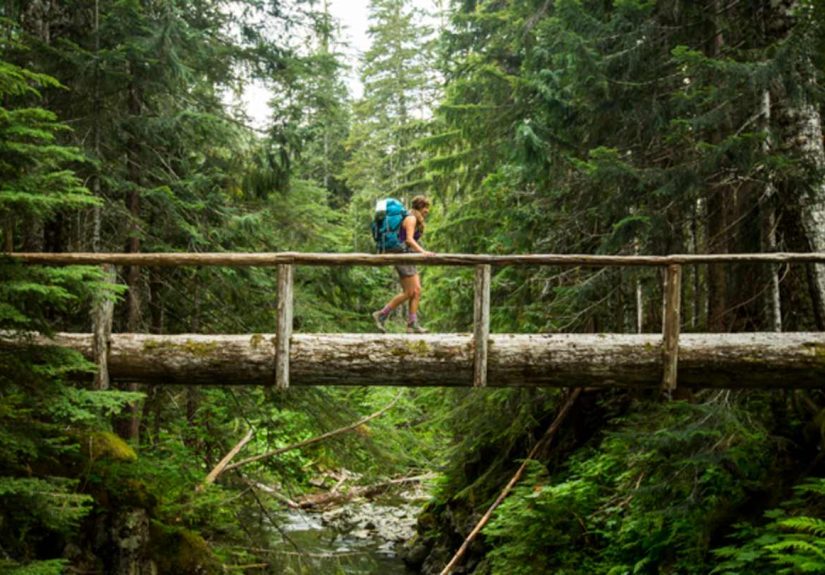
One classic PNW experience is hiking in a forest that looks like it’s been decorated by nature’s interior designer: moss draped over branches, ferns the size of small pets, and tree trunks that appear to be wearing fuzzy green sweaters. On a rainy day, the whole place smells intensely aliveearthy, cedar-like, and clean, as if the forest just finished a spa appointment. The constant moisture is the reason temperate rainforests here look so outrageously lush. It’s also why your camera lens may fog up exactly when you try to capture that perfect “Hall of Mosses” moment.
Driving across the region can feel like changing TV channels. On the west side of the Olympics or Cascades, you’ll see low clouds clinging to ridgelines, water beading on evergreens, and roadside streams doing their best impression of background music. Then you crest a pass or slip into a rain shadow, and suddenly the sky brightens, the air feels drier, and the landscape shifts toward golden grasses and open views. It’s the same day, the same general regionjust different sides of a mountain squeeze.
Another very PNW moment: the “sunbreak.” After hours of gray, a patch of blue opens up like the sky is apologizing. People immediately behave like photosynthesis is a competitive sport: jackets come off, coffee appears in outdoor seating, and someone inevitably says, “Wow, it’s nice out!” as if the weather personally did them a favor. (It did.)
The practical lessons show up quickly. You learn that “waterproof” and “water-resistant” are not synonymsone is confidence, the other is optimism. You learn that layers beat bulky coats because temperatures can be mild while everything else is damp. You learn to stash a spare pair of socks because wet feet can turn a great day into a tragic memoir. And you learn that rain isn’t just an inconvenience hereit’s part of the region’s identity, shaping forests, rivers, salmon runs, hydropower, and the quiet, cozy culture of bookstores, cafés, and the universal desire to own a jacket that can survive a surprise squall.
In the end, the rainy Pacific Northwest is less “constant misery” and more “moody atmosphere with excellent scenery.” The clouds are doing real physical workdelivering moisture, feeding ecosystems, and getting gently bullied by mountains. Once you know the mechanics, the rain stops feeling random and starts feeling like a story the landscape is tellingone drizzle at a time.
Conclusion
The Pacific Northwest’s rainy reputation is earned, but it isn’t mysterious. Put a moisture-rich ocean upwind, add prevailing westerlies and a winter storm parade, then build mountains close enough to the coast to force air upwardand you’ve engineered one of North America’s most iconic wet-weather regions. The same setup also creates dramatic rain shadows and sharp contrasts in local climate, which is why “rainy PNW” can mean lush rainforest in one town and surprisingly dry skies in another.
So the next time someone asks why the Pacific Northwest is so rainy, you can smile and say: “Because the Pacific delivers the moisture, the wind brings it in, and the mountains squeeze it out.” Then you can offer them a spare hooded jacketbecause you’re kind, and because you’ve learned.