Table of Contents >> Show >> Hide
Turning 60 doesn’t mean slowing down it just means your body wants you to be a little smarter about how you move.
Think of daily exercise less like “training for a marathon” and more like “keeping the machine well-oiled so it doesn’t squeak when you stand up.”
The right moves can help you stay independent, strong, and steady on your feet for years.
Health organizations in the U.S. consistently recommend that older adults aim for a mix of aerobic activity, strength work, balance training, and flexibility most days of the week.
You don’t need fancy equipment, a gym membership, or a 20-year-old’s knees to get those benefits a handful of simple, daily exercises can do a lot of the heavy lifting for you.
Why daily exercise after 60 matters so much
After 60, your body goes through natural changes: muscle mass slowly declines, balance becomes a bit trickier, and joints may feel more “opinionated” in the morning.
Regular movement helps counter all of that. It can:
- Keep your heart and lungs strong
- Maintain muscle and bone, which helps prevent frailty and fractures
- Improve balance and coordination, reducing fall risk
- Support brain health and memory
- Boost mood, energy, and sleep quality
U.S. guidelines suggest older adults aim for at least 150 minutes of moderate aerobic activity per week (like brisk walking),
plus activities to strengthen muscles and improve balance on at least two days a week. Daily “micro-workouts” are a smart way to get there without feeling overwhelmed.
The five exercises you should do every day
There are endless exercise options, but if you’re over 60 and want a short, effective routine, these five are a powerful combination.
They cover heart health, strength, balance, and flexibility the core pillars of healthy aging.
1. Daily brisk walk: Your all-purpose health booster
If exercise had a “multivitamin,” it would be walking. A daily walk helps your heart, circulation, lungs, joints, brain, and mood without needing any equipment beyond decent shoes.
What it does:
- Strengthens your heart and lowers the risk of heart disease and stroke
- Helps manage blood pressure, cholesterol, and blood sugar
- Supports a healthy weight and reduces belly fat
- Improves mood and reduces stress, anxiety, and feelings of loneliness
How to do it:
- Start with 5–10 minutes at a comfortable pace if you’re new to exercise.
- Gradually work up to 20–30 minutes most days.
- Aim for a pace where you can talk, but singing would be a bit much that’s a good “moderate intensity” rule of thumb.
Make it easier: Break it into shorter walks three 10-minute strolls through the day add up beautifully.
Make it more interesting: Walk with a friend, listen to music or a podcast, or explore new routes in your neighborhood.
2. Sit-to-stand from a chair: The “independence” exercise
Being able to stand up from a chair without using your hands is a surprisingly powerful predictor of independence.
The sit-to-stand is a simple move that strengthens your legs, hips, and core exactly what you need for getting out of chairs, cars, and off the toilet without help.
What it does:
- Builds strength in your thighs, glutes, and hips
- Improves your ability to get up and down safely in daily life
- Helps maintain bone density by loading your lower body
How to do it:
- Use a sturdy chair without wheels. Sit near the front edge, feet flat and hip-width apart.
- Cross your arms over your chest or place your hands lightly on your thighs.
- Lean your chest slightly forward and press through your heels to stand up.
- Slowly sit back down with control no “plopping” allowed.
Aim for 8–12 repetitions, once or twice a day. If it’s easy, try not using your hands at all. If it’s tough, use your hands on the chair or arms for light support.
3. Standing balance practice: Guarding against falls
One of the biggest threats to independence after 60 isn’t “getting older” it’s falls.
Balance exercises train your brain, inner ear, muscles, and joints to work together so you’re less likely to stumble, and more likely to catch yourself if you do.
Two simple balance drills you can do daily:
Option A: Heel-to-toe walk
- Stand tall near a counter or wall for support.
- Place one foot directly in front of the other so the heel of your front foot touches the toes of your back foot.
- Walk forward 10–20 steps like you’re on a tightrope.
Option B: Supported single-leg stand
- Stand behind a sturdy chair, holding the back for support.
- Lift one foot slightly off the floor, keeping your posture tall.
- Hold for 10–20 seconds, then switch legs.
Start with 1–2 minutes of balance practice daily, working up gradually. The key is to feel challenged but not scared always have something sturdy nearby to hold.
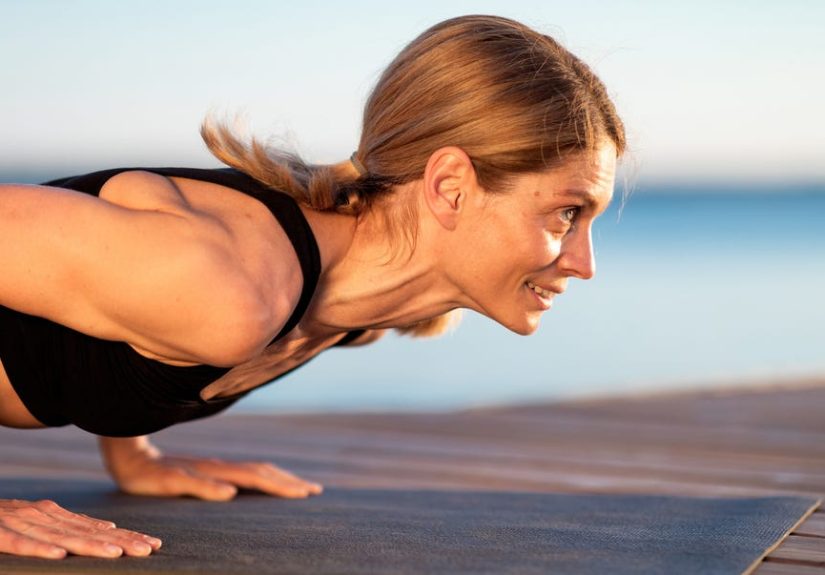
4. Wall push-ups: Easy upper body and core strength
Upper body strength matters more than we often think. You use it to push yourself up from bed, carry groceries, open doors, and steady yourself.
Wall push-ups are a joint-friendly way to build that strength without getting down on the floor.
What it does:
- Strengthens chest, shoulders, arms, and core
- Helps with daily pushing tasks and posture
- Can be adjusted easily to your current strength level
How to do it:
- Stand facing a wall, arms extended, hands at shoulder height and slightly wider than shoulder-width.
- Step back so your body is at a slight angle.
- Bend your elbows and lower your chest toward the wall, keeping your body in a straight line.
- Press back to the starting position.
Start with 8–10 repetitions. As you get stronger, step your feet farther away from the wall, or progress to doing push-ups on a countertop or sturdy table.
5. Gentle daily stretches: Stay flexible, move more freely
Flexibility doesn’t mean turning into a human pretzel. It means your joints move comfortably through the range you need for everyday life: reaching shelves, bending to tie your shoes, turning your head to check for traffic.
A simple daily stretch routine (5–10 minutes):
- Chest opener: Stand tall, gently clasp your hands behind your back (or hold a towel), and lift your chest to stretch the front of your shoulders.
- Calf stretch: Stand facing a wall, one leg behind the other, and press your back heel down to stretch your calf. Hold 15–30 seconds per side.
- Hamstring stretch: Sit on the edge of a chair, extend one leg forward with your heel on the floor, and gently lean forward until you feel a stretch along the back of your thigh.
- Neck and shoulder rolls: Slowly roll your shoulders and gently turn your head side to side to ease stiffness.
Move slowly and breathe. Stretching should never feel sharp or painful just mildly tight and gradually more comfortable.
Putting it together: A simple 20-minute daily routine
Here’s how you might combine these five exercises into a realistic, daily plan:
- 5–10 minutes: Brisk walk around your block, inside a mall, or even around your house.
- 3–5 minutes: Sit-to-stand from a chair (2 sets of 8–12 reps).
- 3–5 minutes: Balance practice (heel-to-toe walk and single-leg stands).
- 3–5 minutes: Wall push-ups (2 sets of 8–10 reps).
- 5–10 minutes: Gentle stretching routine.
You can do it all at once or sprinkle pieces throughout the day five minutes after breakfast, a walk after lunch, a few stretches before bed.
Consistency matters far more than perfection.
Safety tips before you start
- Check with your doctor if you have heart disease, uncontrolled blood pressure, severe arthritis, balance problems, or any new symptoms like chest pain or dizziness.
- Start slow, then build. If you’ve been mostly sedentary, begin with shorter sessions and fewer repetitions.
- Use support. There is absolutely no shame in using a chair, wall, or rail for balance.
- Listen to your body. Mild muscle fatigue is okay; sharp pain, chest pain, or severe shortness of breath is a red flag to stop and seek advice.
- Wear supportive shoes for walking and standing exercises to protect your feet and joints.
Real-world experiences: What these five exercises feel like in daily life
It’s one thing to read about exercises and another to live with them. Here’s what a daily routine like this can feel like over time, based on common experiences people share when they start moving more after 60.
In the first week or two, many people notice they’re a little more tired right after exercise and also oddly proud of themselves.
The walk that felt “too short to matter” on day one starts to feel like a small ritual: a chance to get fresh air, notice the neighbors’ gardens, or listen to a favorite audiobook.
Even five or ten minutes of walking can lift your mood and make the day feel more productive.
The sit-to-stand exercise can be humbling at first. Maybe you realize you’ve been using your hands to push off the armrests for years.
After a couple of weeks of practice, getting up from the couch or out of the car starts to feel smoother and more automatic.
Some people say they notice it most when they’re out at a restaurant or visiting family they stand up and think, “Oh, that was easier than usual.”
Balance practice often brings small but important “aha” moments. In the beginning, heel-to-toe walking near the kitchen counter might feel wobbly.
You may grab the counter more often than you’d like. But as days go by, you start needing that support less.
You notice you can step over a curb or a doorway threshold with more confidence, or turn quickly when someone calls your name without feeling like you might tip over.
Wall push-ups have their own quiet victory. At first, arms and shoulders might complain: “Excuse me, we did not sign up for this.”
But give it a little time and those same muscles begin to feel more dependable. Lifting a heavy grocery bag, pushing open a heavy door, or picking up a grandchild becomes less of a strain.
Some people even notice they sit up straighter and feel less hunched in the upper back.
The stretching routine tends to pay off when you’re not thinking about it at all. You might realize you can turn your head more easily to check over your shoulder while driving.
Bending to tie your shoes or pick something up from the floor feels less stiff. Mornings may still come with a little creakiness, but it fades faster once you move through your familiar stretches.
Perhaps the biggest shared experience is psychological: you start to feel more in control of your body instead of just “putting up with” aging.
Daily exercise becomes less about chasing a number on the scale or in your step count app and more about protecting the life you want: traveling, gardening, playing with grandkids, cooking, meeting friends, and doing it all without worrying as much about falling or fatiguing.
Not every day will feel amazing. There will be days when your joints are cranky, the weather is bad, or you’re simply not in the mood.
That’s normal. The goal isn’t perfection; it’s to keep showing up in small ways. Even if all you manage one day is a shorter walk and a few chair stands, that still counts.
Over months and years, those “small” efforts add up to something huge: strength, stability, and confidence that let you keep living life on your own terms.
Bottom line: Five small exercises, one big difference
Being over 60 doesn’t mean giving up activities you love it means making smart deposits into your “strength, heart, and balance” bank account every day.
A daily walk, sit-to-stands, a bit of balance work, wall push-ups, and gentle stretching might not look dramatic, but together they form a powerful daily routine.
Start where you are, use the support you need, and celebrate every bit of progress. Your future self the one still walking confidently, getting up from chairs easily, and saying “yes” to plans will be very glad you did.