Table of Contents >> Show >> Hide
- What is eczema on the hands and fingers?
- Symptoms of hand and finger eczema
- What causes eczema on hands and fingers?
- Types of hand eczema to know
- Who is most at risk?
- How doctors diagnose hand eczema
- Treatment for eczema on hands and fingers
- How to prevent flares
- When to see a doctor
- What living with hand and finger eczema actually feels like
- Conclusion
If your hands feel like they’ve been through a dramatic breakup with soap, winter air, and reality itself, hand eczema may be the reason. This common skin condition can show up on the palms, backs of the hands, knuckles, fingertips, and between the fingers. It can make everyday thingswashing dishes, typing, buttoning a shirt, even opening a bag of chipsfeel surprisingly rude.
Hand and finger eczema is more than ordinary dry skin. Yes, dryness is part of the party, but so are itching, redness, irritation, burning, blisters, peeling, and painful cracks. In some people, it flares for a few days and fades. In others, it hangs around like an uninvited houseguest who somehow knows where the snacks are. The good news is that it can be managed, especially when you understand what’s driving it.
What is eczema on the hands and fingers?
Eczema is a broad term for inflammatory skin conditions that weaken the skin barrier. When that happens, the skin loses moisture more easily and becomes more vulnerable to irritants, allergens, and infection. On the hands, eczema often shows up because the skin is constantly exposed to water, cleansers, friction, weather, and whatever mystery goo lives on doorknobs, steering wheels, and grocery carts.
Hand eczema is not contagious, and it is not a sign that someone is “unclean.” It is usually the result of a mix of genetics, skin barrier problems, immune system activity, and environmental triggers. In plain English: your skin is more reactive than average, and your hands are on the front lines.
Symptoms of hand and finger eczema
The symptoms can vary depending on the type of eczema and how irritated the skin has become, but a few signs are especially common.
Common symptoms
- Dry, rough, or chapped skin
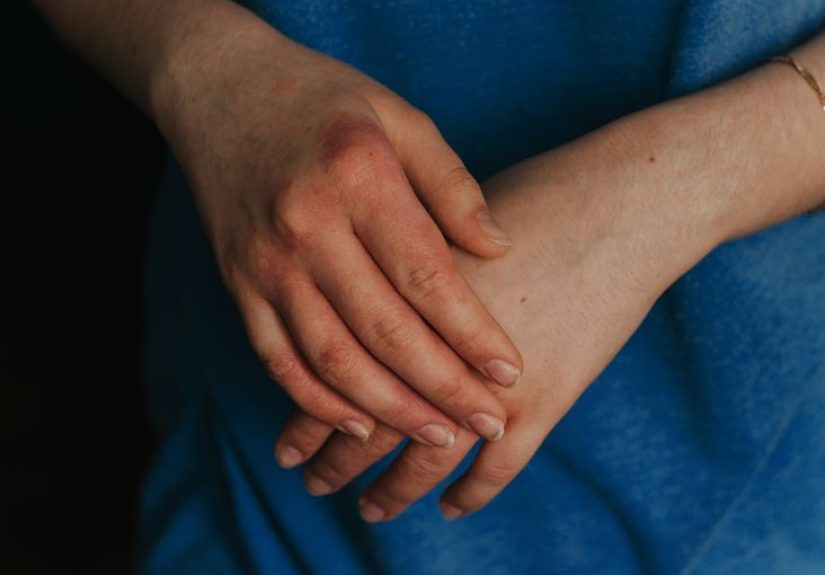
- Red, pink, brown, gray, or purple-looking irritated patches, depending on skin tone
- Itching that can range from annoying to please-send-help
- Burning, stinging, or tenderness
- Scaling, flaking, or peeling
- Thickened skin from repeated rubbing or scratching
- Deep, painful cracks, especially on fingertips and knuckles
- Bleeding, weeping, crusting, or pus if the skin becomes badly inflamed or infected
Symptoms that often affect fingers specifically
Finger eczema can be especially irritating because the skin there bends, stretches, and rubs against things all day long. Some people notice eczema around the nails, at the sides of the fingers, or in the web spaces between fingers. When the fingertips split, even simple tasks like texting, cooking, or using hand sanitizer can feel like a tiny betrayal.
What about little blisters?
If you get clusters of tiny, itchy blisters on the sides of your fingers, palms, or both, you may be dealing with dyshidrotic eczema. This type is famous for producing small fluid-filled blisters that can itch intensely, then dry out, peel, and crack. It is basically your skin’s way of saying, “I would like to overreact in miniature.”
What causes eczema on hands and fingers?
There is no single cause. Hand eczema usually develops because several things team up at once.
1. A weakened skin barrier
Your skin barrier is supposed to hold moisture in and keep irritants out. In people with eczema, that barrier is often less effective. Moisture escapes too easily, the skin dries out faster, and outside triggers can get in more easily. That makes the hands more likely to become inflamed, itchy, and cracked.
2. Genetics and immune system activity
Eczema often runs in families. People with a personal or family history of atopic dermatitis, asthma, seasonal allergies, or hay fever may be more likely to develop it. The immune system also plays a role by reacting too strongly to things that might barely bother someone else’s skin.
3. Irritants
This is a big one for hand eczema. Repeated contact with water, harsh soaps, detergents, disinfectants, shampoos, solvents, and cleaning products can wear down the skin barrier over time. Even water alone can be irritating when your hands are wet over and over again. That helps explain why frequent handwashing, while important, can also be rough on eczema-prone skin.
4. Allergens
Sometimes the problem is not just irritation but allergy. Allergic contact dermatitis can happen when the skin reacts to substances such as nickel, fragrances, preservatives, rubber, latex, hair dyes, or certain skincare ingredients. In those cases, your skin is not being dramatic for no reason; it is reacting to a trigger it has decided it absolutely hates.
5. Sweat, heat, cold, and stress
Weather extremes can make hand eczema worse. Dry winter air can leave the skin dehydrated and fragile, while heat and sweating may trigger itching and inflammation. Stress does not directly create eczema out of thin air, but it can absolutely make flares worse. Because apparently having itchy hands was not enough, the condition sometimes likes to collaborate with your nervous system too.
Types of hand eczema to know
Irritant contact dermatitis
This is one of the most common types of hand eczema. It happens when repeated exposure to irritating substances damages the skin. Think frequent handwashing, dish soap, cleaning chemicals, food prep, wet work, and sanitizer overload.
Allergic contact dermatitis
This develops when your immune system reacts to a specific allergen after contact. Common culprits include nickel, fragrance, rubber additives, preservatives, and some cosmetic or personal care products.
Atopic hand eczema
People who have atopic dermatitis elsewhere on the body, or who had it as children, have a higher risk of developing eczema on their hands. Their skin barrier tends to be more easily irritated from the start.
Dyshidrotic eczema
This type is known for tiny, itchy blisters on the fingers, palms, and sometimes feet. Triggers may include stress, metals such as nickel or cobalt, sweaty hands, humid weather, and sometimes allergic tendencies.
Who is most at risk?
Hand eczema can affect anyone, but it is especially common in people whose hands do a lot of “wet work” or chemical exposure. That includes healthcare workers, hair stylists, chefs, food handlers, cleaners, mechanics, construction workers, machinists, plumbers, and people who wear gloves for long periods at work.
In other words, if your job involves water, sanitizers, soap, cement, metals, gloves, hair dye, solvents, or cleaning products, your hands may be working overtime and protesting loudly.
How doctors diagnose hand eczema
Diagnosis usually starts with a medical history and a skin exam. A clinician will often ask when the rash started, where it appears, what makes it worse, what products you use, what kind of work you do, and whether you have allergies, asthma, or a history of eczema.
If the cause is not obvious, more testing may help. Patch testing can identify allergic triggers such as fragrance, rubber, or metals. A skin biopsy may be done if the diagnosis is unclear or if your clinician wants to rule out psoriasis, fungal infection, or another skin condition. Sometimes diagnosis takes a little detective work because hand eczema has a talent for looking like “just dry skin” until it very much does not.
Treatment for eczema on hands and fingers
There is no one-size-fits-all fix, but treatment usually works best when it combines trigger avoidance, skin barrier repair, and anti-inflammatory care.
Moisturize like it is your part-time job
One of the most important steps is frequent moisturizing. Thick creams and ointments usually work better than thin lotions, especially when the skin is cracked or irritated. Apply moisturizer after washing your hands, after bathing, and whenever your skin feels dry. Fragrance-free products are usually the safest choice.
Use gentle cleansing habits
Wash with lukewarm rather than hot water. Use a mild, fragrance-free cleanser or soap substitute when possible. Pat your hands dry instead of scrubbing them with a towel like you are trying to polish a car. Then moisturize right away to trap water in the skin.
Prescription treatments may help during flares
Doctors often prescribe topical corticosteroids to calm inflammation during flare-ups. Depending on the situation, nonsteroid anti-inflammatory creams or ointments may also be used. If hand eczema is severe, widespread, or stubborn, a dermatologist may consider phototherapy or other prescription treatments.
Protect your hands from triggers
If cleaning products, shampoos, solvents, or food prep irritate your hands, protective gloves may help. The key is matching the glove type to the trigger and avoiding materials you may be allergic to. For some people, long glove wear can also trap sweat and make things worse, so protection has to be practical, not punishing.
Watch for infection
Broken skin can invite bacteria, viruses, or fungi to move in unannounced. See a healthcare professional if the skin becomes increasingly painful, warm, swollen, crusted, or starts leaking yellow fluid, or if you develop fever. Infected eczema needs more than wishful thinking and moisturizer.
How to prevent flares
Prevention is rarely glamorous, but it is powerful. The most useful strategies are often the least flashy.
- Use fragrance-free moisturizers often
- Switch to mild cleansers and avoid harsh soaps
- Keep showers and handwashing lukewarm, not hot
- Identify patterns between flares and products, work tasks, or weather
- Avoid known irritants and allergens
- Manage stress as best you can
- Protect hands during cleaning, dishwashing, and chemical exposure
- Seek medical care early instead of waiting until your fingertips resemble desert pavement
When to see a doctor
Make an appointment if your rash is painful, keeps returning, interferes with sleep or work, spreads, shows signs of infection, or does not improve with gentle skin care and regular moisturizing. Hand eczema can seriously affect quality of life, and expert treatment can make a big difference.
A dermatologist or allergist may be especially helpful if you think your job, gloves, skincare products, or metals are involved. If patch testing reveals a hidden allergen, avoiding that one trigger can sometimes change the whole game.
What living with hand and finger eczema actually feels like
On paper, hand eczema sounds like a skin condition. In real life, it can feel like a full-time inconvenience with terrible timing. The experience is not just about itching. It is about how many tiny pieces of daily life depend on your hands feeling normal.
For many people, the first sign is deceptively boring: dry skin that will not behave. You moisturize. Then moisturize harder. Then buy the expensive cream with the reassuring label and the price tag that suggests it should also pay rent. But the skin still feels tight, rough, or itchy. Soon the knuckles redden, the fingertips split, and handwashing starts to sting. That is often the moment people realize this is not regular dryness anymore.
Then there is the practical side. You notice how often your hands meet water, soap, sanitizer, produce wash, shampoo, dish liquid, cleaning spray, paper towels, cold wind, and random cardboard boxes. Suddenly every normal task becomes a trigger audition. Cooking dinner means your skin meets tomatoes, onions, citrus, and detergent. Cleaning the bathroom feels less like productivity and more like a chemistry experiment your fingers did not consent to.
People with finger eczema often describe the cracks as the worst part. A small split near a fingertip can hurt more than it looks like it should. Typing, zipping a jacket, opening a soda can, or fastening jewelry can all become weirdly dramatic. Even applying hand cream can burn when the skin is raw. It is a condition with a talent for making everyday life feel personal.
The social part can be frustrating too. Hands are visible. You use them to shake hands, gesture, hold a coffee cup, sign receipts, and point at things in meetings like a competent adult. When eczema flares, some people feel embarrassed by redness, peeling, or blisters. Others worry that people will think the rash is contagious. It is not, but that does not stop the self-consciousness from showing up anyway.
There is also the itch-scratch loop, which deserves its bad reputation. The itching may be mild during the day, then louder at night when the world gets quiet. Scratching brings a few seconds of relief, followed by more irritation, more inflammation, and sometimes more cracking. It is an unhelpful cycle, but a very human one.
Work can make the experience even harder. A nurse may need to sanitize constantly. A hairstylist handles shampoo and dye. A chef washes hands, wears gloves, and cuts acidic foods. A cleaner uses detergents for hours. In those settings, hand eczema is not just uncomfortable; it can interfere with performance, concentration, and confidence.
Still, many people eventually learn their patterns. They notice which soap causes trouble, which season makes flares worse, and which moisturizer their skin actually likes. They get better at catching flares early instead of waiting until the skin is angry enough to file a formal complaint. That learning curve can be frustrating, but it often leads to much better control.
The biggest emotional shift is usually realizing that hand eczema is manageable even if it is stubborn. A smart routine, the right diagnosis, and timely treatment can turn the condition from a daily bully into something far more predictable. And when your hands stop itching, cracking, and arguing with hand soap, life feels wonderfully ordinary againwhich, in this case, is a pretty excellent outcome.
Conclusion
Eczema on the hands and fingers is common, uncomfortable, and sometimes surprisingly disruptive. It can cause dryness, itching, blisters, peeling, and painful cracks, and it often results from a mix of skin barrier weakness, genetics, irritants, allergens, and everyday exposure. The condition may look like plain dry skin at first, but it often needs more targeted care than a random bottle of lotion from the back of a cabinet.
The good news is that hand eczema can improve with the right approach. Identifying triggers, protecting the skin, moisturizing often, and using medical treatment when needed can make a major difference. If your hands keep flaring, cracking, or hurting, it is worth getting professional help. Your hands do a lot for you. They deserve better than being stuck in a nonstop argument with soap.