Table of Contents >> Show >> Hide
- Why Vera Wang’s Pool Photos Took Off So Fast
- Vera Wang Did Not Come Out of Nowhere
- The Real Secret Is Probably Less Magical Than the Comments Suggest
- What Healthy Aging Actually Looks Like
- Why the Internet Keeps Fixating on Women and Age
- What the Swimsuit Photos Really Represent
- Experiences That Make This Story Feel So Familiar
Editor’s note for accuracy: The headline reflects the viral 2024 moment that inspired this story. Vera Wang was 74 when the pool photos made headlines and is 76 as of 2026. The internet, however, has clearly not stopped talking about that now-famous summer post.
Some celebrities break the internet with a shocking confession. Some do it with a surprise divorce, a new haircut, or an unhinged kitchen tour that somehow involves twelve lemons and no visible refrigerator. Vera Wang, meanwhile, managed to light up the internet with a swimsuit, a swimming pool, and the kind of effortless glamour that makes the rest of us reconsider our choice to wear an old T-shirt to check the mail.
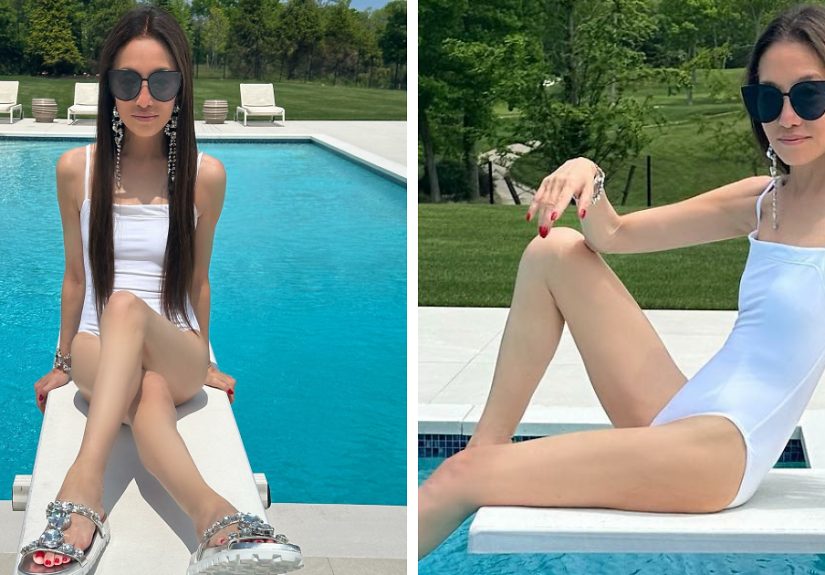
When Wang shared poolside photos of herself in a white one-piece swimsuit, oversized sunglasses, sparkling earrings, and silver sandals, the internet did what the internet does best: it gasped, typed in all caps, and declared that she was “aging backward.” The phrase spread because it captured a very modern form of celebrity fascination. People were not just reacting to a stylish photo. They were reacting to the fact that a woman in her mid-70s looked confident, composed, camera-ready, and entirely uninterested in asking permission.
That is what made the moment bigger than a swimsuit post. It became a conversation about beauty standards, age expectations, celebrity branding, fashion authority, and the deeply odd way social media treats women who dare to grow older while still looking fabulous. And because this is Vera Wang, the whole thing also came with immaculate styling, decades of brand power, and just enough mystery to keep everyone staring at the screen a little too long.
Why Vera Wang’s Pool Photos Took Off So Fast
The photos worked because they hit three internet pressure points at once: visual drama, age surprise, and celebrity credibility. Wang did not post a casual backyard snapshot with messy hair and a paper plate of watermelon. She posted a polished image that looked like fashion met summer fantasy. The white swimsuit felt sleek and bridal-adjacent, the accessories were unapologetically glamorous, and the pool setting gave the whole thing a classic luxury aura.
She even captioned the post with a playful nod to Slim Aarons, the photographer famous for capturing elegant, poolside leisure among the rich and stylish. That reference mattered. It signaled that Wang knew exactly what kind of image she was making. This was not an accidental “caught in the wild” celebrity moment. It was image-making, full stop.
Then came the age reaction. In 2024 headlines, Wang was widely described as 74, and that number seemed to scramble people’s brains. Online comments framed her appearance as impossible, unbelievable, or somehow in defiance of nature itself. But the wild reaction said less about Vera Wang than it did about the public. Many people still carry a stale, outdated idea of what women in their 70s are “supposed” to look like. Wang disrupted that script without saying a word.
She has addressed this kind of reaction before. Rather than acting shocked by her own reflection, Wang has suggested that the bigger issue is society’s narrow picture of aging. In other words, the real story may not be that Vera Wang looks amazing. It is that so many people still find it newsworthy when a woman over 70 looks amazing in public.
Vera Wang Did Not Come Out of Nowhere
Part of what makes Wang so compelling is that she has been building this public image for decades. Long before the swimsuit photos, she had already become one of the most recognizable names in American fashion. Born in New York City in 1949, Wang first trained seriously as a figure skater before eventually moving into fashion. She worked at Vogue at a remarkably young age, then went on to Ralph Lauren before launching her own bridal business in 1990.
That career path matters because her poolside post did not go viral just because she looked good in a swimsuit. It went viral because it came from Vera Wang. This is a woman whose name is almost synonymous with bridal fantasy, red-carpet polish, and high-glam femininity. She has dressed celebrities, shaped wedding culture, and spent years making aspirational beauty look almost architectural.
So when she appears by a pool in a white suit and dripping jewelry, the image lands with the force of brand recognition. It feels consistent with her aesthetic universe. She is not randomly dressing up. She is being Vera Wang with professional-grade commitment.
She Has Been Challenging Age Assumptions for Years
The swimsuit post was not even Wang’s first viral age-related moment. She previously drew major attention after sharing photos that showed off her toned midriff, sparking a similar wave of disbelief. Over time, those reactions have created a strange secondary identity for her online. She is not just a designer anymore. She is also, in the eyes of the internet, a recurring plot twist in the public’s assumptions about aging.
That double identity is fascinating. On one hand, it keeps her culturally relevant in a digital era that rewards visual surprise. On the other hand, it reduces a long and influential career to a single obsessive question: “How does she look like that?” It is flattering, sure, but it is also a little ridiculous. Vera Wang has spent decades building an empire, and the internet still acts like her biggest achievement is owning a swimsuit.
The Real Secret Is Probably Less Magical Than the Comments Suggest
The phrase “aging backward” is catchy, but it is also nonsense. No one is aging backward. Not Vera Wang. Not your Pilates instructor. Not the woman on social media who claims celery juice gave her the face of a teenager and the knees of a mountain goat. What people usually mean is that someone looks vibrant, stylish, healthy, or unusually youthful for their age.
In Wang’s case, several real-world factors likely shape that impression. First, she understands fashion and presentation better than almost anyone. Clothing lines, body language, posture, hair, accessories, and photo composition all influence how youthful or striking someone appears in a picture. Second, she has access to elite beauty, grooming, and styling resources. Third, genetics almost certainly play a role. Fourth, she has repeatedly pointed to staying busy and continuing to work as central parts of how she experiences life and aging.
That last point may be the most interesting. Wang has spoken about wanting to keep creating and “prodding on,” rather than mentally filing herself into some cultural box labeled done now. In a later interview, she even suggested that what people may read as confidence is really her being busy and working hard. That is a revealing distinction. Her public energy may come less from some mysterious anti-aging potion and more from momentum, purpose, and a very full calendar.
She has also been refreshingly un-monk-like about lifestyle myths. Wang has spoken candidly about exercise, self-care, and getting stronger, but she has also admitted to loving fast food and sweets. That honesty is part of her appeal. She does not present herself as a wellness robot programmed to sip green juice beside a Himalayan salt lamp. She comes across more like a real person with expensive sunglasses and better posture than the rest of us.
What Healthy Aging Actually Looks Like
One reason Wang’s photos fascinated people is that they fed the fantasy that aging well must come down to one hidden trick. But official guidance on healthy aging is much less dramatic and much more practical. It is also, frankly, less glamorous than a white swimsuit by a perfect pool.
For adults 65 and older, healthy aging guidance emphasizes regular movement, strength work, balance training, good sleep habits, and consistent self-care. That means physical activity each week, muscle-strengthening exercises, routines that support sleep quality, and daily habits that protect long-term health. Dermatology guidance also makes it clear that sun protection matters, especially if we are talking about the visible side of aging. Skin does, in fact, remember what you did every summer.
In plain English, aging well usually looks like the boring basics done consistently. It looks like moving your body, sleeping like it matters, protecting your skin, managing stress, keeping your brain busy, and staying connected to some sense of purpose. Glamour can be added later. Preferably with earrings large enough to have their own zip code.
Style Helps, But So Does Perspective
Another important piece of the Vera Wang effect is psychological. She dresses like someone who expects to be seen. That sounds simple, but it is not. Many women receive cultural pressure to become quieter, duller, and more apologetic with age. Wang has done the opposite. Her clothes still say look at me. Her hair still says yes, this takes effort. Her sunglasses say I know exactly what I am doing.
That kind of visual confidence changes how audiences interpret a person. We often confuse style authority with youth because both are associated with energy, relevance, and presence. When a woman in her 70s is sharply styled and visibly self-possessed, people sometimes describe her as looking younger when what they really mean is that she looks vivid.
That is a much smarter way to read the image. Vera Wang may not be “aging backward,” but she is aging visibly, stylishly, and on her own terms. That may be even more powerful.
Why the Internet Keeps Fixating on Women and Age
Celebrity culture has always been obsessed with age, but social media poured lighter fluid on the fire. A famous woman no longer just appears in a magazine spread once a month. She appears constantly, often through self-posted images that invite instant comparison, speculation, and commentary. Every photo becomes a referendum on whether she has “still got it,” whatever that means.
That dynamic can be deeply unfair. Men are often praised for looking distinguished, seasoned, or powerful as they get older. Women are more likely to be graded against an imagined version of eternal youth. If they look older, the internet can be cruel. If they look younger, the internet becomes suspicious. Either way, they are trapped in a game they did not design.
Wang’s poolside moment exposes that double bind beautifully. People praised her, yes, but many of those compliments were still rooted in disbelief that a woman her age could occupy that visual space. The praise sounded positive, yet it also revealed a low bar for what older women are expected to look like. That is the part worth noticing.
At the same time, Wang seems savvy enough to understand the game. She knows fashion is image, image is power, and power is partly about controlling the frame. If people are going to talk, she may as well give them something polished to talk about.
What the Swimsuit Photos Really Represent
At the surface level, the viral moment was about a pool, a white one-piece, and a comment section losing its collective mind. But on a deeper level, the post represented something more useful: a stylish public rejection of expiration-date thinking.
Vera Wang did not dress like someone retreating from visibility. She dressed like someone who still enjoys image, still enjoys fashion, still enjoys performance, and still enjoys a little sparkle for the sake of sparkle. That matters because aging in public should not require surrendering delight.
The smartest takeaway is not that everyone should chase youth. It is that people should stop acting like confidence, sensuality, glamour, and playfulness belong exclusively to the young. Wang’s photos made that point more effectively than any lecture could.
So no, Vera Wang is not literally aging backward. But she is doing something arguably better: aging forward without asking the culture to lower the lights, hide the sequins, or confiscate the swimsuit.
Experiences That Make This Story Feel So Familiar
Part of the reason this story traveled so fast is that it taps into experiences many women know by heart, even if they have never stood on a diving board in designer sandals. There is the experience of posting a photo and suddenly realizing that the image is no longer just about the outfit or the setting. It becomes about your face, your age, your body, your neck, your arms, your knees, your hands, and whatever else strangers decide to turn into a public committee meeting.
There is also the experience of getting older and noticing that people begin to narrate your appearance for you. If you look tired, they call it aging. If you look polished, they call it defiance. If you look natural, they ask whether you have “let yourself go.” If you look glamorous, they assume there must be a trick, a filter, a treatment, or a hidden medical laboratory under the house. Very few people simply say, “You look great,” and keep it moving.
That is why a moment like Vera Wang’s pool post lands emotionally. It feels like a tiny rebellion against all that nonsense. It suggests that getting older does not have to mean dressing more timidly, shrinking your public presence, or apologizing for enjoying beauty. For many women, especially those who have spent years being told to be sensible, invisible, or age-appropriate in the most boring possible way, that message can feel weirdly liberating.
There is another familiar experience here too: the gap between how a person feels and how the world expects them to look. Plenty of people in their 60s, 70s, and beyond do not feel “old” in the simplistic way pop culture imagines. They still want to travel, flirt, work, lift weights, wear dramatic sunglasses, learn new things, and be seen as fully alive. The body changes, yes, but the inner life does not suddenly turn into beige wallpaper.
That is one reason the phrase “aging backward” can feel both flattering and annoying. It sounds complimentary, but it also implies that looking energetic, attractive, or joyful is somehow incompatible with age. In real life, many people know that is nonsense. They know grandmothers who are sharper than startup founders, retired men who live at the gym, and women in their 70s who can outdress an entire wedding party before lunch.
And then there is the confidence piece. Real confidence in midlife and later life often looks different from youthful confidence. It is less about trying to win approval and more about not rearranging your whole existence to avoid criticism. You wear the swimsuit because it is hot outside. You post the picture because you like the picture. You buy the giant earrings because you enjoy a little drama. If people freak out in the comments, that is really their cardio.
In that sense, Vera Wang’s viral photos feel relatable even for people who do not have a fashion empire. The experience underneath the glamour is familiar: wanting to age with style instead of apology, wanting your image to belong to you, and wanting the freedom to be visible without turning your birthday into a debate topic. That may be the real reason the post resonated. Beneath the luxury and the sparkle, it carried a very human message: life is still happening, and you are still allowed to look fabulous while living it.