Table of Contents >> Show >> Hide
- Why Global Partnerships Are Now Part of the Technology Stack
- 1. International Space Station
- 2. James Webb Space Telescope
- 3. Gateway
- 4. Large Hadron Collider
- 5. ITER
- 6. Event Horizon Telescope
- 7. LIGO-Virgo-KAGRA
- 8. Human Genome Project
- 9. International HapMap Project
- 10. ALMA
- What These Projects Teach Us About the Future
- Experiences From the Real World of Global High-Tech Collaboration
- Conclusion
- SEO Tags
If you still picture innovation as one genius in a garage, this article may gently ruin that fantasy. Today’s boldest breakthroughs are less “lone inventor with a whiteboard” and more “planet-sized group project with better snacks and much higher stakes.” From moon stations and fusion reactors to black hole imaging and genome mapping, the most ambitious high-tech projects on Earth now depend on international collaboration, shared infrastructure, pooled funding, and an astonishing amount of trust.
That is the real story behind modern innovation. The world’s biggest scientific and engineering wins do not happen because one country, one lab, or one company simply decides to go full superhero. They happen because global partnerships combine expertise, hardware, software, talent, and political will in ways no single player could match alone. In other words, the future is collaborative, expensive, gloriously complicated, and absolutely worth it.
Why Global Partnerships Are Now Part of the Technology Stack
At the frontier of science and engineering, the problems are too large, the costs are too high, and the timelines are too long for most nations to go solo. A particle collider needs giant detectors, computing centers, and thousands of researchers. A space observatory may require one agency to manage the mission, another to supply instruments, another to provide launch support, and still others to run science operations. A genomics project needs massive data sharing, standardized methods, and access to diverse populations and researchers.
That is why global partnerships in technology are no longer a nice extra. They are the operating system. The projects below prove that international collaboration is not just good diplomacy; it is often the only practical way to build transformative technology.
1. International Space Station
The original orbiting group project
The International Space Station is still one of the clearest examples of a high-tech project made possible by global partnerships. Built and operated by the United States, Russia, Europe, Japan, and Canada, the ISS required different modules, launch systems, training centers, control rooms, and engineering teams to work together across borders and time zones. That is already hard enough on Earth, where at least the coffee machine is nearby. Doing it in orbit is another level.
The ISS matters because it turned multinational cooperation into working hardware. It became a platform for life sciences, materials research, robotics, and long-duration human spaceflight. No single nation could have replicated its mix of infrastructure, scientific capacity, and political durability at the same scale. The station is not just a lab in the sky; it is proof that technical interoperability can become diplomatic interoperability too.
2. James Webb Space Telescope
A cosmic masterpiece built by shared ambition
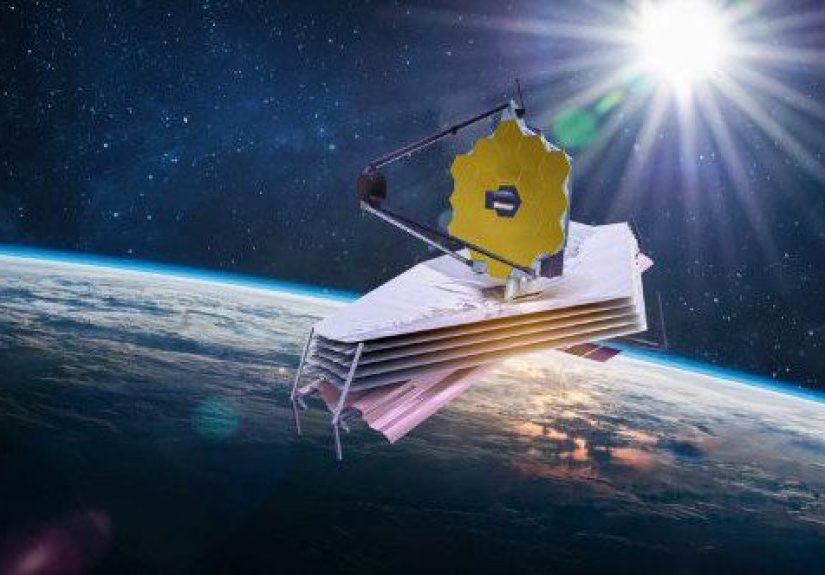
The James Webb Space Telescope is often described as the most powerful space science observatory ever built, and that level of capability did not come from one flag acting alone. Webb is an international collaboration led by NASA with major contributions from the European Space Agency and the Canadian Space Agency. That shared structure mattered because the mission needed specialized instruments, launch support, engineering coordination, and long-term scientific operations on a truly epic scale.
Webb’s success shows what happens when global innovation is tied to complementary strengths. NASA managed the overall mission, ESA contributed key hardware and launch services, and CSA supplied important instruments and guidance capabilities. The result is a telescope that can study early galaxies, exoplanet atmospheres, and the history of the universe with extraordinary sensitivity. Translation: when the world shares the bill and the brainpower, humanity gets better pictures of creation itself.
3. Gateway
The next international outpost is headed for lunar orbit
Gateway, the planned lunar space station tied to NASA’s Artemis architecture, is another example of how major space systems now depend on international design from day one. NASA is working with partners including CSA, ESA, JAXA, and MBRSC to build a station that will support science in lunar orbit and future missions deeper into space. Instead of one country trying to own every subsystem, Gateway is being assembled as a coalition by design.
That matters because deep-space exploration is too expensive and technically complex for a durable solo act. Robotics, habitation, life support, communications, power, logistics, and crew support all benefit when multiple partners contribute their strongest capabilities. Gateway is still a future-facing project, but it already reflects a clear lesson: if humanity wants a sustainable presence beyond low Earth orbit, international partnerships are not optional. They are the blueprint.
4. Large Hadron Collider
Because discovering fundamental physics is not a one-country hobby
The Large Hadron Collider at CERN is the world’s largest and most powerful particle accelerator, and it only works because huge international teams build, run, and interpret it together. The machine itself is a marvel of superconducting magnets, ultra-high vacuum systems, detectors, and data pipelines. But the hardware is only half the story. The LHC also depends on multinational experiment teams, cross-border funding, distributed computing, and coordinated analysis at a scale that would make ordinary project managers lie down in a dark room.
The collider’s best-known triumph, the Higgs boson discovery, was not just a scientific win. It was a triumph of international collaboration in science. U.S. researchers, European institutions, and scientists from around the world contributed to the experiments, software, detector systems, and computing infrastructure that made the result possible. The LHC proves that when the question is “What is the universe made of?” the answer tends to involve thousands of people and a lot of cables.
5. ITER
The fusion experiment that only works if everyone shows up
ITER is one of the boldest energy projects on the planet. Its goal is to demonstrate fusion at a scale meaningful for future power systems, and it is being built through a partnership that includes China, the European Union, India, Japan, Korea, Russia, and the United States. What makes ITER especially interesting is the structure of the partnership: members do not simply write checks. Much of the project is delivered through in-kind contributions, meaning entire components, systems, and buildings are produced by different partners and integrated into one giant machine.
That model is messy, difficult, and absolutely fascinating. It forces technical standards, supply chains, and engineering teams from multiple countries to align around a single goal. Fusion has always been a “maybe this changes everything” field. ITER turns that ambition into shared industrial reality. It is a reminder that future clean-energy breakthroughs may come not from competition alone, but from countries deciding the long game is worth building together.
6. Event Horizon Telescope
The black hole photo heard around the world
When the Event Horizon Telescope produced the first image of a black hole, the result felt almost magical. In truth, it was a triumph of synchronized global engineering. The EHT linked radio telescopes at different locations around the world to function like an Earth-sized virtual telescope. That took precise timing, advanced data processing, distributed observation campaigns, and teams spread across continents.
This is exactly why global partnerships matter. No single observatory, no matter how excellent, could achieve that kind of angular resolution alone. The EHT turned geographic distance into an engineering advantage. It transformed a worldwide network into one giant instrument and gave humanity a direct visual look at something that once lived mostly in equations and imagination. That is what international high-tech collaboration looks like at its best: audacious, technical, and just a little bit surreal.
7. LIGO-Virgo-KAGRA
Hearing the universe takes more than one detector
The LIGO-Virgo-KAGRA collaboration is a perfect example of why networked science beats isolated science. LIGO in the United States works with Virgo in Italy and KAGRA in Japan because gravitational-wave detection becomes stronger, more reliable, and more informative when multiple detectors operate together. Data from different sites help confirm that a signal is real, improve sensitivity, and sharpen the estimate of where in the sky an event occurred.
That cooperation is not a branding exercise. It is fundamental to the science. A single detector can see something weird. A global network can prove what it was. By pooling instruments, expertise, and analysis, the collaboration has advanced gravitational-wave astronomy into a mature global enterprise. It is also a useful metaphor for modern research: the deeper the mystery, the less useful it is to work alone.
8. Human Genome Project
The biological moonshot that rewired medicine
The Human Genome Project was a landmark international effort that generated the first sequence of the human genome and changed biology forever. Launched in 1990 and completed in 2003, it was not just a sequencing project. It was a data, computing, coordination, and standardization project on a massive scale. Researchers across countries worked toward a shared public resource that would accelerate everything from disease research to diagnostics and drug discovery.
Its success still echoes through modern medicine. Precision medicine, genomics-driven cancer care, and countless research tools all stand on foundations strengthened by the project. The Human Genome Project showed that international collaboration can create public scientific infrastructure with long-term value far beyond the original mission. It also proved that when scientists share data instead of hoarding it like dragons on a mountain of nucleotides, everyone wins.
9. International HapMap Project
The quieter collaboration that made genetic variation easier to study
The Human Genome Project mapped the broad terrain; the International HapMap Project helped researchers understand the common patterns of human genetic variation across populations. That may sound less flashy than “we mapped the genome,” but it was hugely important for medical genetics. The project brought together researchers from Japan, the United Kingdom, Canada, China, Nigeria, and the United States to create a public resource for studying how genetic differences relate to health, disease, and drug response.
In practical terms, HapMap helped make genome-wide association studies more efficient and more powerful. It also demonstrated something crucial about global partnerships in health technology: diversity of data and diversity of participants matter. If medical research is meant to help real humans, then the underlying science should not be built from a narrow slice of humanity. HapMap was a technical project, yes, but it also nudged genomics toward a broader, more global mindset.
10. ALMA
A giant telescope array built by a giant alliance
The Atacama Large Millimeter/submillimeter Array, better known as ALMA, is one of the world’s premier astronomical facilities and another child of international partnership. It is a collaboration involving Europe, the United States, Japan, additional regional partners, and Chile. That structure matters because ALMA is not just a telescope. It is a complicated observatory ecosystem involving antennas, receivers, data systems, operations centers, and long-term scientific support.
ALMA has helped scientists study star formation, planet formation, and the chemistry of the universe with extraordinary detail. It also demonstrates a recurring pattern in high-tech global projects: the best instruments are often born where geography, engineering, politics, and science all meet. Chile provides the extraordinary observing site. International partners provide the money, instrumentation, governance, and science community. Nobody gets the full result alone, but everyone gets something more valuable together.
What These Projects Teach Us About the Future
These ten examples span space exploration, fusion, particle physics, astronomy, and genomics, yet they share the same operating logic. First, the hardest technological challenges require pooled resources. Second, specialized capabilities are distributed around the world, so collaboration is often the fastest path to excellence. Third, shared infrastructure creates shared knowledge, which multiplies the value of each partner’s investment.
There is also a bigger lesson here. The future of innovation may belong less to isolated national champions and more to coalitions that can coordinate talent, standards, funding, and trust. That does not mean competition disappears. It means the most important breakthroughs increasingly happen inside systems that are globally networked. Modern science is not borderless, exactly, but it is deeply border-aware. The smartest projects learn how to turn that complexity into momentum.
Experiences From the Real World of Global High-Tech Collaboration
One of the most interesting things about these projects is that the technology is only half the story. The human experience inside a global partnership is often just as demanding as the engineering. Teams work across languages, time zones, institutional cultures, procurement systems, and political realities. A scientist in California may wake up to detector updates from Italy, a design change from Japan, and a scheduling note from Europe that somehow arrived while they were asleep and still expects an answer by lunch. It is thrilling, exhausting, and very modern.
There is also a special kind of humility built into these collaborations. On a project this large, almost nobody gets to see the whole machine at once. One team tunes instruments. Another handles software pipelines. Another manages cryogenics, robotics, or data archiving. People become experts in one crucial slice of a much larger system, and success depends on trusting other experts to do the same. That creates a workplace culture where communication is not a soft skill; it is infrastructure.
Participants in global science and engineering efforts often describe the same emotional rhythm. At first, the work feels impossibly complex. Meetings are full of acronyms, standards, dependencies, and decisions that seem to require three committees and a small miracle. Then, slowly, the project becomes legible. You learn who solves which problems. You see how a sensor in one country connects to a software team in another and a science result somewhere else. The giant machine starts to feel less like chaos and more like choreography.
There is also a powerful sense of perspective. Working on a project like Webb, ITER, ALMA, or the Human Genome Project can make everyday office drama look hilariously tiny. It is hard to stay worked up about a mildly passive-aggressive email when your actual job is helping image a black hole, detect ripples in spacetime, or build hardware for a fusion experiment meant to shape the energy future. Big science has a way of shrinking petty concerns.
At the same time, these partnerships are not magically smooth. They involve delays, cost pressure, technical disagreements, and the occasional bureaucratic obstacle course. But that is part of the experience too. Global collaboration teaches resilience. It teaches that progress is sometimes slower than anyone wants and still more meaningful than anyone expected. It teaches patience with process, respect for different working styles, and the value of shared standards.
Perhaps the most important experience is the feeling that the work belongs to more than one nation, more than one institution, and more than one generation. These projects are built to outlast headlines. They create tools, data, methods, and relationships that future researchers will inherit. That is why they matter. A global partnership is not just a way to finish a big project. It is a way to build a bigger future than any one player could manage alone.
Conclusion
The biggest truth behind these high-tech projects made possible by global partnerships is simple: the frontier has become too large for isolation. The next era of discovery will be built by networks, not silos. Whether the mission is understanding dark matter, decoding biology, building fusion systems, or establishing a foothold beyond Earth, global partnerships transform ambition into reality. And honestly, that may be the most advanced technology of all.