Table of Contents >> Show >> Hide
- 1) Win the stance and the first step (on-ball defense)
- 2) Close out with control (contest without flying by)
- 3) Play help-side defense and rotate like a teammate (not a tourist)
- 4) Communicate like you’re getting paid for it
- 5) Finish the possession: box out, rebound, and get back in transition
- Common defensive mistakes (and the quick fix)
- A simple 20-minute practice plan to sharpen all five skills
- Conclusion: defense is a skill, not a personality trait
- Experience: From Real Games That Changed How I Defend
Offense sells tickets. Defense wins games. And defense also wins pickup runs, earns you minutes with strict coaches, and makes the other team’s best scorer question their life choices (politely, of course).
Here’s the good news: you don’t need a 45-inch vertical to be a great defender. You need habits. The kind that show up every possessionstance, angles, closeouts, help, communication, and finishing the stop with a rebound.
Below are five practical, game-tested ways to play better defense in basketballplus drills and examples you can use today, whether you’re guarding a shifty point guard or your buddy who only shoots step-back threes and “never fouls.”
1) Win the stance and the first step (on-ball defense)
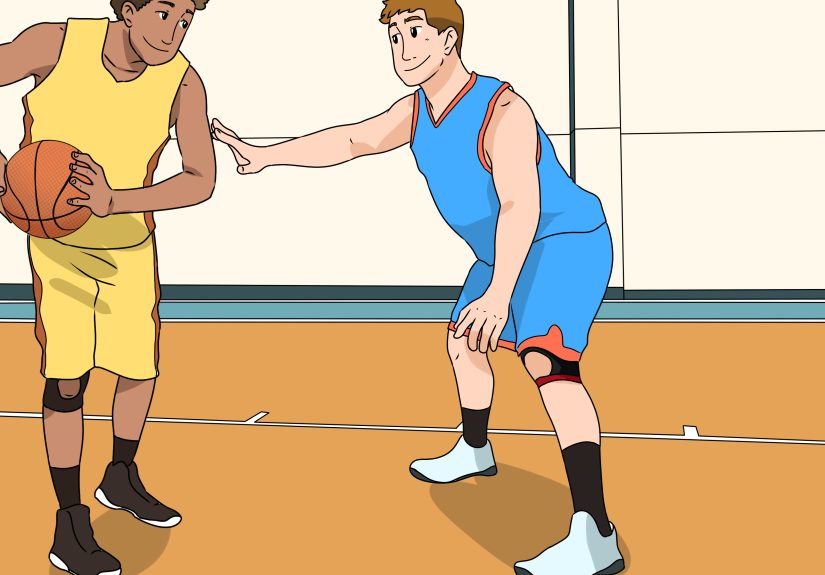
Great defense starts before the ball-handler even moves. Your stance is your “ready position.” If your stance is upright and stiff, you’re basically defending in flip-flops.
Build a stance that can actually move
- Feet about shoulder-width, one foot slightly ahead (think “track stance,” not “statue”).
- Hips back, knees bent, chest uplow enough to move, not so low you can’t breathe.
- Hands active: one hand pressures the ball, the other lives in passing lanes (without reaching).
- Eyes on the ball-handler’s hips/waist area to read direction changes more reliably than head fakes.
Guard with angles: influence the drive, don’t just chase it
“Stopping” someone doesn’t always mean stonewalling them in place. Often the goal is to send them where you want: toward the sideline/baseline, toward help, and away from the middle. Middle penetration collapses a defense fastbecause it turns one player’s problem into everyone’s problem.
Try this simple rule in most half-court situations: no straight-line drives to the middle. Shade the ball-handler slightly and angle your body so their easiest path is toward the boundary. The sideline and baseline are free defendersuse them.
Quick example: guarding a quick right-hander at the wing
If they love driving right, take a half-step to that side, keep your outside foot ready to slide, and show them the lane you want: down the sideline into help. If you get beat, you want them running into teammatesnot into the center of the paint where it’s layup city.
Mini drill: “zig-zag contain” for footwork and angles
Start at half court. One player dribbles in a zig-zag pattern toward the baseline. The defender slides to stay in front and guides the ball-handler toward the sideline (no reaching). Switch roles after each trip. Focus on short, quick slides and staying balanced.
2) Close out with control (contest without flying by)
Most open threes aren’t created by “bad luck.” They’re created by slow or sloppy closeouts. The trick is closing the distance fast and arriving under control so you don’t get blown byor launched into the third row on a shot fake.
The sprint–chop–hand up recipe
- Sprint hard out of help position to eat space quickly.
- Chop your steps (short, quick steps) as you arrive to slow down and stay balanced.
- High hand to contest the shot; low hand ready to react to the drive.
- Stay down on fakesmake them prove it with a tough shot over a hand.
Closeouts should change based on the player
A smart defender doesn’t guard every shooter the same. Against a knockdown shooter, you close out tighter and prioritize taking away the catch-and-shoot. Against a reluctant shooter who wants to drive, you can close out with more cushion, break down earlier, and be ready to slide. That’s not “being soft”that’s scouting.
Quick example: corner closeout (the scary one)
Corner closeouts are tough because you have less room to recover. Sprint, then break down early enough that you can take away the immediate shot while still cutting off the baseline. Your goal: no layup, no easy three. Make them dribble into a crowded mid-range, where efficiency usually drops.
Mini drill: closeout + box out (finish the stop)
Start in help position. Coach/partner passes to a shooter. Defender closes out under control, contests the shot, then immediately turns to locate and box out. This builds the habit that a closeout isn’t “done” until the possession is actually over.
3) Play help-side defense and rotate like a teammate (not a tourist)
On-ball defense mattersbut most breakdowns happen because of what’s happening off the ball: late help, missed rotations, and defenders watching the ball like it’s a movie.
Use “ball–you–man” vision
You want to see the ball and your assignment at the same time. That usually means a stance angled slightly toward the ball, not standing behind your man. If you can’t see both, you’ll be late on cuts, late on help, and late on recoverywhich is a hat trick nobody wants.
Help early, recover hard
Help defense is a timing sport. Arrive early enough to stop the drive, then recover with urgency to take away the next pass. Good teams punish slow recoveries with kick-out threes. Great teams punish slow recoveries with a smile and a high-five (which somehow makes it worse).
Learn the “X-out” rotation for kick-outs
When the ball gets driven and kicked to the perimeter, defenses often have to “X-out”: two defenders cross responsibilities to cover two shooters. The key is communication and decisive movementhesitation creates wide-open looks.
Mini drill: the shell drill (the ultimate team-defense teacher)
Put 4 offensive players around the perimeter, 4 defenders matched up. The offense passes and cuts lightly while defenders move on the string: on-ball pressure, denial one pass away, and help positioning weak side. Build in rotations on drives and closeouts on kick-outs. If you want team defense to improve, this drill is a staple for a reason.
4) Communicate like you’re getting paid for it
Defense is five people solving the same problem at the same time. Silence is basically five separate people doing five separate things. That’s not a defense. That’s a group project where nobody opened the document.
Three calls that clean up a lot of mess
- “Ball!” on-ball defender announces they’re engaged and applying pressure.
- “Help!” off-ball defenders signal support and positioning.
- “Shot!” triggers box-outs and rebounding responsibilities immediately.
Add these when the game speeds up
- “Screen left/right!” early warning on ball screens and off-ball screens.
- “Switch!” or “Stay!” prevents two defenders from guarding the same player while someone pops open.
- “Cutter!” helps teammates see backdoor threats before it’s too late.
Quick example: defending a pick-and-roll without confusion
If a ball screen is coming, the defender guarding the screener can call it early (“Screen right!”). The on-ball defender responds with the coverage (“I’m going over!” or “Switch!”). The rest of the defense talks behind the play, especially if the roller is heading to the paint. You don’t need fancy wordsjust clear ones, early.
Bonus tip: communication isn’t just volume. It’s timing and clarity. “AYYY!” is emotional support. “SCREEN LEFT!” is a defensive superpower.
5) Finish the possession: box out, rebound, and get back in transition
The best defense in the world doesn’t matter if you allow an offensive rebound. Giving up a second shot is like doing all the dishes and then immediately eating spaghetti directly over the sink. You’re back where you started.
A simple box-out checklist
- Call “Shot!” the moment it leaves the hand.
- Find your matchup (locate first, then pursue the ball).
- Make contact with your bodylow, strong base; don’t extend arms and shove.
- Seal and pursue the rebound with two hands and chin it like it owes you money.
Transition defense is part of defense (surprise!)
A lot of points are scored before the defense is set. Your priorities after a shot or turnover: stop the ball, protect the paint, and match up. Even if you don’t get a steal, getting back early forces the offense into half-court decisionswhere your team defense can actually work.
Mini drill: 3-second box-out holds
Practice holding a box out for a full three seconds before going to get the ball. It builds the habit of not “peeking” at the rebound and losing contact. The rebound doesn’t count if you don’t finish the job.
Common defensive mistakes (and the quick fix)
- Reaching and fouling → Move your feet first; keep hands active but disciplined.
- Standing tall after one slide → Reset your stance every time you change direction.
- Late closeouts → Start from proper help position so the closeout is shorter.
- Ball-watching → See ball and man; point if it helps you stay aware.
- Not finishing with a rebound → “Shot!” should trigger contact and a box out automatically.
A simple 20-minute practice plan to sharpen all five skills
- 4 minutes: stance + slide fundamentals (short bursts, perfect form)
- 4 minutes: zig-zag contain (focus on angles and no middle)
- 4 minutes: closeout technique (sprint–chop–contest; rotate lines fast)
- 6 minutes: shell drill (add drive-and-kick rotations on coach’s call)
- 2 minutes: box-out war (quick competitive repsno rebounds, no mercy)
Conclusion: defense is a skill, not a personality trait
Some players are “born scorers.” Nobody is born knowing how to close out under control, rotate on time, and box out without getting moved. That’s trained. Pick one of the five ways above and focus on it for a week. Then stack habits.
When your stance is solid, your closeouts are sharp, your help is early, your talk is constant, and you finish possessions with rebounds, you’ll notice something magical: the game feels slowerespecially for the other team.
Experience: From Real Games That Changed How I Defend
The first time I tried to “play defense” in a competitive run, I thought defense meant two things: (1) crouch low and (2) slap at the ball like it personally insulted me. I got two quick fouls, one ankle-breaking hesitation move, and a polite suggestion from a teammate to “maybe guard with your feet.” That day was the beginning of my favorite defensive lesson: effort is required, but technique is what makes effort matter.
One of the biggest changes came when I stopped treating defense like a mirror (copy every move) and started treating it like a steering wheel (guide the driver). In pickup games, you rarely have perfectly organized help defenseso forcing the ball-handler toward the sideline or baseline became my best friend. I noticed that when I shaded properly, even fast players started taking wider drives. Wider drives take longer. Longer drives give help a chance to arrive. That’s when “no middle” stopped being a coach slogan and started being a practical survival strategy.
Closeouts were the next wake-up call. I used to sprint at shooters and jump at every pump fake because I wanted the highlight contest. What I got instead was a steady diet of blow-bys and “and-1” opportunities. The moment I practiced sprint–chop–hand upand stayed on the flooreverything changed. Shooters still got shots, but they were rushed. Drivers still drove, but now I was balanced enough to slide. The funny part is that I looked less dramatic, but I was actually defending better. Defense is humbling like that.
The most underrated experience-based lesson was communication. In a loud gym, it feels awkward to talkuntil you play with a group that talks constantly. The difference is immediate. A simple “Screen left!” saved me from getting clipped on picks. Yelling “Shot!” turned random rebounding into actual box-outs. Even calling “Help!” changed my teammates’ body language; they moved earlier because they knew support was there. Once I felt what a connected defense looked like, quiet defense started to feel like playing with a blindfold.
And finally: rebounding. I used to assume rebounds were for tall people and chaos enthusiasts. Then I watched a smaller teammate end possessions just by finding someone and making contact every time. It wasn’t fancyjust consistent. When I copied that habit, our stops finally became real stops. Nothing is more frustrating than guarding well for 20 seconds and giving up an offensive rebound. When you box out with purpose, defense becomes simpler: you get the ball back, you run, you score, and suddenly everybody loves defense (or at least pretends to).
If I could sum up all those runs, practices, and painful learning moments in one line, it’s this: defense is a set of repeatable decisions. Make the right decisions often enoughstance, angle, closeout, help, talk, box outand you don’t just “play defense.” You control the game.