Table of Contents >> Show >> Hide
- What Is Acupuncture, Really?
- How Acupuncture May Help Headaches and Migraines
- What the Research Says About Acupuncture for Headaches and Migraine
- What a Typical Acupuncture Session for Headaches Looks Like
- How Many Sessions Do You Need?
- Is Acupuncture Safe for Headaches and Migraine?
- Who Might Benefit Most From Acupuncture?
- Combining Acupuncture With Your Overall Migraine Plan
- Experiences With Acupuncture for Headaches and Migraine
If you’ve ever pressed your fingers into your temples and thought,
“There has GOT to be a better way,” you’re not alone. Headaches and migraines
are among the most common reasons people miss work, cancel plans, and
search the internet at 2 a.m. for “how to make my brain stop throbbing.”
One solution more and more people are exploring: acupuncture for headaches and migraine.
Once dismissed as “just needles and vibes,” acupuncture is increasingly being
studied in modern medicine for its role in pain management, including
tension-type headaches and migraine attacks. While it’s not a magic cure,
research suggests it can reduce headache frequency and intensity for many people,
especially when it’s part of a broader treatment plan.
In this guide, we’ll break down how acupuncture works, what the science says,
who it may help most, what a typical session looks like, and what real-world
experiences feel likeminus the mystical fog and plus a dose of clear,
evidence-based explanation.
What Is Acupuncture, Really?
Acupuncture is a key component of traditional Chinese medicine (TCM).
It involves inserting very thin, solid needles into specific points on
the body (called acupoints) to influence how your body functions.
These needles are hair-thin, sterile, and typically left in place for
15–30 minutes while you lie there pretending you’re not checking your
phone in your head.
In TCM, acupuncture is said to balance the flow of qi (pronounced “chee”),
often translated as “vital energy,” which flows along pathways called meridians.
When the flow is blocked or unbalanced, symptoms like pain, fatigue, or
headaches can appear. Acupuncture is intended to restore that balance.
In Western medicine terms, acupuncture is often described more in
neurophysiologic language:
- Stimulating nerves in the skin and muscles
- Triggering the release of natural pain-relieving chemicals (like endorphins)
- Influencing blood flow
- Modulating how the brain and spinal cord process pain signals
That’s the short version: acupuncture taps into the body’s own pain-control
systems and adjusts how your nervous system responds to pain.
How Acupuncture May Help Headaches and Migraines
The Traditional View: Moving Stuck Energy
In TCM theory, headaches and migraines are often seen as a result of
energy not flowing smoothly, sometimes linked to liver “wind,”
“dampness,” or “heat” rising to the head. (Yes, it sounds poetic;
no, you don’t have to understand it perfectly for acupuncture to work.)
Practitioners evaluate your pattern by asking detailed questions about
your sleep, stress, digestion, menstrual cycle (if relevant), and the
exact quality of your pain. A sharp, stabbing headache in one eye might
be treated differently than a dull, band-like tension around your head.
Based on this pattern, they select specific points to “disperse” or
“tonify” energy, with the goal of calming the system and preventing
future attacks.
The Modern View: Calming the Pain Pathways
From a scientific perspective, several mechanisms have been proposed for
how acupuncture helps headaches and migraine:
-
Neurotransmitter regulation: Acupuncture appears to influence
levels of pain-related chemicals such as endorphins, serotonin, and
other neuromodulators. These substances can change how you perceive pain
and how sensitive your nervous system is to triggers. -
Anti-inflammatory effects: Migraine and some headache disorders
involve inflammation around blood vessels and nerves in the brain.
Acupuncture may dial down inflammatory signaling, especially in pain-processing regions. -
Modulation of brain activity: Brain imaging studies have shown
that acupuncture can alter activity in areas involved in pain perception,
emotional regulation, and attention. In other words, it can “turn down
the volume” on pain circuits and sometimes the anxiety that comes with them. -
Impact on muscle tension and blood flow: By influencing
muscles and local circulation, acupuncture may ease tight neck and scalp muscles
that contribute to tension-type headaches and may stabilize vascular changes
involved in migraines.
So while acupuncture grew out of a very different medical framework,
modern research is gradually mapping those ideas onto neural circuits,
biochemistry, and brain networks.
What the Research Says About Acupuncture for Headaches and Migraine
Let’s get to the part your inner skeptic has been waiting for: does
acupuncture actually help, or is it just a very elaborate placebo with
fancy needles?
Tension-Type Headaches
Tension-type headaches are the “classic” stress headaches: dull,
band-like pressure around the head, often with tight neck and shoulder
muscles. Systematic reviews and large analyses of randomized trials
suggest that acupuncture can:
- Reduce the number of headache days per month
- Lower headache intensity
- Improve quality of life for people with frequent or chronic tension-type headaches
In several trials, people who received “real” acupuncture did better than
those receiving sham (placebo-style) acupuncture and sometimes better
than usual care alone. The benefits aren’t instant miracles, but they’re
clinically meaningful for many patients.
Migraine Prevention
Migraine is more than a bad headacheit’s a neurological disorder involving
brain hyper-excitability, sensitivity to light and sound, nausea, and
often a need to hide in a dark, quiet cave (also known as your bedroom).
Research suggests that acupuncture can play a role in migraine prevention:
-
Randomized controlled trials comparing acupuncture with sham acupuncture
or standard medication often find fewer migraine days and reduced
intensity in the acupuncture groups. -
Some studies show that the benefits can last for months after a course
of treatment, especially when people complete a full series of sessions. -
In some comparisons, acupuncture has performed similarly to preventive
medications, but with fewer side effects.
It’s important to be honest: not every study is positive. Results
vary, and the quality of acupuncture research is not always perfect.
But overall, major evidence reviews and headache organizations generally
consider acupuncture a reasonable option for migraine prevention,
especially for people who cannot tolerate or do not respond well to
medications.
Placebo or Real Effect?
Acupuncture has a strong “context effect”the calm environment, the time
spent with a caring practitioner, and the expectation that you’ll feel
better. All of that matters. But even when those factors are controlled
for (for example, comparing real acupuncture to sham needling), many
studies still show additional benefit from proper needling techniques.
The most realistic takeaway: acupuncture’s effects are a combination of
specific biological mechanisms and powerful nonspecific factors like
relaxation, attention, and expectation. That doesn’t make it “fake”
it makes it human.
What a Typical Acupuncture Session for Headaches Looks Like
If the word “needles” makes you picture giant syringes, take a deep breath.
Acupuncture needles are extremely thinoften compared to a strand of hair.
Your First Visit
On your first visit, expect a longer appointment. Your acupuncturist will:
- Review your medical history and headache or migraine patterns
- Ask about your sleep, stress levels, digestion, and overall energy
- Possibly examine your tongue and pulse (a TCM diagnostic method)
Based on this, they’ll design a treatment plan: which points to use,
how often to treat you, and how many sessions to start with.
During the Treatment
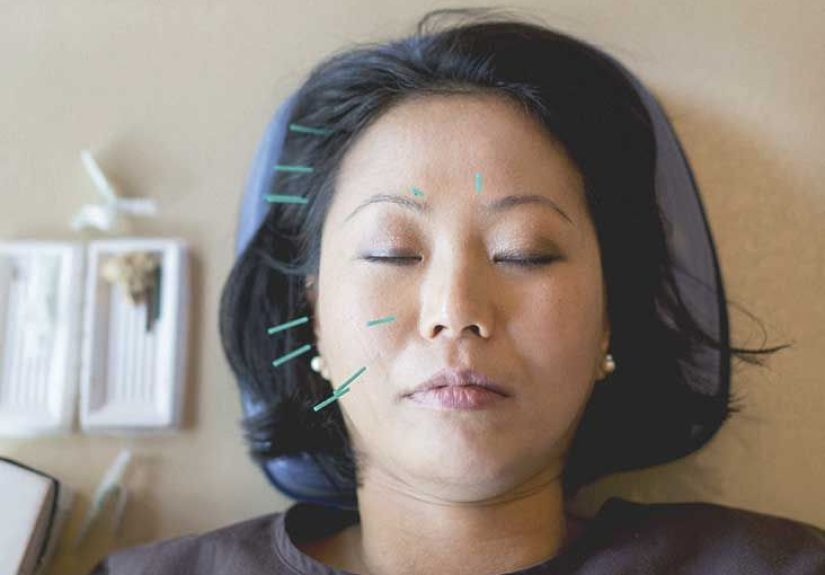
You’ll usually lie on a treatment table in a quiet room. The practitioner
swabs selected sites with alcohol and gently inserts needles into specific
pointscommonly on the head, hands, feet, and sometimes legs or torso.
Sensations can include:
- A quick pinch or sting as the needle goes in
- A dull ache, heaviness, tingling, or warmth once the needle is placed
- Occasional feeling of “spreading” sensation along a limb or pathway
Most people settle into a state between “deeply relaxed” and “mildly
surprised that this is actually kind of nice.” Some even fall asleep.
After 15–30 minutes, the needles are removed, and you’re free to go
(slowlyno need to sprint back to your email immediately).
How Many Sessions Do You Need?
Acupuncture is usually done as a series, not a one-off rescue:
- Many practitioners recommend 1–2 sessions per week at first.
- A typical trial might be 6–12 sessions, then reassessment.
- Some people transition to maintenance visits (e.g., monthly) if they respond well.
You might feel a little better after the first session, or it might take
several visits before you notice a consistent drop in headache frequency.
Think of it as training your nervous system, not flipping a switch.
Is Acupuncture Safe for Headaches and Migraine?
When performed by a licensed, properly trained practitioner using sterile,
single-use needles, acupuncture is generally considered safe for most adults.
Common, mild side effects can include:
- Temporary soreness or ache at needle sites
- Small bruises
- Mild fatigue or “floating” feeling after treatment
More serious complicationslike infections, punctured organs, or nerve
injuryare extremely rare and typically linked to untrained providers
or poor technique. That’s why choosing a qualified acupuncturist matters.
You should talk with your healthcare provider before starting acupuncture if:
- You’re pregnant
- You take blood thinners or have a bleeding disorder
- You have a serious medical condition or implanted device
And very important: acupuncture is not a replacement for emergency care.
If you have a sudden, severe headache unlike anything you’ve had before,
with symptoms like confusion, weakness, slurred speech, or vision loss,
seek urgent medical attention. Call your provider or emergency services
do not book a same-day acupuncture session and hope for the best.
Who Might Benefit Most From Acupuncture?
While individual responses vary, acupuncture may be especially worth
considering if you:
- Have frequent tension-type headaches or chronic migraine
- Don’t tolerate preventive medications well due to side effects
- Prefer a more integrative or holistic approach to pain management
- Already use relaxation, exercise, or lifestyle strategies and want another non-drug tool
For some people, acupuncture is the “missing piece” that helps them move
from constant flare-ups to “manageable with the occasional bad week.”
For others, it’s a mild helper rather than a game-changer. The only way
to know where you fall is usually to try a proper series under professional
guidance.
Combining Acupuncture With Your Overall Migraine Plan
The best results usually come when acupuncture is part of a broader,
personalized headache plan. That might include:
-
Medication: Acute treatments (like triptans or gepants)
for attacks, and preventive medications if recommended by your neurologist. -
Lifestyle strategies: Consistent sleep, regular meals,
hydration, exercise, and stress management. -
Trigger awareness: Identifying your personal triggers
(like certain foods, hormonal changes, bright lights, or lack of sleep)
and working to minimize them without obsessing over every possible cause. -
Other therapies: Cognitive behavioral therapy (CBT),
biofeedback, physical therapy, or relaxation training.
Acupuncture fits in as a non-drug tool that may help reduce overall
sensitivity and frequency, making everything else you’re doing work a bit
better. Think of it as upgrading your brain’s “pain filter,” not erasing
the problem with a single needle.
Experiences With Acupuncture for Headaches and Migraine
Beyond statistics and brain scans, what does acupuncture actually feel like
for real people living with chronic headaches and migraine?
Many patients describe a familiar journey: years of trying medications,
supplements, diet changes, and every “miracle hack” on the internet before
finally walking into an acupuncture clinic. Often they arrive skeptical:
“If my neurologist, two MRIs, and four different pills haven’t fixed this,
how is lying on a table with needles going to help?”
The first surprise is usually the sensory experience. After a short series
of gentle taps and placements, the sharp, expected “shot” feeling rarely
appears. Instead, there’s a warm, heavy sensation where the needles sit,
and a growing sense of groundedness. Some people feel their shoulders
drop for the first time all week. Others notice the familiar band of
tension around their head begin to softeneven if the headache doesn’t
vanish completely.
Over several sessions, patterns often emerge. One person with long-standing
tension headaches might notice that their daily afternoon ache shrinks
from a 7 out of 10 to a 3 or 4. They still feel stress, still have busy
days, but the pain is less commanding. Instead of reaching for pain
relievers every day, they may only need them a few times a week. Another
person with migraine might notice that attacks don’t disappear, but they
come less often, respond quicker to medication, or feel less devastating
afterward.
A subtle but important theme in many stories is a shift from feeling
helpless to feeling engaged. Acupuncture sessions create a built-in
pausea scheduled moment each week where the only job is to lie still and
let the nervous system unwind. Over time, people often become more aware of
early warning signs: a certain neck stiffness, a flicker of sensitivity to
light, a familiar irritability. That awareness can make it easier to act
early, rather than waiting until the pain is overwhelming.
Of course, not every experience is glowing. Some people try 6–8 sessions
and notice very little change. Others feel great on the treatment table
but find that the relief doesn’t last long between visits. For these
patients, acupuncture might still offer valueas a stress-management tool
or a supportive practicebut it may not justify long-term, frequent
appointments. That’s part of the reality: like many migraine treatments,
acupuncture helps a meaningful subset of people, but not everyone.
Still, for many, the benefits are strong enough to become part of their
long-term routine. They may schedule a session before known trigger
periodslike seasonal transitions, high-stress deadlines, or hormonal
shiftsor keep monthly “tune-ups” on the calendar. The goal is not to
become someone who never has a headache again (though that would be nice),
but someone whose life is no longer ruled by pain.
If you’re curious, the most practical approach is usually this: talk with
your healthcare provider to make sure acupuncture is appropriate for you,
then commit to a short trial with a qualified acupuncturistoften
around 6–10 sessions. Track your headaches in a diary before and during
treatment. If you see clear improvements in frequency, intensity, or
how you bounce back after attacks, you’ll have your answer. If not, you
can file acupuncture under “good to know, not my main solution” and move
on with more information about how your body responds.
Either way, you’re not stuck. Headache and migraine care are increasingly
multidimensional, and acupuncture is one more evidence-informed tool you
can explore on the path to fewer bad days and more time living your life
instead of negotiating with your head.