Table of Contents >> Show >> Hide
- What Actually Happened Between Ariana Grande and Jonathan Bailey?
- Why the Internet Turned a Friendly Moment Into a Frenzy
- The Wicked Effect: Why This Cast Was Always Going to Be Overanalyzed
- Jonathan Bailey, Ariana Grande, and the Power of Visible Chemistry
- Did the “Intimate” Label Fit? Not Really.
- Why This Moment Worked as Pop Culture Fuel
- Experiences Around the Frenzy: How Fans, Casual Viewers, and the Internet All Saw a Different Story
- Conclusion
It does not take much to launch the internet into full detective mode anymore. A glance becomes a theory. A hug becomes a think piece. Two celebrities laugh in the same zip code, and suddenly half the timeline is convinced it has uncovered a secret plot twist. That is more or less what happened when Ariana Grande and Jonathan Bailey shared a cozy, playful moment while promoting Wicked: For Good. What should have been filed under “co-stars being charming while making pizza” somehow became a full-on fan frenzy.
The moment in question felt small, warm, and blink-and-you’ll-miss-it casual. But because this is Ariana Grande, because this is Jonathan Bailey, and because Wicked turned its cast into a round-the-clock content machine for entertainment media and fan communities, the clip landed like a glitter bomb on social media. Suddenly, everyone had an opinion. Some viewers called the interaction adorable. Others called it flirty. A few tried to turn it into a scandal, because the internet has never met a harmless celebrity moment it could not over-season.
Still, the reason this story took off is more interesting than the story itself. The viral response says less about what Grande and Bailey actually did and more about modern fandom, celebrity chemistry, and the way audiences now consume entertainment with one eye on the performance and the other on body language. In other words, this was not just a celebrity interaction. It was a case study in how pop culture works in 2026, with extra pizza flour and a side of overreaction.
What Actually Happened Between Ariana Grande and Jonathan Bailey?
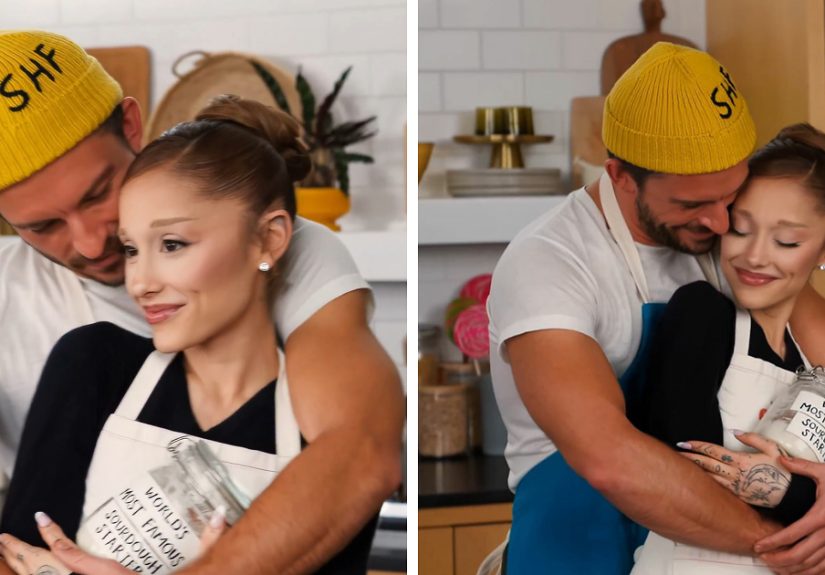
The now-viral chatter grew out of a playful New York Times Cooking pizza interview tied to the Wicked: For Good promotional cycle. Grande and Bailey were not hiding in some mysterious VIP corner, nor were they caught in an off-guard tabloid ambush. They were doing exactly what stars do during a major studio rollout: showing up, being likable, and giving the internet a fresh batch of clips to replay at unhealthy speed.
In the video, the pair joke their way through questions while making pizza, batting around opinions on food, personality, and taste with the kind of rhythm that only happens when two people genuinely enjoy each other’s company. Bailey’s hard-line stance against pineapple on pizza was one of the most quoted bits, but the larger takeaway for fans was their easy, lived-in rapport. They were relaxed. They were funny. They looked like two people who had long since stopped needing icebreakers.
Then came the part that sent social media into overdrive: a warm, affectionate moment that some viewers labeled “intimate,” even though that word was doing some Olympic-level stretching. Was it close? Sure. Was it tender? A little. Was it enough to justify the internet acting like it had discovered a secret second act in a romance thriller? Absolutely not. But when two performers already associated with a beloved musical and a heavily analyzed press tour share even a tiny burst of visible chemistry, the online reaction tends to skip directly past calm and land in dramatic uppercase.
That is why this clip traveled. It was not scandalous. It was readable. Fans could project onto it. Shippers could decorate it. Casual viewers could laugh at it. And gossip-minded corners of the web could slap a charged adjective on it and let the comments section do cardio.
Why the Internet Turned a Friendly Moment Into a Frenzy
The simplest answer is chemistry. Jonathan Bailey has built a reputation as a performer who can generate sparks with practically anyone on screen, and Wicked only reinforced that image. Ariana Grande, meanwhile, is one of the most closely watched pop stars on the planet, which means her public interactions are rarely allowed to remain ordinary. Put those two facts together and you get a near-perfect recipe for viral overanalysis.
There is also the Wicked factor. The film franchise did not just succeed as a movie event; it became a content ecosystem. Red carpets, interviews, behind-the-scenes clips, fashion breakdowns, cast banter, and emotional sound bites all fed a fandom that never really clocked out. Viewers were not only watching the films. They were watching the cast watch each other, talk to each other, defend each other, and laugh with each other. In that environment, every interaction becomes a possible clue.
That helps explain why this Ariana Grande and Jonathan Bailey interaction caught fire so fast. Online fandom now treats celebrity press tours like serialized storytelling. Each interview is an episode. Each clip is evidence. Each facial expression becomes a screenshot with a caption that begins, “No but the way he looked at her…” At some point, the discourse stops being about the actual work and starts becoming a parallel entertainment product made by the audience itself.
And let’s be honest: this kind of frenzy is partly fueled by humor. The internet was not responding in one voice. Some people were genuinely swooning over their chemistry. Others were making exaggerated jokes. Some were being messy on purpose because celebrity gossip has become a spectator sport. When a clip is cute, ambiguous, and easy to meme, it spreads faster than anything serious. We are living in an era where one affectionate hug can become both a shipping video and a fake courtroom trial on the same afternoon.
Context Made the Clip Look Bigger Than It Was
The audience did not see this interaction in a vacuum. By the time the clip arrived, Grande and Bailey already had a public history as co-stars, theater kids, and highly visible members of the Wicked machine. Grande has spoken warmly about the friendship they built while filming, even describing the connection as one that grew alongside their characters’ bond. Bailey, meanwhile, has consistently come across as affectionate, witty, and deeply at ease with his collaborators. So when viewers saw them joking and leaning into each other naturally, it confirmed the version of their dynamic many had already accepted.
It also did not hurt that Wicked itself invites emotional investment. The story is built on longing, rivalry, tenderness, and complicated attachment. Fans are already primed to read meaning into looks, silences, and emotional timing. Once that viewing habit spills out of the movie and into the press tour, people start treating promotional clips as bonus scenes. Suddenly, a kitchen interview looks less like media training and more like a deleted chapter from the fandom’s imagination.
The Wicked Effect: Why This Cast Was Always Going to Be Overanalyzed
Wicked was never going to be just another movie press tour. It had too much emotional weight, too much Broadway history, and too much star power. Ariana Grande came into the project with a massive fan base, intense media attention, and years of public fascination trailing behind her. Jonathan Bailey brought his own devoted following, especially after becoming one of the most charismatic breakout stars of prestige romance television and big-screen musical fandom alike. Put them in the same blockbuster orbit, and the result was always going to be loud.
What made the frenzy more intense was the tone of the cast’s public chemistry overall. The Wicked promotional cycle was filled with emotional interviews, affectionate moments, and genuinely warm interactions that audiences found either endearing or hilariously theatrical, depending on their mood. TikTok, in particular, helped turn the cast dynamic into a whole subgenre of content. People were not merely sharing trailers. They were lip-syncing interviews, clipping red-carpet reactions, and debating interpersonal vibes like graduate students in a department called Celebrity Semiotics.
That environment trained viewers to treat the cast as an ongoing social text. If Grande and Cynthia Erivo appeared deeply bonded, people discussed it. If Bailey showed up and charmed another room into submission, people discussed that too. If the trio sat down for a chat and produced ten seconds of delightful nonsense, that also became discourse. In other words, by the time the so-called “intimate” Ariana Grande and Jonathan Bailey interaction hit the feed, fans had already been conditioned to react as if each new clip carried emotional plot significance.
This is where celebrity culture gets slippery. The public starts with genuine affection for performers and their work, but it quickly drifts into ownership language. Fans say things like “we know them,” “we called it,” or “did you see the tension?” as though they are recapping a scripted scene rather than watching edited promotional content. It is entertaining, yes, but it also explains why a perfectly ordinary burst of co-star warmth can be treated like breaking news.
Jonathan Bailey, Ariana Grande, and the Power of Visible Chemistry
A big reason the clip resonated is that neither star looked like they were forcing charm for the camera. That matters. Audiences are surprisingly good at spotting rehearsed chemistry, and what people responded to here was the opposite. Grande and Bailey felt easy with each other. Their timing was loose. Their humor was shared. The warmth looked lived in.
That is not especially shocking when you remember that the two bonded over similar theater backgrounds. Both came into Wicked with a genuine love for musical performance, and both have spoken in ways that suggest their friendship was not manufactured in a publicity lab. Their connection has shown up in multiple places, from behind-the-scenes photos to interviews and now even the announcement of another stage collaboration. The point is not that there is some secret romantic subplot. The point is that audiences can feel the difference between strangers being polite and collaborators who actually enjoy one another.
Bailey also occupies a unique place in the current entertainment landscape. He is one of those rare performers who can be elegant, funny, flirtatious, vulnerable, and slightly mischievous in the same ten-second clip. That makes him extremely meme-able and extremely dangerous to the emotional stability of fan edits everywhere. Add Grande’s pop-cultural magnetism to that, and the viral math starts making sense.
So yes, people saw chemistry. But chemistry is not confession. Chemistry is not scandal. Chemistry is often just evidence that casting directors, rehearsal rooms, and shared work experiences did their jobs.
Did the “Intimate” Label Fit? Not Really.
Calling the interaction “intimate” made for a catchy headline, but it also exaggerated what viewers were actually watching. This was not a hidden rendezvous or a whispered revelation. It was a public, promotional, camera-friendly moment between co-stars. Affectionate, yes. Comfortable, definitely. But the language of scandal worked harder than the clip itself.
Part of the overreaction came from how quickly online discussion pulled in off-screen relationship chatter. That is usually the point where fandom stops being playful and starts getting sloppy. People import real-life assumptions, personal narratives, and tabloid baggage into a clip that does not actually support those conclusions. The result is a strange kind of gossip inflation where a gentle interaction gets treated like a dramatic boundary-crossing event simply because the internet enjoys the shape of that story more than the reality.
And the reality is more boring, which is also why it is more believable. Two stars with proven rapport appeared in a lighthearted cooking segment and looked genuinely fond of each other. Viewers, primed by months of Wicked discourse and a social-media ecosystem addicted to relationship analysis, turned it into a frenzy. That is the story. The rest is commentary, projection, and the occasional all-caps overreach.
Why This Moment Worked as Pop Culture Fuel
For a celebrity interaction to go viral, it usually needs three things: familiarity, ambiguity, and emotional charge. This one had all three. People already knew Ariana Grande. They already knew Jonathan Bailey. They already cared about Wicked. The clip itself was open-ended enough to invite interpretation, but warm enough to reward repeat viewing. And because both stars are highly expressive performers, even a small gesture looked rich with possible meaning.
There was also a bonus layer: the broader Wicked conversation had already amplified interest in romantic dynamics involving Glinda and Fiyero. Reports that a more passionate Glinda-Fiyero kiss was filmed and later cut only added more fuel. Once audiences know a stronger romantic beat existed somewhere in the development process, they become even more likely to read sparks into every off-screen interaction. Suddenly the line between character chemistry and celebrity chemistry gets blurry, and the internet does what it always does when lines get blurry: it zooms in and refuses to behave.
In that sense, the frenzy was inevitable. The clip was cute, the timing was perfect, and fandom had already laid the tracks.
Experiences Around the Frenzy: How Fans, Casual Viewers, and the Internet All Saw a Different Story
One reason this story kept bouncing around online is that different groups experienced the same clip in totally different ways. Hardcore Wicked fans tended to view it through the lens of the movie and the cast’s existing dynamic. For them, the Ariana Grande and Jonathan Bailey interaction looked like an extension of a familiar friendship. It read as sweet, unsurprising, and maybe even reassuring. These viewers had already seen plenty of evidence that the cast clicked, so the moment felt like one more charming puzzle piece rather than a shocking reveal.
Casual viewers had a different experience. They might not have followed every red carpet or interview, so the clip arrived without much context. To them, the warmth stood out more sharply. A friendly hug or a playful glance can look a lot louder when you have not spent months marinating in cast interviews. That is where a lot of the “wait, what is going on here?” reaction came from. It was not always malicious. Sometimes it was just the normal response of people dropping into the middle of a fandom conversation already in progress.
Then there was the meme crowd, which treated the whole thing like a pop-culture playground. This group did not necessarily care whether the interaction meant anything at all. They cared that it was funny, usable, and ripe for exaggerated captions. Their experience of the moment was basically this: two famous, attractive people had visible chemistry in a setting involving pizza, and the internet had gifted them a blank canvas. Within hours, the clip was no longer a clip. It was a joke format, a reaction image source, and the raw material for increasingly dramatic commentary.
There is also the parasocial layer, which tends to shape stories like this more than people admit. Many fans now experience celebrity culture through constant exposure rather than occasional headlines. They see interviews, behind-the-scenes footage, reposted fan edits, outfit breakdowns, and emotional snippets all week long. That repetition creates a false feeling of closeness. People begin to think they understand not only a star’s public persona, but also the hidden meaning of every pause, smile, and side-eye. When a moment like this appears, it does not feel random to them. It feels confirmatory. It feels like proof of something they already suspected.
But that sense of certainty is usually the least reliable part of the whole process. The truth is that viewers bring their own hopes, biases, and humor to celebrity interactions. Some people want romance. Some want chaos. Some want a harmless laugh. Some want to protect their favorite star from narratives they think are unfair. All of those experiences collided at once around this clip, which is exactly why the reaction looked so messy. Everyone was technically watching the same video, but emotionally they were watching different versions of it.
That is what makes these moments so sticky. They are not just consumed; they are customized. One person sees tenderness. Another sees flirtation. Another sees nothing more than two exhausted performers being pleasant while doing press. And because social media rewards speed over nuance, the most dramatic interpretation usually runs the fastest. By the time calmer voices show up to say, “This seems normal,” the internet has already appointed itself judge, jury, and relationship analyst, wearing a powdered wig made entirely of reaction GIFs.
In the end, the frenzy around Ariana Grande and Jonathan Bailey was less about scandal than experience. It showed how modern audiences co-author celebrity stories in real time, each group projecting its own tone onto the same few seconds of footage. That is why the clip mattered. Not because it exposed a secret, but because it revealed how fandom now works: fast, emotional, funny, occasionally ridiculous, and always one affectionate moment away from total overdrive.
Conclusion
Ariana Grande’s so-called “intimate” interaction with Jonathan Bailey did not go viral because it proved anything scandalous. It went viral because it landed at the exact intersection of star power, cast chemistry, fandom projection, and internet performance. Grande and Bailey looked comfortable together because they probably are. The audience reacted loudly because that is what audiences do when a beloved franchise, two charismatic stars, and one very shareable clip collide.
In other words, this was not a bombshell. It was a modern celebrity moment doing what modern celebrity moments do best: inviting too many interpretations, generating too many jokes, and reminding everyone that the internet can turn a pizza interview into a week-long cultural weather system. The frenzy was real. The scandal, not so much.