Table of Contents >> Show >> Hide
- How Do You Even Rank the “Best Novelists of All Time”?
- Foundations of the English-Language Novel
- Modernist Game-Changers
- 20th-Century Icons Readers Still Love
- Genre-Bending and Imaginative Giants
- Why Lists of “Best Novelists” Still Matter
- How to Start Reading the Best English-Language Novelists
- Reader Experiences: Living with the Greatest Novelists
- Conclusion: Build Your Own Canon
Ask ten readers who the best novelists of all time are and you’ll probably get eleven different answers.
Literature is subjective, emotional, and deeply personal. Still, certain English-language writers show up again and again
on critics’ lists, readers’ polls, and “100 greatest novels” countdowns from major outlets in the U.S. and U.K.
This guide doesn’t pretend to be the final word on the top English language writers, but it does bring together
patterns from big lists like The Guardian’s “100 best novels written in English,” the Modern Library rankings, composite
academic canons, and crowd-sourced votes on Ranker and similar platforms.
Think of it as a curated tour through the novelists who shaped how we read, think, and tell stories today.
We’ll look at why these authors matter, which books to start with, and how to build your own personal canonno PhD required,
just a library card and a comfy reading chair.
How Do You Even Rank the “Best Novelists of All Time”?
Before we start naming names, it helps to admit that any list of the greatest English-language novelists is
going to be imperfect. Different lists weigh different things:
- Critical influence: Did this writer change what novels can do?
- Popularity and staying power: Are people still reading them a century later?
- Innovation in style or form: Did they invent new ways of telling stories?
- Representation and breadth: Do they bring new voices and experiences into the literary conversation?
Canonical lists like the Modern Library’s “100 best novels” lean heavily toward early 20th-century British and American writers,
while newer roundups from critics and data-driven sites have pushed more women, writers of color, and genre-bending authors into
the spotlight.
With that in mind, think of the following writers not as the only choices, but as a strong “starter pack” of the best novelists
of all time in the English languagepeople whose work keeps showing up wherever great books are being discussed.
Foundations of the English-Language Novel
Jane Austen: Social Comedy with a Steel Spine
Jane Austen’s novels may look like polite drawing-room romances on the surface, but under the witty dialogue and marriage plots
is a razor-sharp critique of class, money, and gender expectations in 18th- and early 19th-century England.
Works like Pride and Prejudice, Sense and Sensibility, and Emma are staples on “best novel” lists
for a reason: they balance emotional depth, tight plotting, and some of the best banter in the language.
Start here: Pride and Prejudice for the iconic enemies-to-lovers arc, then Emma if you enjoy
watching a charming meddler learn from her mistakes.
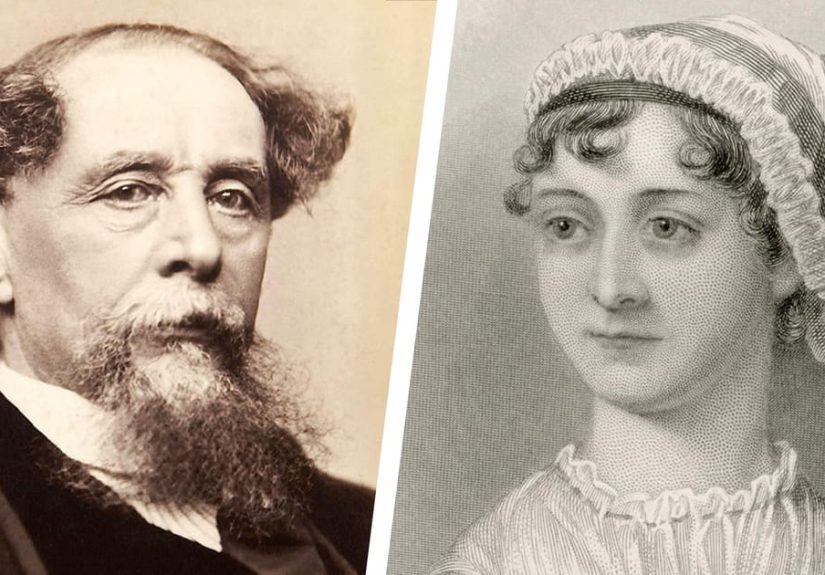
Charles Dickens: The Great Victorian Storyteller
If you like your novels crowded, emotional, and packed with plot twists, Charles Dickens is your guy. From Great Expectations
to Bleak House, his stories capture industrial-era London with unforgettable characters and moral energy. Dickens shows up
repeatedly in rankings of the top English-language writers thanks to his influence on serial storytelling and social realism.
Start here: Great Expectations for a relatively compact introduction, or
A Christmas Carol if you want a shorter, iconic tale that you already accidentally know through a dozen movie versions.
George Eliot: Psychological Depth Before It Was Cool
Writing under a male pen name, Mary Ann Evansbetter known as George Eliotbrought a new level of psychological nuance to the novel.
Middlemarch, often appearing near the very top of “best novel ever written” lists, dives into marriage, ambition, and
idealism in a provincial English town.
Start here: Middlemarch if you’re ready for a big, immersive read; Silas Marner if you want
something shorter but still emotionally powerful.
The Brontës and Thomas Hardy: Passion and Tragedy
The Brontë sistersCharlotte, Emily, and Annepushed the 19th-century novel into darker, more passionate territory with books like
Jane Eyre, Wuthering Heights, and The Tenant of Wildfell Hall. Their work routinely appears in
“greatest novels” lists for its emotional intensity and Gothic flair.
Thomas Hardy, meanwhile, explored rural life, fate, and social constraint in novels such as Tess of the d’Urbervilles
and Far from the Madding Crowd. If you enjoy beautiful landscapes mixed with heartbreak and moral complexity,
Hardy is your man.
Modernist Game-Changers
James Joyce: The Maximalist
James Joyce’s Ulysses might be the single most frequently cited “greatest English-language novel” of the 20th century,
appearing near the top of academic and critical lists across the board.
Joyce’s stream-of-consciousness technique, playful language, and structural experimentation made him a hero to modernist writers
and a mild terror to generations of students.
Start here: Dubliners, his short-story collection, is far more approachable and offers a perfect gateway
into his themes and style.
Virginia Woolf: Interior Lives, Exterior Beauty
Virginia Woolf reshaped what a novel could do by turning inward. In books like Mrs. Dalloway, To the Lighthouse,
and The Waves, she tracks the flow of consciousness, memory, and time with poetic precision. She’s widely considered
one of the best novelists of all time and a central figure in feminist literature.
Start here: Mrs. Dalloway for a single day in London that somehow contains an entire life.
William Faulkner: The Southern Experimenter
William Faulkner’s dense, looping sentences and fractured timelines made him a cornerstone of American modernism. His novels,
particularly The Sound and the Fury, As I Lay Dying, and Light in August, regularly appear on lists
of the best 20th-century English-language fiction.
Start here: As I Lay Dying is challenging but shorter; its multiple narrators give a haunting view of
a Southern family on the edge.
20th-Century Icons Readers Still Love
F. Scott Fitzgerald: Glamour and Disillusion
When people think of the Jazz Age, they often think of F. Scott Fitzgerald. The Great Gatsby has become a shorthand
for wealth, excess, and the dark side of the American Dream. While Fitzgerald’s output is relatively small, his lyrical style
and sharp social observations secure his place on almost every list of top American authors.
Start here: The Great Gatsby is short, gorgeous, and a cultural touchstone. It’s the rare “required reading”
book that many people choose to reread as adults.
Ernest Hemingway: Less Is More
Ernest Hemingway’s famously lean prose and emotionally charged understatement changed English-language writing far beyond
literary fiction. His novels, including The Sun Also Rises, A Farewell to Arms, and
For Whom the Bell Tolls, are fixtures on “best of” lists and continue to influence everyone from war correspondents
to minimalist stylists.
Start here: The Old Man and the Sea if you want a short, allegorical read; The Sun Also Rises
if you’re fascinated by the “lost generation.”
George Orwell: Politics Meets Page-Turner
George Orwell’s gift was making moral and political questions gripping to read. 1984 and Animal Farm are
constantly referenced in discussions of surveillance, propaganda, and power. While he wrote essays, journalism, and memoir,
these two short novels are the reason he’s consistently ranked among the greatest English-language writers of the 20th century.
Start here: 1984 if you like dystopia, Animal Farm if you prefer your political critique
in fable form (with surprisingly intense pigs).
Toni Morrison: Voice, Memory, and Power
Nobel laureate Toni Morrison brought Black American history and interior life to the center of the literary canon. Novels like
Beloved, Song of Solomon, and The Bluest Eye explore trauma, memory, identity, and community with
poetic language and emotional force. She appears prominently in modern rankings of the best American authors and has influenced
a generation of writers around the world.
Start here: Beloved is demanding and devastating, but unforgettable. For a slightly easier entry,
try Sula.
John Steinbeck: Empathy for Ordinary Lives
John Steinbeck chronicled the lives of workers, migrants, and families struggling through economic hardship. The Grapes of Wrath,
Of Mice and Men, and East of Eden appear frequently on “best American novels” lists and remain classroom staples
for their mix of social critique and human sympathy.
Start here: Of Mice and Men is short but emotionally massive; East of Eden is a big family saga
if you’re ready for something longer.
Genre-Bending and Imaginative Giants
J.R.R. Tolkien: Epic Fantasy that Redefined a Genre
Although Tolkien is sometimes shelved under “fantasy” rather than “literary fiction,” it’s impossible to deny his influence
on English-language storytelling. The Lord of the Rings consistently appears in readers’ polls of favorite novels,
and his world-building has shaped everything from modern fantasy series to video games.
Start here: The Hobbit if you want a lighter adventure; The Lord of the Rings if you’re ready
for the full epic.
Margaret Atwood and Beyond: Contemporary Canon-Builders
Contemporary lists of the best English-language novelists increasingly highlight authors like Margaret Atwood, Salman Rushdie,
Zadie Smith, Kazuo Ishiguro, and others whose work crosses national borders and blends genres.
While they’re still mid-career compared to the long-departed Victorians, their books already appear on “greatest of the century”
lists and in university syllabi.
Start here: Atwood’s The Handmaid’s Tale, Ishiguro’s Never Let Me Go, or Zadie Smith’s
White Teeth if you want to see how modern writers stretch the boundaries of the novel.
Why Lists of “Best Novelists” Still Matter
It’s easy to be cynical about ranked lists. (Yes, we know, art isn’t a competitiontry telling that to awards season.)
But thoughtfully constructed lists of the greatest novelists can:
- Introduce new readers to foundational works they might never stumble across on their own.
- Highlight writers from underrepresented groups who were historically left out of the canon.
- Show how different eras and cultures have redefined what “great literature” looks like.
Canon isn’t fixed; it’s a conversation. When you read widelyfrom Austen to Morrison, from Joyce to Atwoodyou’re not just
consuming stories; you’re participating in a centuries-long debate about what the novel can and should be.
How to Start Reading the Best English-Language Novelists
Feeling overwhelmed? Here’s a simple, mood-based way to dive into some of the top English language writers:
- “I want romance and sharp social commentary” – Jane Austen, the Brontës.
- “Give me big feelings and Victorian drama” – Charles Dickens, Thomas Hardy.
- “I’m curious about experimental styles” – James Joyce, Virginia Woolf, William Faulkner.
- “I like historical and political themes” – George Orwell, Toni Morrison, John Steinbeck.
- “I love world-building and imaginative fiction” – J.R.R. Tolkien, Margaret Atwood.
You don’t have to read everything on every “greatest novels” list to be a serious reader. Pick a handful that genuinely
interest you, sprinkle in recommendations from friends, librarians, and book clubs, and let curiosity do the rest.
Reader Experiences: Living with the Greatest Novelists
Beyond rankings and canons, the real magic of the best novelists of all time shows up in the way they quietly infiltrate
everyday life. If you’ve ever recognized a stubborn relative in an Austen character or thought “this is very Kafkaesque”
at the DMV, you’ve already felt how deeply novels wire themselves into our thinking.
Many readers start with the classics in schoolmaybe trudging through Great Expectations or The Scarlet Letter
under duressand only later realize how rich these books can be. Coming back to a novel like The Great Gatsby or
To Kill a Mockingbird as an adult often feels like reading a completely different story: suddenly you care less about
plot and more about voice, subtext, and the small details that flew past you at sixteen.
Book clubs and online communities add another layer. One group might argue passionately about whether Middlemarch
is secretly a proto-feminist masterpiece (spoiler: many critics think so), while another debates which translation or edition
of a modern classic is “the one” to read. Meanwhile, social platforms and review sites turn once-solitary reading experiences
into rolling conversations, where thousands of people compare favorite passages, share fan art, or gently warn newcomers:
“Yes, it’s worth it, but give yourself time.”
There’s also the quiet, personal side of reading the top English language writers. Maybe you keep a battered copy of
Beloved or Mrs. Dalloway on your nightstand, not because you’re currently reading it, but because it reminds
you of a specific season in your life. Maybe a line from Hemingway or Morrison pops into your head at odd times, offering
comfort or a jolt of clarity. These are the moments when the idea of a “canon” stops being abstract and becomes something
intimate and lived.
And then there’s the delightful frustration of tackling a famously “difficult” novel. Working through Joyce, Faulkner, or
Woolf can feel like solving a puzzle with half the pieces upside down. But that processre-reading passages, checking a guide,
chatting with other readersoften leads to a deeper sense of ownership. You don’t just finish the book; you survive it,
and that survival comes with a weird, nerdy pride.
Over time, most readers discover that their personal “best novelists of all time” list doesn’t match any official ranking.
You might adore a writer who barely shows up on academic syllabi, or feel lukewarm about a supposed genius. That’s not a
failure; it’s the point. The big namesAusten, Dickens, Woolf, Morrisongive you a shared language and a starting map,
but every reading life eventually branches out in its own direction.
The fun part is that the conversation never really ends. New prizes highlight emerging voices; classic authors get reinterpreted
through fresh cultural lenses; and your own tastes evolve as you move through different stages of life. The “best novelists
of all time” are not just monuments in a museum; they’re companions you can return to, argue with, outgrow, and rediscover
whenever you’re ready.
Conclusion: Build Your Own Canon
Lists of the best novelists of all time and the top English language writers are useful
starting points, but they’re not verdicts carved in stone. Use them like a travel guide: helpful for finding landmarks,
but not the only way to explore.
Read the big names everyone talks aboutAusten, Dickens, Joyce, Woolf, Faulkner, Morrisonand then follow your curiosity
into lesser-known corners. The real “best novelist” is the one whose work makes you miss your bus stop, stay up too late,
and see your own life a little differently the next morning.